Who Was Zhou Dunyi? Neo-Confucian Sage Who Loved the Lotus
Who Was Zhou Dunyi? Neo-Confucian Sage Who Loved the Lotus
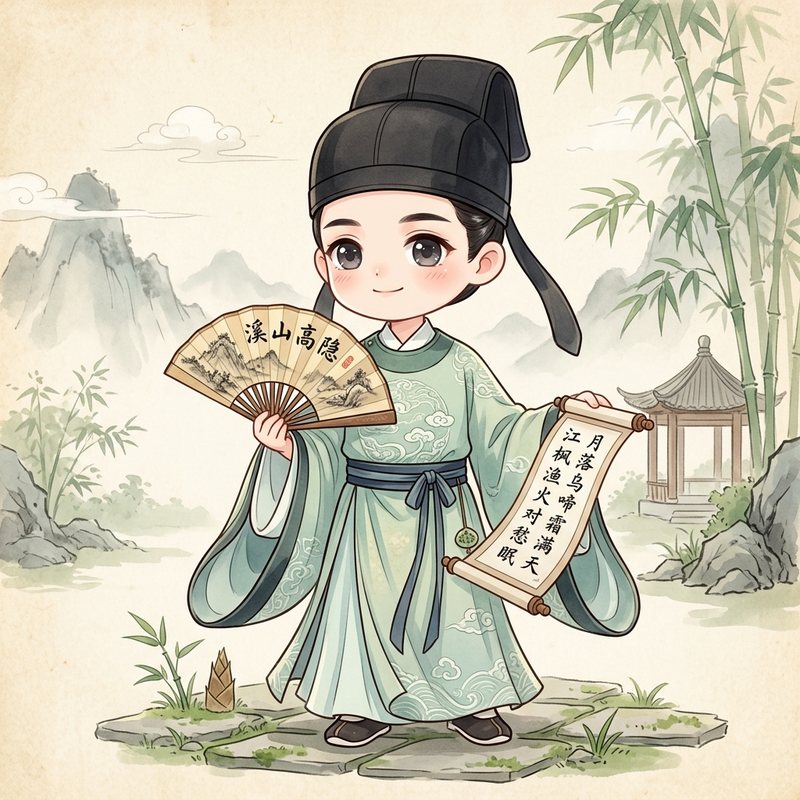
Zhou Dunyi (周敦颐 · Zhōu Dūnyí)
字茂叔 · 号濂溪 · 谥元公
Founder of Neo-Confucianism and author of 'On the Love of the Lotus', who unified cosmic genesis with the pure moral ideal of the gentleman rising unstained from the mud.
北宋五子之首、宋明理学开山鼻祖,以《太极图说》奠定宇宙论,以《爱莲说》树立‘出淤泥而不染’的君子人格典范。
- The Pioneer of Neo-Confucianism: Integrated Daoist cosmology and Confucian ethics, establishing the philosophical blueprint later systematized by the Cheng brothers and Zhu Xi.
- Defier of Tyranny: Famously threw down his official tablet to stop a bloodthirsty commissioner from executing an innocent man, living the creed: 'To murder to curry favor is something I will never do.'
- Architect of the Lotus Ideal: Penned 'On the Love of the Lotus' (Ai Lian Shuo) in 1071, turning the lotus flower into East Asia's definitive botanical symbol of moral integrity in public office.
- Teacher of the Masters: Personally mentored teenage Cheng Hao and Cheng Yi in the 'joy of Confucius and Yan Hui', laying the foundations for the influential Cheng-Zhu school.
Phase 1: Early Tragedy, Canal-Side Mourning & Judicial Brilliance (1017–1040)
Zhou Dunyi was born in 1017 CE in Daozhou (modern Daoxian, Hunan Province) into an official household. Originally named Zhou Dunshi (later changed to avoid the imperial taboo of Emperor Yingzong), he grew up playing beside the crystal-clear Lianxi stream fronting his family village. When his father passed away during his childhood, his mother Lady Zheng took young Zhou to live with her brother, Zheng Xiang, a respected imperial academician.
宋真宗天禧元年(1017年),周敦颐生于湖南道州营道县楼田村。村前清溪流淌,名为濂溪。他幼年丧父,随母亲郑氏投奔舅父——龙图阁直学士郑向,自幼受到深厚的庭训与书香熏陶。
In 1032 CE, Zhou accompanied his uncle to Danyang beside the Grand Canal in Jiangsu. Soon after, his mother died. Observing strict filial mourning for three years, the teenage scholar lived in a humble hut, immersing himself day and night in the Book of Changes (I Ching) and ancient classics. In 1040 CE, entering public office as magistrate assistant in Fenning (modern Xiushui, Jiangxi), the 23-year-old rookie solved entangled criminal cases that had baffled veteran officials for years in a single morning, leaving seasoned clerks in awe.
明道元年(1032年),周敦颐随舅父迁居润州丹阳。不久母亲病故,十五岁的周敦颐奉制丁忧守孝三年,在运河畔草庐中发愤苦读《易经》与诸子百家。康定元年(1040年),他出任分宁县主簿,初入仕途便‘一讯立辨’积压数年的疑难大案,令老吏惊服叹弗如。
笃学敦行,志存圣贤。
Dǔ xué dūn xíng, zhì cún shèng xián.
Devoted in learning and sincere in action, his aspirations were firmly anchored in the wisdom of the ancient sages.
Context · Recorded in classical gazetteers commemorating Zhou Dunyi's youthful mourning period in Danyang, where he immersed himself in the Book of Changes.
Phase 2: Defying Cruelty in Nan'an & Mentoring the Cheng Brothers (1044–1046)
In 1044 CE, Zhou was appointed military judicial officer in Nan'an (modern Dayu, Jiangxi). The provincial transport commissioner, Wang Kui, was notoriously vicious and tyrannical, terrifying the regional bureaucracy. When Wang Kui sought to fabricate capital charges against an innocent prisoner to flex imperial terror, other officials cowered in silence. Zhou Dunyi alone stood in fierce defiance.
庆历四年(1044年),周敦颐调任南安军司理参军,主管刑狱。转运使王逵为人残苛暴虐、威震官场,诸官莫敢仰视。王逵欲罗织罪名冤杀一死囚立威,满堂官吏噤若寒蝉,唯独周敦颐据法力争。
Furious, Wang Kui threatened him with ruin. Zhou Dunyi untied his official tablet, hurled it to the stone floor, and declared: 'How can one remain in office under such conditions! To kill an innocent man merely to curry favor with the powerful is something I will never do!' Shamed, Wang Kui backed down. Witnessing this peerless moral courage, local vice governor Cheng Xiang formed a lifelong friendship with Zhou and sent his two gifted sons—Cheng Hao (age 14) and Cheng Yi (age 13)—to study under Zhou's personal tutelage.
面对上司雷霆之怒,周敦颐怒掷官笏于地,厉声抗辩:‘如此尚可仕乎!杀人以媚人,吾不为也!’王逵感愧罢杀。南安军通判程珦深服其刚正气节与博大胸怀,遂命二子程颢、程颐拜周敦颐为师,理学道统由此萌芽发轫。
如此尚可仕乎!杀人以媚人,吾不为也!
Rú cǐ shàng kě shì hū! Shā rén yǐ mèi rén, wú bù wéi yě!
How can one remain in office under such conditions! To kill an innocent man merely to curry favor with the powerful is something I will never do!
Context · From the History of Song (Song Shi), recording Zhou Dunyi's fearless showdown in Nan'an against commissioner Wang Kui to protect an innocent prisoner.
Phase 3: The Great Cosmological Breakthrough at Hezhou (1056–1060)
After exemplary service as county magistrate in Guiyang (modern Rucheng, Hunan), where he excavated his very first lotus pond, Zhou was assigned as judge to Hezhou (modern Hechuan, Chongqing) in 1056 CE. Perched above the majestic confluence of the Jialing, Qu, and Fu rivers, Zhou found the geographical majesty and quiet needed to synthesize his decades of philosophical inquiry.
此后周敦颐主政郴州桂阳,政平讼理,在县署后山开凿半亩池塘引泉种荷。嘉祐元年(1056年),他改任合州判官。合州汇聚三江风雷,周敦颐断案公允有‘理绝’之誉,公余则在巴山夜雨中潜心著述。
Here, Zhou penned the concise, epoch-making treatise 'Taijitu Shuo' (Explanation of the Diagram of the Supreme Ultimate) and his masterwork 'Tongshu' (Penetrating the Book of Changes). In just 250 characters, the Taijitu Shuo articulated a grand cosmology: from the formless Boundless (Wuji) springs the Supreme Ultimate (Taiji), which generates Yang through movement and Yin through tranquility. By aligning human morality with this cosmic genesis, Zhou provided Confucianism with its missing metaphysical foundation.
在合州,周敦颐写下了奠定理学千年基石的哲学巨著《太极图说》与《通书》。他以两百五十余字的精练文字提出‘无极而太极’的宇宙演化图式,由宇宙生成推演至‘圣人定之以中正仁义而主静,立人极焉’,为儒家文明补齐了宏大的形而上学生命哲学。
无极而太极。太极动而生阳,动极而静;静而生阴,静极复动。
Wú jí ér tài jí. Tài jí dòng ér shēng yáng, dòng jí ér jìng; jìng ér shēng yīn, jìng jí fù dòng.
The Boundless, and yet the Supreme Ultimate! The Supreme Ultimate through movement generates yang; at its limit it becomes tranquil, and through tranquility generates yin.
Context · The opening passage of the 'Explanation of the Diagram of the Supreme Ultimate' (Taijitu Shuo), Zhou Dunyi's masterwork on cosmic genesis composed in Hezhou.
Phase 4: Sincerity in Administration & Subtropical Prison Reform (1061–1070)
Transferred to Qianzhou (modern Ganzhou, Jiangxi) in 1061 CE as vice governor, Zhou encountered the formidable prefect Zhao Bian, famed throughout the empire as the incorruptible 'Iron-Faced Imperial Censor'. Though initially skeptical of Zhou's quiet aloofness, Zhao Bian was completely won over by Zhou's profound integrity after an evening's conversation, publicly exclaiming: 'A singular genius under heaven!'
嘉祐六年(1061年),周敦颐调任虔州通判。知州为以刚正铁面著称的名臣赵抃。赵抃初闻其名疑其自傲,及秉烛长谈,大为叹服,握其手赞曰:‘天下奇才也!’两人遂结为莫逆知己。
In 1068 CE, Zhou was promoted to Judicial Commissioner of Guangnan East Circuit (Guangdong). Despite the deadly subtropical malaria and dangerous jungle paths that deterred other officials, Zhou traversed the rugged wilderness in straw sandals, inspecting remote county jails. He overturned hundreds of wrongful verdicts and liberated unjustly enslaved villagers, nearly dying of fever during his inspections. For Zhou, genuine philosophy was proved through administrative mercy.
熙宁元年(1068年),周敦颐擢升广南东路提点刑狱,主管岭南司法。他不避瘴疠险阻,亲涉绝徼荒村,巡查牢狱,平反冤狱数百起,因劳瘁过度身染重疾险些殉职,令岭南吏治为之一新。
诚者,圣人之本。士希贤,贤希圣,圣希天。
Chéng zhě, shèng rén zhī běn. Shì xī xián, xián xī shèng, shèng xī tiān.
Sincerity is the foundation of the sage. The scholar aspires to become worthy, the worthy aspires to become a sage, and the sage aspires to harmonize with Heaven.
Context · From Zhou Dunyi's philosophical treatise Tongshu ('Penetrating the Book of Changes'), outlining the ethical ladder of self-cultivation.
Phase 5: The Lotus Pond of Nankang & The Immortal Ode (1071–1072)
In 1071 CE, Zhou Dunyi took up his post as military governor of Nankang (modern Lushan City, Jiangxi), nestled between the misty peaks of Mount Lu and the vast waters of Poyang Lake. Outside his official residence, he cleared a neglected hollow, diverted mountain spring water, and planted pristine white lotuses, building an open-air pavilion named 'Ai Lian Ting' (The Pavilion of Loving the Lotus).
熙宁四年(1071年),周敦颐调知南康军(今江西庐山市)。面对巍巍庐山与浩渺鄱阳湖,他在府衙东侧开辟半亩池塘,引清泉修砌‘爱莲池’,广植白莲并筑‘爱莲亭’。
Looking upon the blossoms rising clean above the mud, Zhou penned 'On the Love of the Lotus' (Ai Lian Shuo)—119 characters that became immortal throughout East Asia. While others craved the opulent peony of wealth or retreated like Tao Yuanming into the recluse's chrysanthemum, Zhou declared his singular love for the lotus: growing out of silt without being soiled, cleansed by ripples without coquettish charm, hollow within and straight without—the quintessential emblem of the noble Confucian gentleman.
面对亭亭净植的白莲,周敦颐挥毫写下了仅一百一十九字的千古奇文《爱莲说》。借菊之隐逸、牡丹之富贵,反衬出莲花‘出淤泥而不染,濯清涟而不妖’的君子之德,确立了华夏知识分子在浊世中洁身自好的最高道德标杆。
予独爱莲之出淤泥而不染,濯清涟而不妖,中通外直,不蔓不枝,香远益清,亭亭净植,可远观而不可亵玩焉。
Yú dú ài lián zhī chū yū ní ér bù rǎn, zhuó qīng lián ér bù yāo, zhōng tōng wài zhí, bù màn bù zhī, xiāng yuǎn yì qīng, tíng tíng jìng zhí, kě yuǎn guān ér bù kě xiè wán yān.
I love only the lotus, for it rises from the silt yet remains unstained, and is cleansed by clear ripples yet is not wanton; hollow within and straight without, neither spreading vines nor branching, its fragrance travels far and grows ever purer; standing clean and erect, it can be viewed from afar, but never toyed with profanely.
Context · From Zhou Dunyi's celebrated prose 'On the Love of the Lotus' (Ai Lian Shuo), written in 1071 beside his lotus pond in Nankang.
Phase 6: The Lianxi Hermitage beneath Mount Lu & The Eternal Dao (1072–1073)
Worn down by illness and decades of relentless public service, Zhou retired from office in 1072 CE. He built a tranquil scholarly retreat beneath Lotus Peak at Mount Lu. Longing for his birthplace in Daozhou, he named the bubbling mountain brook in front of his cottage 'Lianxi' and established the Lianxi Academy, welcoming scholars and Buddhist monks to explore moral harmony.
熙宁五年(1072年),周敦颐因病辞官归隐。因深深眷念故里道州,他在庐山莲花峰下结庐,引门前清泉名之为‘濂溪’,创设‘濂溪书堂’,讲学著述、陶然林泉。
On July 24, 1073 CE (the sixth year of Xining), Master Lianxi passed away peacefully at age fifty-six, laid to rest beside his mother's tomb near Mount Lu. Centuries later, Southern Song master Zhu Xi codified Zhou's writings, declaring him the first true patriarch to revive the Confucian Dao since Mencius. As poet Huang Tingjian memorably reflected, Zhou's untrammeled soul was 'like a gentle breeze under the sun and the bright moon after rain.'
熙宁六年(1073年)六月初七日,一代宗师周敦颐于濂溪书堂安详辞世,享年五十七岁。南宋朱熹毕生阐发其学,尊其为千百年来理学传道第一人。黄庭坚盛赞其人品:‘胸怀洒落,如光风霁月。’先生之风,山高水长。
舂陵周茂叔,人品甚高,胸怀洒落,如光风霁月。
Chōng líng Zhōu Mào shū, rén pǐn shèn gāo, xiōng huái sǎ luò, rú guāng fēng jì yuè.
Master Zhou Maoshu of Chongling possessed the loftiest character; his heart was open and untrammeled, like a fresh breeze under the sun and the bright moon after rain.
Context · Poet Huang Tingjian's famous eulogy in 'Preface to Master Lianxi's Poems', honoring Zhou Dunyi's serene and transcendent spirit.
| Perspective 视角 | Zhou Dunyi (Neo-Confucian Pioneer) | Plato & Plotinus (Western Idealists) |
|---|---|---|
| Cosmological Genesis | Deduced the cosmos from the 'Boundless and Supreme Ultimate' (Wuji er Taiji), alternating between dynamic Yang and quiescent Yin. | Deduced reality as an emanation from 'The One' (Plotinus) or the eternal realm of perfect archetypal Forms (Plato). |
| Moral Self-Cultivation | Identified 'Sincerity' (Cheng) as the ontological root of virtue, seeking harmony with cosmic order while living as an active magistrate. | Emphasized dialectical reason and contemplation of the Good, seeking to liberate the rational soul from material distractions. |
| Nature as Moral Metaphor | Used the lotus rising unsullied from muddy silt as the living standard for the incorruptible scholar-statesman. | Used the Allegory of the Cave to contrast blinding shadows of perception with the pure sunlight of philosophical truth. |
| Civilizational Legacy | Venerated as the first of the Northern Song Five Masters, providing the metaphysical bedrock for eight centuries of East Asian governance. | Laid the foundational architecture of Western metaphysics, theology, and political philosophy across the Mediterranean and Europe. |
Explore Zhou Dunyi's Journey on the Interactive Geographic Map
Follow his actual historical trail across 10 imperial stations—from childhood beside Lianxi stream in Daozhou to digging the lotus pond in Nankang beneath Mount Lu.
Launch Interactive MapFrequently Asked Questions (FAQ)
What is the philosophical meaning of 'Wuji er Taiji' in the Taijitu Shuo?
In Zhou Dunyi's 'Taijitu Shuo', 'Wuji er Taiji' ('The Boundless and yet the Supreme Ultimate') explains how the undifferentiated, formless source of reality manifests as the ordered universe. Through alternating cycles of movement (Yang) and stillness (Yin), it generates the five elements and gives birth to all living things.
Why is the lotus flower so important in Zhou Dunyi's philosophy?
In his immortal 1071 essay 'On the Love of the Lotus' (Ai Lian Shuo), Zhou Dunyi used the lotus as a metaphor for the noble Confucian gentleman (junzi). Rising clean from murky pond silt without being stained, the lotus represents an upright official who serves in corrupt government without losing moral purity.
How did Zhou Dunyi influence Cheng Hao and Cheng Yi?
In 1044 at Nan'an, imperial officer Cheng Xiang was so moved by Zhou Dunyi's fearless defense of an innocent prisoner that he sent his young sons, Cheng Hao and Cheng Yi, to study under him. Zhou guided the boys toward moral self-cultivation, inspiring them to become the founders of Cheng-Zhu Neo-Confucianism.
What did Zhou Dunyi mean by 'Sincerity' (Cheng) in his treatise Tongshu?
In the 'Tongshu', Zhou Dunyi defined 'Sincerity' (Cheng) not merely as personal honesty, but as the metaphysical truth of the universe and the ultimate foundation of sagehood. To possess sincerity is to align one's inner moral compass perfectly with the natural Way of Heaven, acting without duplicity or selfish ambition.
Why did poet Huang Tingjian compare Zhou Dunyi to 'a gentle breeze and bright moon'?
Poet Huang Tingjian celebrated Zhou Dunyi's character with the famous idiom 'Guang Feng Ji Yue'—a gentle breeze under clear skies and the bright moon after rain. The phrase honored Zhou's utter freedom from worldly greed, vanity, and political malice, reflecting an inner state of pure, serene moral clarity.
Walk with Zhou Dunyi Across China
随周敦颐漫步华夏河山 · 亲历命运逆境与精神涅槃