Fake Sun Tzu Quotes vs Real Art of War: 7 Myths Debunked
Fake Sun Tzu Quotes vs Real Art of War: 7 Myths Debunked
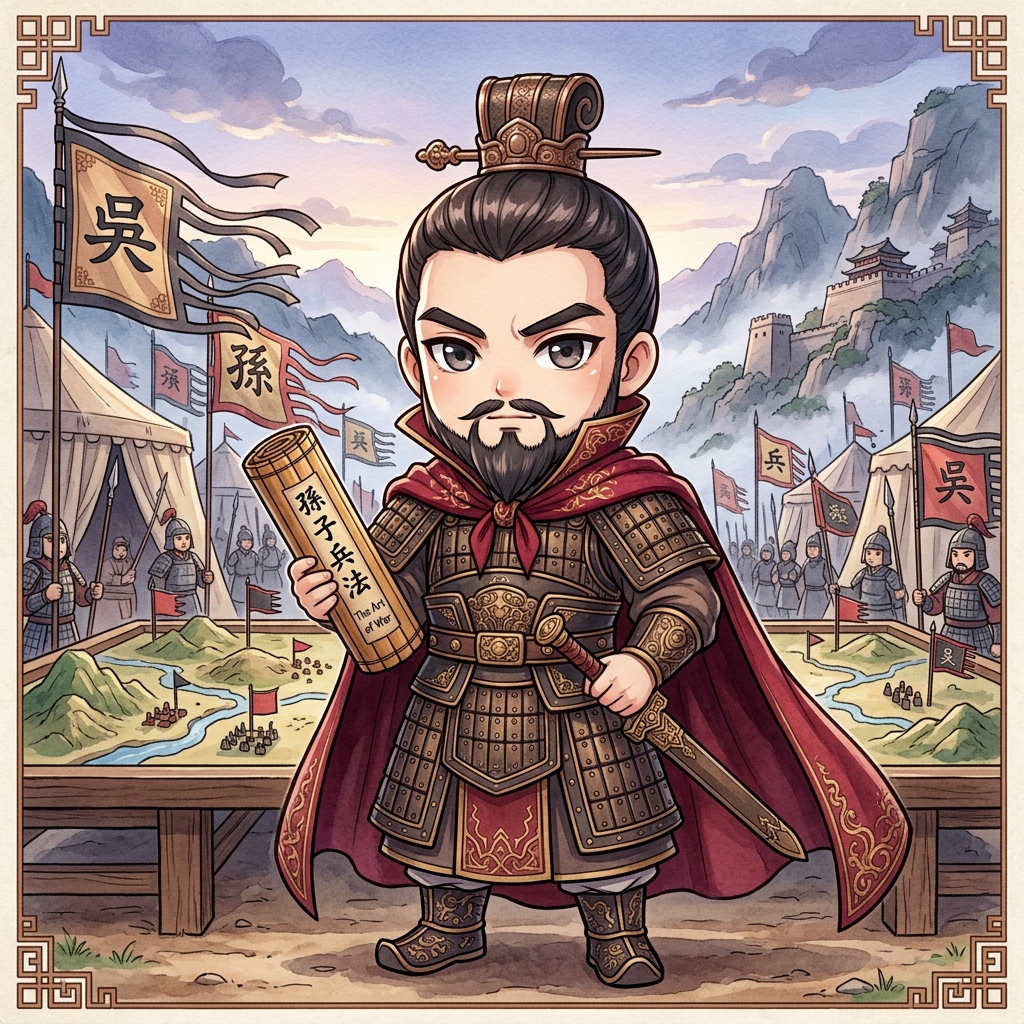
Sun Tzu (Sun Wu) (孙子 (孙武) · Sūn Zǐ)
字长卿 · 兵家至圣 · 百世兵家之师
The Supreme Strategist & Master of The Art of War
兵家鼻祖 · 不战而屈人之兵的东方战略哲学宗师
- The Godfather Myth: 'Keep your friends close, but your enemies closer' was penned by Hollywood screenwriter Mario Puzo in 1974, not Sun Tzu.
- Subduing Without Fighting: Sun Tzu's highest virtue was not slaughter, but winning without combat ('To subdue the enemy without fighting is supreme excellence').
- The Full Proverb: 'Know yourself and know your enemy' actually concludes with 'in a hundred battles you will never be in peril' (bu dai), not 'you will win every battle'.
- Economy of Words: The authentic Art of War contains only 13 chapters and fewer than 6,000 Chinese characters.
The Most Famous Fake Sun Tzu Quotes Circulating Online
| Perspective 视角 | Quote Attributed to Sun Tzu | Historical Truth & Real Origin |
|---|---|---|
| 'Keep your friends close, and your enemies closer.' | Attributed to Sun Tzu in corporate slides and social media captions | Written by Mario Puzo & Francis Ford Coppola for *The Godfather Part II* (1974) |
| 'In the midst of chaos, there is also opportunity.' | Widely cited as a chapter 5 Sun Tzu quote in business keynote speeches | A modern 20th-century motivational paraphrase; the original text discusses feigning tactical chaos |
| 'Can you imagine what I would do if I could do all I can?' | Popular quote graphic on Pinterest attributed to Sun Tzu | Attributed to 19th-century French writer Paul Valéry, entirely absent from Chinese texts |
| 'Victorious warriors win first and then go to war.' | Authentic Sun Tzu (Chapter 4: Tactical Dispositions) | True quote: 胜兵先胜而后求战,败兵先战而后求胜 (Winners secure conditions first) |
Authentic Wisdom: What Sun Tzu Actually Wrote
The real Sun Tzu was not an aggressive warmonger, but an anti-war realist who viewed conflict as a devastating drain on state wealth and human life. His genuine aphorisms prioritize reconnaissance, psychological disruption, and strategic restraint.
Explore Sun Tzu's Decisive Baiju Battlefield Station
Tour the historic battlefield of Baiju where Sun Tzu executed his military doctrines, crushing the massive Chu army.
View Baiju Station on MapFrequently Asked Questions (People Also Ask)
Did Sun Tzu say 'Keep your friends close and enemies closer'?
No. This line does not exist in any ancient Chinese text. It was created for Michael Corleone in the 1974 film The Godfather Part II.
Did Sun Tzu say 'In the midst of chaos, there is also opportunity'?
No. While widely quoted in business keynotes and Hollywood scripts, this is a modern 20th-century motivational paraphrase. In Chapter 5, Sun Tzu discusses feigning tactical disorder (乱而取之) to bait an enemy, not finding personal opportunity in chaos.
What does 'Know yourself and know your enemy' really mean?
The full original sentence is 'Know the enemy and know yourself; in a hundred battles you will never be in peril' (知彼知己,百战不殆). It emphasizes risk mitigation and self-awareness rather than reckless aggression.
How long is the authentic Art of War text?
The original Chinese text contains thirteen chapters and approximately 5,900 classical Chinese characters, which can be read in English in under two hours.