Who Was Zhu Xi? The Architect of Neo-Confucian Philosophy
Master of the Four Books, creator of the White Deer Grotto academy charter, and philosophical giant whose synthesis of moral metaphysics shaped Chinese thought for eight centuries
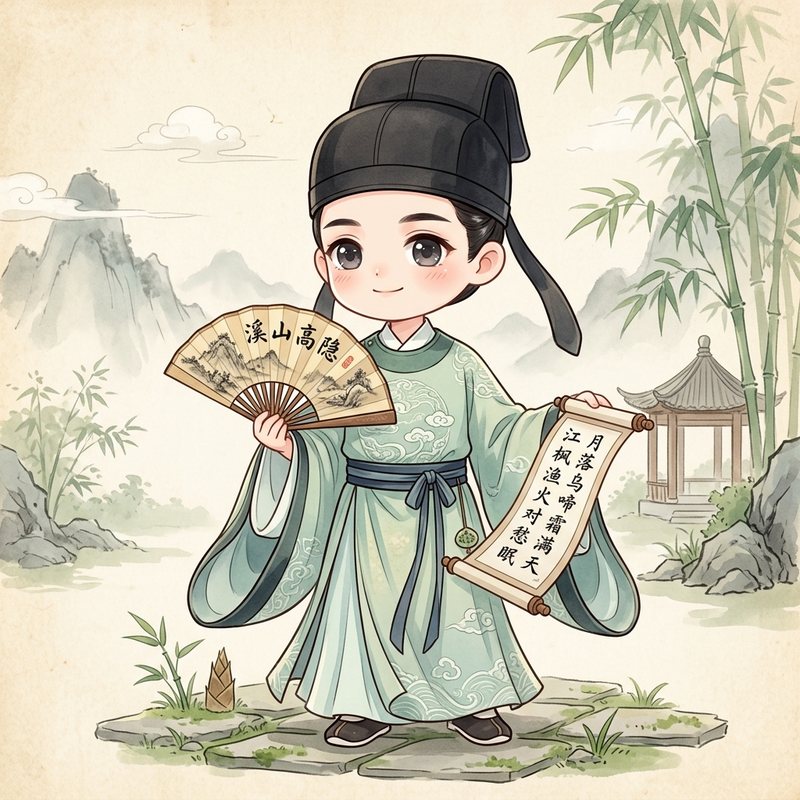
Zhu Xi (朱熹 · Zhū Xī)
字元晦 · 字仲晦 · 号晦庵 · 谥文 · 徽国公
Supreme synthesizer of Neo-Confucianism who established the Four Books as the core East Asian civil exam canon for seven centuries.
南宋理学集大成者,集注《四书》确立东亚八百年科举文脉,以‘格物致知’与‘理气论’筑就儒学大厦。
- The Supreme Synthesizer: Unified classical Confucianism with cosmic metaphysics into Neo-Confucianism (Lixue), structuring the philosophy around the universal Principle (Li) and Material Force (Qi).
- Canonizer of the Four Books: Redefined Chinese scholarship by elevating the Great Learning, Doctrine of the Mean, Analects, and Mencius into the core civil examination curriculum from 1313 to 1905.
- Epistemology of 'Gewu Zhizhi': Advocated the 'investigation of things to extend knowledge,' establishing a rationalist pursuit of cosmic patterns and inner ethical awakening.
- Architect of Higher Education: Rebuilt the legendary White Deer Grotto and Yuelu academies, drafting academy charters that served as the Magna Carta of traditional East Asian universities.
- Unbending Moral Resilience: Confronted corrupt imperial courtiers during the 'Qingyuan Partisan Ban,' serenely perfecting his classical commentaries until his final breath despite political persecution.
Phase 1: The Precocious Prodigy of Youxi (1130–1152)
Zhu Xi was born in 1130 in the official residence of Youxi County in Fujian Province, where his father, Zhu Song, served as sheriff. His father was an upright Confucian scholar who was demoted after fiercely opposing the pacification faction under the notorious court chancellor Qin Hui. From his earliest boyhood, Zhu Xi exhibited an extraordinary, philosophical curiosity. At the age of four, when his father pointed up and taught him the character for heaven, the young toddler astonished his family by asking: 'What lies beyond the boundless sky?'
南宋建炎四年(1130年),朱熹出生于福建尤溪县尉官舍。其父朱松为人方正刚直,曾因抗章痛陈和议之非而遭秦桧忌恨贬斥。朱熹自幼天资颖异,四岁时父亲指天教其认字,幼年朱熹脱口反问:‘天之上何物?’展现出追问宇宙极则与形而上本体的罕见敏锐。
At eight years old, upon reading the Classic of Filial Piety, Zhu Xi wrote an inscription across the cover: 'If one cannot live like this, one is no true human being.' When his father passed away in 1143, fourteen-year-old Zhu Xi and his mother were entrusted to Liu Ziyu in Wufu, northern Fujian. There he studied under the 'Three Masters of Wuyi'—Liu Zihui, Liu Mianzhi, and Hu Xian. At the astonishingly young age of nineteen, Zhu Xi traveled to Lin'an and passed the highest palace civil service examinations (Jinshi), establishing his reputation across southeastern China.
八岁读《孝经》,朱熹便在卷首自题‘若不如此,便不成人’。绍兴十三年(1143年)父亲临终托孤,十四岁的朱熹随母迁居崇安五夫里,师从‘武夷三先生’刘子翚、刘勉之、胡宪,苦读经史子集。绍兴十八年(1148年),年仅十九岁的朱熹赴行在临安高中进士,声震闽中。
天之上何物?
Tiān zhī shàng hé wù?
What lies beyond the boundless sky?
Context · Asked by four-year-old Zhu Xi to his father, foreshadowing his lifelong philosophical quest into the ultimate metaphysical principles of the cosmos.
Phase 2: Local Governance in Tong'an & Discipleship under Li Tong (1153–1162)
In 1153, twenty-four-year-old Zhu Xi accepted his first official posting as the registrar of Tong'an County near Xiamen. Rejecting the leisurely habits of typical local bureaucrats, he threw himself into hands-on administrative reform: clearing false entries from taxation registers, curbing the illegal land seizures of powerful clans, and personally restoring the county academy. He gave weekly lectures to common students, believing that moral transformation and institutional order must go hand in hand.
绍兴二十三年(1153年),二十四岁的朱熹出任泉州同安县主簿。初登仕途的他拒绝因循守旧,亲自丈量户籍田亩、清平差役,坚决抑制豪强兼并。同时他扩建县学孔庙,创立教思堂,登席讲经化导士民,将圣贤义理切实化为基层经世善治。
During his twenties, Zhu Xi had been deeply attracted to Chan (Zen) Buddhism and Daoist mysticism. However, in 1158, he embarked on a fateful journey on foot across steep mountains to Yanping (Nanping) to apprentice himself to Master Li Tong (Master Yanping), an orthodox disciple of the Cheng brothers. Li Tong patiently redirected Zhu Xi away from empty metaphysical quietism back to the vibrant, practical reality of daily moral cultivation: 'Principle is one, but its manifestations are distinct' (Li yi fen shu). This profound awakening convinced Zhu Xi to dedicate the rest of his life exclusively to the revitalization of the Confucian lineage.
青年时期的朱熹曾泛滥于释老禅理。绍兴二十八年(1158年),他徒步数百里赴南剑州延平,正式拜二程三传正统名宿李侗为师。李侗开导他于日用平常践履中体认‘未发之中’与‘理一分殊’。朱熹如梦方醒,断然割舍佛老玄言,皈依纯正洛学道统,完成了人生最重要的哲学奠基。
昨夜江边春水生,艨艟巨舰一毛轻。向来枉费推移力,此日中流自在行。
Zuóyè jiāng biān chūnshuǐ shēng, méngtōng jù jiàn yī máo qīng. Xiànglái wǎngfèi tuīyí lì, cǐ rì zhōngliú zìzài xíng.
Last night along the riverbank the spring tide rose, bearing giant warships light as a single feather. All the futile efforts spent in shoving them along before—today they glide effortlessly through the surging midstream.
Context · Composed by Zhu Xi to symbolize the sudden enlightenment and effortless mastery that arrives after years of painstaking intellectual accumulation.
Phase 3: The Great Goose Lake Philosophical Debate (1175)
By 1175, Zhu Xi was recognized as the preeminent intellectual leader of southern China, yet rival schools of thought were flourishing. In the summer of that year, the eminent scholar Lü Zuqian arranged a historic summit at Goose Lake Temple in Qianshan, Jiangxi, aimed at reconciling the growing divide between Zhu Xi and the brothers Lu Jiuyuan and Lu Jiuling. This monumental gathering became known as the Goose Lake Debate (Ehu Zhi Hui), the most famous intellectual clash in Chinese philosophical history.
淳熙二年(1175年),浙东名儒吕祖谦为了弥合各学派分歧,出面主持并促成信州铅山鹅湖寺的学者盛会,史称‘鹅湖之会’。这是中国思想史上最具影响力的世纪大辩论,朱熹与陆九渊、陆九龄兄弟就认识论与心性修养展开了激烈的交锋。
The debate centered on the core path to sagehood. Zhu Xi championed the rationalist path of 'following the path of inquiry and learning' (Dao Wen Xue): an incremental, rigorous process of investigating external phenomena, reading classical texts, and accumulating knowledge to perceive cosmic principle. Lu Jiuyuan countered with intuitionist idealism, urging thinkers to 'honor the moral nature' (Zun De Xing): asserting that 'the universe is my mind, and my mind is the universe,' dismissing Zhu's book-learning as fragmented pedantry. While the two giants parted without consensus, the summit permanently defined the two grand pillars of late imperial Chinese thought: the Cheng-Zhu School of Principle and the Lu-Wang School of Mind.
辩论核心围绕成圣修养工夫展开。朱熹力倡‘格物穷理、道问学’,强调通过深研经典、博察物理以求顿悟贯通;陆九渊则主张‘尊德性、发明本心’,直斥外求经籍为支离破碎,断言‘宇宙便是吾心,吾心即是宇宙’。这场论战确立了后世理学与心学并峙争鸣的双峰格局。
德业更快三山字,智勇相超万乘师。向来论辩如琴瑟,此去逢迎似路歧。
Déyè gèng kuài sānshān zì, zhìyǒng xiāng chāo wàn shèng shī. Xiànglái lùnbiàn rú qínsè, cǐ qù féngyíng sì lùqí.
Virtue and deed advance swift as the runes of sacred mountains; wisdom and courage surpass an army of ten thousand chariots. Hitherto our debate harmonized like zithers and harps, yet parting here our paths appear to diverge.
Context · From Zhu Xi's reflective poem written to Lu Jiuling following the conclusion of the Goose Lake Debate, capturing both intellectual rivalry and profound mutual respect.
Phase 4: Resurrecting the White Deer Grotto Academy (1179–1189)
In 1179, Zhu Xi took office as the Military Commissioner of Nankang near Lake Poyang. Traveling along the forested foothills of Mount Lu, he discovered that the venerable White Deer Grotto Academy (Bailudong Shuyuan), first established during the Tang Dynasty, lay in utter ruin and overgrown with thorns. Believing that imperial government schools had degenerated into mercenary cram schools for civil exam aspirants, Zhu Xi immediately petitioned the court to reconstruct the academy as a sanctuary for pure moral and philosophical education.
淳熙六年(1179年),朱熹知南康军。巡行庐山脚下时,他目睹天下名庠白鹿洞书院荒草没顶、残垣断壁,痛感官办科举学校沦为功利名利场,遂毅然奏请重修书院,置办学田,招纳海内贤士,亲自兼任洞主主持讲席。
Zhu Xi personally drafted the 'Articles of Learning for the White Deer Grotto Academy' (Bailudong Shuyuan Jieshi). This compact document codified the five moral relations, the sequence of rigorous study, and the primary virtues of personal self-cultivation and societal duty. Emphasizing that true learning was not meant for passing exams or acquiring power, but for purifying the soul and serving humanity, Zhu Xi's charter became the foundational manifesto for academies across China, Choson Korea, and Tokugawa Japan for the next eight hundred years.
朱熹亲自起草颁布《白鹿洞书院揭示》(五教之目、为学之序、修身之要、处事之要、接物之要)。他严正指出求学的终极目标是明辨人伦、涵养德行,绝非追逐利禄。这部学规成为后世八百年间东亚书院教学制度的最高纲领。
半亩方塘一鉴开,天光云影共徘徊。问渠那得清如许?为有源头活水来。
Bàn mǔ fāng táng yī jiàn kāi, tiān guāng yún yǐng gòng páihuái. Wèn qú nǎ dé qīng rú xǔ? Wèi yǒu yuántóu huóshuǐ lái.
A half-acre square pond opens like an unblemished mirror, where celestial light and cloud shadows wander in embrace. Ask how it remains so crystalline and clear: it is because a living spring ceaselessly flows from its source.
Context · Zhu Xi's most famous philosophical poem, using a pristine pond fed by a mountain spring as a metaphor for the human mind kept pure through ceaseless moral learning.
Phase 5: The Four Books Commentary & Administrative Realism in Zhangzhou (1190–1193)
In 1190, at sixty-one years of age, Zhu Xi was appointed Prefect of Zhangzhou in southern Fujian. Confronting massive wealth inequality caused by wealthy gentry bribing officials to conceal their estates while crushing landless peasants with unfair corvée taxes, Zhu Xi fiercely implemented the 'Land Demarcation Law' (Jingjiefa). He dispatched surveyors across every village, measuring actual plots and equalizing land taxes despite fierce threats and political petitions from aristocratic families.
绍熙元年(1190年),年逾耳顺的朱熹出知漳州。针对豪强隐田漏税、小民破产流亡的沉疴,他顶住缙绅权贵的疯狂抵制,大力推行‘经界法’,均平赋税,整饬吏治,展现出求真务实、护持苍生的非凡政治魄力。
Simultaneously, Zhangzhou became the birthplace of the definitive modern Confucian canon. There Zhu Xi published his magnum opus: the *Collected Commentaries on Chapters and Verses of the Four Books* (Sishu Zhangju Jizhu). By grouping the Great Learning (Daxue), the Doctrine of the Mean (Zhongyong), the Analects of Confucius (Lunyu), and the Mencius (Mengzi) into a cohesive curriculum, he provided a clear, systematic hermeneutic framework that made the timeless wisdom of the sages accessible, logical, and universally applicable.
与此同时,朱熹在漳州官署正式校订付梓他的毕生心血结晶——《四书章句集注》。他将《大学》《中庸》《论语》《孟子》合编为‘四书’,以缜密精当的注解重构儒学义理体系,使圣贤微言大义成为人人可循的实践阶梯。
读书有三到,谓心到、眼到、口到。心不在此,则眼不看仔细。
Dúshū yǒu sān dào, wèi xīn dào, yǎn dào, kǒu dào. Xīn bù zài cǐ, zé yǎn bù kàn zǐxì.
In reading there are three essential arrivals: the mind must arrive, the eyes must arrive, and the mouth must arrive. If the mind is not present, the eyes cannot observe closely.
Context · From Zhu Xi's classroom guidelines (Xunxue Zhaigui), teaching students the supreme virtue of deep focus and intellectual honesty in scholarship.
Phase 6: The Yuelu Academy Revival & Socratic Lectures (1194–1195)
In 1194, Zhu Xi was made Pacification Commissioner of Jingnan and Governor of Tanzhou (modern Changsha, Hunan). Rather than ruling from an aloof military fortress, he immediately focused on rebuilding the ancient Yuelu Academy along the Xiang River. Zhu Xi took the podium personally, delivering public lectures on classical ethics and statecraft that electrified the entire academic community of China.
绍熙五年(1194年),朱熹知潭州兼荆湖南路安抚使。抵任后他立即重修岳麓书院,设榻延揽天下名士。朱熹亲登讲席为学子宣讲性命义理,开创了开明包容、深研经学的学术盛宴。
Students, civil officials, and independent scholars arrived in Changsha by boat from every province. Historical chronicles record that the audiences swelled into the thousands, packing the halls so densely that 'the courtyards could not contain their slippers, and the campus horses drank the academy pond completely dry.' Zhu Xi's lively, question-and-answer pedagogical style at Yuelu transformed Changsha into the intellectual heart of the Southern Song empire.
天下士子闻风泛舟云集潭州,‘座不能容,履满户外,池水为之涸’。朱熹循循善诱、发微阐幽,奠定了岳麓书院作为‘千年学府’的鼎盛文脉,湖湘文化自此蔚为大观。
少年易老学难成,一寸光阴不可轻。未觉池塘春草梦,阶前梧叶已秋声。
Shàonián yì lǎo xué nán chéng, yī cùn guāngyīn bù kě qīng. Wèi jué chítáng chūncǎo mèng, jiē qián wú yè yǐ qiū shēng.
Youth ages all too swiftly while profound learning is hard to achieve; not a single inch of time should ever be treated lightly. Before waking from the dream of spring grasses by the pond, the paulownia leaves before the courtyard steps are already whispering of autumn.
Context · A celebrated admonition poem composed by Zhu Xi to remind youth to treasure fleeting hours in relentless intellectual and moral self-cultivation.
Phase 7: The Tempest of 'False Learning' & Unconquered Final Years at Kaoting (1196–1200)
In late 1194, Zhu Xi was summoned to Lin'an to serve as imperial tutor (Shi Jiang) to the newly crowned Emperor Ningzong. Yet within forty-six days, his uncompromising moral lectures against imperial favoritism infuriated the power-hungry imperial relative Han Tuozhou. Han launched the notorious 'Qingyuan Partisan Prohibition' (Qingyuan Dangjin), branding Zhu Xi's philosophy as 'False Learning' (Weixue) and a treasonous conspiracy. Zhu Xi was stripped of all offices, his commentaries were banned from public circulation, and his disciples were hunted by the secret police.
绍熙五年底,朱熹入朝为宋宁宗侍讲。他因直谏规谏皇帝、力抑外戚韩侂胄擅权,仅四十六天便被罢免。韩侂胄发动残酷的‘庆元党禁’,斥理学为‘伪学逆党’,革去朱熹一切祠禄与爵位,《四书》等著述皆遭禁毁,门人多遭株连下狱。
Facing this devastating political storm, seventy-year-old Zhu Xi retired peacefully to his Cangzhou Jingshe at Kaoting in Jianyang. Refusing to succumb to bitterness or fear, he calmly gathered his remaining disciples in the bamboo grove, continuing to edit his commentaries on the Classic of Changes and the Songs of Chu until three days before his death. On April 23, 1200, Master Zhu passed away serenely. Despite the imperial ban threatening anyone who attended the 'heretic's' burial, over a thousand scholars, peasants, and disciples defied the secret police to escort their beloved teacher to his mountain tomb, ensuring his truth outlived the tyranny that sought to extinguish it.
面对灭顶般的政治构陷,晚年朱熹在建阳考亭沧洲精舍安之若泰。他神采奕奕抱病坚持笔耕,直至辞世前三日仍在修订经解。庆元六年(1200年)四月二十三日,一代宗师从容病逝。出葬之日官府明令严禁,然而天下仍有千余士民冒死自发素服送葬,正义自在人心。不久韩侂胄北伐败亡,朝廷为朱熹平反昭雪,其《四书集注》终成东亚天下宗仰的百代定本。
| Perspective 视角 | Zhu Xi (East Asian Neo-Confucian Synthesizer) | Aristotle / Thomas Aquinas (Western Scholastic Titans) |
|---|---|---|
| Philosophical Synthesis | Synthesized classical Confucian ethics with cosmological principles of Li (Principle) and Qi (Material Force) into Neo-Confucianism. | Aristotle synthesized natural science and metaphysics; Aquinas synthesized Aristotelian philosophy with Christian theology into Scholasticism. |
| Core Metaphysical Distinction | Formulated the duality of Li (universal immaterial pattern/principle) and Qi (material force/physical embodiment). | Formulated the foundational distinction between Form (the essence/organizing principle) and Matter (the material potential). |
| Epistemological Method | Gewu Zhizhi: Exhaustive investigation of things and rational inquiry into external patterns to expand inner moral understanding. | Empirical observation, categorical taxonomy, and syllogistic deduction to discern essential natures and teleological purposes. |
| Institutional Legacy | Compiled the Four Books, which served as the mandatory, nationwide civil service exam curriculum from 1313 to 1905 across East Asia. | Aquinas's Summa Theologiae and Aristotle's treatises formed the core doctrinal and university curriculum across medieval Europe. |
Trace Zhu Xi's Footsteps on the Interactive Topographic Map
Follow his actual historical trail across 10 imperial stations—from his childhood wonder in Youxi and breakthrough with Li Tong in Yanping, to the Goose Lake Debate, the White Deer Grotto Academy, and his final days at Kaoting.
Launch Interactive Journey MapFrequently Asked Questions (FAQ)
Why is Zhu Xi considered the most influential Chinese philosopher after Confucius?
While Confucius laid the moral foundation of Chinese culture, Zhu Xi systematically integrated that humanistic ethics into a comprehensive metaphysical and cosmological architecture. By establishing the Four Books as the core imperial examination curriculum from 1313 to 1905, he directly shaped the worldview of every literate scholar and statesman in East Asia for centuries.
What is the difference between Li (Principle) and Qi (Material Force) in Zhu Xi's thought?
In Zhu Xi's metaphysics, Li represents the eternal, immaterial principle and ethical order underlying all existence, comparable to Aristotelian form. Qi represents the dynamic physical matter and vital energy that embodies Li in concrete objects. Li provides the cosmic blueprint, while Qi gives that blueprint tangible physical reality in the world.
What happened at the famous Goose Lake Debate in 1175?
At Goose Lake Temple in 1175, Zhu Xi debated brothers Lu Jiuyuan and Lu Jiuling over the true method of self-cultivation. Zhu argued for 'investigating things through inquiry and broad reading' (rationalist gradualism), while Lu championed 'honoring moral intuition and realizing one's original mind' (direct sudden enlightenment), creating China's two major intellectual currents.
What is 'Gewu Zhizhi' and why is it central to Zhu Xi's epistemology?
'Gewu Zhizhi' translates to 'the investigation of things to extend knowledge.' Zhu Xi argued that the human mind inherently possesses awareness, and all physical things embody Principle. By rigorously investigating natural phenomena, human relationships, and classical literature, scholars progressively eliminate delusions until their understanding achieves sudden, holistic illumination.
Why did the imperial court persecute Zhu Xi during the 'Qingyuan Partisan Ban'?
In 1195, power-hungry chancellor Han Tuozhou launched the Qingyuan Partisan Prohibition to purge political rivals. Because Zhu Xi had boldly criticized imperial nepotism and moral laxity during his lectures to the emperor, Han branded his philosophy as subversive 'False Learning' (Weixue), banning his books and exiling his followers until after Han's fall.
What was Zhu Xi's contribution to the White Deer Grotto Academy?
Finding the ancient Tang Dynasty academy in ruins beneath Mount Lu in 1179, Zhu Xi personally rebuilt it and formulated the 'Articles of Learning for the White Deer Grotto Academy.' This famous manifesto established guidelines for moral conduct and rigorous study that became the standard model for academies throughout East Asia.
Walk with Zhu Xi Across China
随朱熹漫步华夏河山 · 亲历命运逆境与精神涅槃