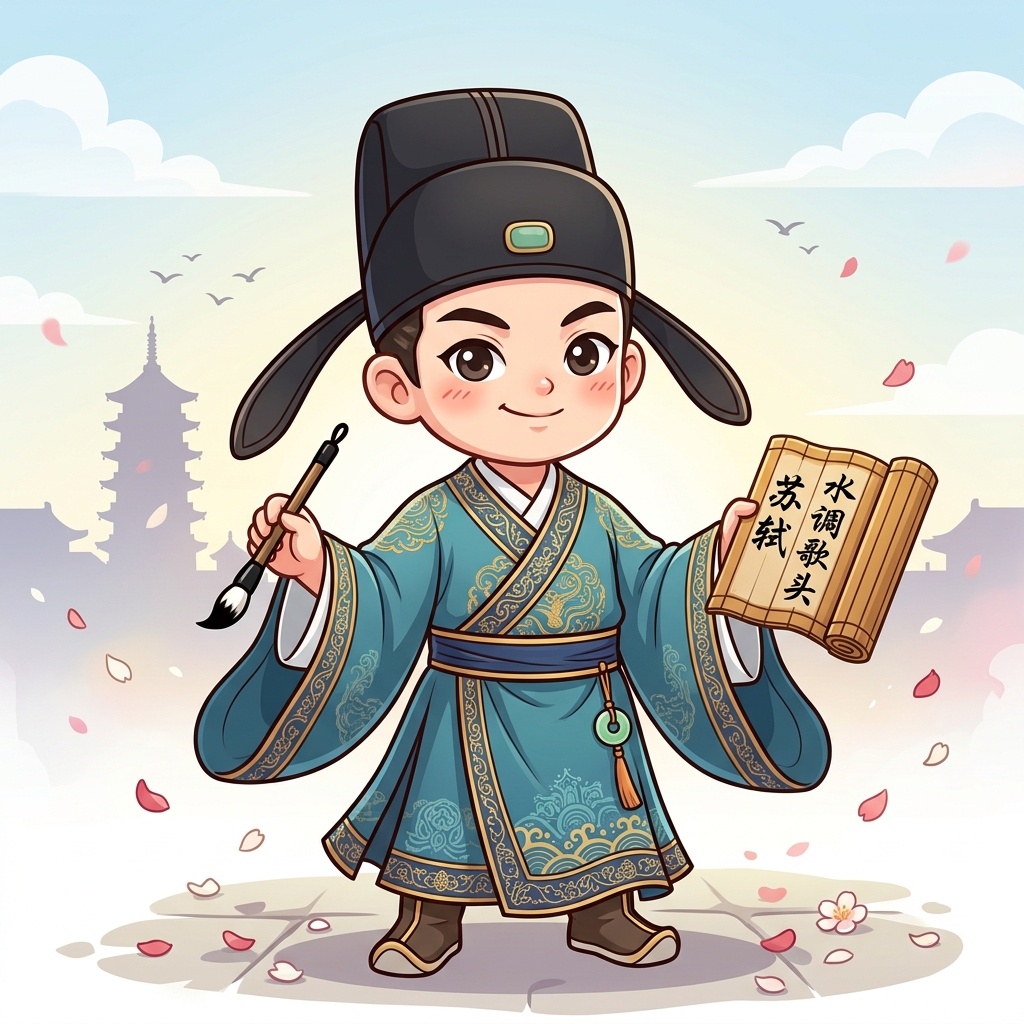
Su Shi (Dongpo)
Northern Song Dynasty (1037-1101)Age 19 · Meishan, Sichuan“Exiled across the empire, he turned every hardship into poetry, cuisine, and unconquerable joy.”
The Complete Life Journey & Biography of Su Shi (Su Dongpo) (苏轼 (东坡))
Chronological travel & exile routes mapped to modern Chinese cities across Northern Song Dynasty (1037-1101) China — featuring bilingual scholar audio, classical poetry recitations, and historical cross-paths.
Kaifeng (Imperial Exam Triumph), Henan (河南开封 (嘉祐及第))
Age 211057 CEModern-day analog: Imperial Capital Kaifeng (The 11th-century New York with 1M+ citizens)
Stunning the Imperial Capital at Age 21
In 1057, at age twenty-one, Su Shi stunned the capital with his brilliant imperial exam essay. Chief examiner Ouyang Xiu declared that future generations would belong to Su Shi. Almost overnight, he became the brightest rising star of the Song Dynasty.
“To stand head and shoulders above all peers.”
出人头地(Chū rén tóu dì)Meishan (Filial Mourning Period), Sichuan (四川眉山 (丁母忧守丧))
Age 211057 CEModern-day analog: Foothills of Mt. Emei, Sichuan (Panda & Culinary Heartland)
Three Years of Mourning: The Moral Legacy of Mother Cheng
Returning to Meishan, Su Shi observed twenty-seven months of filial mourning for his mother. In quiet seclusion, he read history and reflected on virtue. He held dear his mother's teaching that moral integrity surpasses life itself, establishing the unbending ethical pillar of his lifetime.
“When my father was away, my mother took upon herself the noble family burden, raising us with rigorous virtue and moral courage.”
昔吾先君之殁也,太夫人受其遗诫,率诸孤以居……(Xī wú xiānjūn zhī mò yě, tài fūrén shòu qí yíjiè, shuài zhū gū yǐ jū...)Three Gorges, Yangtze River (长江三峡 (奉节夔门至夷陵))
Age 231059 CEModern-day analog: Dramatic Yangtze River Gorges from Qutang Gorge to Yiling, Hubei/Chongqing
The Epic Yangtze River Voyage: Birth of 'The Southbound Collection'
Navigating the roaring Yangtze through Qutang, Wu, and Xiling Gorges, Su Shi and his brother marveled at nature's sublime majesty, composing over a hundred verses collected as 'The Southbound Collection'. The monumental canyon landscape forged his boundless, magnificent poetic style.
“The craggy peaks recede as the raging waters calm; the river widens vastly with rolling, surging waves.”
山平水怒稍平帖,江阔波翻远荡潏。(Shān píng shuǐ nù shāo píngtiē, jiāng kuò bō fān yuǎn dàngyù.)Kaifeng (Imperial Decree Exam), Henan (河南开封 (汴京·制科及第))
Age 251061 CEModern-day analog: Prosperous Northern Song capital, modern Kaifeng, Henan
Triumph in the Supreme Imperial Decree Exam
At the Kaifeng imperial court, Emperor Renzong held the elite Imperial Decree Exam. Su Shi's twenty-five brilliant statecraft essays placed him in the supreme third class—achieved by only four scholars in Song history. Emperor Renzong rejoiced: 'Today I have gained two future prime ministers for my descendants!'
“The greatest peril under heaven is when people follow the status quo without understanding why.”
天下之患,莫大于不知其然而然。(Tiānxià zhī huàn, mò dàyú bùzhī qí rán ér rán.)Fengxiang, Shaanxi (陕西凤翔)
Age 251061 CEModern-day analog: Historic Tang/Song administrative bastion in western Shaanxi, modern Baoji
First Government Post & The Fleeting Nature of Life
In Fengxiang, Su Shi governed with deep empathy for the local farmers. He constructed East Lake and prayed for rain during a severe drought. When relief rains arrived, he penned the joyful prose 'Pavilion of Joyful Rain' to celebrate with his people.
“To what should we compare our fleeting life? To a wild swan touching down upon the snowy mud, leaving a few casual tracks before flying on.”
人生到处知何似,应似飞鸿踏雪泥。(Rénshēng dàochù zhī hésì, yīng sì fēihóng tà xuěnī.)Hangzhou (First Term), Zhejiang (浙江杭州 (一任通判))
Age 351071 CEModern-day analog: Hangzhou West Lake (China's poetic paradise and romantic freshwater lake)
Falling in Love with West Lake in Rain and Sunshine
In 1071, Su Shi arrived in Hangzhou. Charmed by West Lake's shifting mists, he composed the immortal verse: 'The shimmer of water delights under the sun; the misty mountains enchant in the rain.' He governed with grace and immortalized the city in verse.
“If West Lake were compared to Lady Xishi, light or rich makeup would always grace her peerless beauty.”
欲把西湖比西子,淡妆浓抹总相宜。(Yù bǎ Xīhú bǐ Xīzǐ, dànzhuāng nóngmǒ zǒng xiāngyí.)Mizhou, Shandong (山东密州 (知州))
Age 381074 CEModern-day analog: Near modern Qingdao (Shandong breezy coastal frontier)
The Mid-Autumn Moon and a Brother's Longing
In Mizhou, Su Shi fought locust plagues and founded shelters for abandoned infants. On the Mid-Autumn Night of 1076, gazing at the luminous moon, he wrote China's most celebrated moon poem: 'May we all be blessed with longevity, though miles apart, sharing the moon's beauty.'
“May we all be blessed with longevity, though miles apart, we share the beauty of the graceful moon.”
但愿人长久,千里共婵娟。(Dàn yuàn rén chángjiǔ, qiānlǐ gòng chánjuān.)Xuzhou, Jiangsu (江苏徐州)
Age 411077 CEModern-day analog: Martial crossroads of four provinces, modern Xuzhou, Jiangsu
The Hero Mayor Who Defeated the Yellow River Flood
When the Yellow River burst its banks, floodwaters besieged Xuzhou for over seventy days. Su Shi lived atop the city walls alongside soldiers and citizens, successfully fortifying dykes against collapse and saving tens of thousands of lives.
“The bright moon like frost, a fine breeze like water—boundless clear scenery.”
明月如霜,好风如水,清景无限。(Míngyuè rú shuāng, hǎo fēng rú shuǐ, qīngjǐng wúxiàn.)Huzhou & Imperial Prison, Kaifeng (浙江湖州与开封御史台狱)
Age 421079 CEModern-day analog: Imperial Capital Dungeon (China's earliest trial of poetic satire)
Arrested for Poetry: About 130 Days in Death Row
In 1079, political adversaries seized on Su Shi's satirical poems and arrested him in Huzhou. Imprisoned for 130 days on death row at the imperial censorate, he faced torture in the darkest crisis of his life.
“May we remain brothers through every lifetime, renewing this unfinished bond in ages to come.”
与君世世为兄弟,更结来生未了因。(Yǔ jūn shìshì wéi xiōngdì, gèng jié láishēng wèiliǎo yīn.)In-Depth Inquiries at this Stop:Huangzhou, Hubei (Dongpo Rebirth) (湖北黄州 (东坡诞生))
Age 441080 CEModern-day analog: Near modern Wuhan on the Yangtze River (Birthplace of Dongpo Pork)
From Imperial Death Row to Farming and Inventing Dongpo Pork
In Huangzhou, Su Shi took up farming on the Eastern Slope, styling himself 'Dongpo'. He invented Dongpo Pork and composed his timeless masterpiece 'Ode to the Red Cliff'. Through adversity, he achieved ultimate philosophical and artistic transcendence.
“Straw sandals and a bamboo cane beat any horse; who cares? In a woven cloak of mist and rain, I let life unfold at its own pace.”
竹杖芒鞋轻胜马,谁怕?一蓑烟雨任平生。(Zhúzhàng mángxié qīng shèng mǎ, shuí pà? Yī suō yānyǔ rèn píngshēng.)In-Depth Inquiries at this Stop:Mount Lu & Changzhou Transit (江西庐山途次 · 常州乞居)
Age 471084 CEModern-day analog: Prosperous water town of Jiangnan, modern Changzhou, Jiangsu
Seeing Mount Lu's True Face — and Begging for a Plot of Land
En route he climbed Mount Lu and inscribed: 'I cannot see Mount Lu's true face, for I am inside the mountain.' After reconciling with Wang Anshi near Jinling, ruinous costs and a child's death drove him to beg for farmland in Changzhou — a midlife plea, distinct from his final death there in 1101.
“I cannot recognize the true face of Mount Lu, simply because I am standing inside the mountain.”
不识庐山真面目,只缘身在此山中。(Bù shí Lúshān zhēn miànmù, zhǐ yuán shēn zài cǐ shān zhōng.)Kaifeng (Grand Academician), Henan (河南开封 (官拜翰林学士))
Age 491085 CEModern-day analog: Imperial capital of Northern Song, modern Kaifeng, Henan
Summoned Back to the Top of the Imperial Court
Back in Kaifeng, Su Shi rose to Hanlin Academician within seventeen months. When conservatives demanded total repeal of the New Policies, he argued that laws succeed when they build on what came before and that gradual change spares the people alarm — and was attacked by both factions for his independence.
“When laws build on what came before, affairs succeed easily; when change is gradual, the people are not alarmed.”
法相因则事易成,事有渐则民不惊。(Fǎ xiāng yīn zé shì yì chéng, shì yǒu jiàn zé mín bù jīng.)Hangzhou (Second Term - Su Causeway) (浙江杭州 (修筑苏堤))
Age 531089 CEModern-day analog: Hangzhou West Lake (Where he dredged the lake & built Su Causeway)
Dredging West Lake and Building the Immortal Su Causeway
Serving as Hangzhou governor, Su Shi mobilized 200,000 workers to dredge West Lake. Using dredged silt he built the iconic Su Causeway, easing floods and droughts while leaving an eternal hydraulic and cultural monument.
“Returning, I get drunk once more in West Lake rain—fifteen years without seeing those leaping pearl-drops.”
还来一醉西湖雨,不见跳珠十五回。(Huán lái yī zuì Xīhú yǔ, bù jiàn tiàozhū shíwǔ huí.)Huizhou, Guangdong (Lingnan Exile) (广东惠州 (远贬岭南))
Age 581094 CEModern-day analog: Subtropical Guangdong frontier (Near modern Shenzhen / Guangzhou)
Banished Beyond the Mountains: 'Eating 300 Lychees a Day!'
In subtropical Huizhou, Su Shi famously relished local lychees: 'Eat three hundred lychees a day, and I wouldn't mind being a Lingnan native forever.' He funded bridges and irrigation wheels, blessing locals with gentle kindness.
“Eating three hundred sweet lychees a day, I would gladly remain a native of Lingnan forever.”
日啖荔枝三百颗,不辞长作岭南人。(Rì dàn lìzhī sānbǎi kē, bù cí cháng zuò Lǐngnán rén.)Danzhou, Hainan Island (The Edge of the World) (海南儋州 (天涯海角/烤生蚝))
Age 611097 CEModern-day analog: Tropical Hainan Island (The outer edge of the ancient world)
Banished to an Island: Cultural Pioneer & Grilled Oysters
In Hainan Danzhou, lacking medicine and books, Su Shi founded an academy and taught the local populace. He produced Hainan Island's very first imperial graduate, bringing intellectual light to the edge of the sea.
“Though I faced nine deaths in the southern wilderness, I harbor zero regrets—this wondrous journey stands supreme in my whole lifetime.”
九死南荒吾不恨,兹游奇绝冠平生。(Jiǔsǐ nánhuāng wú bù hèn, zī yóu qíjué guān píngshēng.)Changzhou, Jiangsu (The Peaceful Sunset) (江苏常州 (巨匠谢幕))
Age 641101 CEModern-day analog: Prosperous water town of Jiangnan, modern Changzhou, Jiangsu
'My Life's Greatest Feats? Huangzhou, Huizhou, Danzhou!'
In 1101, Su Shi passed away peacefully in Changzhou at age 64. Reflecting on his tumultuous life, he famously summarized: 'Ask my life accomplishments: Huangzhou, Huizhou, and Danzhou.' His wisdom and optimism endure forever across civilizations.
“If you ask for my life's greatest achievements: Huangzhou, Huizhou, and Danzhou.”
问汝平生功业,黄州惠州儋州。(Wèn rǔ píngshēng gōngyè, Huángzhōu Huìzhōu Dānzhōu.)
Literati Knowledge Vault · 先贤知识宝库
In-Depth Essays & Philosophical Inquiries on Su Shi (Dongpo)
Deep dives, myth-busting, and modern psychological lessons from Su Shi (Dongpo)'s life and philosophy.
Who Was Su Shi? The Exiled Sage Su Dongpo
Trace the 66-year life of Su Shi (Su Dongpo) across 11 cities—from Sichuan prodigy and death row to gastronomic rebirth in Huangzhou and Hainan exile.
Crow Terrace Poetry Trial: Why Su Shi Was Arrested
In 1079 Su Shi spent 103 days on death row for metaphors in his poems. The Crow Terrace Poetry Trial became China's most famous literary prosecution.
How Dongpo Pork Was Born: Su Shi's Recipe for Resilience
How was Dongpo pork invented? The true story of exiled poet Su Shi, slow-braised pork belly, and inner resilience in ancient Huangzhou.
Historical Nexus & Intersecting Journeys
与 苏轼 (东坡) (Su Shi (Dongpo)) 时空交汇、思想交锋或命运相连的华夏先贤网络
Historical Nexus & Intersecting Journeys
与 苏轼 (东坡) 时空交汇、思想交锋或命运相连的华夏先贤网络
Su Zhe
苏辙
Passed imperial exams together; Su Zhe risked life and rank to plead for Su Shi in the Crow Terrace poetry trial.
手足同科及第,一生仕途起伏相互营救,'但愿人长久,千里共婵娟'即为怀子由而作。
Wang Anshi
王安石
Political rivals over the New Policies who reunited warmly in late life at Jinling, sharing poetry and philosophy.
早年因王安石变法政见迥异,晚年王安石退居江宁,苏轼金陵来访,一笑泯恩仇,共论诗道佛理。
Ouyang Xiu
欧阳修
The grand master who discovered 20-year-old Su Shi in 1057 and famously declared he would yield the literary stage to him.
嘉祐二年主考官欧阳修读苏轼试卷击节叹赏,称'吾当避此人出一头地',力倡古文革新。
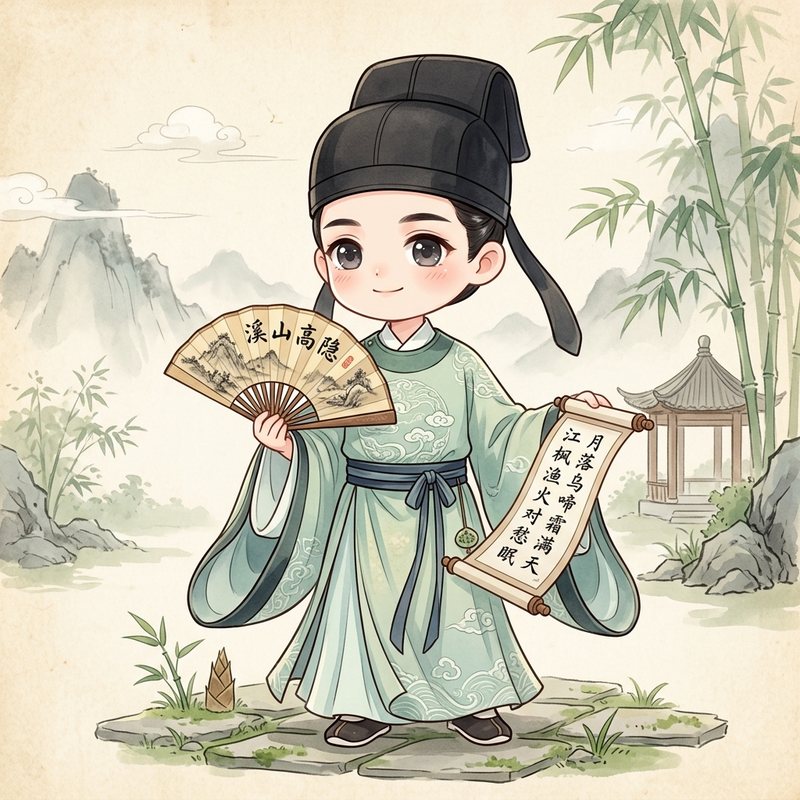
Huang Tingjian
黄庭坚
Leading member of the Four Scholars of Su Gate; founded the Jiangxi poetry school and stood as Su's artistic equal.
苏门四学士领军者,亦师亦友,黄庭坚开江西诗派,二人书法并列宋四家。
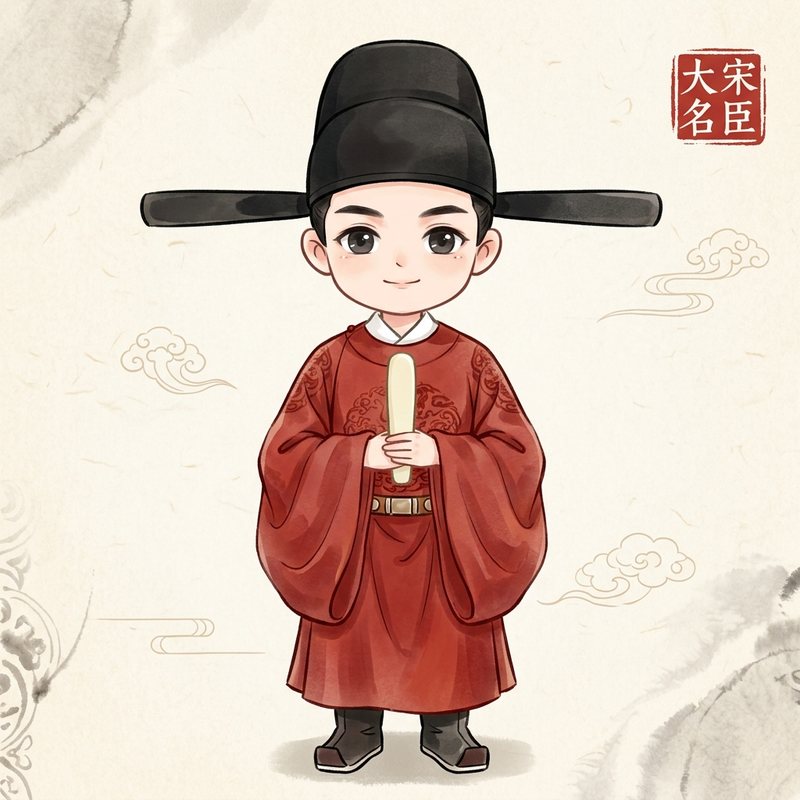
Sima Guang
司马光
Stood together against the sudden excesses of New Policies, maintaining principled candor and deep mutual respect.
反对激进变法同列元祐党籍,苏轼任翰林学士时亦直言进谏,求真务实,君子之交。
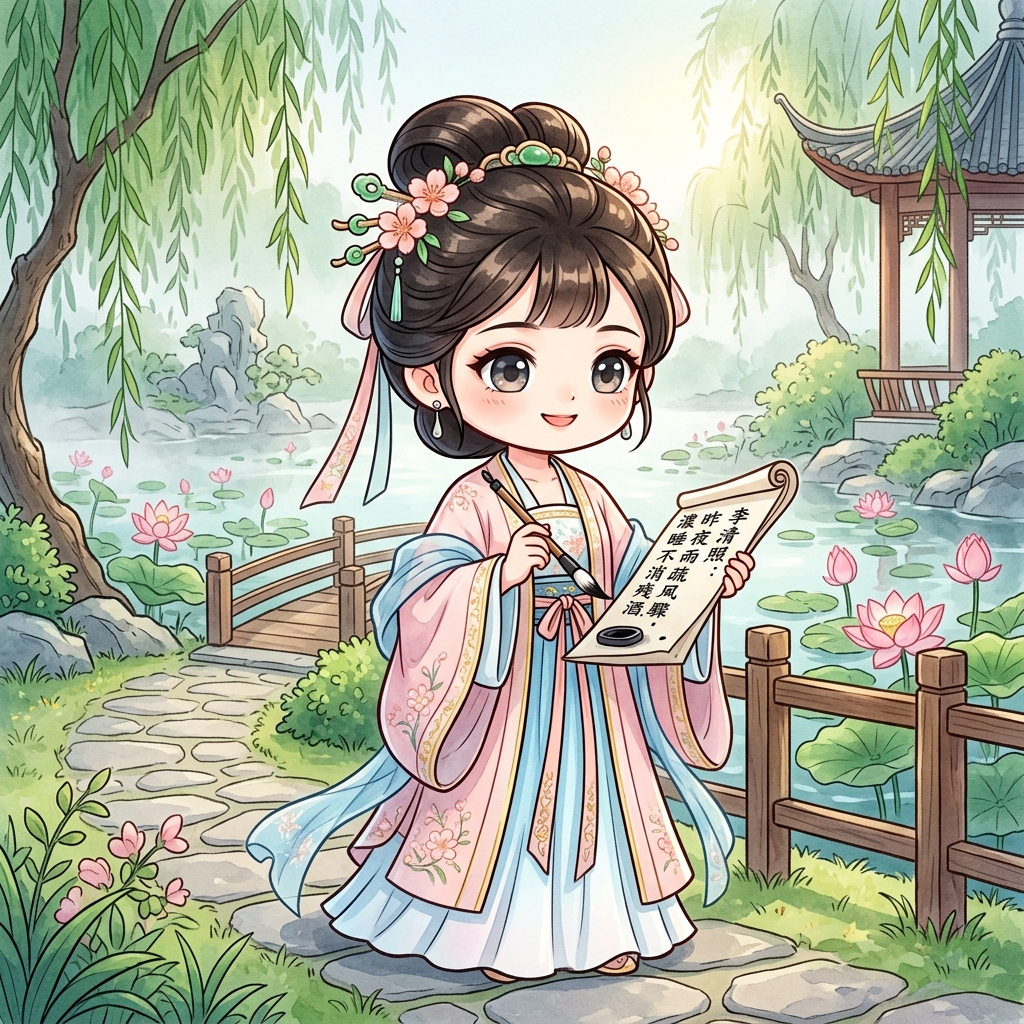
Li Qingzhao
李清照
Raised in the intellectual lineage of Su Gate; inherited Su's fearless boldness in her later exile verses.
其父李格非为苏门后学,李清照幼承苏门家学遗风,晚年词风雄浑苍茫深受其开拓之功启发。

Liu Yong
柳永

Mi Fu
米芾

Shen Kuo
沈括
Contemporaries representing the twin heights of Song genius: Shen in empirical science, Su in humanities.
同为北宋百科全书式奇才,沈括偏自然格致与经世,苏轼偏人文哲学与诗画。
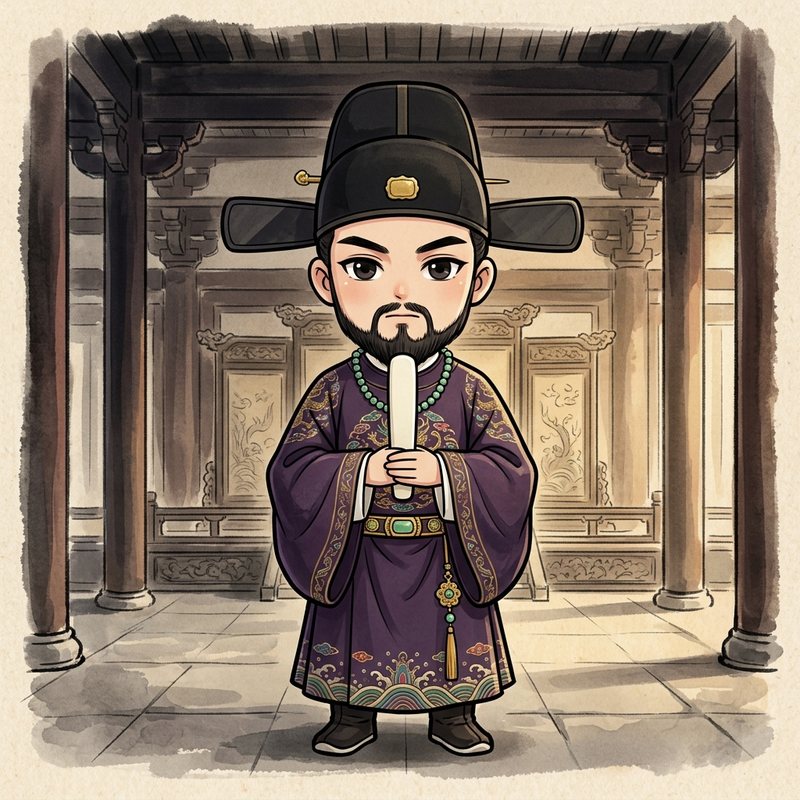
Yan Zhenqing
颜真卿
Su Shi praised him as the supreme pinnacle of calligraphy alongside Du Fu in verse and Han Yu in classical prose.
苏轼一生极推崇颜真卿祭侄文稿与楷书风骨,赞曰:'诗至于杜子美,文至于韩退之,书至于颜鲁公,天下之变尽矣!'
Key Historical Inquiries & Context
关于 苏轼 (东坡) (Su Shi (Dongpo)) 的核心史实考证、公案辨析与中英直答
Why was Su Shi exiled?
The Crow Terrace Poetry Case (1079) charged him with slandering the court in verse. After 103 days on death row, he was stripped of rank and sent to Huangzhou in 1080, then later to Huizhou and Hainan.
What is the Crow Terrace Poetry Case?
A 1079 literary inquisition in the Song censorate (Yushitai, nicknamed Crow Terrace). Prosecutors reread Su Shi's poems as coded attacks. It is the most famous poetry trial in Chinese history.
Where were Su Shi's three places of exile?
Huangzhou (modern Huanggang, Hubei), Huizhou (Guangdong), and Danzhou on Hainan Island. He later named those three as his life's real work. They are stations on this map.