Who Was Su Zhe? Su Shi's Loyal Brother & Song Statesman
One of the Eight Great Prose Masters of Tang and Song, Vice Prime Minister, and devoted brother who risked execution to save Su Shi
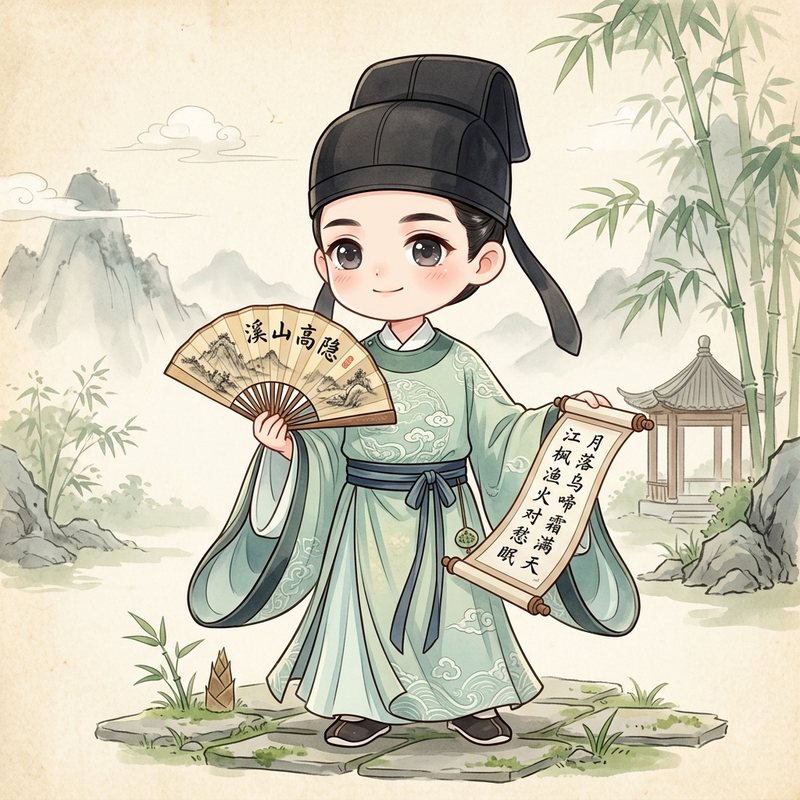
Su Zhe (苏辙 · Sū Zhé)
字子由 · 号颍滨遗老/栾城先生
The Serene Statesman and Prose Master of Song Dynasty: one of the Eight Great Prose Masters and Vice Prime Minister, famed for vast tranquil prose and self-sacrificing fraternal devotion.
唐宋八大家之一,位极门下侍郎;以沉潜深邃之文风与至情至义的手足情谊名垂青史,乌台救兄、黄州快哉,一代文宗汪洋澹泊。
- Master of Vast Serenity: Championed the theory that literary excellence reflects cultivated inner spirit (养气), crafting essays famed for crystalline clarity, restraint, and philosophical depth.
- Immortal Sibling Bond: Risked death and sacrifice during the 1079 Crow Terrace Poetry Case, petitioning Emperor Shenzong to forfeit all his own ranks to save his brother Su Shi.
- Pragmatic Statesman: Rose to Vice Prime Minister (Menxia Shilang) during the Yuanyou era, striving to reconcile bitter partisan factions with moderation, fiscal realism, and institutional integrity.
- Philosopher of Resilience: Weathered years of remote subtropical banishment in Guangdong and Leizhou by penning monumental commentaries on the Spring and Autumn Annals and the Daodejing.
Phase 1: Roots in Mount Emei & The Prodigious Examination Triumph (1039–1069)
Su Zhe was born in 1039 CE in Meishan, modern Sichuan Province, nestled beneath the misty peaks of Mount Emei. In the Su household at Shahu Lane, scholarly excellence was a way of life. Under the rigorous tutelage of their father Su Xun and mother Madame Cheng, young Su Zhe and his older brother Su Shi devoured Confucian scriptures and historical annals. In 1057 CE, the eighteen-year-old Su Zhe journeyed with his brother to Kaifeng, where both passed the elite Jinshi imperial examination on their first attempt, stunning chief examiner Ouyang Xiu.
宋仁宗宝元二年(1039年),苏辙生于四川眉山。在纱縠行的书香门第中,父亲苏洵以古文策论立家,母亲程氏亲授《后汉书》忠义大节。嘉祐二年(1057年),年仅十八岁的苏辙与兄苏轼同赴汴京应举,同榜及第进士,主考官欧阳修惊叹于兄弟二人的绝世文采,京师为之震动。
Four years later in 1061, the brothers sat for the extraordinary Decree Examination for Direct Remonstrance. Displaying astonishing moral courage, young Su Zhe penned a blistering palace essay criticizing court expenditures and imperial complacency. While orthodox officials hesitated over his audacity, Emperor Renzong himself praised the brothers, remarking that he had secured two future chancellors for his descendants. Su Zhe was appointed military judge in Shangzhou and subsequently composed his celebrated strategic essay 'On the Six States' (六国论).
嘉祐六年(1061年),兄弟二人同举直言极谏科。苏辙在策论中切直陈言,痛陈宫廷奢靡与天下积弊,其刚正风骨深得仁宗皇帝嘉许,称‘为子孙得两宰相’。随后出任商州军事推官,并撰写策论名篇《六国论》,名动公卿。
以为文者气之所形,然文不可以学而能,气可以养而致。
Yǐ wéi wén zhě qì zhī suǒ xíng, rán wén bù kě yǐ xué ér néng, qì kě yǐ yǎng ér zhì.
I believe that literature is the tangible manifestation of vital spirit; yet one cannot attain literary excellence through imitation alone, while vital spirit can indeed be cultivated through noble living.
Context · Written at nineteen to Grand Commandant Han Qi in Kaifeng, this seminal essay laid the cornerstone of Song Dynasty literary theory, uniting personal moral character with creative genius.
Phase 2: Principled Dissent & Provincial Service in Chenzhou and Qizhou (1070–1076)
In 1069 CE, Chancellor Wang Anshi launched the sweeping New Policies to overhaul Song fiscal and military structures. Appointed to the Finance Commission, Su Zhe closely scrutinized the Green Sprouts lending program and warned that compulsory state credit would overburden rural farming families with interest debts. When his respectful objections were sidelined, Su Zhe chose voluntary provincial transfer over blind compliance, accepting the professorship of the imperial academy in Chenzhou (modern Huaiyang, Henan).
熙宁二年(1069年),王安石推行新法。苏辙任制置三司条例司检详文字,深知青苗法取息扰民之弊,上书陈述利害。政见不合之下,苏辙主动乞求外任,出任陈州学官教授。他不随波逐流,在陈州潜心修身治经。
In Chenzhou, Su Zhe formed a lifelong intellectual bond with Governor Zhang Fangping and devoted his days to annotating the Classic of Poetry. In 1074, he was transferred to Qizhou (modern Jinan, Shandong) as Magistrate Secretary. There he distinguished himself through pragmatic judicial administration, overturning wrongful convictions while enjoying the tranquil gushing freshwater springs celebrated in his lyrical travel essays.
在陈州,苏辙深得知州张方平知遇之恩,闭门著《诗集传》。熙宁七年(1074年),调任齐州掌书记,辅佐郡守理清讼狱,造福一方黎庶。公务之余,他流连于齐鲁泉水胜景,写下了清丽深沉的《齐州草堂记》等传世美文。
闭门深坐心自宁,读书万卷百念轻。
Bì mén shēn zuò xīn zì níng, dú shū wàn juàn bǎi niàn qīng.
Sitting deep behind closed doors my heart finds tranquil peace; having absorbed ten thousand scrolls, all mundane cares dissolve into nothingness.
Context · Composed during his academic tenure in Chenzhou, reflecting Su Zhe's conscious choice of intellectual solitude and philosophical grounding amid political storms.
Phase 3: The Supreme Sacrifice & Banishment to Junzhou (1077–1084)
Transferred to the Southern Capital of Nanjing (modern Shangqiu, Henan) as judge in 1077, Su Zhe soon faced the most harrowing crisis of his life. In the autumn of 1079, imperial censors arrested Su Shi in the infamous Crow Terrace Poetry Case, accusing him of treasonous satire in his verses. While courtiers distanced themselves from the prisoner, Su Zhe drafted an extraordinary petition to Emperor Shenzong, offering to surrender all his official degrees, privileges, and career titles to ransom his elder brother from execution.
熙宁十年(1077年),苏辙调任南京签书判官。元丰二年(1079年),北宋最震撼的文字狱‘乌台诗案’爆发,苏轼被御史罗织罪名逮捕下狱,性命悬于一线。危难关头,苏辙挺身而出,上呈《为兄轼下狱上书》,愿削尽自身一切官爵为兄赎罪,手足深情令神宗为之动容。
Su Zhe's selfless memorial deeply moved the court, and Su Shi was spared execution, demoted to Huangzhou. Su Zhe was himself demoted to the humble post of wine and salt tax collector in Junzhou (modern Gao'an, Jiangxi). Stripped of administrative influence, Su Zhe built a small study called the Eastern Veranda (东轩). In this remote haven he found unshakeable equilibrium, penning philosophical masterpieces like the 'Record of the Kuaizai Pavilion' (黄州快哉亭记) for his exiled friend Zhang Huaisu.
苏轼终获赦免死罪贬谪黄州,苏辙亦受株连被贬为监筠州盐酒税。在江西筠州的五年艰辛岁月里,苏辙筑‘东轩’读书安贫,写下《东轩记》,更应黄州好友之请写就千古名篇《黄州快哉亭记》,提出了‘使其中坦然,不以物伤性’的旷达人生观。
士生于世,使其中不自得,将何往而非病?使其中坦然,不以物伤性,将何适而非快?
Shì shēng yú shì, shǐ qí zhōng bù zì dé, jiāng hé wǎng ér fēi bìng? Shǐ qí zhōng tǎn rán, bù yǐ wù shāng xìng, jiāng hé shì ér fēi kuài?
If a scholar cannot find contentment within himself, wherever he journeys will be an illness; but if his heart is tranquil and free, never letting external circumstance harm his innate nature, where can he possibly wander without discovering pure joy?
Context · From Su Zhe's immortal essay 'Record of the Kuaizai Pavilion in Huangzhou', celebrating internal equanimity against external political misfortune.
Phase 4: Yuanyou Restoration & Reaching Vice Prime Minister (1085–1093)
In 1085 CE, Emperor Shenzong passed away, and the Empress Dowager Xuanren took power as regent for the young Emperor Zhezong. Initiating the Yuanyou political restoration, the court summoned conservative scholars back to Kaifeng. After a brief tenure as magistrate of Jixi, Su Zhe returned triumphantly to the imperial capital. Between 1086 and 1093, he rose with dizzying speed: Right Policy Remonstrator, Hanlin Academician, Minister of Revenue, and ultimately Vice Prime Minister (Menxia Shilang) in 1092.
元丰八年(1085年),神宗驾崩,宣仁太后垂帘,元祐更化开启。苏辙量移绩溪县令后被火速召回京师。元祐年间,他累迁右司谏、中书舍人、户部侍郎,元祐七年(1092年)官拜门下侍郎(副宰相),登上了政治生涯的巅峰。
At the pinnacle of imperial power, Su Zhe proved to be a voice of rare sobriety. Unlike vindictive partisans who sought to erase every trace of Wang Anshi's reforms, Su Zhe urged pragmatic compromise, recommending the preservation of practical elements like the service exemption system. Su Shi famously evaluated his brother's prose and character during these years: 'Ziyou's writing actually surpasses mine... vast, tranquil, with echoing overtones, and an innate moral nobility that can never be obscured.'
位居宰执要津,苏辙始终保持着冷静理性的治国眼界。他反对在新旧党争中走极端,力主保留新法中便民利国的措施。兄长苏轼曾深情赞扬道:‘子由之文实胜仆……汪洋澹泊,有一唱三叹之声,而其秀杰之气终不可没。’
天下之患,莫大于士大夫好争名而无其实。
Tiān xià zhī huàn, mò dà yú shì dà fū hào zhēng míng ér wú qí shí.
Among all the grave hazards of the world, none is more perilous than scholar-officials clamoring for empty prestige while neglecting genuine substance.
Context · From Su Zhe's ministerial memorials to the Song court, critiquing virulent factional conflict and urging grounded administrative service.
Phase 5: Southern Exiles in Subtropical Jungles & Monumental Scholarship (1094–1100)
The calm shattered in 1094 CE when Emperor Zhezong assumed personal rule. Hardline reformers led by Zhang Dun seized control and launched sweeping purges against the Yuanyou ministers. Su Zhe was banished south in rapid succession—from Yuanzhou and Huazhou to remote Longchuan (Guangdong) and eventually the Leizhou Peninsula on the edge of the South China Sea. Facing malaria, poverty, and isolation, he remained unbowed, transforming his thatched hut into a sanctuary of scholarship.
绍圣元年(1094年),哲宗亲政,新党得势大肆报复元祐之臣。苏辙首当其冲,连贬袁州、循州,随后更远谪极南的雷州海康。面对瘴气横行、风雨飘摇的蛮荒困厄,苏辙泰然处之,把流放荒岛的岁月化为著述经史的精神熔炉。
In the summer of 1097, Su Zhe crossed paths with Su Shi at Haikang on the Leizhou coast, just as his brother was being ferried into terrifying exile across the straits to Hainan Island. It was the brothers' final farewell. Alone in Leizhou, Su Zhe completed his monumental historical work, the Ancient History (古史) in sixty volumes, along with rigorous commentaries on the Spring and Autumn Annals and Laozi's Daodejing, finding profound metaphysical peace in ancient classical thought.
绍圣四年(1097年),苏辙与贬往海南儋州的兄长苏轼在雷州海康短暂相逢,这也是两兄弟此生最后的诀别。在南荒岁月中,苏辙杜门谢客,著成六十卷《古史》,并作《春秋集解》《老子解》,以浩瀚学术铸就了不朽的精神丰碑。
并鬼门而东骛,浮瘴海以南迁。
Bìng Guǐ mén ér dōng wù, fú zhàng hǎi yǐ nán qiān.
Skirting past the perilous Ghost Gate Pass eastward, and floating across the miasmic seas to our southern banishment.
Context · From Su Zhe's 'Memorial of Thanks from Leizhou', capturing the physical perils of southern exile alongside his unshakeable composure.
Phase 6: The Old Man of the Ying River & Eternal Sunset (1101–1112)
Following Emperor Huizong's accession in 1100, an imperial amnesty allowed the exiled brothers to travel northward. Heartbreakingly, Su Shi succumbed to illness in Changzhou in 1101. Grief-stricken, Su Zhe retired to Yingchang (modern Xuchang, Henan) along the Ying River. In 1102, his name was carved onto the infamous Yuanyou Partisan Stele, permanently barring him from public office. He smiled, embraced obscurity, and styled himself 'The Old Man of the Ying River' (颍滨遗老).
宋徽宗即位大赦,苏辙北归定居颍昌(今河南许昌)。不幸的是,兄长苏轼于1101年病逝于常州,苏辙痛失手足至亲。崇宁元年(1102年),蔡京刻‘元祐党籍碑’,苏辙被剥夺祠禄。他坦然自号‘颍滨遗老’,彻底杜门谢客,沉潜于最后的书斋岁月。
For his final decade, Su Zhe lived in utter serenity. He built the Moon Waiting Veranda (待月轩), refused political visitors, and methodically arranged his lifetime writings into the Luancheng Collection (栾城集), composing the autobiographical Chronicle of the Old Man of Yingbin. On October 25, 1112 CE, Su Zhe passed away peacefully at age seventy-four. Posthumously honored as Grand Academician and granted the谥号 Wenxian (文宪), he remains revered as the purest embodiment of classical integrity and fraternal grace.
晚年十年,苏辙在颍昌筑‘待月轩’,终日默坐读书,整理旧作编成《栾城集》,撰写《颍滨遗老传》。政和二年(1112年)十月三日,苏辙安详仙逝,享年七十四岁。朝廷追赠端明殿学士,赐谥‘文定’(后改‘文宪’),其沉潜醇厚的大家风范永曜千秋。
明朝好时节,莫待鬓成丝。
Míng cháo hǎo shí jié, mò dài bìn chéng sī.
Tomorrow brings a joyful season of harvest; let us not wait until our temples are frosted with white silk to embrace life's precious dawn.
Context · From Su Zhe's poem 'Autumn Festival' composed in Yingchang, radiating the peaceful gratitude of a retired master who had outlived the empire's storms.
| Perspective 视角 | Su Zhe (with Su Shi) | Edmond & Jules de Goncourt |
|---|---|---|
| Nature of Brotherhood | Immortal literary brothers of Northern Song China; complementary giants who co-founded the Shu School of thought. | Inseparable 19th-century French literary brothers who wrote novels and their monumental collaborative Journal as a single mind. |
| Stylistic Harmony | Su Shi wrote with untamed brilliance and explosive vitality; Su Zhe composed with crystalline serenity, philosophical depth, and vast reserve. | Edmond and Jules merged their individual sensibilities into a single, seamless 'artistic style' characterized by hyper-sensitive realism. |
| Devotion Under Crisis | Su Zhe offered to surrender his own official career and face execution to ransom Su Shi during the Crow Terrace Poetry Case. | Edmond nursed Jules devotedly until his tragic early death, afterward describing himself as 'a book whose first volume was lost.' |
| Enduring Monument | The Luancheng Collection and Eight Great Masters canon; celebrated across East Asia as the golden standard of fraternal loyalty. | The Prix Goncourt, France's most prestigious literary prize, founded by Edmond's will to honor the creative brotherhood forever. |
Trace Su Zhe's Footsteps on the Interactive Topographic Map
Follow his remarkable trail across 10 imperial stations—from youthful exam triumphs in Kaifeng and self-sacrifice in Nanjing to quiet resilience at the Eastern Veranda in Junzhou.
Launch Interactive Journey MapFrequently Asked Questions (FAQ)
Why did Su Zhe offer his own career to save his brother Su Shi?
In 1079, during the politically motivated Crow Terrace Poetry Case, Su Shi was imprisoned and faced possible execution for alleged treasonous satire. Overwhelmed by fraternal devotion, Su Zhe submitted a famous memorial offering to forfeit all his own official titles and ranks to ransom his elder brother, persuading Emperor Shenzong to commute the death sentence.
What is the literary style of Su Zhe compared to Su Shi?
While Su Shi was flamboyant, versatile, and passionate, Su Zhe's prose was characterized by immense serenity, restraint, and philosophical depth ('汪洋澹泊'). Su Shi himself famously acknowledged that his younger brother's writing was in many ways deeper and more refined, holding a quiet moral power that revealed itself upon repeated reading.
Why is Su Zhe counted among the Eight Great Prose Masters of Tang and Song?
Su Zhe was a towering master of the Classical Prose Movement. His political treatises, historical monographs like the Ancient History, and lyrical essays like the Record of the Kuaizai Pavilion set enduring standards for balanced reasoning, unadorned elegance, and moral resonance, earning him an undisputed place among China's eight greatest prose stylists.
What was Su Zhe's role during the Yuanyou era in the Song court?
During the Yuanyou restoration under Empress Dowager Xuanren (1086–1093), Su Zhe rose to Vice Prime Minister (Menxia Shilang). He served as a voice of fiscal responsibility and moderation, resisting extremist retribution against reformers and arguing that practical state institutions should be preserved for the public good.
What does the famous line 'A tranquil heart finds joy everywhere' mean?
Originating from Su Zhe's 'Record of the Kuaizai Pavilion', the statement '使其中坦然,不以物伤性,将何适而非快' argues that happiness is an internal discipline rather than external circumstance. A mind rooted in integrity and peace cannot be disturbed by demotion or exile, discovering profound joy wherever life leads.
Walk with Su Zhe Across China
随苏辙漫步华夏河山 · 亲历命运逆境与精神涅槃