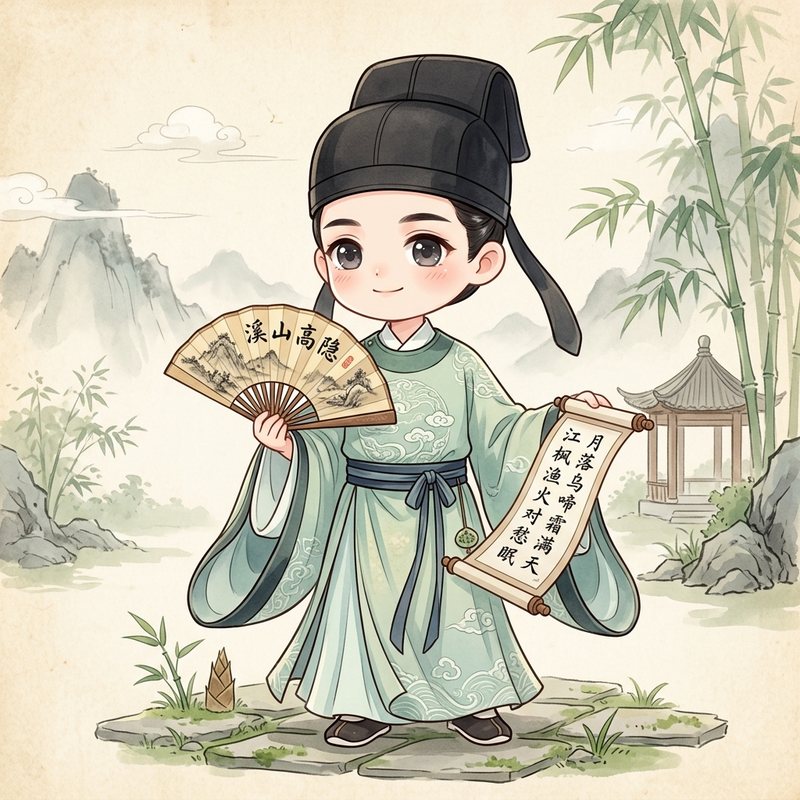
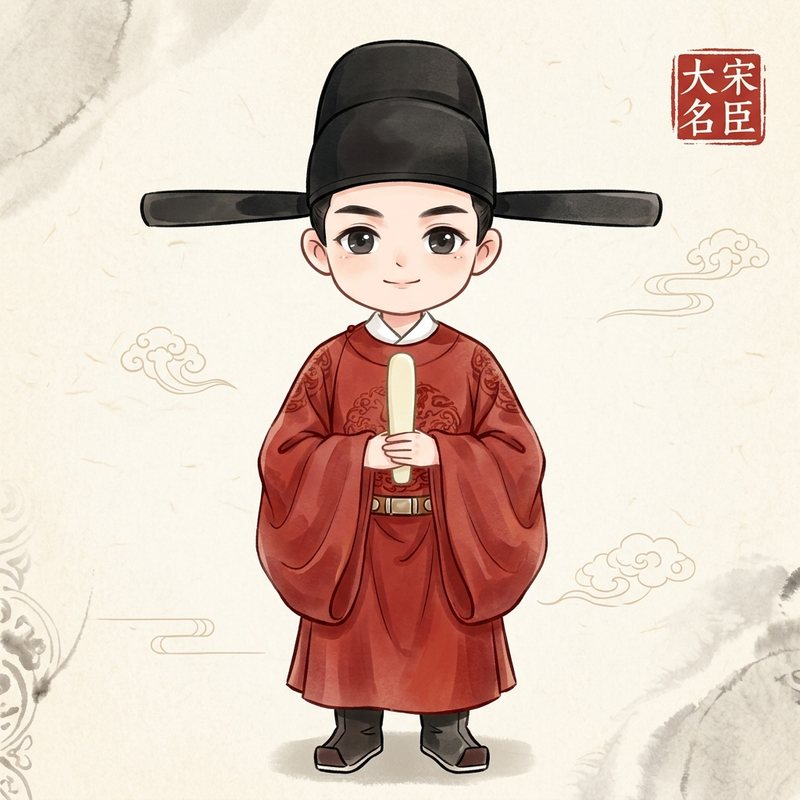
The Serene Statesman & Master of Vast Prose · 1039 – 1112
The Serene Statesman and Prose Master of Song Dynasty: one of the Eight Great Prose Masters and Vice Prime Minister, famed for vast tranquil prose and self-sacrificing fraternal devotion.
Stops10
Traversed~6,072km
Audio Tour~12min
“以为文者气之所形,然文不可以学而能,气可以养而致。”
I believe that literature is the tangible manifestation of vital spirit; yet literary power cannot be mastered through imitation alone, while vital spirit can be cultivated through deliberate moral elevation.
The Serene Statesman & Master of Vast ProseSong Dynasty(1039—1112)字子由 · 号颍滨遗老/栾城先生Audio Journey · 10 Stops
The Serene Statesman and Prose Master of Song Dynasty: one of the Eight Great Prose Masters who balanced high statecraft with profound equanimity.
The Inseparable Literary Brotherhood· The Goncourt Brothers (Edmond & Jules de Goncourt)The Contemplative Anchor· Henry JamesThe Classical Hermeneut & Historian· The Brothers Grimm
Unfolding the Historical Landscape…
印
Daily Wisdom & Resilience Oracle
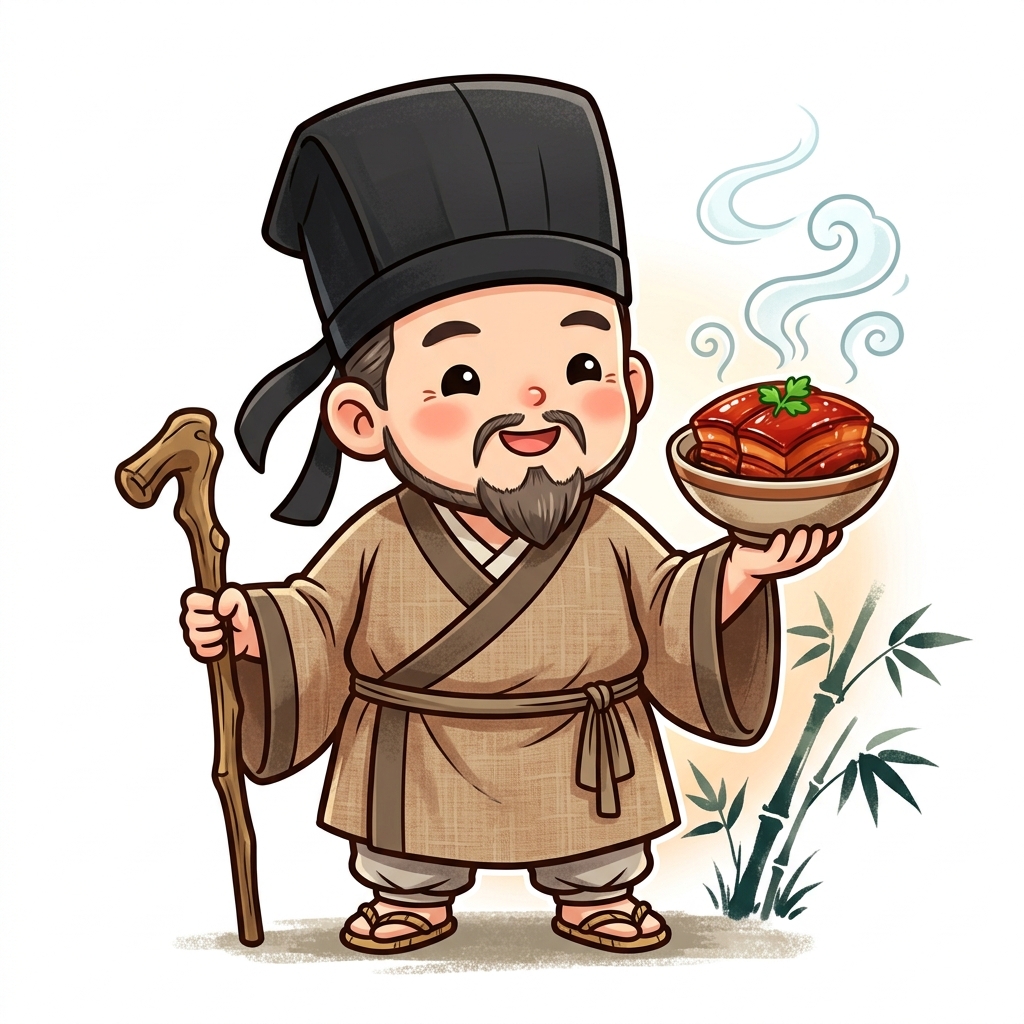
The Resilient Optimist
“竹杖芒鞋轻胜马,谁怕?一蓑烟雨任平生。”
Holding a bamboo cane and wearing straw sandals, I stride faster than a horse. Who is afraid? A straw cloak in the mist and rain — I live my life with equanimity.
💡 In the 3rd year of exile in Huangzhou, caught in a sudden downpour, Su Shi embraced the storm with supreme resilience.
— Su Shi (Dongpo)(The Renaissance Foodie & Optimist)
Historical Footprints & Narration Archive
10 Stations
1
Meishan Early Education
1039 CE · Age 18
Foothills of Mount Emei, Sichuan (Birthplace of the Three Sus)
Born into a literary dynasty, young Su Zhe studied classics day and night alongside his brother Su Shi, cultivating vital spirit.
“以为文者气之所形,然文不可以学而能,气可以养而致。”
Yǐ wéi wén zhě qì zhī suǒ xíng, rán wén bù kě yǐ xué ér néng, qì kě yǐ yǎng ér zhì.
I believe that literature is the tangible manifestation of vital spirit; yet literary power cannot be mastered through imitation alone, while vital spirit can be cultivated through deliberate moral elevation.
Station Narration Script
In 1039 CE, Su Zhe was born in the historic town of Meishan, Sichuan. Under their father's guidance and mother's moral instruction, he and his elder brother Su Shi studied side by side at the family desk. While Su Shi was flamboyant and expressive, young Su Zhe was deeply thoughtful, patient, and serene. Surrounded by emerald mountains, the brothers absorbed thousands of classical scrolls and dedicated their youth to public service.
Departure Transition Script
In 1056, Su Zhe journeyed east alongside his father and brother, heading toward the imperial capital Kaifeng for the imperial examinations.
2
Kaifeng Imperial Examination Triumph
1057 CE · Age 22
Northern Song imperial metropolis where young Su Zhe stunned the court with direct remonstrance, modern Kaifeng, Henan
Passing the Jinshi exam at just nineteen, he stunned the court during palace exams with fearless remonstrance praised by the Emperor.
Whenever I read the chronicles of the Six Warring States, I marvel with dismay that the feudal lords—possessing five times the territory and ten times the soldiers—hurled themselves westward in fury against Qin, yet ended in defeat.
Station Narration Script
Before the imperial examination halls and the palace gates of Kaifeng, young Su Zhe displayed brilliant intellectual prowess that captivated the empire. Following his Jinshi success at nineteen, he offered an uncompromisingly honest critique of imperial rule during the palace decree exams. Rather than taking offense, Emperor Renzong recognized his integrity, dubbing the Su brothers 'future chancellors of peace.' The quiet youth from Sichuan had arrived as a national moral beacon.
Departure Transition Script
In 1069, finding himself in principled disagreement with the New Policies, Su Zhe chose voluntary provincial transfer to become academy professor in Chenzhou.
3
Chenzhou Academy and Classical Hermeneutics
1070 CE · Age 31
Ancient capital of Chen state where Su Zhe taught and studied the classics, modern Huaiyang, Henan
Stepping away from fierce factional battles in the capital, he immersed himself in classical scholarship and poetry in Chenzhou.
Sitting deep behind closed doors my heart finds tranquil peace; having read ten thousand volumes, all mundane cares dissolve into air.
Station Narration Script
Beneath the willow groves of ancient Chenzhou, Su Zhe found a serene scholarly sanctuary far from capital politics. While court factions argued bitterly over economic reforms, Su Zhe chose not to compromise his conscience, lecturing at the local academy and annotating Confucian texts. Governor Zhang Fangping treated him with immense respect, shielding the young scholar so he could deepen his understanding of governance and classical wisdom.
Departure Transition Script
In 1074, Su Zhe was transferred to Qizhou as magistrate secretary, journeying north to the historical lands of Shandong.
4
Qizhou Administrative Excellence
1074 CE · Age 35
Spring capital of Qi-Lu where Su Zhe served as magistrate secretary, modern Jinan, Shandong
Administering local justice in Qizhou, he cleared wrongful convictions and drew inspiration from legendary freshwater springs.
“还朝正三伏,一再趋未央。”
Háin cháo zhèng sān fú, yī zài qū wèi yāng.
Returning to the court in the sweltering heat of midsummer, repeatedly hastening along the palace corridors.
Station Narration Script
Amid the crystal-clear springs of Qizhou, Su Zhe demonstrated practical administrative genius. As magistrate secretary, he worked tirelessly through court archives, clearing numerous wrongful convictions and restoring justice for ordinary families. Whenever duties were settled, he climbed historical pavilions to admire the springs, exchanging heartfelt poetic letters with his brother in nearby Mizhou that enriched Song literature.
Departure Transition Script
In 1077, Su Zhe was transferred to the Southern Capital of Nanjing (Shangqiu), unaware of the catastrophic storm looming on the horizon.
5
Nanjing Judge & Self-Sacrifice for Su Shi
1077 CE · Age 38
Southern capital of Song Dynasty where Su Zhe petitioned to sacrifice his rank for Su Shi, modern Shangqiu, Henan
When the Crow Terrace Poetry Case threatened Su Shi with death, Su Zhe risked his life and offered all his titles to save his brother.
I lament my brother's noble intent and am overwhelmed by fraternal devotion; therefore, I risk death to utter this singular plea. Bereft of parents since youth, my brother and I have only each other to lean upon for life.
Station Narration Script
In the Southern Capital of Nanjing during the autumn of 1079, a political storm shook the empire. When word arrived that Su Shi had been seized by imperial inquisitors, silence fell over the court as officials distanced themselves. Only Su Zhe sat beneath his flickering candle, tears in his eyes, drafting an extraordinary petition. He declared that having lost their parents early, the brothers depended entirely on each other, begging to forfeit every official honor to spare his brother's neck.
Departure Transition Script
With Su Shi spared and banished to Huangzhou, Su Zhe was demoted and exiled south to manage salt and wine taxes in Junzhou.
6
Junzhou Exile & The Eastern Veranda
1080 CE · Age 41
Remote tax collection outpost in Jiangxi where Su Zhe built the Eastern Veranda and wrote Kuaizai Pavilion, modern Gao'an
Exiled to manage salt and liquor taxes in Junzhou, he built the Eastern Veranda and composed the immortal Record of Kuaizai Pavilion.
If a scholar cannot find contentment within himself, wherever he travels will be an illness; but if his heart is serene and undisturbed by external loss, where can he possibly journey without discovering pure joy?
Station Narration Script
Beside the modest, damp official quarters in Junzhou, Su Zhe built a humble study called the Eastern Veranda. Once a prominent official, he was now tasked with calculating taxes on barrels of liquor and sacks of salt, yet his spirit remained completely uncrushed. Within the bamboo-shaded veranda, he gathered his inner vital energy and turned political banishment into spiritual renewal, articulating a timeless philosophy of unshakeable contentment.
Departure Transition Script
In 1085, Emperor Shenzong passed away and an imperial amnesty permitted Su Zhe's transfer to Jixi as magistrate, heralding political revival.
7
Jixi Magistrate & Return to Imperial Favor
1085 CE · Age 46
Mountainous county in Huizhou where Su Zhe governed with compassion before being recalled to court, modern Jixi, Anhui
Serving briefly as county magistrate in mountainous Jixi, he relieved local hardships before an imperial summons returned him to court.
Governance must place nurturing the common people above all else, while justice demands the clearing of false charges and the silencing of slander.
Station Narration Script
Along the ancient mountain paths of Jixi beneath Mount Huangshan, spring arrived for Su Zhe's public career. Though serving as magistrate for only a few months, he traveled across local valleys, investigating hardships and rectifying delayed legal disputes. As the Yuanyou era began in Kaifeng, Empress Dowager Xuanren and Sima Guang sought capable ministers, dispatching fast couriers to summon Su Zhe back to imperial court.
Departure Transition Script
In 1086, Su Zhe rode north back to Kaifeng, entering the highest policy echelons of the Song Empire.
8
Kaifeng Vice Prime Minister and Political Pinnacle
1086 CE · Age 47
Imperial center of Northern Song where Su Zhe reached Vice Prime Minister during Yuanyou era, modern Kaifeng, Henan
Rising to Vice Prime Minister in the Yuanyou era, he governed with steady moderation and restrained partisan extremism.
Among all the grave hazards of the world, none is more perilous than scholar-officials clamoring for empty prestige while neglecting genuine substance.
Station Narration Script
Within the Grand Secretariat and imperial council chambers of Kaifeng, Su Zhe helped steer imperial policy as Vice Prime Minister. When vindictive partisans demanded the total eradication of every reform, Su Zhe urged moderation, preserving practical policies that aided ordinary farmers. With his brother Su Shi serving as Hanlin Academician, the two brothers stood together at the summit of empire—living symbols of wisdom, integrity, and cultural excellence.
Departure Transition Script
In 1094, Emperor Zhezong took personal control, unleashing aggressive political vendettas that swept the Yuanyou ministers into exile.
9
Lingnan Demotion and Remote Exiles
1094 CE · Age 55
Subtropical frontier of Guangdong and Leizhou Peninsula where Su Zhe wrote the Ancient History in exile
Banished to the southern tropical seas of Guangdong and Leizhou, he bade farewell to Su Shi and completed his sixty-volume Ancient History.
Skirting past the perilous Ghost Gate Pass eastward, and floating across the miasmic seas to our southern banishment.
Station Narration Script
On the tropical coastline of Leizhou, turbulent ocean winds surrounded Su Zhe's thatched hut. Plunging from Vice Prime Minister to an outcast on the edge of the known world, he met hardship with heroic tranquility. In the summer of 1097, Su Shi stopped in Leizhou on his way to Hainan Island. Under a giant banyan tree, the brothers embraced and said their final farewells. Alone in exile, Su Zhe poured his spirit into writing the sixty-volume Ancient History.
Departure Transition Script
Following Emperor Huizong's accession, an imperial amnesty permitted Su Zhe's northern journey back to the Central Plains of Henan.
10
Yingchang Retirement and Master of Yingbin
1102 CE · Age 63
Peaceful retreat along the Ying River where Su Zhe spent his final decade as Yingbin Yilao, modern Xuchang, Henan
Styling himself 'The Old Man of Yingbin,' he spent his final tranquil decade compiling the Luancheng Collection.
“明朝好时节,莫待鬓成丝。”
Míng cháo hǎo shí jié, mò dài bìn chéng sī.
Tomorrow brings a joyful season of harvest; let us not wait until our temples are frosted with white silk to embrace life's grace.
Station Narration Script
Along the tranquil banks of the Ying River in Yingchang, the silver-haired Su Zhe spent his most peaceful final decade. He built a quiet study named the Moon Waiting Veranda, spending his days reading, burning incense, and playing the zither. Though political stele still barred his career, worldly ambition had vanished into the wind. Here, he edited his lifetime writings into the eighty-four-volume Luancheng Collection. In late autumn 1112, he passed away serenely, leaving a legacy of crystal-clear integrity and profound peace.
Departure Transition Script
Su Zhe passed away peacefully in Yingchang, posthumously honored as Grand Academician Wenxian, his moral prose shining forever alongside his brother Su Shi.
Key Historical Inquiries & Context
· 核心史实公案与速览
Su Zhe (1039–1112 CE), courtesy name Ziyou, was a Northern Song Vice Prime Minister and one of the Eight Great Prose Masters of Tang and Song. He was the younger brother of Su Shi, famous for serene essays and deep fraternal loyalty.
Su Zhe (1039–1112 CE) was an eminent Northern Song statesman, essayist, and historian, celebrated as one of the Eight Great Prose Masters alongside his elder brother Su Shi and father Su Xun.
QWhat was the relationship between Su Zhe and Su Shi?
They were devoted brothers and intellectual companions. During the 1079 Crow Terrace Poetry Trial, Su Zhe offered to forfeit his official rank to save Su Shi from execution.
The Complete Life Journey & Biography of Su Zhe (Song Statesman) (苏辙)
Chronological travel & exile routes mapped to modern Chinese cities across Song Dynasty China — featuring bilingual scholar audio, classical poetry recitations, and historical cross-paths.
Meishan Early Education (眉山发轫)
Age 18
Modern-day analog: Foothills of Mount Emei, Sichuan (Birthplace of the Three Sus)
Born into a literary dynasty, young Su Zhe studied classics day and night alongside his brother Su Shi, cultivating vital spirit.
In 1039 CE, Su Zhe was born in the historic town of Meishan, Sichuan. Under their father's guidance and mother's moral instruction, he and his elder brother Su Shi studied side by side at the family desk. While Su Shi was flamboyant and expressive, young Su Zhe was deeply thoughtful, patient, and serene. Surrounded by emerald mountains, the brothers absorbed thousands of classical scrolls and dedicated their youth to public service.
In 1056, Su Zhe journeyed east alongside his father and brother, heading toward the imperial capital Kaifeng for the imperial examinations.
“I believe that literature is the tangible manifestation of vital spirit; yet literary power cannot be mastered through imitation alone, while vital spirit can be cultivated through deliberate moral elevation.”
以为文者气之所形,然文不可以学而能,气可以养而致。 (Yǐ wéi wén zhě qì zhī suǒ xíng, rán wén bù kě yǐ xué ér néng, qì kě yǐ yǎng ér zhì.)
Kaifeng Imperial Examination Triumph (汴京及第直言)
Age 22
Modern-day analog: Northern Song imperial metropolis where young Su Zhe stunned the court with direct remonstrance, modern Kaifeng, Henan
Passing the Jinshi exam at just nineteen, he stunned the court during palace exams with fearless remonstrance praised by the Emperor.
Before the imperial examination halls and the palace gates of Kaifeng, young Su Zhe displayed brilliant intellectual prowess that captivated the empire. Following his Jinshi success at nineteen, he offered an uncompromisingly honest critique of imperial rule during the palace decree exams. Rather than taking offense, Emperor Renzong recognized his integrity, dubbing the Su brothers 'future chancellors of peace.' The quiet youth from Sichuan had arrived as a national moral beacon.
In 1069, finding himself in principled disagreement with the New Policies, Su Zhe chose voluntary provincial transfer to become academy professor in Chenzhou.
“Whenever I read the chronicles of the Six Warring States, I marvel with dismay that the feudal lords—possessing five times the territory and ten times the soldiers—hurled themselves westward in fury against Qin, yet ended in defeat.”
Chenzhou Academy and Classical Hermeneutics (陈州任教研经)
Age 31
Modern-day analog: Ancient capital of Chen state where Su Zhe taught and studied the classics, modern Huaiyang, Henan
Stepping away from fierce factional battles in the capital, he immersed himself in classical scholarship and poetry in Chenzhou.
Beneath the willow groves of ancient Chenzhou, Su Zhe found a serene scholarly sanctuary far from capital politics. While court factions argued bitterly over economic reforms, Su Zhe chose not to compromise his conscience, lecturing at the local academy and annotating Confucian texts. Governor Zhang Fangping treated him with immense respect, shielding the young scholar so he could deepen his understanding of governance and classical wisdom.
In 1074, Su Zhe was transferred to Qizhou as magistrate secretary, journeying north to the historical lands of Shandong.
“Sitting deep behind closed doors my heart finds tranquil peace; having read ten thousand volumes, all mundane cares dissolve into air.”
Modern-day analog: Spring capital of Qi-Lu where Su Zhe served as magistrate secretary, modern Jinan, Shandong
Administering local justice in Qizhou, he cleared wrongful convictions and drew inspiration from legendary freshwater springs.
Amid the crystal-clear springs of Qizhou, Su Zhe demonstrated practical administrative genius. As magistrate secretary, he worked tirelessly through court archives, clearing numerous wrongful convictions and restoring justice for ordinary families. Whenever duties were settled, he climbed historical pavilions to admire the springs, exchanging heartfelt poetic letters with his brother in nearby Mizhou that enriched Song literature.
In 1077, Su Zhe was transferred to the Southern Capital of Nanjing (Shangqiu), unaware of the catastrophic storm looming on the horizon.
“Returning to the court in the sweltering heat of midsummer, repeatedly hastening along the palace corridors.”
Nanjing Judge & Self-Sacrifice for Su Shi (南京判官舍身救兄)
Age 38
Modern-day analog: Southern capital of Song Dynasty where Su Zhe petitioned to sacrifice his rank for Su Shi, modern Shangqiu, Henan
When the Crow Terrace Poetry Case threatened Su Shi with death, Su Zhe risked his life and offered all his titles to save his brother.
In the Southern Capital of Nanjing during the autumn of 1079, a political storm shook the empire. When word arrived that Su Shi had been seized by imperial inquisitors, silence fell over the court as officials distanced themselves. Only Su Zhe sat beneath his flickering candle, tears in his eyes, drafting an extraordinary petition. He declared that having lost their parents early, the brothers depended entirely on each other, begging to forfeit every official honor to spare his brother's neck.
With Su Shi spared and banished to Huangzhou, Su Zhe was demoted and exiled south to manage salt and wine taxes in Junzhou.
“I lament my brother's noble intent and am overwhelmed by fraternal devotion; therefore, I risk death to utter this singular plea. Bereft of parents since youth, my brother and I have only each other to lean upon for life.”
Modern-day analog: Remote tax collection outpost in Jiangxi where Su Zhe built the Eastern Veranda and wrote Kuaizai Pavilion, modern Gao'an
Exiled to manage salt and liquor taxes in Junzhou, he built the Eastern Veranda and composed the immortal Record of Kuaizai Pavilion.
Beside the modest, damp official quarters in Junzhou, Su Zhe built a humble study called the Eastern Veranda. Once a prominent official, he was now tasked with calculating taxes on barrels of liquor and sacks of salt, yet his spirit remained completely uncrushed. Within the bamboo-shaded veranda, he gathered his inner vital energy and turned political banishment into spiritual renewal, articulating a timeless philosophy of unshakeable contentment.
In 1085, Emperor Shenzong passed away and an imperial amnesty permitted Su Zhe's transfer to Jixi as magistrate, heralding political revival.
“If a scholar cannot find contentment within himself, wherever he travels will be an illness; but if his heart is serene and undisturbed by external loss, where can he possibly journey without discovering pure joy?”
Jixi Magistrate & Return to Imperial Favor (绩溪县令安抚黎民)
Age 46
Modern-day analog: Mountainous county in Huizhou where Su Zhe governed with compassion before being recalled to court, modern Jixi, Anhui
Serving briefly as county magistrate in mountainous Jixi, he relieved local hardships before an imperial summons returned him to court.
Along the ancient mountain paths of Jixi beneath Mount Huangshan, spring arrived for Su Zhe's public career. Though serving as magistrate for only a few months, he traveled across local valleys, investigating hardships and rectifying delayed legal disputes. As the Yuanyou era began in Kaifeng, Empress Dowager Xuanren and Sima Guang sought capable ministers, dispatching fast couriers to summon Su Zhe back to imperial court.
In 1086, Su Zhe rode north back to Kaifeng, entering the highest policy echelons of the Song Empire.
“Governance must place nurturing the common people above all else, while justice demands the clearing of false charges and the silencing of slander.”
Kaifeng Vice Prime Minister and Political Pinnacle (汴京门下侍郎参赞大政)
Age 47
Modern-day analog: Imperial center of Northern Song where Su Zhe reached Vice Prime Minister during Yuanyou era, modern Kaifeng, Henan
Rising to Vice Prime Minister in the Yuanyou era, he governed with steady moderation and restrained partisan extremism.
Within the Grand Secretariat and imperial council chambers of Kaifeng, Su Zhe helped steer imperial policy as Vice Prime Minister. When vindictive partisans demanded the total eradication of every reform, Su Zhe urged moderation, preserving practical policies that aided ordinary farmers. With his brother Su Shi serving as Hanlin Academician, the two brothers stood together at the summit of empire—living symbols of wisdom, integrity, and cultural excellence.
In 1094, Emperor Zhezong took personal control, unleashing aggressive political vendettas that swept the Yuanyou ministers into exile.
“Among all the grave hazards of the world, none is more perilous than scholar-officials clamoring for empty prestige while neglecting genuine substance.”
Modern-day analog: Subtropical frontier of Guangdong and Leizhou Peninsula where Su Zhe wrote the Ancient History in exile
Banished to the southern tropical seas of Guangdong and Leizhou, he bade farewell to Su Shi and completed his sixty-volume Ancient History.
On the tropical coastline of Leizhou, turbulent ocean winds surrounded Su Zhe's thatched hut. Plunging from Vice Prime Minister to an outcast on the edge of the known world, he met hardship with heroic tranquility. In the summer of 1097, Su Shi stopped in Leizhou on his way to Hainan Island. Under a giant banyan tree, the brothers embraced and said their final farewells. Alone in exile, Su Zhe poured his spirit into writing the sixty-volume Ancient History.
Following Emperor Huizong's accession, an imperial amnesty permitted Su Zhe's northern journey back to the Central Plains of Henan.
“Skirting past the perilous Ghost Gate Pass eastward, and floating across the miasmic seas to our southern banishment.”
Yingchang Retirement and Master of Yingbin (颍昌归隐颍滨遗老)
Age 63
Modern-day analog: Peaceful retreat along the Ying River where Su Zhe spent his final decade as Yingbin Yilao, modern Xuchang, Henan
Styling himself 'The Old Man of Yingbin,' he spent his final tranquil decade compiling the Luancheng Collection.
Along the tranquil banks of the Ying River in Yingchang, the silver-haired Su Zhe spent his most peaceful final decade. He built a quiet study named the Moon Waiting Veranda, spending his days reading, burning incense, and playing the zither. Though political stele still barred his career, worldly ambition had vanished into the wind. Here, he edited his lifetime writings into the eighty-four-volume Luancheng Collection. In late autumn 1112, he passed away serenely, leaving a legacy of crystal-clear integrity and profound peace.
Su Zhe passed away peacefully in Yingchang, posthumously honored as Grand Academician Wenxian, his moral prose shining forever alongside his brother Su Shi.
“Tomorrow brings a joyful season of harvest; let us not wait until our temples are frosted with white silk to embrace life's grace.”