Who Was Sima Guang? Historian of the Comprehensive Mirror
Architect of the monumental 294-volume Zizhi Tongjian, child hero of the legendary water vat story, and principled chancellor of the Northern Song Dynasty
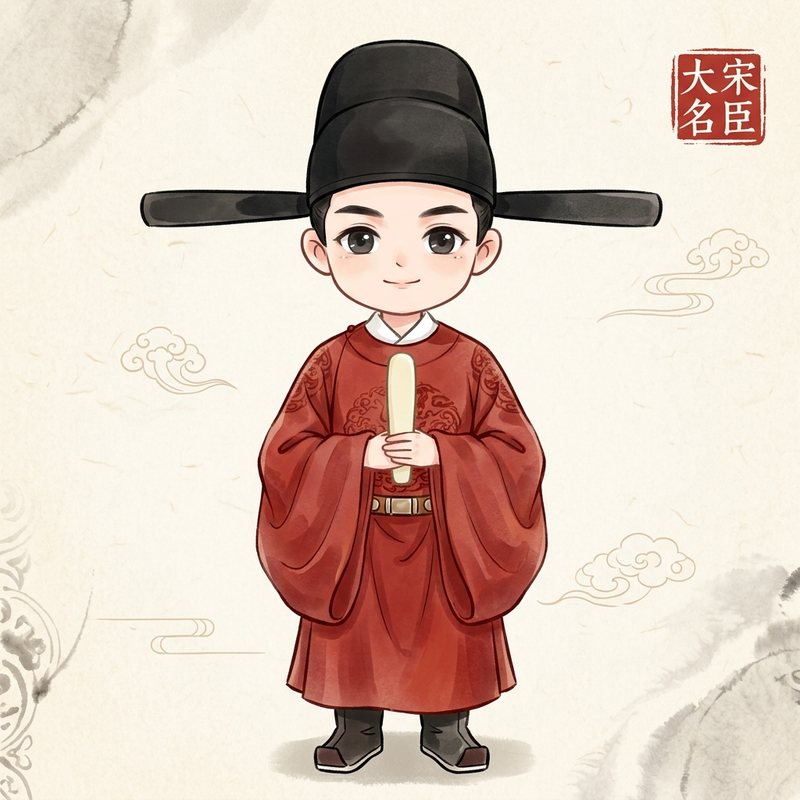
Sima Guang (司马光 · Sīmǎ Guāng)
字君实 · 陕州夏县人 · 世称温国公/涑水先生
Grand historian who forged the 294-volume Comprehensive Mirror in Aid of Governance and principled conservative chancellor of the Northern Song.
历十五载修成《资治通鉴》二百九十四卷;砸缸救友传千古,居安思危辅两朝。
- Architect of the Comprehensive Mirror: Masterminded the 294-volume Zizhi Tongjian, covering 1,362 years of Chinese history across 16 dynasties as the premier chronological guide to imperial statecraft.
- The Water Vat Hero: Immortalized across Chinese popular culture for shattering a massive ceramic water vat with a heavy boulder at age seven to rescue a drowning playmate.
- Champion of Principled Conservatism: Led the political opposition against Wang Anshi's radical New Policies, arguing that state profit-seeking, market manipulation, and rapid institutional churn devastated peasant livelihoods.
- Fifteen-Year Historiographical Exile: Self-exiled from the capital to Luoyang's modest Duleyuan (Garden of Solitary Joy), laboring through sleepless nights with a wooden wake-up pillow to finish his historical monument.
- The Yuanyou Restoration Chancellor: Summoned to lead the empire as prime minister at age sixty-six, celebrated by cheering street crowds as 'Prime Minister Sima' and posthumously venerated as Duke Wen of Sima.
Phase 1: The Water Vat Prodigy & The Ban of Flashy Luxuries (1019–1038)
Sima Guang was born in 1019 CE in Guangshan County (modern Xinyang, Henan Province), where his father, Sima Chi, was serving as the county magistrate. Named 'Guang' after the prefecture, he displayed astonishing cognitive precocity. By age seven, he was already reciting the foundational Spring and Autumn Annals from memory, comprehending historical cause and effect far beyond his years.
It was during these childhood years that the defining folk anecdote of Chinese civilization took place. While playing in the family courtyard, a young boy climbed onto the rim of a giant ceramic water vat (weng) and fell into the deep water. As other terrified children scattered and wailed in panic, seven-year-old Sima Guang remained completely calm. Grabbing a heavy rock from the garden path, he hurled it against the base of the urn, shattering the thick pottery. The water gushed outward, and the drowning boy was safely pulled free.
众人皆弃去,光持石击瓮破之,水迸,儿得活。
Zhòngrén jiē qì qù, Guāng chí shí jī wèng pò zhī, shuǐ bèng, ér dé huó.
While all the other children fled in panic, Guang took up a stone and smashed the vat to pieces; the water gushed out, and the child was saved.
Context · Recorded in the official History of Song (宋史), documenting the famous crisis composure that established seven-year-old Sima Guang as a folk hero across China.
In 1038 CE, at the young age of nineteen, Sima Guang passed the imperial civil service examination with the highest Jinshi honors. At the ceremonial Qionglin imperial banquet, celebrating scholars adorned their caps with extravagant royal floral crowns. Sima Guang sat stone-faced and refused to wear the frivolous ornament, only yielding when an elder scholar gently reminded him that imperial gifts must be formally accepted. This innate contempt for luxury would later produce his famous family manual 'On Frugality'.
由俭入奢易,由奢入俭难。
Yóu jiǎn rù shē yì, yóu shē rù jiǎn nán.
It is easy to transition from frugality to luxury, but exceedingly difficult to return from luxury to frugality.
Context · From Sima Guang's celebrated ethical letter 'Admonition on Frugality to My Son Sima Kang' (训俭示康), urging future generations to embrace temperance over corruption.
Phase 2: Frontier Fortresses & Practical Statecraft (1039–1044)
Unlike scholars who remained insulated in imperial academies, Sima Guang's early public career was forged in the grueling realities of provincial administration. In 1039 CE, he assumed his first official post as Judicial Officer (Tuiguan) in Huazhou, situated beneath the rugged granite cliffs of Mount Hua. Here, he spent long nights mastering statutory penal codes, systematically exonerating wrongfully accused commoners and learning the delicate balance of rule-of-law governance.
By 1041 CE, he was reassigned north as Vice Prefect (Tongpan) of Bingzhou (modern Taiyuan, Shanxi Province), facing the dangerous militarized border of the Tangut Western Xia Empire. Serving under the renowned elder general and commissioner Pang Ji, Sima Guang inspected garrison outposts and submitted memorials advocating defensive border fortifications and agricultural self-sufficiency. Pang Ji recognized Sima Guang's monumental depth, becoming his lifelong political mentor. When Pang later died, Sima Guang cared for his widow and children with filial devotion.
Phase 3: Fearless Imperial Remonstrance & The Clash with Wang Anshi (1050–1070)
Summoned to the capital Kaifeng, Sima Guang served in prominent central offices, including Chief Remonstrator (Zhi Jian Yuan) and Academician of the Hanlin Academy. He gained national renown for fearless memorials urging Emperor Renzong to designate an imperial heir, fearlessly attacking palace corruption and arguing that honest remonstrance is the true lifeline of the state.
为政之要,在于用人、赏善、罚恶而已。
Wéi zhèng zhī yào, zàiyú yòng rén, shǎng shàn, fá è éryǐ.
The essence of governance lies merely in employing the worthy, rewarding good, and punishing evil.
Context · From Sima Guang's influential court memorial 'Requesting Open Paths for Remonstrance' (乞开言路札子), emphasizing institutional clarity over bureaucratic excess.
When Emperor Shenzong ascended the throne in 1067 CE eager to enrich the state treasury and conquer border rivals, he appointed the visionary economist Wang Anshi to launch the sweeping New Policies (Xinfa). Sima Guang and Wang Anshi had been close, respectful intellectual friends, but their divergent worldviews now sparked the most famous political duel in Chinese history. Wang believed the imperial state must actively mobilize economic capital, issue state farm loans, and regulate trade. Sima Guang vehemently disagreed, warning that state monopolies always invite predatory official corruption and drain the common people's meager livelihood.
Phase 4: Fifteen Years in Luoyang & The 294-Volume Masterpiece (1071–1085)
Recognizing that Emperor Shenzong was fully committed to Wang Anshi's radical reforms, Sima Guang refused to compromise his principles for ministerial rank. In 1071 CE, he requested demotion to a sinecure in the ancient western capital of Luoyang, exiling himself from national power for fifteen consecutive years. Purchasing a modest residence with dilapidated walls, he named his garden 'Duleyuan' (The Garden of Solitary Joy).
In Luoyang, Sima Guang gathered three brilliant editorial assistants—Liu Ban (Han Dynasty specialist), Liu Shu (Six Dynasties specialist), and Fan Zuyu (Tang Dynasty specialist). Together, they combed through more than thirty thousand historical texts, official annals, private diaries, and forgotten tomb inscriptions. Sima Guang worked with monastic asceticism, resting his head on a round wooden log termed the 'alarm pillow' (Jingzhen); whenever he drifted off, the rolling log would jolt him awake, sending him immediately back to his manuscripts.
德胜才,谓之君子;才胜德,谓之小人。
Dé shèng cái, wèi zhī jūnzǐ; cái shèng dé, wèi zhī xiǎorén.
When moral virtue surpasses talent, one is termed a gentleman; when talent surpasses moral virtue, one is termed a petty man.
Context · From the opening commentary of Volume 1 of the Comprehensive Mirror in Aid of Governance (资治通鉴), warning rulers against brilliant courtiers lacking moral character.
The completed 'Comprehensive Mirror in Aid of Governance' (资治通鉴, Zizhi Tongjian) reached an astonishing 294 volumes containing over three million Chinese characters. Spanning 1,362 years from the Partition of Jin in 403 BCE to the founding of the Song in 960 CE, it organized China's sprawling history into a seamless, year-by-year chronological tapestry. Emperor Shenzong himself wrote the imperial preface, proclaiming that the text offered monarchs an incorruptible mirror to understand why empires flourish and fall.
更无柳絮因风起,惟有葵花向日倾。
Gèng wú liǔ xù yīn fēng qǐ, wéi yǒu kuí huā xiàng rì qīng.
No longer do willow catkins drift with the wanton wind; only the sunflower remains, steadfastly leaning toward the sun.
Context · From Sima Guang's lyrical poem 'Early Summer in Solitude' (客中初夏), expressing his unwavering, solitary devotion to the state during his Luoyang retreat.
Phase 5: The Yuanyou Restoration & The Passing of Duke Wen (1085–1086)
In March 1085 CE, Emperor Shenzong passed away, leaving his ten-year-old son Emperor Zhezong under the regency of the revered Empress Dowager Gao. Deeply distressed by the social dislocation wrought by the New Policies, Empress Dowager Gao immediately summoned Sima Guang back to Kaifeng. As the sixty-six-year-old historian rode through the capital gates, tens of thousands of cheering citizens and soldiers thronged the avenues, throwing incense and crying out, 'Save us, Prime Minister Sima!'
Appointed Chancellor (Left Prime Minister), Sima Guang launched the 'Yuanyou Restoration' (元祐更化). Working alongside fellow conservatives like Su Shi and Fan Chunren, he dismantled the burdensome Green Sprouts farm taxes, dissolved aggressive state monopolies, and repealed harsh household militia conscriptions to grant the peasantry breathing room. Yet the crushing burden of state affairs overwhelmed his failing health. On October 11, 1086 CE, Sima Guang collapsed and passed away in office at age sixty-seven.
When news of his death broke, the entire capital shuttered its markets in mourning, and ordinary families placed his portrait in their homes to offer prayers. Emperor Zhezong posthumously conferred upon him the title Duke of Wen (温国公) and the supreme civic honor 'Wenzheng' (Civil and Upright). Su Shi famously carved his spirit inscription, declaring Sima Guang's incorruptible moral courage an eternal lighthouse for Chinese civilization.
| Perspective 视角 | Sima Guang (The Chinese Sage Historian) | Titus Livius / Livy (The Roman Sage Historian) |
|---|---|---|
| Magnum Opus Scope | 294-volume Zizhi Tongjian spanning 1,362 years (403 BCE–959 CE) across 16 dynasties. | 142-book Ab Urbe Condita spanning nearly 800 years from Rome's mythic founding to Augustus. |
| Core Civic Mission | Didactic mirror to guide emperors: demonstrating that moral character and continuity sustain dynasties. | Patriotic monument to remind Romans of ancestral virtus and diagnose moral decadence. |
| Political Philosophy | Principled Confucian conservatism: opposed aggressive state economic monopolies and disruptive social churning. | Republican conservative moralism: praised traditional agrarian fortitude and institutional balance. |
| Historiographical Style | Strict chronological (annalistic) rigor with meticulous textual variance cross-examination (Kao Yi). | Vivid annalistic narrative enriched with dramatic moral orations and legendary character sketches. |
Trace Sima Guang's Footsteps on the Interactive Topographic Map
Follow his actual historical trail across 8 imperial stations—from the childhood water vat rescue in Guangshan and frontier defense in Bingzhou to fifteen years of monumental scholarship in Luoyang's Duleyuan.
Launch Interactive Journey MapFrequently Asked Questions (FAQ)
What is the true story behind Sima Guang smashing the water jar?
When Sima Guang was seven years old in Guangshan, a playmate slipped into a giant ceramic vat filled with water. While all the other children fled screaming in terror, Sima Guang stayed calm, picked up a large garden stone, and smashed the base of the vat. The water drained out immediately, rescuing the drowning boy.
What is the Zizhi Tongjian and why is it so important in world history?
The Zizhi Tongjian (Comprehensive Mirror in Aid of Governance) is a monumental 294-volume chronicle covering 1,362 years of Chinese history across sixteen dynasties. Compiled over fifteen years, it systematically organized past political triumphs and moral catastrophes into a chronological master textbook for imperial governance.
Why did Sima Guang and Wang Anshi become fierce political rivals?
Though they shared deep mutual respect as scholars, they fundamentally clashed over statecraft. Wang Anshi believed the imperial state should actively monopolize markets and issue commercial loans. Sima Guang argued that state profit-seeking inevitably spawns official extortion, destabilizes markets, and destroys the livelihoods of ordinary farmers.
Why is Sima Guang frequently compared to the Roman historian Livy?
Both Sima Guang and Livy spent decades composing monumental annalistic histories designed as moral mirrors for rulers and citizens. Both historians championed traditional civic virtue, revered ancestral institutions, and believed that an empire's survival depends on moral integrity rather than unrestrained imperial expansion.
What was Sima Guang's famous wooden wake-up pillow (Jingzhen)?
While compiling the Comprehensive Mirror in Luoyang, Sima Guang used a small, rounded log as a pillow known as the 'alarm pillow' (Jingzhen). Whenever he fell into deep slumber, his head would slide off the rolling wood onto the desk, jolting him awake so he could immediately resume writing.
What does Sima Guang's famous line 'From frugality to luxury is easy' mean?
In his family admonition 'Xunjian Shi Kang', Sima Guang wrote: '由俭入奢易,由奢入俭难'—transitioning from frugal simplicity to lavish excess is effortless, but returning from luxury to humble discipline is exceedingly difficult. It serves as an enduring warning that moral corruption begins with unbridled vanity.