Who Was Liu Yuxi? The Poetry Hero of Tang Dynasty China
Author of the immortal 'Humble Dwelling', pioneer of the Bamboo Branch Lyrics, and master of 23 years of defiant resilience in political exile
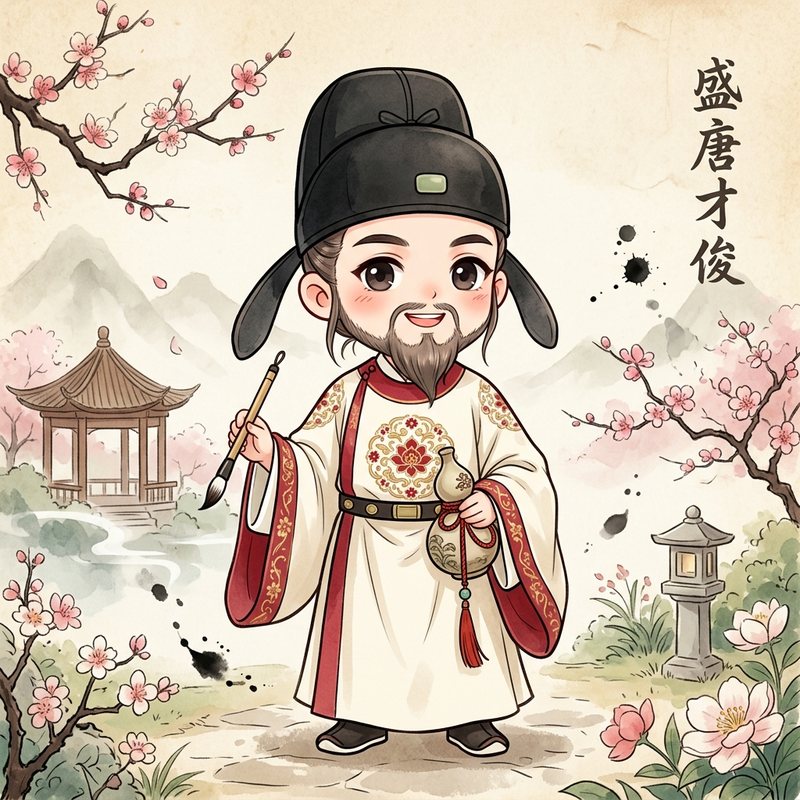
Liu Yuxi (刘禹锡 · Liú Yǔxī)
字梦得 · 世称刘宾客/诗豪
The Poetry Hero of Tang China: author of 'An Inscription on My Humble Dwelling' and 'Autumn Verse', who turned 23 years of exile into immortal defiance.
中唐一代‘诗豪’,作《陋室铭》《秋词》《竹枝词》名扬天下;二十三载贬谪不屈,以‘沉舟侧畔千帆过’写就华夏最旷达乐观的人格典范。
- The Poetry Hero (Shi Hao): Honored by Bai Juyi as Tang China's boldest literary champion, celebrated for his razor-sharp intellect, fierce wit, and unconquerable optimism.
- Author of 'Lou Shi Ming': Penned the timeless 81-character prose masterpiece 'An Inscription on My Humble Dwelling', proving that spiritual virtue triumphs over material confinement.
- Twenty-Three Years in Exile: Banished to remote frontiers following the collapse of the 805 Yongzhen Reform, he served as a benevolent governor across Langzhou, Lianzhou, Kuizhou, and Hezhou.
- Master of Folk Poetics: Pioneered the literary 'Bamboo Branch Lyrics' (Zhu Zhi Ci) in the Three Gorges, integrating folk vitality and musical charm into the Tang poetic canon.
- Cosmic Optimism: Formulated the materialist philosophy of 'Heaven and Humanity Alternately Overcoming Each Other' in his treatise On Heaven (Tian Lun).
Phase 1: The Prodigy of Chang'an & The Yongzhen Reform (772–805)
Liu Yuxi was born in 772 CE during the Tang Dynasty's middle era. His family had fled south to Jiaxing in modern Zhejiang Province to escape the devastating aftermath of the An Lushan Rebellion. Raised on classical Confucian canons by the tranquil southern canals, young Liu Yuxi combined northern aristocratic grit with southern cultural refinement. In 789 CE, he journeyed north to the eastern capital of Luoyang, gaining widespread renown among eminent scholars and Buddhist poets for his encyclopedic learning.
唐代宗大历七年(772年),刘禹锡出生于江南嘉兴。其父刘融为避安史之乱南渡任职,刘禹锡在水乡书香中饱读经史,兼具中原士族的雄健与江南文化的灵秀。789年他游学洛阳,结交名士高僧,以出类拔萃的诗才崭露头角。
In 793 CE, at the age of twenty-one, Liu Yuxi passed the prestigious Jinshi imperial examination in the same illustrious cohort as his lifelong soulmate Liu Zongyuan. In that same extraordinary year, he conquered the even more demanding Boxue Hongci palace selection exam. Appointed as an Investigating Censor (Jiancha Yushi), he quickly emerged as one of the sharpest young minds in the imperial administration. When Emperor Shunzong ascended the throne in 805 CE, Liu Yuxi joined Wang Shuwen and Liu Zongyuan in spearheading the audacious Yongzhen Reform.
贞元九年(793年),二十一岁的刘禹锡与柳宗元同榜登进士第,同年又一举高中博学宏词科,名动京华。出任监察御史后,他以干练风骨备受瞩目。805年唐顺宗即位,刘禹锡与王叔文、柳宗元等人成为‘永贞革新’的核心柱石。
The reformist cadre sought to break the chokehold of imperial eunuchs, eradicate exploitative court market rackets, and restore civic vitality to the fractured Tang Empire. However, entrenched palace factions struck back ruthlessly within months. Emperor Shunzong was coerced into abdicating, and the reformers were ruthlessly purged. Liu Yuxi was stripped of rank and exiled south, branded as one of the legendary 'Eight Marshals' (Ba Sima).
革新派力图抑制宦官专权、废除宫市苛政、整肃吏治,沉重打击了腐朽既得利益集团。然而改革遭到宦官与保守藩镇联合反扑,短短数月便告夭折。顺宗被迫退位,宪宗即位后严厉清洗革新党人,刘禹锡被贬往南荒之地,沦为史称‘八司马’之一。
少年负壮气,奋烈自有时。
Shào nián fù zhuàng qì, fèn liè zì yǒu shí.
In youth I harbored noble aspirations; courage and fiery resolve will find their season of glory.
Context · Reflecting on his youthful ambition in Chang'an, where he dared to confront imperial corruption in pursuit of political renewal.
Phase 2: A Decade in Langzhou & The Autumn Breakthrough (805–815)
Demoted to the remote post of Marshal of Langzhou (modern Changde, Hunan Province), Liu Yuxi found himself marooned in a humid, malarial frontier hundreds of leagues from the cultural capital. For ten grueling years, his imperial career remained entirely frozen. Yet while other exiled scholars succumbed to depression, Liu Yuxi immersed himself in local customs, studied farming communities, and engaged in deep philosophical reflection.
被贬为朗州司马后,刘禹锡谪居卑湿蛮荒的楚地长达整整十年。朝廷的冷冻与仕途的绝望足以摧毁普通文人,但刘禹锡未曾一日自怨自艾。他深入田间地头观察民风,潜心撰写哲学论著,在逆境中实现了心性的蜕变。
It was during this decade that he composed his groundbreaking philosophical treatise 'On Heaven' (Tian Lun, 天论三篇). Challenging Han Yu's traditional Confucian theological assumptions, Liu Yuxi argued that nature operates according to autonomous physical laws rather than divine moral retribution, declaring that 'Heaven and humanity alternately overcome each other.' Simultaneously, he dismantled two millennia of melancholy literary tropes with his triumphant masterpiece, 'Autumn Verse.'
在朗州,他著就划时代的哲学名著《天论》三篇,驳斥天命鬼神迷信,提出‘天与人交相胜’的唯物论断,与韩愈展开了精彩的哲学论战。与此同时,面对文人墨客悲叹秋风萧瑟的千年传统,他挥笔写下《秋词》,以冲天豪气重铸了华夏审美的浩然风骨。
自古逢秋悲寂寥,我言秋日胜春朝。晴空一鹤排云上,便引诗情到碧霄。
Zì gǔ féng qiū bēi jì liáo, wǒ yán qiū rì shèng chūn zhāo. Qíng kōng yī hè pái yún shàng, biàn yǐn shī qíng dào bì xiāo.
Since antiquity people have grieved autumn as desolate and chill; but I say an autumn day surpasses a morning in spring. A lone crane pierces through the clouds into the azure sky, carrying poetic inspiration right into the sapphire heavens.
Context · From 'Autumn Verse' (秋词), written in Langzhou, overturning millennia of melancholic poetry with soaring courage and radiant optimism.
Phase 3: The Peach Blossom Defiance & The Three Gorges Songs (815–824)
In the spring of 815 CE, the imperial court issued an edict recalling the exiled reformists to Chang'an. Visiting the renowned Daoist abbey of Xuandu Temple, Liu Yuxi observed crowds of servile ministers fawning over newly blossomed peach trees. Disgusted by the brazen opportunism of courtiers who had risen to power on the ruins of the Yongzhen Reform, he dashed off a blistering satirical quatrain: 'A thousand peach trees in Xuandu Temple—all were planted only after Master Liu had left!'
元和十年(815年)春,朝廷召诸司马还京。漫步长安玄都观,刘禹锡目睹当年依附权贵得势的新贵们趋炎附势、簇拥看花,愤然写下名作《戏赠看花诸君子》:‘玄都观里桃千树,尽是刘郎去后栽。’一语道破朝中暴发户的虚伪本质。
The four-line poem infuriated the imperial cabinet. Emperor Xianzong condemned Liu Yuxi to immediate banishment to Bozhou—an even harsher, near-lethal border territory. Seeing that Yuxi's eighty-year-old mother would never survive the perilous trek across Guizhou's crags, his heroic friend Liu Zongyuan famously petitioned the throne, weeping and offering to trade his own exile post in Liuzhou for Bozhou. Moved by this fraternal self-sacrifice, the court commuted Liu Yuxi's destination to Lianzhou in northern Guangdong.
此诗触怒了满朝新贵,宪宗暴怒之下将刘禹锡远贬绝荒之地播州。柳宗元因其老母年逾八旬,痛哭上疏愿以自己的柳州与刘禹锡对调,‘不忍见其母子俱死于非命’。朝中裴度等人亦极力进言,最终改判刘禹锡为连州刺史。
In Lianzhou, Liu Yuxi governed with boundless affection, building schools, encouraging agriculture, and earning the adoration of the frontier populace. In 821 CE, he was transferred to Kuizhou (modern Fengjie, Chongqing), guarding the magnificent western gateway to the Three Gorges. Captivated by the haunting folk songs chanted by local boatmen and Tujia villagers, Liu Yuxi adapted their vernacular rhythms into his sparkling 'Bamboo Branch Lyrics' (竹枝词), immortalizing everyday southern life in Chinese classical poetry.
在连州,刘禹锡兴办义学、开山通商,深得百姓爱戴。长庆元年(821年),他转任夔州刺史,驻守三峡白帝城天险。他深入市井江畔向船夫巴女采风,将三峡民歌融入文人诗篇,开创了家喻户晓的《竹枝词》,让民间天籁登上大雅之堂。
东边日出西边雨,道是无晴却有晴。
Dōng biān rì chū xī biān yǔ, dào shì wú qíng què yǒu qíng.
Eastward shines the sun, westward falls the rain; they say there is no clear sky, yet clarity shines through / they say there is no affection, yet deep feeling remains.
Context · From 'Bamboo Branch Lyrics' (竹枝词), written in Kuizhou, featuring a famous phonetic double-entendre between 'clear weather' (qíng, 晴) and 'affection' (qíng, 情).
Phase 4: The Humble Dwelling of Hezhou & Unshakeable Virtue (824–826)
In 824 CE, Liu Yuxi was transferred to the governorship of Hezhou (modern Hexian, Anhui Province) along the northern bank of the Yangtze River across from historic Nanjing. Local lore recounts that an arrogant county official, eager to curry favor with factional elites in Chang'an, deliberately humiliated the fallen statesman by repeatedly cutting his residential allowance, eventually confining him to a tiny, damp room barely ten feet wide facing the river.
长庆四年(824年),刘禹锡调任和州刺史。相传当地趋炎附势之徒见其屡遭贬谪、看似前途黯淡,便百般刁难,故意三度缩减其居所,最后逼其迁入面江背水的一间逼仄陋室。
Rather than submitting to rage or despair, Liu Yuxi responded with sublime serenity. He brushed an eighty-one-character inscription upon his wall, 'An Inscription on My Humble Dwelling' (陋室铭, Lou Shi Ming), and had it carved directly into a stone stele by his door. Proclaiming that a mountain is famous not for its height but for the divinity dwelling within, he affirmed that nobility resides solely in moral purity and cultured fellowship, forever disarming the pettiness of worldly power.
面对恶意的侮辱,刘禹锡朗然一笑,挥毫在石碑上写下仅八十一字的骈文绝唱《陋室铭》,高悬门楣:‘山不在高,有仙则名。水不在深,有龙则灵。斯是陋室,惟吾德馨。’以至高无上的精神丰碑,彻底击碎了世俗势利小人的狭隘嘴脸。
斯是陋室,惟吾德馨。苔痕上阶绿,草色入帘青。谈笑有鸿儒,往来无白丁。
Sī shì lòu shì, wéi wú dé xīn. Tái hén shàng jiē lǜ, cǎo sè rù lián qīng. Tán xiào yǒu hóng rú, wǎng lái wú bái dīng.
Though this is a humble dwelling, only my virtue lends it fragrance. Green moss creeps up the stone steps; emerald grass reflects through the bamboo blinds. Those who converse and laugh here are eminent scholars; among those who come and go, there are no ignorant louts.
Context · From 'An Inscription on My Humble Dwelling' (陋室铭), Chinese literature's supreme testament to moral autonomy and contentment over material vanity.
Phase 5: The Meeting in Yangzhou & The Sunken Boat Couplet (826–828)
In the bitter winter of 826 CE, Liu Yuxi completed his tenure in Hezhou and began traveling north toward Luoyang. Passing through the bustling commercial metropolis of Yangzhou along the Grand Canal, he encountered the legendary poet Bai Juyi, who was returning from his post in Suzhou. Though the two men were the exact same age (born in 772 CE) and had exchanged admired letters for decades, this was their very first face-to-face meeting.
宝历二年(826年)冬,刘禹锡罢和州刺史任北归洛阳,途经繁华的扬州,恰逢同岁大诗人白居易自苏州罢官返京。两位同庚的大师神交已久,这却是两人人生的第一次促膝长谈与杯酒相逢。
Moved to tears by Liu Yuxi's twenty-three unbroken years of hardship while less talented sycophants held grand offices, Bai Juyi poured out an emotional poem lamenting Yuxi's unmerited suffering. Liu Yuxi took up the brush on the spot and delivered his reply, 'Responding to Letian at Our First Gathering in Yangzhou' (酬乐天扬州初逢席上见赠). Conceding that he felt like a battered ship after two decades in the wilderness, he nonetheless pivoted to breathtaking cosmic optimism: the universe never stops generating fresh life, and personal loss is simply the precursor to the world's springtime.
酒席之上,白居易感佩刘禹锡连遭二十三载残酷贬谪,为他鸣不平,作诗叹其‘亦是才名冠世人,如何历落不得呈’。刘禹锡闻诗当即挥毫唱和,写下流传千秋的《酬乐天扬州初逢席上见赠》。他不掩饰身处逆境的沧桑,却以宏大的宇宙胸襟包容个体命运:个人的坎坷无法阻挡历史的长河,春风总会在荒芜的前方孕育万木葱茏。
沉舟侧畔千帆过,病树前头万木春。今日听君歌一曲,暂凭杯酒长精神。
Chén zhōu cè pàn qiān fān guò, bìng shù qián tóu wàn mù chūn. Jīn rì tīng jūn gē yī qū, zàn píng bēi jiǔ zhǎng jīng shén.
Past a sunken boat, a thousand sails race ahead; before a sickly tree, ten thousand woods burst into spring. Hearing your gracious song today, I raise this cup of wine to summon my soaring spirit!
Context · Written in response to Bai Juyi in Yangzhou in 826 CE, cementing Chinese literature's ultimate metaphor for historical renewal and unconquerable endurance.
Phase 6: Return to the Capital & The Twilight Glow of Luoyang (828–842)
In 828 CE, after fourteen years since his previous recall, fifty-seven-year-old Liu Yuxi re-entered the imperial capital of Chang'an. Revisiting Xuandu Temple, he discovered that the sycophants who had once banished him had vanished into history, the peach blossoms were dead, and wild vegetables flourished amid the ruins. Ever fearless, he penned his second peach blossom poem: 'Where has that peach-planting Daoist priest gone? The Master Liu of yesteryear has returned once more!'
大和二年(828年),五十七岁的刘禹锡奉诏入京。重游玄都观,当年那些得势猖狂的仇敌政客早已身死名裂、灰飞烟灭,桃花荡尽,唯见荒芜菜花。傲骨凛然的刘禹锡提笔写下《再游玄都观》:‘种桃道士归何处,前度刘郎今又来!’向世人宣示真理与骨气的最终胜利。
After serving with distinction as Governor of Tongzhou and Investigating Censor-in-Chief, Liu Yuxi was appointed Senior Advisor to the Crown Prince (Taizi Binke) and retired to the cultural sanctuary of Luoyang. Reunited with Bai Juyi and former prime minister Pei Du, he formed the celebrated 'Liu & Bai' literary circle. Bai Juyi publicly hailed him as the 'Poetry Hero' (Shi Hao), marveling that his verses possessed an incisive sharpness no contemporary could match.
此后刘禹锡出任同州刺史兼御史中丞,晚年以太子宾客分司东都洛阳。在洛阳履道坊,他与白居易、裴度等人诗酒唱和,世称‘刘白’。白居易盛赞其为‘诗豪’:‘彭城刘梦得,诗豪者也。其锋森然,少敢当者。’晚年的刘禹锡真正达到了心物两忘、豁达旷达的大宗师境界。
In the autumn of 842 CE (the second year of Huichang), Liu Yuxi passed away peacefully at his Luoyang residence at the age of seventy-one. The imperial throne posthumously honored him with the rank of Minister of Revenue (Hubu Shangshu). His disciple preserved his complete writings as 'The Collected Works of Master Liu Binke' (刘宾客文集), ensuring that his voice of iron integrity, buoyant wit, and philosophical wisdom would echo across twelve centuries.
会昌二年(842年)秋,一代诗豪刘禹锡在洛阳寓所安详仙逝,享年七十一岁。朝廷追赠户部尚书。后人将其一生鸿篇巨著辑为《刘宾客文集》,其铮铮铁骨、安贫乐道的旷达境界与永不屈服的生命意志,化为中华民族永恒的精神丰碑。
莫道桑榆晚,为霞尚满天。
Mò dào sāng yú wǎn, wéi xiá shàng mǎn tiān.
Never say the sun has sunk past the mulberry and elm tree tops; even as twilight dusk, it floods the whole sky with blazing crimson clouds!
Context · From Liu Yuxi's late poem replying to Bai Juyi on aging, reminding humanity that the twilight years of a virtuous soul shine with golden brilliance.
| Perspective 视角 | Liu Yuxi (The Poetry Hero of Tang China) | Ovid (The Exiled Bard of Imperial Rome) |
|---|---|---|
| Response to Political Banishment | Defiant stoicism and vibrant optimism; turned 23 years of demotion into songs of nature, folk humor, and cosmic renewal. | Melancholic lamentation and pleading; composed Tristia and Epistulae ex Ponto begging Emperor Augustus for clemency. |
| Philosophy of Adversity | Pioneered materialist theory in On Heaven; saw individual misfortune as a tiny ripple in the grand, renewing march of nature ('past a sunken boat, a thousand sails race ahead'). | Emphasized tragic irony and the arbitrary wrath of fickle fortune, feeling completely severed from the civilization of Rome. |
| Engagement with Marginalized Cultures | Embraced local customs in Hunan, Guangdong, and the Three Gorges, transforming rustic boat songs into the classic Bamboo Branch Lyrics. | Lamented his linguistic isolation among the 'barbarians' of Tomis, though he eventually composed a lost poem in the local Getic tongue. |
| Enduring Cultural Canon | Revered as the 'Poetry Hero' (Shi Hao); author of Lou Shi Ming, memorized by over a billion students as the archetype of spiritual integrity. | Immortalized as one of Rome's greatest poets alongside Virgil and Horace, celebrated for Metamorphoses and Ars Amatoria. |
Trace Liu Yuxi's Footsteps on the Interactive Topographic Map
Follow his actual historical journey across 10 imperial stations—from youth in Chang'an and a decade in Langzhou to the humble dwelling of Hezhou and late triumph in Luoyang.
Launch Interactive Journey MapFrequently Asked Questions (FAQ)
Why was Liu Yuxi given the prestigious title 'Poetry Hero' (Shi Hao)?
Liu Yuxi was bestowed the title 'Poetry Hero' (诗豪, Shi Hao) by his celebrated contemporary Bai Juyi. Bai marveled at Liu's razor-sharp intellectual wit, soaring vigor, and unconquerable courage. Despite enduring twenty-three years of political exile, Liu never produced verses of self-pity, consistently infusing classical poetry with heroic optimism and defiant vitality.
What inspired Liu Yuxi to write 'An Inscription on My Humble Dwelling' (Lou Shi Ming)?
While serving as governor of Hezhou in 824 CE, a petty local official tried to humiliate the demoted statesman by repeatedly reducing his lodgings, eventually forcing him into a cramped one-room shack facing the river. Rather than despairing, Liu composed the famous 81-character inscription declaring that a home is made noble by virtue rather than luxury.
How did Liu Yuxi turn his 23-year political exile into literary triumph?
Instead of succumbing to bitter isolation during his exile across Langzhou, Lianzhou, Kuizhou, and Hezhou, Liu Yuxi engaged directly with common people. He governed with deep benevolence, studied local folklore, formulated the materialist philosophy of 'Heaven and Humanity Alternately Overcoming Each Other', and elevated folk melodies into the classic 'Bamboo Branch Lyrics'.
What does 'Past a sunken boat, a thousand sails race ahead' mean?
From his 826 CE poem responding to Bai Juyi in Yangzhou, '沉舟侧畔千帆过,病树前头万木春' is Chinese literature's ultimate metaphor for historical optimism. While comparing his own exiled past to a wrecked ship, Liu celebrated that life and history continuously move forward, heralding inevitable spring and collective renewal.
How does Liu Yuxi's exile compare to that of the Roman poet Ovid?
Both were towering literary masters banished to imperial peripheries by suspicious emperors. While Ovid's Black Sea poems in Tristia were filled with despair and pleas for pardon, Liu Yuxi demonstrated extraordinary stoic resilience, refusing to compromise his moral dignity and turning his banishment into celebratory anthems of natural beauty and philosophical freedom.
What was the Yongzhen Reform and why did it lead to Liu Yuxi's banishment?
The Yongzhen Reform was an idealistic political movement in 805 CE led by Wang Shuwen, Liu Yuxi, and Liu Zongyuan to curb corrupt eunuch power and imperial market rackets. When conservative factions forced Emperor Shunzong to abdicate, the reform collapsed, and its leaders were purged and banished to frontier outposts as the 'Eight Marshals'.
Walk with Liu Yuxi Across China
随刘禹锡漫步华夏河山 · 亲历命运逆境与精神涅槃