Who Was Bai Juyi? The People's Poet of the Tang Dynasty
Author of the Song of Everlasting Sorrow and the Pipa Song, leader of the New Yuefu Movement, and the civic governor who built the West Lake causeway
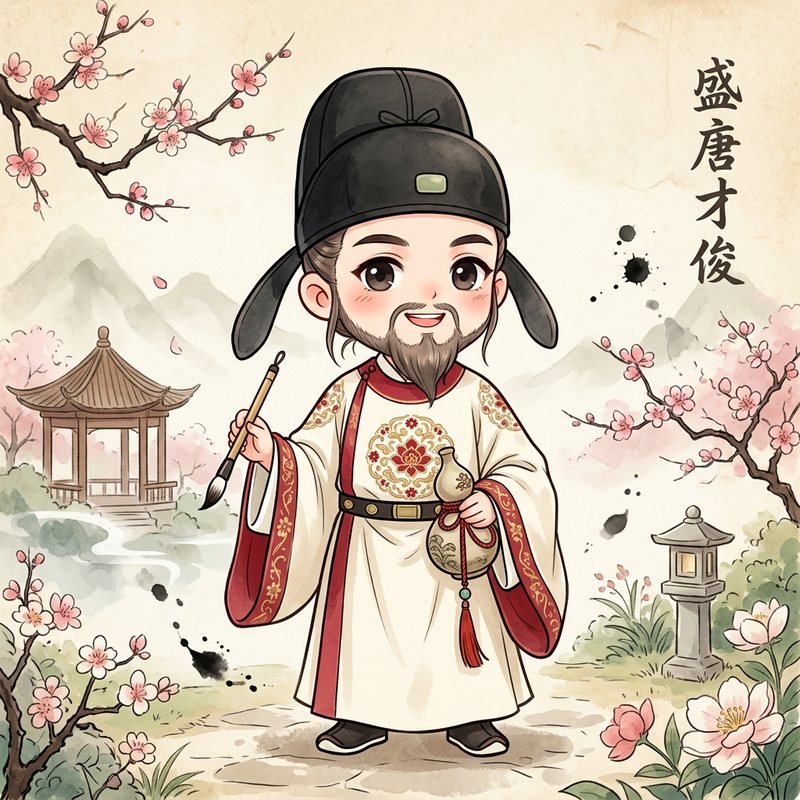
Bai Juyi (白居易 · Bái Jūyì)
字乐天 · 香山居士
The People's Poet: From a fierce imperial critic to a transcendent philosopher.
文章合为时而著,歌诗合为事而作;从兼济天下到独善其身的平民诗魔。
- The People's Poet: Championed the New Yuefu Movement, writing in plain, accessible language about the suffering of ordinary people and making poetry a weapon for social justice.
- Master of Epic Narrative Verse: Authored the 'Song of Everlasting Sorrow' and 'Pipa Song', sweeping narrative epics that captured love, loss, and exile with unmatched emotional power.
- Unbending Imperial Critic: As a remonstrance official, risked his career writing blistering poems that exposed peasant starvation and eunuch extortion, declaring he would sing only of the people's pain.
- Civic Governor of West Lake: Turning political frustration into public works, he dredged wells and built the West Lake causeway that still bears his name, feeding thousands of farms.
Phase 1: Confucian Roots & The War-Torn Road (772–799)
Bai Juyi was born in 772 CE into a modest lineage of Confucian scholar-officials in the northern town of Xinzheng (modern Zhengzhou, Henan Province). Raised not with gold but with strict Confucian tenets, he absorbed from his father and grandfather the profound moral duty to serve the emperor and the people, planting a seed of integrity that would define his turbulent life.
唐代宗大历七年(772年),白居易出生于河南新郑一个世代『奉儒守官』的寒素之家。他并未生在钟鸣鼎食之门,童年是祖父与父亲一句句《诗经》《论语》的严苛启蒙。儒家『致君尧舜』的家国理想,悄悄在孩童心底扎下了生根发芽的种子,这是他一生政治风骨的源头。
When regional warlords shattered the peace of the north, the young boy fled south with his family to the rural town of Fuli (modern Suzhou, Anhui). There he studied with brutal obsession—reading until his tongue bled and his elbows calloused—while falling deeply in love with the neighbor girl Xiangling, a romance ultimately doomed by strict class barriers. Standing in a withered field at age sixteen, he penned 'Wildfires cannot destroy the grass; it rises again with the spring breeze', a resilient roar against fate.
藩镇割据的战火很快逼近中原。为避兵灾,少年白居易随家人颠沛流离至符离。在这座简陋的小镇里,他发奋苦读,『昼课赋,夜课书,口舌成疮,手肘成胝』,并与邻家少女湘灵许下山盟海誓,却因门第不合被迫分离。十五岁那年,他在枯黄的原野上写下『野火烧不尽,春风吹又生』,将少年人誓不低头的生机,写进了华夏的血液里。
野火烧不尽,春风吹又生。
Yě huǒ shāo bù jìn, chūn fēng chuī yòu shēng.
Even wild fires cannot burn it entirely; when the spring breeze blows, it will rise again.
Context · From Bai Juyi's 'Farewell on the Ancient Grassland' (赋得古原草送别), written at age sixteen and reflecting his unbreakable resilience.
Phase 2: Imperial Triumph & The Song of Everlasting Sorrow (800–806)
Arriving in the expensive capital of Chang'an, Bai Juyi was mocked by established literary giants who joked that 'the rice in Chang'an is too expensive to live here'. But when they read his poetry, they were struck dumb by his genius. Passing the grueling imperial examination at twenty-nine, he tasted ultimate triumph. Later, as a rural sheriff sheltering from night rain at a mountain temple beneath the Zhongnan Mountains, he poured his own romantic sorrow into 'The Song of Everlasting Sorrow' (Changhen Ge), a tragic imperial epic that became a nationwide sensation overnight—shared by everyone from aristocrats to street vendors.
初入长安,权贵如云。老前辈顾况本想用『长安米贵,居大不易』来打压这个乡下青年,却在翻开他诗稿的瞬间惊艳折服。二十九岁,白居易一举及第,慈恩寺塔下题名的意气风发,洗去了多年的寒窗苦。出任盩厔县尉时,在终南山下的仙游寺夜雨中,他将唐玄宗与杨贵妃的倾国悲剧与自身的相思之痛相融,写下了荡气回肠的千古绝唱《长恨歌》。一夜之间,上至王公,下至卖饼郎,无不传唱。
在天愿作比翼鸟,在地愿为连理枝。
Zài tiān yuàn zuò bǐ yì niǎo, zài dì yuàn wéi lián lǐ zhī.
In heaven we shall be birds flying side by side; on earth, we shall be trees with branches entwined.
Context · From 'The Song of Everlasting Sorrow' (长恨歌), Bai Juyi's immortal epic of imperial love and tragedy.
Phase 3: The Imperial Advisor & New Yuefu Satire (807–815)
The nationwide fame of his epic poem opened the palace doors. At thirty-six, Emperor Xianzong summoned Bai Juyi to the inner imperial academy, propelling him into the highest political echelons. As a remonstrance official (Zuo Shiyi), he fiercely criticized the Emperor and corrupt officials to their faces. Discarding romantic verses, he wielded his pen like a scalpel, writing fifty blistering New Yuefu poems—including 'The Charcoal Seller' and 'Observing the Wheat Harvest'—that exposed peasant starvation and eunuch extortion. 'I sing only of the people's pain,' he wrote, not merely poetry but a blood-written petition risking his own life.
名动天下的《长恨歌》为他叩开了皇宫大门。三十六岁的白居易佩戴银绯,踏入帝国的权力中枢。身为左拾遗,他直言极谏,甚至当面与皇帝力争。退朝归家,他在孤灯下握笔如刀,接连写下《卖炭翁》《观刈麦》等五十首新乐府诗,字字带泪揭露宫市掠夺。『唯歌生民病,愿得天子知』,这不仅仅是诗,更是他为天下苍生抵押上性命的泣血状纸。他的风骨令权贵侧目,也埋下了祸根。
唯歌生民病,愿得天子知。
Wéi gē shēng mín bìng, yuàn dé tiān zǐ zhī.
I sing only of the afflictions of the people, praying that the Emperor might know their suffering.
Context · Bai Juyi's absolute declaration of putting people over politics, from his New Yuefu manifesto.
Phase 4: Exile & The Pipa Song (815–818)
When assassins struck down the Prime Minister in the streets of Chang'an, Bai Juyi's fearless demand for justice enraged the corrupt factions. A cold edict of exile stripped him of everything, casting him out of the capital into the abyss. Exiled to Jiujiang and grieving his mother, he was backed into life's darkest corner. Moored at night on a freezing river, he heard a melancholic lute cutting through the reeds—played by an aging, discarded courtesan from Chang'an. Separated by a thin boat wall, the exiled official and the wandering musician understood each other's shattered souls. Weeping in the dark, he penned 'The Pipa Song', an eternal monument to shared human sorrow.
刺客的刀锋挑落了宰相武元衡的首级。白居易越权上疏求索真凶,换来的是权臣们的狂暴倾轧。一道冰冷的贬书,将他孤身一人踢出长安。政治幻灭、丧母之痛接踵而至,将白居易逼入人生的绝对死角。夜泊浔阳江头,一阵幽咽的琵琶声划破芦苇荡。抚琴的,竟是一个繁华落尽、独守空船的长安倡女。官场弃臣与天涯歌女,隔着冷雨舱壁,听懂了彼此灵魂深处的破碎。那一夜,一代文豪泪洒衣襟,写下了《琵琶行》。
同是天涯沦落人,相逢何必曾相识!
Tóng shì tiān yá lún luò rén, xiāng féng hé bì céng xiāng shí!
Both of us are fallen outcasts at the end of the world; why must we have known each other to find kinship upon meeting?
Context · From 'The Pipa Song' (琵琶行), Bai Juyi's immortal meditation on shared human sorrow in exile.
Phase 5: The Eastern Slope & Self-Healing (818–822)
Three years of cold exile extinguished Bai Juyi's fierce political fire, yet forged a resilient inner peace. Transferred to the impoverished mountain region of Zhongzhou, he refused despair. Taking off his official robes, he spent his meager salary on saplings and led the peasants to clear the rugged 'Eastern Slope', planting hibiscus and lychee trees. Calling himself the 'Resident of the Eastern Slope' (Dongpo), his defiance in the mud would, two centuries later, spiritually save another legendary exile—Su Shi.
在江州的三年冷雨,浇灭了兼济天下的狂热,却洗练出独善其身的清明。调任忠州刺史,面对贫瘠土地,他脱下官服,拿着微薄的俸禄买来树苗,率领百姓在城东的山坡上开荒种树,栽下木芙蓉与荔枝。他在这里自号『东坡居士』。这种在泥泞中也要种出花来的强悍生命力,不仅治愈了他自己,更在两百多年后,隔空拯救了同样身陷绝境的苏东坡。
持钱买花树,城东坡上栽。
Chí qián mǎi huā shù, chéng dōng pō shàng zāi.
Taking my coins to buy flowering trees, I plant them upon the eastern slope of the city.
Context · The spiritual origin of the legendary name 'Dongpo', from Bai Juyi's 'Planting Flowers on the Eastern Slope'.
Phase 6: The Civic Governor of West Lake (822–824)
As Governor of Hangzhou, Bai Juyi abandoned his angry Chang'an edge. Instead of attacking corrupt ministers, he rolled up his trousers and led massive dredging and dam-building projects. He dredged the six wells of the city and built a massive causeway across West Lake, turning political fury into life-giving irrigation for a thousand farms. Riding along the willow-lined white sand causeway, he realized that leaving a legacy in the soil was far more eternal than any political argument. On his departure, the citizens of Hangzhou poured into the streets, weeping for him to stay; he left his entire salary behind to fund future bridges.
钱塘江潮水依旧,昔日的西湖却已淤塞干涸。出任杭州刺史的白居易,彻底敛去了长安城里的锐气。他不再写折子痛骂权贵,而是卷起裤腿,亲自督工疏浚李泌六井,修筑长堤蓄水。他把『兼济天下』的宏愿,化作了灌溉千顷农田的清流。政务之余,他骑马流连于绿杨阴里的白沙堤。离任之日,杭州百姓倾城而出,挽留的哭声连绵不绝。他把半生积蓄留在府库充作修桥基金,两袖清风地奔赴下一座水乡。
最爱湖东行不足,绿杨阴里白沙堤。
Zuì ài hú dōng xíng bù zú, lǜ yáng yīn lǐ bái shā dī.
I can never walk enough along the eastern shore, beneath the green willows of the white sand causeway.
Context · From 'Spring Excursion on Qiantang Lake' (钱塘湖春行), celebrating the West Lake causeway that still bears Bai Juyi's name.
Phase 7: The Sage of Xiangshan & Transcendence (829–846)
The twilight chill of a dying empire crept over Luoyang. Disgusted by the bloody factional warfare of the Niu-Li struggle, Bai Juyi repeatedly declined the highest offices to retire at Xiangshan Temple. In his golden years, he gave away his wealth to the poor and cleared river rapids to protect sailors. Drinking wine with old friends like Liu Yuxi, he let go of life and death, fame and ruin. From the furious young rebel of Chang'an to the smiling sage of Xiangshan, he finally attained the deepest, most transcendent freedom.
晚唐的洛阳,隐隐透出帝国日暮的寒意。看透了牛李党争血雨腥风的白居易,以称病之躯坚辞宰辅高官,彻底退隐龙门香山寺。晚年的他,散尽家财抚恤故旧,开凿伊水八节滩造福船民。他与刘禹锡等老友诗酒酬唱,看淡了毁誉生死。从那个在长安街头怒目金刚般的拾遗少年,到此刻拈花微笑的香山居士,历经大起大落,他终于在『知足保和』中,寻得了生命最深邃的自由。
达哉达哉白乐天,漫说向人意自得。
Dá zāi dá zāi Bái Lètiān, màn shuō xiàng rén yì zì dé.
How open and free is Bai Letian; let us not speak of it, for within my heart I am fully content.
Context · A profound statement of Zen-like acceptance from Bai Juyi's final years in retirement at Xiangshan.
| Perspective 视角 | Bai Juyi (The People's Poet) | William Wordsworth (The Romantic Nature Poet) |
|---|---|---|
| Core Literary Mission | Championed the New Yuefu Movement, writing in plain, accessible language about the suffering of ordinary people and making poetry a tool for social justice. | Pioneered English Romanticism, celebrating the beauty of nature and the dignity of common rural life in the language of everyday speech. |
| Relationship with the People | Wrote 'The Charcoal Seller' and 'Observing the Wheat Harvest' to expose the exploitation of peasants, declaring he would sing only of the people's pain. | Elevated rural shepherds, beggars, and common folk to the center of serious poetry, giving voice to those overlooked by aristocratic verse. |
| Response to Political Disappointment | Exiled for his fearless criticism, he found redemption in public works—dredging wells and building the West Lake causeway that still bears his name. | Retreated from revolutionary enthusiasm into contemplative nature poetry, finding spiritual peace in the Lake District landscape. |
| Enduring Legacy | One of the Three Great Poets of the Tang Dynasty; his poems remain among the most memorized in Chinese schools today. | Poet Laureate of Britain and a founding figure of English Romanticism, whose 'Lines Composed a Few Miles above Tintern Abbey' remains a cornerstone of English literature. |
Trace Bai Juyi's Footsteps on the Interactive Topographic Map
Follow his actual historical trail across 8 imperial stations—from Confucian roots in Xinzheng and war-torn study in Fuli to imperial triumph in Chang'an, exile in Jiujiang, and the civic miracle of the West Lake causeway.
Launch Interactive Journey MapFrequently Asked Questions (FAQ)
Why is Bai Juyi called the People's Poet?
Bai Juyi earned the title 'People's Poet' because he deliberately wrote in plain, accessible language that ordinary people could understand, and because he used poetry to expose the suffering of the poor. As leader of the New Yuefu Movement, he composed poems like 'The Charcoal Seller' and 'Observing the Wheat Harvest' that condemned predatory taxation and eunuch exploitation. He famously declared that he would 'sing only of the afflictions of the people', making poetry a weapon for social justice rather than mere aristocratic entertainment.
What is the Song of Everlasting Sorrow about?
The 'Song of Everlasting Sorrow' (Changhen Ge) is Bai Juyi's most famous long poem, telling the tragic love story of Emperor Xuanzong of Tang and his beloved consort Yang Guifei. It traces their passionate romance, the An Lushan Rebellion that forced the emperor to abandon her, her death, and his eternal grief. Written while Bai Juyi served as a rural sheriff, the poem blends imperial tragedy with profound personal emotion, and its famous lines about being 'birds flying side by side in heaven' remain among the most quoted in Chinese literature.
What is the Pipa Song (Pipa Xing) about?
The 'Pipa Song' (琵琶行) was written during Bai Juyi's exile in Jiujiang. One night, moored on the Xunyang River, he heard a melancholic lute played by an aging courtesan who had once been a celebrated performer in Chang'an. Recognizing their shared brokenness—both fallen from glory into obscurity—he wrote the poem's most famous line: 'Both of us are fallen outcasts at the end of the world; why must we have known each other to find kinship upon meeting?' The poem is a masterpiece of empathy and shared human sorrow.
Did Bai Juyi really build the West Lake causeway?
Yes. As Governor of Hangzhou from 822 to 824, Bai Juyi led major public works projects, including dredging the city's six wells and building a long causeway across West Lake to store water for irrigation. This causeway, known as the Bai Causeway (白堤), still bears his name today. Rather than fighting unwinnable political wars, he channeled his energy into engineering that fed thousands of farms. On his departure, the citizens of Hangzhou wept in the streets, and he left his entire salary behind to fund future bridges.
How did Bai Juyi's life change from reformer to philosopher?
Bai Juyi's life traced a dramatic arc from fierce political reformer to transcendent philosopher. As a young imperial advisor, he risked everything to criticize corruption. But exile to Jiujiang and Zhongzhou extinguished his political fire while forging inner peace. He healed himself by planting flowers on the 'Eastern Slope' of Zhongzhou, then found fulfillment as a civic governor. In his final years, he retired to Xiangshan Temple in Luoyang, giving away his wealth and finding 'the deepest freedom' in quiet contentment—a journey from 'saving the world' to 'perfecting the self'.
Walk with Bai Juyi Across China
随白居易漫步华夏河山 · 亲历命运逆境与精神涅槃