Who Was Liu Zongyuan? Exiled Sage of Tang Landscape Prose
Who Was Liu Zongyuan? Exiled Sage of Tang Landscape Prose
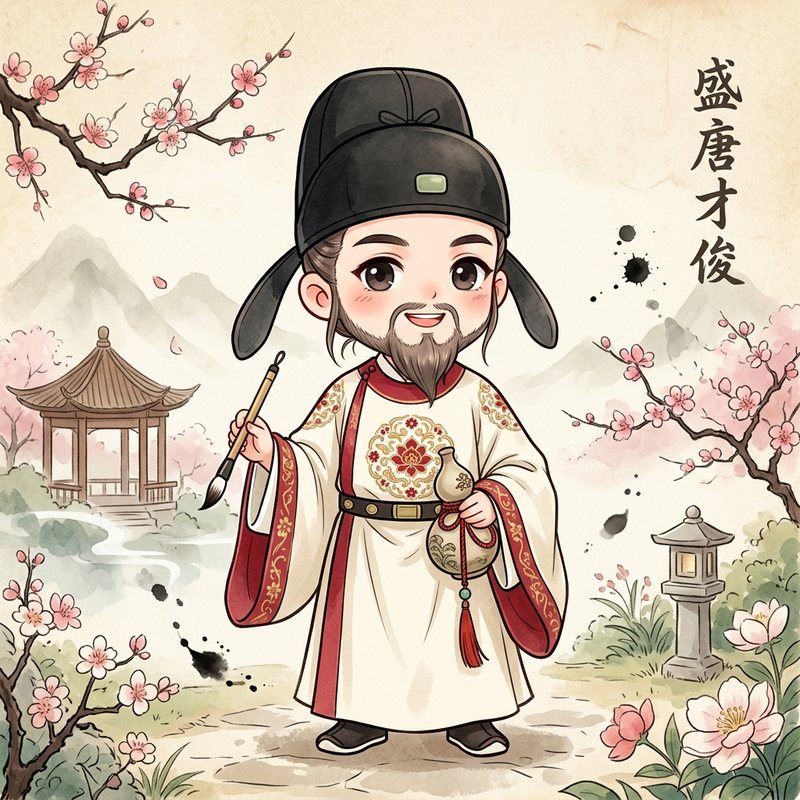
Liu Zongyuan (柳宗元 · Liǔ Zōngyuán)
字子厚 · 世称柳河东/柳柳州
The Exiled Sage of Landscape Prose: one of the Eight Great Prose Masters, he turned banishment into immortal nature writing and served the people in Yongzhou and Liuzhou.
唐宋八大家之一,与韩愈并称‘韩柳’;以《永州八记》《江雪》将贬谪苦难化作永恒山水,永贞革新、柳州释奴,一代文宗流芳千古。
- Exiled Sage of Landscape Prose: Co-led the Classical Prose Movement alongside Han Yu, elevating travel and nature writing to its highest philosophical and artistic summit in Chinese history.
- Unbending Political Reformer: Key architect of the 805 Yongzhen Reform to curb eunuch corruption and regional warlords, enduring fourteen years of punishing southern exile without compromising his integrity.
- Pioneer of Public Accountability: Advanced the revolutionary political maxim 'public officials are the servants of the people' (吏为民役) and formulated early materialist natural philosophy.
- Humanitarian Civic Benefactor: Transformed remote Liuzhou by emancipating debt slaves, opening public schools, excavating sanitary wells, promoting medicine, and cultivating community orchards.
Phase 1: Lineage of Scholar-Officials, Frontier Journey & Youthful Triumph (773–793)
Liu Zongyuan was born in 773 CE into an illustrious official family in the imperial capital of Chang'an (modern Xi'an, Shaanxi Province), tracing his ancestral lineage to Hedong (modern Shanxi Province), which earned him the lifelong honorific 'Liu Hedong.' Gifted with astonishing intellect and a voracious love for learning from early childhood, young Liu became widely celebrated across the capital's literary circles for his precocious talent, mastering classical Confucian canons as well as the broader philosophical schools.
唐代宗大历八年(773年),柳宗元出生于京师长安的官宦世家。其家族祖籍河东,故后世尊称其为‘柳河东’。柳宗元自幼聪颖好学、颖悟绝伦,少年时便以出类拔萃的文才闻名京师,博览儒家经籍与诸子百家,早早展露出旷世文豪的非凡潜质。
Around 784 CE, young Liu Zongyuan accompanied his father, Liu Zhen, on an official assignment to Binzhou (modern Binzhou, Shaanxi Province). Experiencing the windswept passes and rugged mountain terrain of the northwest borderlands, the youth observed firsthand the realities of regional defense and rural livelihoods. This formative journey broadened his vision far beyond court privilege and forged his enduring commitment to pragmatic, grounded governance.
约公元784年,因父亲柳镇任职,少年柳宗元随父短暂前往关陇要地邠州(今陕西咸阳彬州)。在邠州期间,他亲眼目睹西北边陲的雄浑关山与边关民生疾苦,胸怀眼界大为开阔,磨砺出深沉坚毅的心志与经世致用的务实品格。
In 793 CE, at the remarkable age of twenty-one, Liu Zongyuan achieved high imperial distinction by passing the prestigious Jinshi civil examination on his first attempt. That same year brought personal tragedy when his father passed away. Fulfilling filial duties through traditional mourning, Liu dedicated the subsequent years in Chang'an to intensive study and preparation for the elite Boxue Hongci examination. During this reflective period, he formulated the core of his political ethics, boldly proclaiming in his essay 'Preface Seeing Off Xue Cunyi' that government officials exist solely as public servants to labor on behalf of the people.
贞元九年(793年),年仅二十一岁的柳宗元登进士第,文名大振长安。同年父亲不幸病故,柳宗元恪尽孝道丁忧守制。此后数年间,他在京师潜心备考选拔极为严苛的博学宏词科。在此期间,他深刻体察官民根本关系,在名篇《送薛存义序》中石破天惊地提出‘吏为民役’的划时代民本主张。
吏为民役
Lì wèi mín yì.
Public officials are the servants of the people, existing solely to labor for their well-being.
Context · From Liu Zongyuan's early political essay 'Preface Seeing Off Xue Cunyi' (送薛存义序), boldly articulating public service accountability centuries ahead of his era.
Phase 2: The Imperial Censorate & The Yongzhen Reform (803–805)
Between 803 and 805 CE, Liu Zongyuan rose swiftly through the imperial administration in Chang'an, serving successively as Investigating Censor (Jiancha Yushi Lixing) and Vice Director in the Ministry of Rites (Libu Yuanwailang). Deeply troubled by late Tang dynastic decline, he joined his close comrade Liu Yuxi and entered the progressive political circle led by Wang Shuwen, actively driving the historic 'Yongzhen Reform.'
贞元十九年至永贞元年(803–805年),柳宗元在长安朝廷历任监察御史里行与礼部员外郎。面对中唐藩镇割据与宦官弄权的内忧外患,他同挚友刘禹锡等热血志士一同积极参与王叔文领导的‘永贞革新’,展现出卓越的政治抱负与除弊魄力。
The reform administration launched resolute initiatives to curb the despotic power of palace eunuchs, rein in autonomous regional military commanders, and abolish abusive royal marketplace requisitions that preyed on common citizens. Drawing upon this intensive political engagement, Liu reflected deeply upon institutional evolution, crystallizing the theoretical foundations that later culminated in his masterwork 'On Feudalism' (Fengjian Lun).
革新力量雷厉风行,大力削弱宦官兵权、抑制跋扈军阀、废除盘剥百姓的宫市苛敛,力图振衰起弊。在火热的变法实践中,柳宗元深入考察历代兴衰制度之变,为后来系统撰就划时代的政论巨著《封建论》奠定了坚实的思想基础。
秦之所以革之者,其为制,公之大者也;其情,私也……然而公天下之端自秦始。
Qín zhī suǒyǐ gé zhī zhě, qí wéi zhì, gōng zhī dà zhě yě; qí qíng, sī yě... ránhuò gōng tiānxià zhī duān zì Qín shǐ.
The institutional transformation under Qin served the greater public good; the dawn of governing the world for the public commonwealth truly began with Qin.
Context · From Liu Zongyuan's epoch-making historical treatise 'On Feudalism' (封建论), analyzing the civil superiority of meritocratic prefectures over hereditary feudalism.
Phase 3: The Reform Collapses & Demotion to Shaozhou (805)
In the autumn of 805 CE, the fragile reform movement was ruthlessly suppressed by entrenched conservative aristocrats and eunuch commanders. Following Emperor Shunzong's abdication due to severe illness, the newly enthroned court systematically purged the reformers. Stripped of his capital office, Liu Zongyuan was demoted and banished south to serve as prefect of remote Shaozhou (modern Shaoyang, Hunan Province).
永贞元年(805年)秋,改革触动守旧贵族与宦官势力的核心利益,遭到残酷反扑。顺宗因疾逊位,新帝即位后对革新派实施彻底清洗,主将遭贬。柳宗元初被贬为邵州刺史(今湖南邵阳),政治生涯遭遇毁灭性重创。
Confronted with sudden political ruin and the perilous southward journey, Liu Zongyuan refused to pander, grovel, or abandon his ideals. Embracing his exile with profound inner resilience and unbroken moral composure, he affirmed to his colleagues that even if threatened with death ten thousand times, he would never compromise his dedication to justice and the public good.
面对人生断崖式的重挫与漫漫贬谪征途,柳宗元坚贞自守,毫无谄媚摇尾之态。他以深沉高傲的精神定力直面风暴,在与友人的书信中立下‘虽万被戮,岂能改其度’的铮铮誓言,展现出士大夫阶层最高贵的风骨。
Phase 4: A Decade in Yongzhou & The Pinnacle of Landscape Prose (805–815)
Before he could settle in Shaozhou, a harsher imperial decree further demoted Liu Zongyuan to the powerless post of Vice Prefect (Sima) in Yongzhou (modern Yongzhou, Hunan Province). In this malaria-ridden, humid river basin of the Xiao and Xiang rivers, he would remain trapped under close political surveillance for ten unbroken years (805–815 CE). Yet adversity did not diminish his spirit; it elevated him into an immortal literary titan.
贬途未半,朝廷再降严命,将柳宗元加重贬黜为永州司马。在这片当时烟瘴弥漫、地处荒偏的潇湘流域,柳宗元被剥夺政治实权并受到严密监视,一驻便是整整十年(805–815年)。然而,漫长严酷的逆境不仅未能销蚀其意志,反而成就了中国文学史上最为璀璨壮丽的文学涅槃。
Rather than languishing in melancholy, Liu immersed himself in nature, traversing rocky peaks, hidden ravines, and transparent streams. He composed the immortal 'Yongzhou Eight Records' (永州八记), including the celebrated 'Record of the Small Stone Pond' (小石潭记) and 'My First Excursion to West Mountain' (始得西山宴游记). With crystalline descriptions and profound meditative depth, Liu transformed Chinese travel literature from mere topographical notation into a sublime mirror of the human spirit.
柳宗元以惊人的精神韧性寄情山水,踏遍荒山幽壑与清泉奇石,写下开辟中国古典游记散文巅峰的《永州八记》(含《小石潭记》《始得西山宴游记》等名篇)。他以孤清冷峭又细腻入微的笔触,将山水游记升华为探索生命哲理与主体人格的独立艺术殿堂。
孤舟蓑笠翁,独钓寒江雪。
Gūzhōu suōlì wēng, dú diào hán jiāng xuě.
An old fisherman in a solitary boat, clad in straw cape and bamboo hat, fishes alone in the chilly river snow.
Context · From Liu Zongyuan's quatrain 'River Snow' (江雪), composed in Yongzhou exile as imperial China's ultimate visual and spiritual emblem of unbending moral resilience.
During his Yongzhou exile, Liu also championed the common people. In his gripping exposé 'Catching Snakes' (捕蛇者说), he courageously laid bare how tyrannical tax collection drove villagers to risk their lives hunting deadly vipers, declaring that corrupt governance was far deadlier than serpentine venom. In 'Three Admonitions' (三戒), he deployed allegories like 'The Donkey of Guizhou' (黔之驴) to satirize pretentious, hollow elites. In groundbreaking philosophical treatises like 'On Heaven' (天说) and 'Responses on Heaven' (天对), he rejected theological fatalism, championing a materialist understanding of the natural universe.
在永州期间,柳宗元始终心系苍生疾苦。在震撼人心的名篇《捕蛇者说》中,他以如椽巨笔痛斥‘赋敛之毒有甚是蛇者乎’的黑暗现实;在《三戒》(含《黔之驴》)中,他运用生动辛辣的寓言无情嘲弄外强中干的宵小之辈;在《天说》《天对》等哲学专著中,他坚决否定神学宿命论,树立起朴素唯物主义的自然观。
孰知赋敛之毒有甚是蛇者乎!
Shú zhī fùliǎn zhī dú yǒu shèn shì shé zhě hū!
Who could have known that the poison of predatory taxation is far more deadly than that of venomous vipers!
Context · From Liu Zongyuan's devastating social critique 'Catching Snakes' (捕蛇者说), defending vulnerable rural villagers against imperial tax oppression.
Phase 5: Brief Recall to Chang'an alongside Comrades (815)
In the first month of 815 CE, after ten grueling years in Yongzhou, an imperial amnesty recalled Liu Zongyuan and fellow purged reform leaders, including his lifelong brother-in-arms Liu Yuxi, back to Chang'an. Journeying north across the Qinling Mountains, Liu re-entered the bustling imperial capital, where his unyielding character and literary mastery commanded universal awe.
元和十年(815年)初春,在度过整整十年的漫长流放后,柳宗元同昔日革新挚友刘禹锡等人一同奉诏还京。重返阔别多年的长安城,历经劫难的文豪风采依旧,朝野瞩目。
Yet court factionalism quickly erupted once more. Liu refused to compromise his principles or court imperial favor. When satirical poems composed by Liu Yuxi angered powerful courtiers, the court decreed a second round of frontier banishment. Hearing that Liu Yuxi was condemned to the perilous, disease-ridden outpost of Bozhou while caring for his eighty-year-old mother, Liu Zongyuan famously submitted an emotional petition offering to exchange postings and take Bozhou upon himself, immortalizing their bond of brotherhood in Chinese history.
面对依然险恶的朝堂风云,柳宗元坚守独立人格,绝不向保守权贵折腰。当刘禹锡因作诗讽刺权贵而再度激怒朝廷、被贬往环境极端险恶的播州时,考虑到刘母年逾八旬经不起远行,柳宗元毅然上书恳请以自己的柳州与刘禹锡对调(‘播柳之谊’),展现出感天动地的莫逆深情。
Phase 6: The Humanitarian Governor of Liuzhou & Civic Miracles (815–819)
Assigned instead to serve as Prefect (Cishi) of Liuzhou (modern Liuzhou, Guangxi Zhuang Autonomous Region), Liu Zongyuan traveled deep into the subtropical southwestern frontier between 815 and 819 CE. Rather than treating this frontier prefecture as a place of despair, Liu poured his boundless administrative talents into civil renewal and humanitarian reform, earning the beloved title 'Liu Liuzhou.'
元和十年(815年)夏,柳宗元正式出任柳州刺史。虽远谪极南百越边陲,柳宗元毫无消沉之态,而是以崇高的民本情怀主政柳州(815–819年)。他施仁政、行善治,使这座边远小城大化文明,深受万民世代爱戴,世称‘柳柳州’。
During his four years as governor, Liu enacted transformative civil policies: he prohibited the predatory local custom of debt servitude and liberated bonded slaves, returning them to their families; he constructed public schools to bring classical education to local youths; he directed the excavation of clean water wells to improve sanitary hygiene; he promoted botanical medicine to combat tropical epidemics; and he personally led citizens in planting two hundred citrus trees across the city walls to stimulate agriculture.
主政柳州四年间,柳宗元政绩卓著:大力破除典押人口之弊,释免被卖为奴婢的穷苦平民还其自由;兴办官学打破蒙昧陋习;组织民众开凿水井改善洁净饮水;推广中药医理防治瘴疠瘟疫;并在城郭西北亲自带领百姓补植二百余株柑橘绿化荒郊、繁育物产。
岭树重遮千里目,江流曲似九回肠。
Lǐng shù chóng zhē qiānlǐ mù, jiāngliú qū sì jiǔhuí cháng.
Mountain ridge trees layer upon layer obscure my gaze into the distance; the river twists and winds like nine loops of a yearning heart.
Context · From Liu Zongyuan's masterpiece 'Ascending the Liuzhou City Tower to Send to Prefects of Zhang, Ting, Feng, and Lian Prefectures' (登柳州城楼寄漳汀封连四州), blending tragic exile longing with panoramic majesty.
手植黄柑二百株,春来新叶遍城隅。
Shǒu zhí huánggān èrbǎi zhū, chūn lái xīn yè biàn chéng yú.
Planting two hundred yellow citrus trees with my own hands; when spring arrives, fresh emerald leaves brighten every corner of the city walls.
Context · From 'Planting Citrus Trees at the Northwest Corner of Liuzhou' (柳州城西北隅种柑树), celebrating grassroots public service and environmental renewal.
Phase 7: Passing in Liuzhou & The Immortal Legacy of Master Hedong (819)
In the winter of 819 CE, exhausted by continuous administrative toil and weakened by chronic illness, Liu Zongyuan passed away in office in Liuzhou at the early age of forty-six. The people of Liuzhou wept in the streets, mourning him as a beloved guardian parent, and subsequently built the permanent memorial shrine at Luochi (the historic Temple of Lord Liu, 柳侯祠) to offer seasonal sacrifices for centuries.
元和十四年(819年)十一月,因积劳成疾、瘴毒缠身,一代文宗柳宗元病逝于柳州刺史任上,享年仅四十六岁。噩耗传出,柳州万民号啕痛哭如丧考妣。百姓随后在罗池建庙立祠世代祭祀(柳侯祠),四时享祭千秋不绝。
On his deathbed, Liu entrusted his young children and his life's manuscripts to his dearest friend Liu Yuxi. Fulfilling his sacred pledge, Liu Yuxi painstakingly collected, collated, and edited the thirty-volume 'Collected Works of Master Liu Hedong' (柳河东集). In Chang'an, Han Yu authored the monumental 'Epitaph for Liu Zihou' (柳子厚墓志铭), famously concluding that while banishment had thwarted Liu's political career, it was precisely political adversity that elevated his literary genius into eternity.
弥留之际,柳宗元将年幼子女与全部遗稿托付给生死挚友刘禹锡。刘禹锡抚养遗孤如亲子,并呕心沥血编校出传世三十卷巨著《柳河东集》。韩愈更是写下千古名篇《柳子厚墓志铭》,盛赞其‘逮其贬也,语言益工,幅员益广’,确立了柳宗元作为唐宋八大家与古文运动宗师的崇高历史地位。
| Perspective 视角 | Liu Zongyuan (The Exiled Sage of Nature) | Han Yu (The Champion of Moral Orthodoxy) |
|---|---|---|
| Core Literary Mission | Co-led the Classical Prose Movement; elevated landscape travelogues (Youji), satirical fables, and political treatises into supreme philosophical art. | Pioneered the Classical Prose Movement; spearheaded didactic essays, moral manifestos, and bold public remonstrance against euphuistic parallel prose. |
| Philosophical Foundation | Formulated materialist naturalism (Tian Shuo); rejected cosmic fatalism; integrated Daoist and Buddhist contemplation into Confucian public ethics. | Defended rigid Confucian moral orthodoxy (Dao Tong); fiercely rejected institutional Buddhist and Daoist religious influence in imperial governance. |
| Response to Exile | Endured fourteen years of subtropical banishment in Yongzhou and Liuzhou; channelled isolation into nature immersion, empathy, and debt-slave emancipation. | Survived two perilous exiles in Yangshan and Chaozhou; combated predatory crocodiles, promoted education, and eradicated regional debt bondage. |
| Civic Governance Creed | Championed the revolutionary doctrine 'public officials are the servants of the people' (吏为民役); instituted public sanitation and agricultural orchards. | Emphasized administrative integrity, student mentorship ('On Teachers'), moral uprightness, and uncompromising courage before imperial power. |
| Enduring Monument | The Yongzhou Eight Records, 'River Snow', and the 30-volume Collected Works of Master Liu Hedong; venerated as the patron guardian of Liuzhou. | The Collected Works of Master Changli, 'Memorial on the Bone of Buddha', and 'On Teachers'; celebrated as 'reviving literature after eight dynasties of decay.' |
Trace Liu Zongyuan's Footsteps on the Interactive Topographic Map
Follow his actual historical trail across 9 imperial stations—from early brilliant scholarship in Chang'an and frontier journey in Binzhou to monumental exiles in Yongzhou and Liuzhou.
Launch Interactive Journey MapFrequently Asked Questions (FAQ)
Why was Liu Zongyuan exiled to Yongzhou and Liuzhou?
Liu Zongyuan was banished following the collapse of the 805 CE Yongzhen Reform. As a prominent leader of this progressive movement alongside Wang Shuwen and Liu Yuxi, he sought to curb the rampant corruption of palace eunuchs, suppress autonomous warlords, and abolish predatory taxation. When conservative aristocrats and palace eunuchs launched a successful counter-coup and forced Emperor Shunzong's abdication, the reformers were purged. Liu was initially demoted to Shaozhou, then relegated to ten years of isolation as Vice Prefect of Yongzhou, and finally dispatched to subtropical Liuzhou.
What are the Yongzhou Eight Records (Yongzhou Ba Ji)?
The 'Yongzhou Eight Records' (永州八记) is a celebrated series of landscape travel essays composed by Liu Zongyuan between 809 and 812 CE during his exile in Yongzhou, Hunan Province. Featuring renowned masterpieces like 'Record of the Small Stone Pond' (小石潭记) and 'My First Excursion to West Mountain' (始得西山宴游记), the collection established landscape travel literature as an independent genre in China, combining breathtaking nature observation with profound philosophical reflections on inner resilience and spiritual transcendence.
What is Liu Zongyuan famous for in Chinese literature and philosophy?
Liu Zongyuan is celebrated as one of the 'Eight Great Prose Masters of Tang and Song' and co-leader of the Classical Prose Movement. Beyond iconic poems like 'River Snow' (江雪) and pioneering landscape travelogues, he was a groundbreaking materialist philosopher. In treatises like 'On Heaven' (天说) and 'Responses on Heaven' (天对), he rejected cosmological superstitions and argued that nature operates by its own objective physical laws. In his political writings, notably 'Preface Seeing Off Xue Cunyi', he established the enduring principle that government officials exist purely as servants of the people.
What does the famous poem 'River Snow' (Jiang Xue) symbolize?
Liu Zongyuan's five-character quatrain 'River Snow' (江雪)—capturing a solitary fisherman in straw cape and bamboo hat fishing along a frozen river amid heavy snowfall—is one of China's most iconic poems. It serves as a sublime metaphor for moral purity, independent character, and unbending resilience. Rather than succumbing to despair during his isolated exile in Yongzhou, the poet created an immortal symbol of the virtuous intellectual who maintains dignity and moral clarity amid political winter and cosmic silence.
What humanitarian achievements did Liu Zongyuan accomplish in Liuzhou?
Serving as Prefect of Liuzhou from 815 until his death in 819 CE, Liu Zongyuan transformed the remote frontier city through visionary civic governance. He emancipated hundreds of citizens held in hereditary debt bondage, allowing them to work off debts or using public funds to ransom them. He founded public schools to advance education, directed the excavation of clean water wells to improve sanitary health, promoted botanical medicine to curb tropical epidemics, and personally led citizens in planting two hundred citrus trees around the city walls to stimulate agriculture.
Walk with Liu Zongyuan Across China
随柳宗元漫步华夏河山 · 亲历命运逆境与精神涅槃