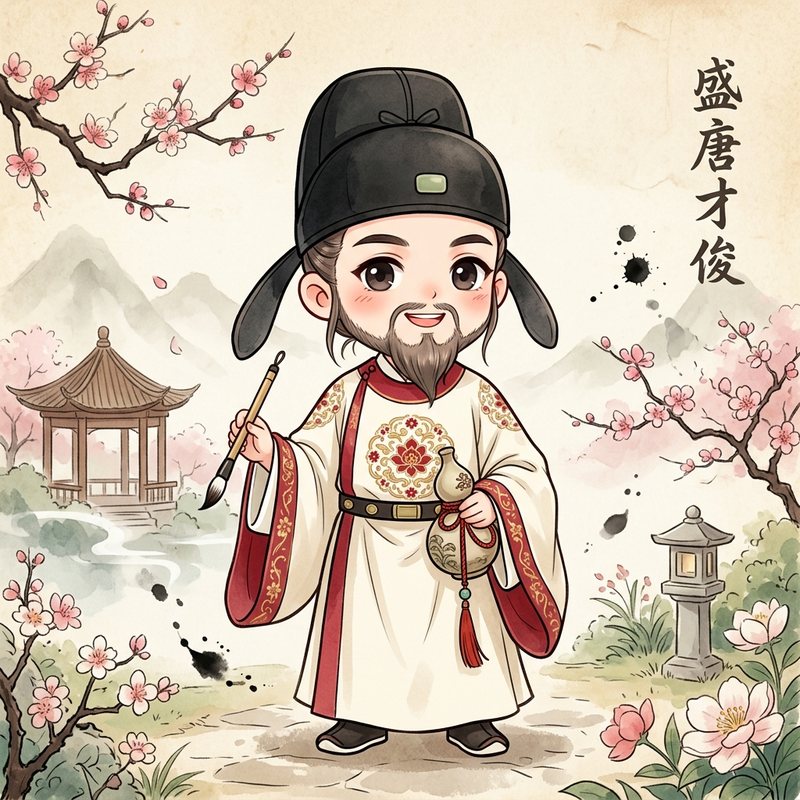
Bai Juyi
Middle to Late Tang Dynasty(772–846)Age 1 · Xinzheng“The People's Poet: From a fierce imperial critic to a transcendent philosopher.”
The Complete Life Journey & Biography of Bai Juyi (Po Chü-i) (白居易)
Chronological travel & exile routes mapped to modern Chinese cities across Middle to Late Tang Dynasty China — featuring bilingual scholar audio, classical poetry recitations, and historical cross-paths.
Fuli (符离)
Age 13784 CEModern-day analog: Modern Suzhou City, Anhui
Studying until his mouth bled and elbows calloused in a war-torn refugee town.
In freezing Fuli, teenage Bai Juyi studied with brutal obsession—reading until his tongue bled and elbows blistered. Amidst poverty, he fell deeply in love with the neighbor girl Xiangling. Standing in a withered field at age sixteen, he penned 'Wildfires cannot destroy the grass; it rises again with the spring breeze'—a resilient roar against fate.
“Even wild fires cannot burn it entirely; when the spring breeze blows, it will rise again.”
野火烧不尽,春风吹又生。(Yě huǒ shāo bù jìn, chūn fēng chuī yòu shēng.)Chang'an (帝都长安)
Age 29800 CEModern-day analog: Imperial Capital Chang'an (Modern Xi'an)
Stunning the literary giants and penning the ultimate epic of imperial tragedy.
In Chang'an, arrogant literary giants tried to dismiss him, only to be struck dumb by his genius. Passing the grueling imperial exam at twenty-nine, he tasted ultimate triumph. Later, as a rural sheriff sheltering from night rain at a mountain temple, he poured his own romantic sorrow into 'The Song of Everlasting Sorrow', a tragic imperial epic that became a nationwide sensation overnight.
“In heaven we shall be birds flying side by side; on earth, we shall be trees with branches entwined.”
在天愿作比翼鸟,在地愿为连理枝。(Zài tiān yuàn zuò bǐ yì niǎo, zài dì yuàn wéi lián lǐ zhī.)Chang'an Court (长安宫廷)
Age 36807 CEModern-day analog: The Inner Imperial Court
Risking his life to expose the darkest imperial truths through poetry.
The glazed tiles of the imperial palace could not hide a rotting empire. Standing in the eye of the political storm, Bai Juyi chose the most dangerous path. Discarding romantic verses, he wielded his pen like a scalpel, writing fifty blistering poems exposing peasant starvation and eunuch extortion. 'I sing only of the people's pain,' he wrote—not merely poetry, but a blood-written petition risking his own life.
“I sing only of the afflictions of the people, praying that the Emperor might know their suffering.”
唯歌生民病,愿得天子知。(Wéi gē shēng mín bìng, yuàn dé tiān zǐ zhī.)Jiujiang (江州)
Age 44815 CEModern-day analog: Modern Jiujiang, Jiangxi
Two outcasts finding profound solace on a freezing, autumn river.
A freezing autumn wind sliced across the Jiujiang river. Stripped of power and grieving his mother, Bai Juyi was backed into life's darkest corner. Moored at night, he heard a melancholic lute cutting through the reeds. The player was an aging, discarded courtesan from Chang'an. Separated by a thin boat wall, the exiled official and the wandering musician understood each other's shattered souls. Weeping in the dark, he penned 'The Pipa Song', an eternal monument to shared human sorrow.
“Both of us are fallen outcasts at the end of the world; why must we have known each other to find kinship upon meeting?”
同是天涯沦落人,相逢何必曾相识!(Tóng shì tiān yá lún luò rén, xiāng féng hé bì céng xiāng shí!)Zhongzhou (忠州)
Age 47818 CEModern-day analog: Modern Zhongxian, Chongqing
Healing a broken heart by planting flowers on a barren eastern slope.
Fog choked the gorges, and Zhongzhou's soil yielded only thorns. Yet the new governor refused to despair. Taking off his official robes, Bai Juyi spent his meager salary on saplings. He led the peasants to clear the rugged 'Eastern Slope', planting hibiscus and lychee trees. The sweat and blooming flowers slowly mended his shattered spirit. Calling himself the 'Resident of the Eastern Slope' (Dongpo), his defiance in the mud would, two centuries later, spiritually save another legendary exile—Su Shi.
“Taking my coins to buy flowering trees, I plant them upon the eastern slope of the city.”
持钱买花树,城东坡上栽。(Chí qián mǎi huā shù, chéng dōng pō shàng zāi.)Hangzhou (杭州)
Age 51822 CEModern-day analog: Hangzhou (The Venice of the East)
Transforming youthful outrage into a massive causeway that fed a million farmers.
The Qiantang tide roared, but West Lake was choked with silt. Arriving as Governor, Bai Juyi abandoned his angry Chang'an edge. Instead of attacking corrupt ministers, he rolled up his trousers and led massive dredging and dam-building projects, turning political fury into life-giving irrigation for a thousand farms. Riding along the willow-lined white sand causeway, he realized that leaving a legacy in the soil was far more eternal than any political argument.
“I can never walk enough along the eastern shore, beneath the green willows of the white sand causeway.”
最爱湖东行不足,绿杨阴里白沙堤。(Zuì ài hú dōng xíng bù zú, lǜ yáng yīn lǐ bái shā dī.)Luoyang (洛阳)
Age 58829 CEModern-day analog: Modern Luoyang, Henan
Walking away from the crumbling empire's power struggles to live as a transcendent hermit.
The twilight chill of a dying empire crept over Luoyang. Disgusted by the bloody factional warfare, Bai Juyi repeatedly declined the highest offices to retire at Xiangshan Temple. In his golden years, he gave away his wealth to the poor and cleared river rapids to protect sailors. Drinking wine with old friends like Liu Yuxi, he let go of life and death, fame and ruin. From the furious young rebel of Chang'an to the smiling sage of Xiangshan, he finally attained the deepest, most transcendent freedom.
“How open and free is Bai Letian; let us not speak of it, for within my heart I am fully content.”
达哉达哉白乐天,漫说向人意自得。(Dá zāi dá zāi Bái Lètiān, màn shuō xiàng rén yì zì dé.)
Literati Knowledge Vault · 先贤知识宝库
In-Depth Essays & Philosophical Inquiries on Bai Juyi
Deep dives, myth-busting, and modern psychological lessons from Bai Juyi's life and philosophy.
暂无已发布的深度专栏文章。
Historical Nexus & Intersecting Journeys
与 白居易 (Bai Juyi) 时空交汇、思想交锋或命运相连的华夏先贤网络
Historical Nexus & Intersecting Journeys
与 白居易 时空交汇、思想交锋或命运相连的华夏先贤网络
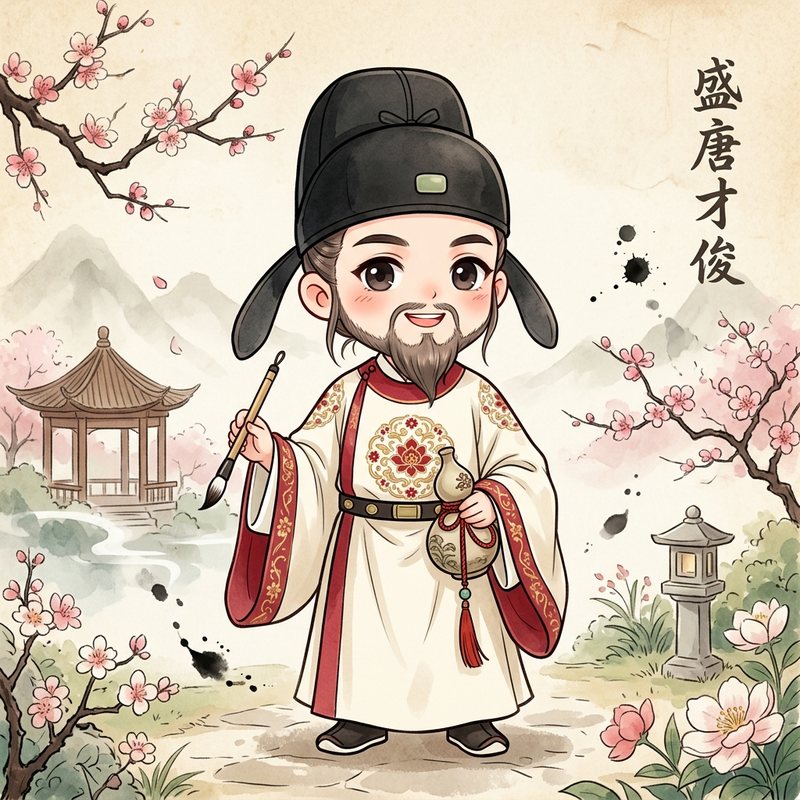
Li Shangyin
李商隐
In late life at Luoyang, Bai Juyi was so captivated by young Li Shangyin's verse that he wished to be his son.
白居易晚年退居洛阳,读李商隐诗卷大为折服,戏言'愿儿身受教',极尽提携爱护。
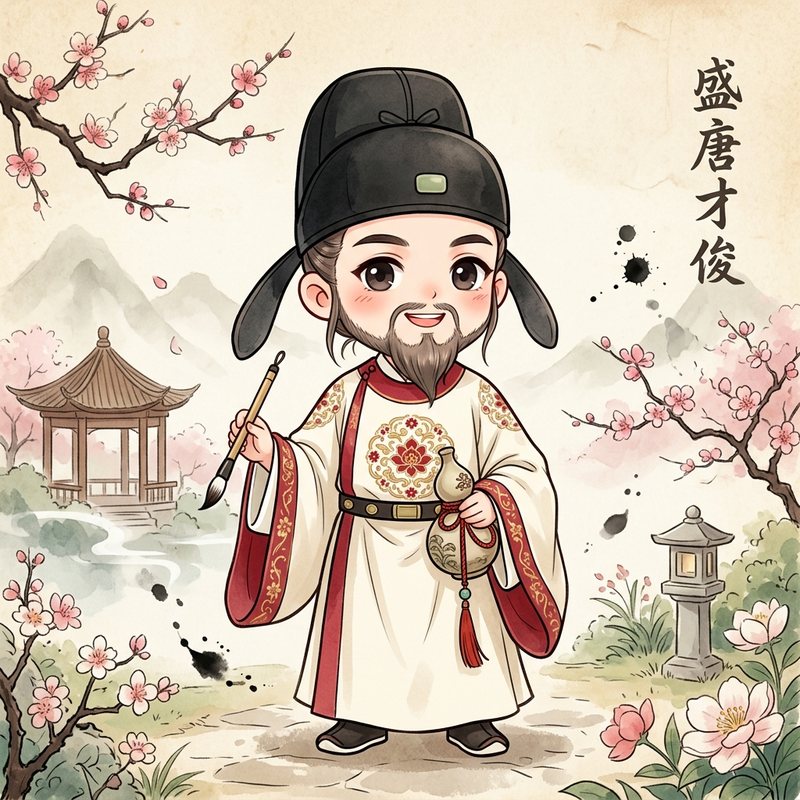
Han Yu
韩愈
Co-commanded Mid-Tang letters: Han Yu through monumental classical prose, Bai through accessible moral verse.
元和年间同立文坛前沿,韩愈险怪奇拔倡古文,白居易平易近人倡乐府,并为中唐巨擘。
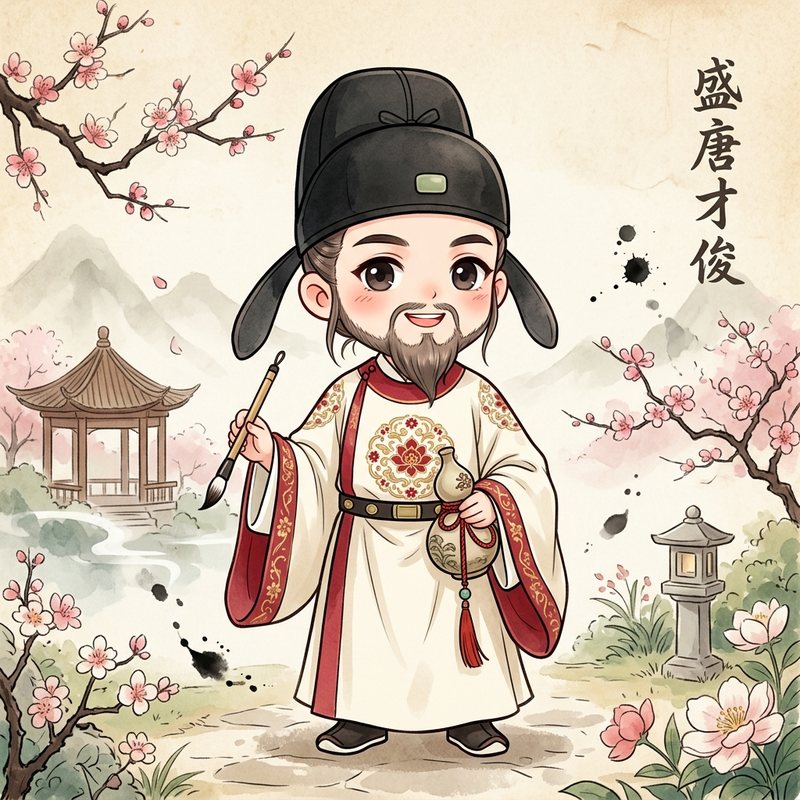
Liu Yuxi
刘禹锡
Living as retired scholars in Luoyang, Bai hailed Liu as 'the Poet Hero', exchanging decades of witty masterpieces.
白居易与刘禹锡晚年同居洛阳,诗酒往来,白称刘为'诗豪',互赠长短句数十篇。
Du Fu
杜甫
Du Fu's compassionate realism formed the direct fountainhead for Bai Juyi's New Yefu poetry movement.
杜甫'穷年忧黎元'的沉郁史诗,直接启发了中唐白居易'文章合为时而著'的现实主义运动。
Key Historical Inquiries & Context
关于 白居易 (Bai Juyi) 的核心史实考证、公案辨析与中英直答
Who was Bai Juyi (白居易)?
Bai Juyi championed the New Yuefu Movement by using accessible language to expose societal injustices. His life traced a dramatic arc from a fierce political reformer to an exiled official, ultimately finding peace as a pragmatic governor building the iconic causeways of West Lake.
What was Bai Juyi's primary cultural and historical legacy?
Bai Juyi is celebrated across world history as a pioneer of The People's Poet, Master of Epic Narrative Verse, The Civic Governor of West Lake, leaving enduring philosophical insights, literature, and art.
Where does Bai Juyi's historical life journey map lead?
This interactive GIS map retraces 8 chronological stops across Middle to Late Tang Dynasty China, originating from Xinzheng and spanning through Luoyang.