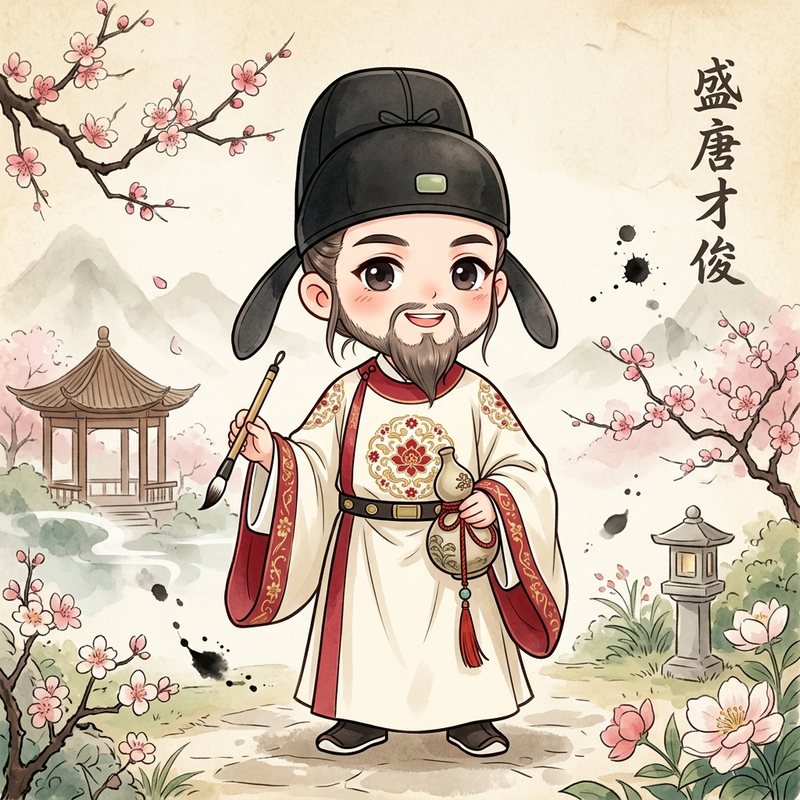
Han Yu
Tang Dynasty(768–824)Age 0 · Heyang Birthplace“The Confucian Luther of Tang China: leader of the Classical Prose Movement who revived Confucian rationalism and reshaped Chinese literature.”
The Complete Life Journey & Biography of Han Yu (Tang Prose Master) (韩愈)
Chronological travel & exile routes mapped to modern Chinese cities across Tang Dynasty China — featuring bilingual scholar audio, classical poetry recitations, and historical cross-paths.
Xuancheng & Shaozhou (宣城启蒙)
Age 3771 CEModern-day analog: Modern Xuancheng, Anhui & Shaoguan, Guangdong
Following his brother into political exile, burying himself in the classics by lamplight through every hardship.
By lamplight in Xuancheng, young Han Yu buried himself in the classics. Around 777, his brother was demoted and the family moved south to Shaozhou. Through every hardship, he turned adversity into fuel for learning.
“A teacher is one who transmits the Way, imparts knowledge, and resolves doubts.”
师者,所以传道受业解惑也。(Shī zhě, suǒ yǐ chuán dào shòu yè jiě huò yě.)Chang'an Struggles (长安应试)
Age 18786 CEModern-day analog: Modern Xi'an, Shaanxi
Thrice failing the prestigious imperial selection exam, yet persevering in poverty and championing bold prose.
The examination halls of Chang'an proved brutally unforgiving: Han Yu failed the prestigious Boxue Hongci exam three times. Reduced to poverty, he persevered, submitting his bold prose to high ministers and challenging the hollow euphuism of the age.
“A thousand-li steed may be common, but a discerning Bole who recognizes it is rare.”
千里马常有,而伯乐不常有。(Qiānlǐ mǎ cháng yǒu, ér Bólè bù cháng yǒu.)Bianzhou & Xuzhou (汴州徐州)
Age 28796 CEModern-day analog: Modern Kaifeng & Xuzhou, China
Passing the examinations at last and entering official service as a registrar.
In the military governor's offices of Bianzhou and Xuzhou, Han Yu honed his skills as a pragmatic administrator, upholding the integrity of a Confucian scholar amid the turbulent politics of the late Tang.
“Whenever things are denied their due balance, they cry out.”
大凡物不得其平则鸣。(Dà fán wù bù dé qí píng zé míng.)Chang'an Censor (长安御史)
Age 34802 CEModern-day analog: Modern Xi'an, Shaanxi
As Imperial Censor, petitioning the throne to relieve famine and being banished to Yangshan for his courage.
As Imperial Censor, Han Yu witnessed famine ravage the land and boldly petitioned the throne to aid the starving, defying powerful ministers. For his fearless conscience, he was banished to the remote southern county of Yangshan.
“One memorial at dawn before the nine-tiered throne, by dusk exiled eight thousand li to Chaozhou.”
一封朝奏九重天,夕贬潮州路八千。(Yī fēng zhāo zòu jiǔ chóng tiān, xī biǎn Cháozhōu lù bā qiān.)Yangshan Exile (阳山兴学)
Age 35803 CEModern-day analog: Modern Yangshan, Qingyuan, Guangdong
In the desolate southern frontier, building schools and winning the love of the people, turning exile into a mission of education.
In remote Yangshan, Han Yu built schools and taught the local people, winning their deep affection. He turned his exile into a mission of education, proving that a true scholar thrives even in the wilderness.
“A fine rain on the capital's street falls soft as butter; the grass's green is seen from afar, but vanishes up close.”
天街小雨润如酥,草色遥看近却无。(Tiān jiē xiǎo yǔ rùn rú sū, cǎo sè yáo kàn jìn què wú.)Chang'an Court (长安中枢)
Age 38806 CEModern-day analog: Modern Xi'an, Shaanxi
Recalled to high office, authoring his philosophical masterpieces, then banished to Chaozhou for denouncing imperial Buddhist relic veneration.
In 819, when Emperor Xianzong venerated a Buddhist relic, Han Yu submitted a fierce memorial denouncing it, risking execution. Banished to Chaozhou, he wrote: 'One memorial at dawn before the throne, by dusk exiled eight thousand li to Chaozhou.'
“He revived literature after eight dynasties of decay, and rescued the Way from the drowning of the age.”
文起八代之衰,道济天下之溺。(Wén qǐ bā dài zhī shuāi, dào jì tiān xià zhī nì.)Chaozhou Exile (潮州驱鳄)
Age 51819 CEModern-day analog: Modern Chaozhou, Guangdong
In eight months in Chaozhou, driving out crocodiles, freeing slaves, and reviving education, transforming a wild frontier.
In Chaozhou, Han Yu wrote his famous 'Crocodile Proclamation' to drive away the beasts, emancipated debt slaves, built waterworks, and revived the local academy. In eight months, he turned a wild frontier into a land of learning, earning the eternal gratitude of its people.
“One memorial at dawn before the nine-tiered throne, by dusk exiled eight thousand li to Chaozhou.”
一封朝奏九重天,夕贬潮州路八千。(Yī fēng zhāo zòu jiǔ chóng tiān, xī biǎn Cháozhōu lù bā qiān.)Yuanzhou Governorship (袁州兴学)
Age 52820 CEModern-day analog: Modern Yichun, Jiangxi
Pardoned and made governor of Yuanzhou, continuing to free slaves and build schools before returning to lead the Imperial University.
As governor of Yuanzhou, Han Yu freed more bonded debt slaves and established schools. That year, he returned to the capital as Chancellor of the Imperial University, shaping the minds of a generation.
“Excellence in work is forged through diligence and wasted by frivolity; success in action is achieved through deliberate thought and ruined by blind conformity.”
业精于勤,荒于嬉;行成于思,毁于随。(Yè jīng yú qín, huāng yú xī; xíng chéng yú sī, huǐ yú suí.)Chang'an Final Rest (长安谢幕)
Age 53821 CEModern-day analog: Modern Xi'an, Shaanxi
Rising to the highest ranks of the Tang bureaucracy, dying in Chang'an, and being honored as the supreme master of letters.
In 824, Han Yu died in Chang'an at the age of fifty-six, posthumously honored as Minister of Rites with the title 'Wen' (Cultured). His disciple Li Han compiled the 'Collected Works of Changli', preserving the legacy of the man Su Shi hailed as 'reviving literature after eight dynasties of decay.'
“He revived literature after eight dynasties of decay, and rescued the Way from the drowning of the age.”
文起八代之衰,道济天下之溺。(Wén qǐ bā dài zhī shuāi, dào jì tiān xià zhī nì.)
Literati Knowledge Vault · 先贤知识宝库
In-Depth Essays & Philosophical Inquiries on Han Yu
Deep dives, myth-busting, and modern psychological lessons from Han Yu's life and philosophy.
暂无已发布的深度专栏文章。
Historical Nexus & Intersecting Journeys
与 韩愈 (Han Yu) 时空交汇、思想交锋或命运相连的华夏先贤网络
Historical Nexus & Intersecting Journeys
与 韩愈 时空交汇、思想交锋或命运相连的华夏先贤网络
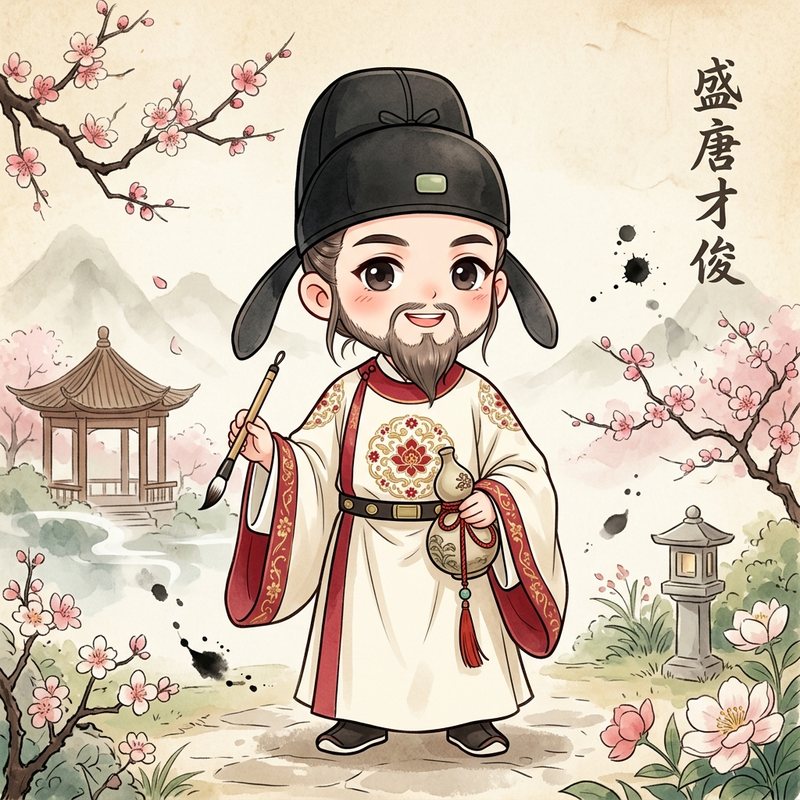
Liu Zongyuan
柳宗元
Co-founders of the Ancient Prose Movement; when Liu died in southern exile, Han wrote his heartbreaking epitaph.
并称'韩柳',共同发起古文运动涤荡六朝浮靡骈文,柳宗元早逝,韩愈为之哭撰墓志铭。
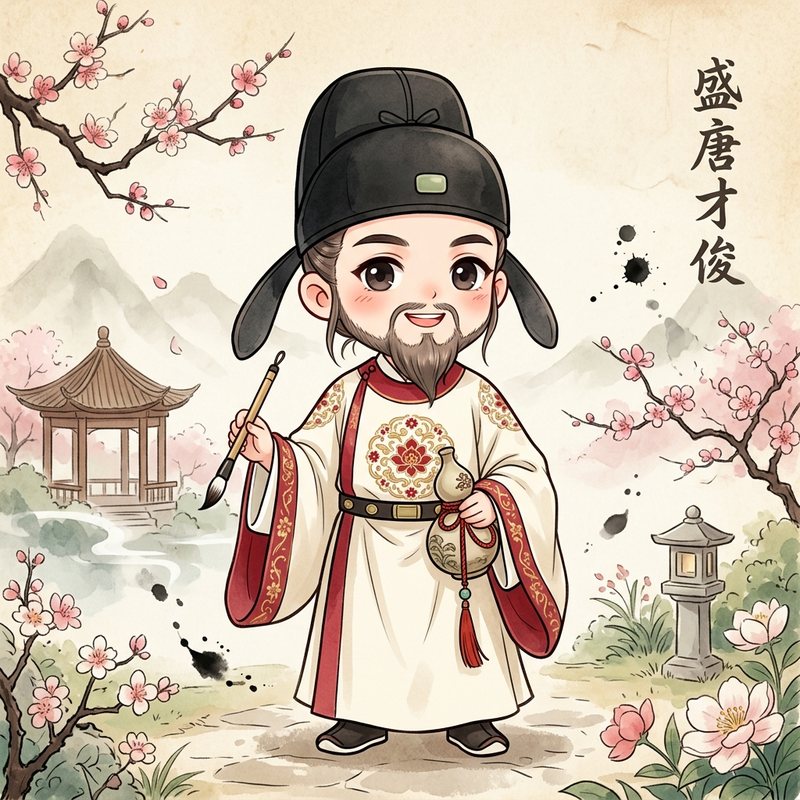
Bai Juyi
白居易
Pioneered the revival of intellectual integrity and moral social engagement in Mid-Tang poetry and essays.
同为中唐文学复兴主将,韩愈重道统之尊,白居易重讽谕民情,交相辉映。
Key Historical Inquiries & Context
关于 韩愈 (Han Yu) 的核心史实考证、公案辨析与中英直答
Who was Han Yu (韩愈)?
Han Yu (768–824), styled Tuizhi, was the foremost literary figure of the Tang Dynasty—the acknowledged head of the Eight Great Prose Masters of Tang and Song and the leader of the Classical Prose Movement. Orphaned young and thrice failing the imperial examinations, he never lost his ambition. As Imperial Censor he petitioned the throne to relieve famine and was banished to Yangshan; later his fierce memorial against imperial Buddhist relic veneration earned him exile to Chaozhou. Wherever he went, he built schools and served the people: teaching in Yangshan, driving out crocodiles and freeing slaves in Chaozhou, and reviving academies in Yuanzhou. Championing rational Confucianism against Buddhist mysticism and ornate parallel prose, he was hailed by Su Shi as the man who 'revived literature after eight dynasties of decay.'
What was Han Yu's primary cultural and historical legacy?
Han Yu is celebrated across world history as a pioneer of The Confucian Luther, The Fearless Whistleblower, The Teacher of Teachers, leaving enduring philosophical insights, literature, and art.
Where does Han Yu's historical life journey map lead?
This interactive GIS map retraces 10 chronological stops across Tang Dynasty China, originating from Heyang Birthplace and spanning through Chang'an Final Rest.