Li Shangyin: Tang China's Most Cryptic Love Poet
Who Was Li Shangyin? Romantic Enigma of Tang Dynasty China
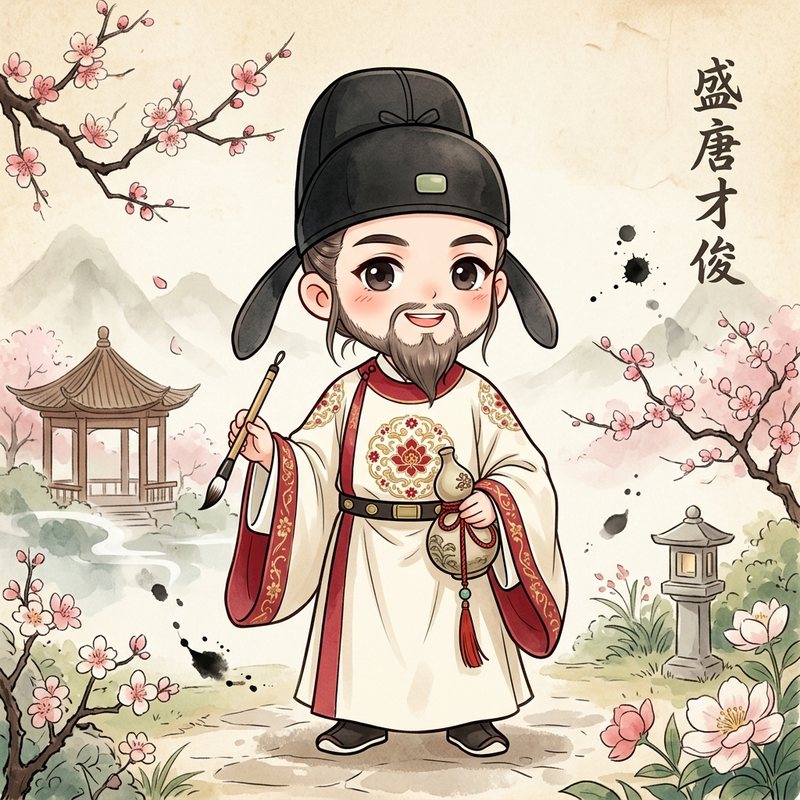
Li Shangyin (李商隐 · Lǐ Shāngyǐn)
字义山 · 号玉谿生/樊南生
The Romantic Soul of Late Tang: master of untitled poetry who wove mystery, longing, and sublime elegance into timeless verses.
晚唐诗坛的浪漫绝唱,‘小李杜’之一;以《无题》《锦瑟》《夜雨寄北》缔造极致朦胧美学,情深致远。
- Master of the Untitled Poem (Wuti): Revolutionized Chinese verse by crafting self-contained lyrical riddles that weave personal desire, political grief, and cosmic nostalgia.
- Tragic Victim of Factional Strife: Trapped innocently between the warring Niu and Li political parties, spending his career wandering provincial military secretariats.
- The Keats of the Late Tang: Paired in world literature with John Keats for supreme aesthetic sensibility, negative capability, and melancholy awareness of transient beauty.
- Immortal Elegist of Memory: Composed 'The Inlaid Zither' (Jinse) and 'Night Rain: Sent to the North' (Yeyu Jibei), universally recognized among humanity's deepest meditations on love and time.
Phase 1: Orphanhood & The Early Brilliance in Luoyang (812–836)
Li Shangyin was born in 812 CE in Henei (modern Qinyang, Henan Province) into a distant, impoverished branch of the Tang imperial house. Misfortune struck when he was barely ten years old: his father, a minor county official, passed away, leaving young Li Shangyin as the eldest son to support his widowed mother and siblings. To survive, the precocious boy copied manuscripts by hand and pounded grain for meager wages, yet devoured the classics by lamplight and developed an extraordinary command of historical prose.
唐宪宗元和七年(812年),李商隐出生于河南怀州河内。虽为李唐宗室远支,但其家境早已衰落不堪。年仅十岁时,任获嘉县令的父亲不幸病故,少年李商隐作为长子不得不‘佣书贩舂’、抄书舂米以供养孤母幼弟。然而在极度清贫之中,他发愤攻读,兼通经史子集,展现出超凡出众的文学才华。
Around 829 CE, his brilliant literary reputation caught the attention of Linghu Chu, Military Commissioner of Tianping and former Prime Minister. Recognizing the youth's singular genius, Linghu Chu welcomed him into his household, taught him the intricate art of formal parallel prose (Pianwen), and provided financial stipends for his examination studies. In the cultural capital of Luoyang, elder poetry giant Bai Juyi was so overwhelmed by Li Shangyin's exquisite verse that he playfully declared he would be glad to be reborn as Li's son.
大和三年(829年),一代重臣、天平军节度使令狐楚读到李商隐的文卷,大为惊叹,遂将其延入幕府,悉心传授骈体四六章奏,并倾囊资助其科举应试。在东都洛阳,文坛盟主白居易读其诗后赞叹折服,晚年甚至笑称‘愿死后得为尔儿’,使青年李商隐声誉鹊起。
身无彩凤双飞翼,心有灵犀一点通。
Shēn wú cǎi fèng shuāng fēi yì, xīn yǒu líng xī yī diǎn tōng.
Although my body lacks colorful phoenix wings to fly to you, our hearts are joined like the single spiritual streak within the sacred horn.
Context · From Li Shangyin's timeless 'Untitled' lyric (昨夜星辰昨夜风), this celebrated couplet became East Asia's definitive proverb for telepathic empathy and unbreakable spiritual connection.
Phase 2: Jinshi Examination Triumph & The Deadly Factional Crossfire (837–841)
In 837 CE, aided by Linghu Chu's son Linghu Tao, twenty-five-year-old Li Shangyin passed the prestigious Jinshi imperial examination in Chang'an, securing his entrance into official rank. Yet triumph turned instantly to tragedy: that very winter, his beloved mentor Linghu Chu passed away in Xingyuan. Li Shangyin hurried thousands of miles to mourn his surrogate father, personally drafting the dying statesman's final memorial to the throne.
开成二年(837年),在令狐楚之子令狐绹等人的襄助下,二十五岁的李商隐登进士第。然而金榜题名的喜悦转瞬化作至痛:同年冬天,亦师亦父的恩师令狐楚病逝于兴元。李商隐千里奔丧,哭别恩师,并代撰遗表,尽显师生至情。
In 838 CE, seeking a livelihood, Li Shangyin joined the staff of Wang Maoyuan, Military Commissioner of Jingyuan in Gansu. Deeply impressed by the young scholar's integrity and intellect, Wang gave his daughter Wang Yanling in marriage to Li Shangyin. The two fell deeply in love, forging a profound domestic bond. Unbeknownst to the young poet, however, Wang Maoyuan was aligned with Li Deyu's faction, while his patrons, the Linghu family, were stalwarts of the rival Niu faction. Branded an ungrateful traitor by the Niu partisans, Li Shangyin found himself permanently trapped in the crossfire of late Tang factional warfare.
开成三年(838年),李商隐受泾原节度使王茂元之辟进入幕府。王茂元爱其才貌,以女妻之,两人情笃意洽。然而王茂元在政治上属于李德裕‘李党’,而令狐家族属于‘牛党’。牛党士人见其入赘李党要员之门,痛斥李商隐‘背恩忘德’。无意之间,李商隐卷入了晚唐最残酷的牛李党争,从此终生见弃于朝堂主流。
昨夜星辰昨夜风,画楼西畔桂堂东。
Zuó yè xīng chén zuó yè fēng, huà lóu xī pàn guì táng dōng.
Last night's stars, last night's gentle wind, west of the painted pavilion, east of the cassia hall.
Context · Evoking the luminous romance and delicate secrecy of a nocturnal encounter in Chang'an, capturing ephemeral beauty suspended in time.
Phase 3: Standing for Justice in Hongnong & Searing Dynastic Satires (842–846)
In 842 CE, Li Shangyin passed the imperial Boxue Hongci selection examination, receiving appointments as Collator in the Palace Library and Magistrate of Hongnong County. During his tenure at Hongnong, the compassionate poet refused to endorse wrongful death sentences imposed on peasant prisoners by corrupt regional governor Sun Jian. Standing firm against judicial brutality, Li Shangyin tendered his resignation rather than compromise his conscience, demonstrating heroic civil courage.
会昌二年(842年),李商隐中拔萃科,授秘书省校书郎,调任弘农县尉。在弘农任上,他秉公执法、体恤苍生,坚决驳回上司陕虢观察使孙简对无辜囚犯的重判。因不忍屈从权贵残民自肥,他毅然辞官抗争,彰显了儒者宁折不弯的清正风骨。
Returning to Chang'an, he observed with growing alarm the vanity of emperors who squandered state resources chasing Daoist elixirs and necromancy while the common folk starved. Pouring his indignation into allegorical history, he composed 'Jia Sheng', a searing satire on Emperor Wendi of Han, and 'The Sui Palace', cautioning modern rulers against decadent indulgence. His razor-sharp political verse established him as one of imperial China's most daring social critics.
重返长安后,面对朝廷昏聩求仙、忽视民瘼的时弊,李商隐借古讽今,写下名篇《贾生》与《隋宫》。他以犀利笔锋鞭挞最高统治者问鬼神而不问苍生的荒唐,展现出忧国忧民的士大夫情怀。
宣室求贤访逐臣,贾生才调更无伦。可怜夜半虚前席,不问苍生问鬼神。
Xuān shì qiú xián fǎng zhú chén, Jiǎ Shēng cái diào gèng wú lún. Kě lián yè bàn xū qián xí, bù wèn cāng shēng wèn guǐ shén.
In the Xuan Chamber seeking talent, the emperor consulted the banished exile; scholar Jia's genius was beyond compare. Pity that at midnight the emperor leaned forward in vain, asking not about the suffering people, but about ghosts and spirits.
Context · Li Shangyin's masterclass in historical critique, lamenting unappreciated talent while rebuking imperial infatuation with religious superstition over governance.
Phase 4: Southern Exiles, Bereavement & Immortal Elegies (847–850)
With Emperor Xuanzong's ascension in 847 CE, political winds reversed: the Niu faction regained supreme authority, banishing Li faction leaders to the deep south. Li Shangyin accepted a post as secretary under Zheng Ya, Governor of Guiguan, traveling over eight thousand miles to remote Guilin (Guangxi). Amid the breathtaking karst limestone peaks and subtropical waters of the Li River, he endured malaria and physical dislocation, transforming southern melancholy into sublime nature lyrics.
大中元年(847年),唐宣宗继位,牛党重掌大权,李德裕等贬谪南荒。李商隐随李党名臣郑亚远赴岭南桂林,出任桂管掌书记。在奇峰林立的漓江瘴疠之地,他恪尽职守,寄情山水,将颠沛流离之苦化作空灵纯净的诗篇。
In 850 CE, he joined the staff of Military Commissioner Lu Hongzhi in Xuzhou (Jiangsu). But while stationed hundreds of miles away in 851 CE, catastrophe fell: his devoted wife Wang Yanling died suddenly at their home in Chang'an. Unable to reach her bedside in time, Li Shangyin was plunged into inconsolable grief. He resigned his commission immediately and returned to the capital, pouring his heartache into haunting elegies that elevated marital devotion into the highest realm of classical Chinese literature.
大中四年(850年),李商隐应卢弘止之请赴江苏徐州任节度判官。然而大中五年春,相濡以沫十余年的结发爱妻王氏在长安故居病逝。关山迢递,李商隐未能见妻子最后一面,闻讯痛彻心扉。他辞官归京,写下无数催人泪下的悼亡诗篇,字字啼血。
春蚕到死丝方尽,蜡炬成灰泪始干。
Chūn cán dào sǐ sī fāng jìn, là jù chéng huī lèi shǐ gān.
The spring silkworm spins silk until it dies; the candle turns to ash before its tears run dry.
Context · A supreme cosmic metaphor from his 'Untitled' cycle: silk (*si*) puns with love (*si*), celebrating endless devotion that transcends human mortality.
Phase 5: Misty Mountains of Sichuan, The Inlaid Zither & Poetic Summit (851–854)
Faced with crushing poverty and two young children to support, the grief-stricken poet was forced to leave the capital once more in late 851 CE, joining the military administration of Liu Zhongying in Zizhou (modern Santai, Sichuan). Stationed deep in the rugged river valleys of ancient Ba-Shu, Li Shangyin found a compassionate protector in Commissioner Liu, who offered him monastic retreats, Buddhist scriptures, and generous patronage.
丧妻之后的李商隐孤苦维艰,为抚育一双幼小儿女,不得不于大中五年冬再次远赴蜀道,投奔东川节度使柳仲郢,出任节度书记。柳仲郢笃信佛教、尊贤爱才,在梓州为李商隐提供了宁静安适的修撰环境与精神庇护。
During four solitary years in Sichuan, listening to the relentless rhythm of autumn rains beating against monastic eaves, Li Shangyin reached the zenith of his artistic powers. Here he penned 'Night Rain: Sent to the North' (夜雨寄北)—a miracle of compression blending present isolation, past yearning, and imagined future communion—as well as his crowning jewel, 'The Inlaid Zither' (锦瑟). In fifty enigmatic lines, he created a kaleidoscope of mythic symbols—Zhuangzi's butterfly, tears of oceanic pearls, smoking Lantian jade—that captured the absolute mystery of human consciousness.
在梓州幕府与山寺的四年间,听着淅淅沥沥的巴山秋雨,李商隐的诗境臻于化境。他写下了传颂千古的《夜雨寄北》与无上神品《锦瑟》。‘锦瑟无端五十弦,一弦一柱思华年’,他将庄周梦蝶、望帝化鹃、沧海珠泪与蓝田玉烟融为一体,缔造了华夏文学史上最具哲学意蕴与象征美学的巅峰之作。
君问归期未有期,巴山夜雨涨秋池。何当共剪西窗烛,却话巴山夜雨时。
Jūn wèn guī qī wèi yǒu qī, Bā shān yè yǔ zhǎng qiū chí. Hé dāng gòng jiǎn xī chuāng zhú, què huà Bā shān yè yǔ shí.
You ask the date of my return, but no date is set; night rain on Mount Ba swells the autumn pools. When shall we trim the candle by the west window together, and talk once more of the night rain on Mount Ba?
Context · Composed in Sichuan, an immortal four-line masterpiece of temporal recursion, transporting the reader between lonely present rainfall and envisioned future reunion.
Phase 6: Leyou Plain Sunset, Ancestral Peace & Eternal Legacy (855–858)
In 855 CE, Liu Zhongying was recalled to Chang'an as Minister of Justice and secured an appointment for Li Shangyin as Salt and Iron Judicatus. Returning to the imperial metropolis in his forties, Li Shangyin saw a dying empire consumed by corruption, eunuch dominance, and rebel uprisings. Ascending the ancient plateau of Leyou outside the south gates at sunset, he penned his famous four-line elegy: 'The setting sun glows with boundless beauty, only it is so close to twilight.' It was the epitaph not only for his own embattled life, but for the glorious golden age of the Tang Dynasty itself.
大中九年(855年),柳仲郢奉调入京出任刑部尚书,力荐李商隐还朝任盐铁推官。重回长安,晚唐政局已是夕阳西下、军阀割据。黄昏时分,李商隐登临长安乐游原,俯瞰苍茫古原,写下了千古绝叹:‘夕阳无限好,只是近黄昏。’这不仅是他一生身世浮沉的哀挽,更是对大唐盛世走向终结的深沉预言。
Relieved of his duties in 858 CE, Li Shangyin retired to his ancestral estate in Zhengzhou (Henan Province). Exhausted by decades of wandering and heartbreak, he passed away peacefully that winter at the age of forty-six. His cousin Han Zhan and son Li Gun painstakingly assembled his manuscripts, publishing the canon as 'The Fannan Collection' (樊南文集) and 'Poems of Yuxisheng' (玉谿生诗). Though neglected by the court during his lifetime, Li Shangyin's reputation soared in later centuries, forever enshrined as the soul of Late Tang poetry.
大中十二年(858年),罢职闲居的李商隐退隐郑州荥阳故里。同年冬,这位才华横溢却饱经沧桑的诗坛巨星平静辞世,终年四十六岁。其表兄韩瞻与子李衮倾尽心力整理其散佚遗稿,编订成《樊南文集》与《玉谿生诗集》。后世文人推崇备至,将其奉为晚唐诗歌不可逾越的高峰。
此情可待成追忆,只是当时已惘然。
Cǐ qíng kě dài chéng zhuī yì, zhǐ shì dāng shí yǐ wǎng rán.
Could this feeling have waited to become a cherished memory? Even then, in the very moment, all was bewilderment and wonder.
Context · The iconic closing lines of 'The Inlaid Zither' (锦瑟), capturing the universal tragic intuition that we can never truly grasp the sublime value of experience until it slips into memory.
| Perspective 视角 | Li Shangyin (Late Tang Romantic) | John Keats (English Romantic Titan) |
|---|---|---|
| Core Aesthetic Vision | Pioneered allusive, layered symbolism and emotional ambiguity to mirror the twilight of late Tang civilization. | Championed 'Negative Capability' and intense sensory absorption to contemplate truth and beauty amidst mortal suffering. |
| Sensuous Imagery & Craft | Ornate brocade zithers, ocean pearls as tears, incense smoke, and the pun of silkworm silk for undying devotion. | Rich tapestries of nightingales, Grecian urns, overflowing vintage wine, and the sweet breath of fading flowers. |
| Tragedy of Transience | 'The setting sun glows with boundless beauty, only it is so close to twilight'—mourning dynastic and personal loss. | 'Beauty that must die; and Joy, whose hand is ever at his lips Bidding adieu'—mourning mortal fragility. |
| Enduring Cultural Influence | Revered as the master of the 'Untitled' genre and co-creator of 'Little Li-Du', inspiring centuries of East Asian lyricism. | Canonized among the foremost English Romantic poets, whose odes remain foundational to global literary education. |
Trace Li Shangyin's Footsteps on the Interactive Topographic Map
Follow his actual historical trail across 10 imperial stations—from childhood in Henei and youth in Luoyang to secretariats in Guilin, bereavement in Xuzhou, and sanctuary in Zizhou.
Launch Interactive Journey MapFrequently Asked Questions (FAQ)
Why is Li Shangyin famous for his 'Untitled' (Wuti) poems?
Li Shangyin pioneered the 'Untitled' (Wuti) poem genre in classical Chinese literature. Rather than titling works with explicit historical or narrative occasions, he omitted titles to create mysterious, multi-layered lyric dreamscapes. Readers can interpret these exquisite verses simultaneously as romantic devotion, introspective existential reflection, or subtle political allegory on late Tang factional decline.
What was the Niu-Li factional strife and how did it affect Li Shangyin?
The Niu-Li factional feud (牛李党争) was a devastating decades-long political war between rival court cliques in the late Tang. Li Shangyin was mentored by Linghu Chu of the Niu faction, but later married the daughter of Wang Maoyuan, who was aligned with the Li faction. Accused of betrayal by both sides, he was denied promotion and spent his career wandering peripheral provincial military posts.
Why is Li Shangyin compared to the English Romantic poet John Keats?
Scholars frequently compare Li Shangyin to John Keats because both poets possessed acute sensory awareness, deep emotional vulnerability, and an intense melancholy born of life's brevity. Both artists transformed personal suffering into immortal odes celebrating transient beauty, achieving what Keats termed 'Negative Capability'—the capacity to exist amid uncertainty and mystery without irritable reaching after fact.
What is the meaning behind Li Shangyin's famous poem 'The Inlaid Zither' (Jinse)?
'The Inlaid Zither' (锦瑟) is widely considered one of the most enigmatic masterpieces in world literature. Featuring fifty strings that evoke fifty years of life, the poem weaves Daoist dreamscapes, tears turned to oceanic pearls, and glowing jade mist to explore memory, lost love, artistic regret, and the elusive nature of human perception.
What does the line 'The spring silkworm spins silk until it dies' mean?
This immortal line from Li Shangyin's 'Untitled' cycle uses a brilliant double entendre: in Chinese, 'silk' (丝, sī) sounds identical to 'yearning' (思, sī). The imagery of a silkworm spinning thread until death and a candle weeping wax until reduced to ashes symbolize devotion and love that persist faithfully to the very end of life.
Why are Li Shangyin and Du Mu together called 'Little Li-Du' (Xiao Li-Du)?
To distinguish them from High Tang titans Li Bai and Du Fu ('Great Li-Du'), literary historians paired Li Shangyin and Du Mu as 'Little Li-Du' (小李杜). As the two greatest poetic luminaries of the late Tang, Du Mu excelled at sharp, heroic historical odes, while Li Shangyin mastered intricate, melancholic, and deeply personal lyricism.
Walk with Li Shangyin Across China
随李商隐漫步华夏河山 · 亲历命运逆境与精神涅槃