Who Was Huineng? The Zen Master Behind the Platform Sutra
Sixth Patriarch of Chan, author of the Platform Sutra, and the Socratic master who taught that enlightenment is already within you
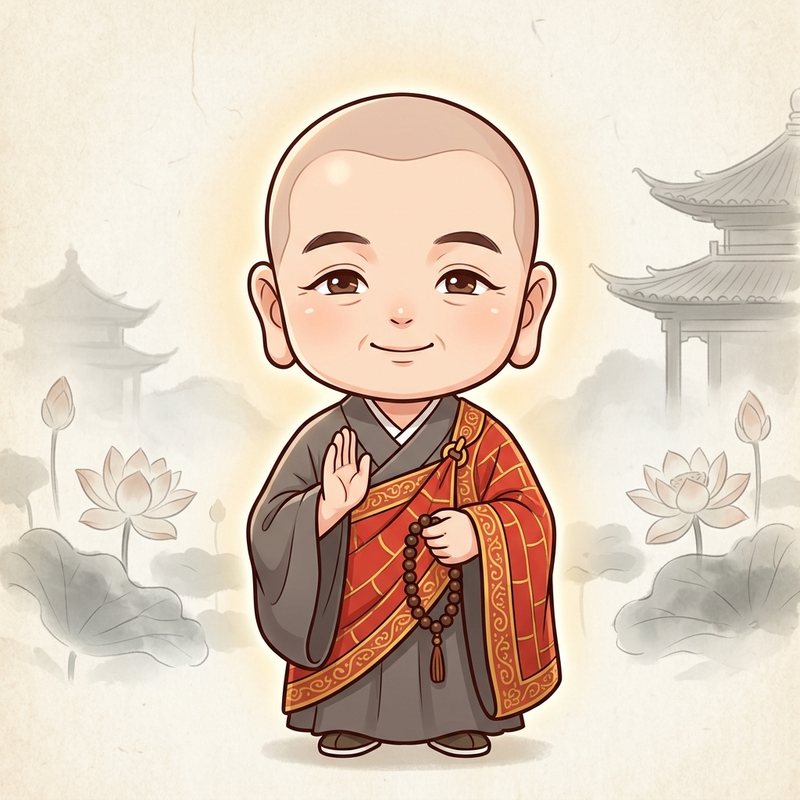
Huineng (慧能 · Huìnéng)
俗姓卢 · 谥号大鉴禅师 · 世称六祖
The Sixth Patriarch of Zen Buddhism: who revolutionized Eastern spirituality with 'Bodhi fundamentally has no tree' and taught that enlightenment is already within you.
中国禅宗实际创始人;以《六祖坛经》‘菩提本无树,明镜亦非台’破除经相执念,主张直指人心、见性成佛,开启东方哲学平民化与顿悟革命。
- The Illiterate Socratic Master: Completely unlettered and from a marginalized southern frontier, he bypassed scholastic scripture to grasp the primordial nature of mind through direct, intuitive realization.
- The Bodhi Verse Revolution: Stunned the monastic establishment with his famous verse 'Bodhi fundamentally has no tree,' overturning dualistic meditation in favor of sudden, effortless awakening.
- The Platform Sutra: His spoken sermons were compiled into the Platform Sutra—the sole native Chinese Buddhist scripture recognized as a canonical Sutra alongside the words of Shakyamuni Buddha.
- Radical Spiritual Democracy: Shattered aristocratic gatekeeping by teaching that 'Buddha-nature has neither north nor south' and that daily mundane tasks like chopping wood and carrying water are the true practice.
Phase 1: The Frontier Woodcutter & The Innate Clarity of Mind (638–661)
Huineng was born in 638 CE during the reign of Emperor Taizong in Xinzhou (modern Xinxing County, Guangdong Province). His father, Lu Xingtao, a former official from Fanyang in northern China, had been demoted and exiled to the southern frontier before passing away during Huineng's early childhood. Left entirely destitute, the young boy grew up supporting his widowed mother by chopping firewood in the rugged mountains and selling bundles in the marketplace.
唐太宗贞观十二年(638年),慧能出生于岭南新州(今广东云浮新兴县)。其父卢行瑫原为范阳官吏,后遭贬谪迁居岭南,在慧能幼年时便病殁。孤儿寡母家徒四壁,年幼的慧能每日入山采薪,挑至市井叫卖,以微薄收入供奉老母。
Though denied formal schooling and remaining completely illiterate throughout his life, Huineng possessed an extraordinary natural purity. Uncorrupted by the courtly vanity and pedantic book-learning of the era, he learned directly from the silent rhythm of nature and honest manual labor, keeping his mind crystalline, humble, and fiercely observant.
尽管终生目不识丁,慧能却天生拥有一颗未被尘俗名利污染的赤子灵心。他在青山长风与粗砺柴担之间体悟天地造化,虽处社会最底层,其本自清净的心性灵光却已悄然涵养圆熟。
下下人有上上智,上上人有没意智。
Xiàxià rén yǒu shàngshàng zhì, shàngshàng rén yǒu mòyì zhì.
The lowliest people may possess the highest wisdom, while the most exalted people may be devoid of true understanding.
Context · Huineng's famous reminder to aristocratic scholars at Huangmei, declaring that spiritual wisdom is an innate birthright that cannot be measured by pedigree or worldly learning.
Phase 2: The Marketplace Awakening & The Journey North (661)
Around 661 CE, when Huineng was twenty-three years old, fate intervened in the bustling trading city of Nanhai (modern Guangzhou). Having just delivered a bundle of firewood to an inn and received his payment, he was walking toward the street when he overheard a traveler chanting a Buddhist text. The verse happened to be from the Diamond Sutra: 'One should produce thoughts that abide nowhere' (应无所住而生其心).
约公元661年,二十三岁的慧能担柴至南海郡(今广州)客店,买主收柴付资。慧能走出店门,偶闻客舍中一位宿客正在高声诵读《金刚经》。当诵至‘应无所住而生其心’这一句时,慧能犹如电光石火破开蒙昧,身心豁然洞彻大悟。
Upon hearing those words, Huineng experienced an instantaneous awakening, recognizing that true consciousness clings to no external objects or mental constructs. He asked the traveler about the scripture and learned that the Fifth Patriarch, Master Hongren, was actively transmitting this teaching at East Mountain in Huangmei (modern Hubei Province). Aided by a generous patron who provided silver for his mother's care, Huineng bade farewell and embarked on a grueling thousand-mile journey north.
慧能当即上前叩问宿客经文来历,得知蕲州黄梅东山寺五祖弘忍大师广传《金刚经》心法。深感其根器非凡的善信安道诚慷慨资助白银十两以奉其母衣粮。慧能拜别老母,毅然收拾行装,徒步千里迢迢北上求法。
应无所住,而生其心。
Yìng wú suǒ zhù, ér shēng qí xīn.
One should produce thoughts that abide nowhere.
Context · The seminal line from the Diamond Sutra that triggered Huineng's spontaneous enlightenment in the bustling marketplace of Guangzhou.
Phase 3: Rice-Pounding at Huangmei & The Immortal Bodhi Verse (661–662)
Arriving at East Mountain Temple in Huangmei, Huineng met Fifth Patriarch Hongren. Testing the uncultured newcomer, Hongren asked: 'You are an uncouth barbarian from Lingnan; how could you possibly become a Buddha?' Without flinching, Huineng replied: 'Human beings may be northern or southern, but Buddha-nature has neither north nor south. My barbarian body differs from Your Reverence's, but what difference is there in our Buddha-nature?' Amazed, Hongren sent him to the kitchen granary.
抵黄梅东山寺参见五祖,弘忍故意试探喝问:‘汝是岭南人,又是獦獠,若为堪作佛?’慧能毫无惧色,慨然抗对:‘人虽有南北,佛性本无南北!獦獠身与和尚不同,佛性有何差别?’弘忍暗暗惊叹其锋芒,命其入后院碓坊劳作。
For eight months, Huineng labored silently pounding grain, tying a heavy stone around his waist to add weight to the wooden pestle. When Hongren challenged his disciples to write a verse revealing their mind to select an heir, the senior monk Shenxiu wrote: 'The body is the Bodhi tree; the mind like a bright mirror stand. Time and again wipe it clean, and let no dust alight.' Shenxiu's verse assumed gradual, dualistic cleansing.
慧能腰系沉重的大石增加体重,在碓坊踏碓舂米整整八个月,任劳任怨。当弘忍召集门人作偈以传法衣时,门首高徒神秀提笔于南廊书壁:‘身是菩提树,心如明镜台,时时勤拂拭,莫使惹尘埃。’此偈虽工整,仍落入执着于渐修拂拭的相对二元之中。
Hearing the verse read aloud, Huineng recognized its incompleteness and asked a visitor to write his own reply on the wall: 'Bodhi fundamentally has no tree, nor is the clear mirror a stand. Originally there is not a single thing; where can dust alight?' Realizing Huineng had penetrated the ultimate reality of emptiness, Hongren visited the granary at dusk, struck the pestle three times with his staff, and at the third watch of the night secretly transmitted the patriarchal robe, bowl, and dharma seal to Huineng, instructing him to flee south immediately.
目不识丁的慧能闻此偈,请人在壁上另题一首:‘菩提本无树,明镜亦非台。本来无一物,何处惹尘埃!’满寺僧众骇然失色。弘忍深知其已明心见性,暮入碓坊击碓三下,夜半以袈裟围护密授真传,将达摩传世祖衣与宝钵授予慧能,密封其为禅宗六祖,并嘱其星夜南奔避祸。
菩提本无树,明镜亦非台。本来无一物,何处惹尘埃!
Pútí běn wú shù, míngjìng yì fēi tái. Běnlái wú yī wù, héchù rě chén'āi!
Bodhi fundamentally has no tree, nor is the clear mirror a stand. Originally there is not a single thing; where can dust alight?
Context · Huineng's crowning enlightenment gatha, sweeping away dualistic cultivation and revealing the unconditioned emptiness that became the foundation of Zen.
Phase 4: Confrontation at Dayu Ridge & The 'Original Face' (662)
Fleeing south with the sacred relics, Huineng was pursued by hundreds of disgruntled northern monks. A fierce former general named Chen Huiming overtook him at Dayu Ridge on the rugged Jiangxi-Guangdong frontier. Seeing escape was impossible, Huineng placed the robe and bowl on a boulder and concealed himself in the thick brush. When Huiming attempted to seize the relics, they remained miraculously immovable.
慧能携衣钵连夜南逃,北方数百僧众沿途紧追抢夺。曾官拜四品游击将军的惠明和尚矫捷先登,追及大庾岭梅关古道。慧能见势不可避,将衣钵掷于路旁盘石,隐身草莽。惠明赶至,伸手提摄衣钵,竟沉重如山,竭尽全力不能动摇分毫。
Trembling with awe, Huiming called out: 'I come for the Dharma, not for the robe!' Huineng stepped from the forest and sat upon the rock, posing a single penetrating question: 'Thinking neither of good nor of evil, at this very moment, what is your original face, Venerable Ming?' The question shattered Huiming's conceptual mind into sudden awakening; he prostrated himself, took Huineng as his teacher, and turned back to mislead the other pursuers.
惠明大惊失色,汗流浃背,跪地呼喊:‘我为法来,不为衣来!’慧能自林中步出高坐石上,当头棒喝:‘不思善,不思恶,正与么时,哪个是明上座本来面目?’惠明闻言大彻大悟,涕泪顶礼拜慧能为师,并回身巧引余众散去,护卫六祖周全。
不思善,不思恶,正与么时,哪个是明上座本来面目?
Bù sī shàn, bù sī è, zhèng yùmó shí, nǎ ge shì Míng shàngzuò běnlái miànmù?
Thinking neither of good nor of evil, at this very moment, what is your original face, Venerable Ming?
Context · The iconic Chan koan delivered at Dayu Ridge, dissolving moral and intellectual dualities to unveil the primordial ground of being.
Phase 5: Fifteen Years in Hiding Among Mountain Hunters (663–676)
Heeding Master Hongren's parting counsel ('Halt at Huai, conceal yourself at Hui'), Huineng slipped into the deep wilderness of Sihui and Huaiji in western Guangdong. For fifteen years, the supreme Sixth Patriarch lived anonymously among rough bands of mountain hunters. Rather than dwelling in luxurious monasteries, he slept by campfires, tended hunting nets, and quietly set captured wild animals free whenever his companions were not looking.
遵五祖弘忍‘逢怀则止,遇会则藏’之嘱,慧能隐遁于广东四会与怀集之间的苍莽大山中,委身避难于猎人队中长达整整十五年。贵为禅宗正统六祖,他毫无架子,与粗粝猎户朝夕相处,守网时常悄悄放生受困禽兽。
When cooking meals with the hunters, Huineng would boil wild herbs in the edges of their communal meat pots. When asked why he ate in such a manner, he simply smiled: 'I only eat the greens beside the meat.' In this long decade and a half of silent patience, he stripped away all monastic self-righteousness, proving that true enlightenment is thoroughly compatible with the dirt, warmth, and grit of human survival.
猎人搭灶煮肉,慧能采摘野菜寄煮于肉锅边缘,每有人问,他便淡然微笑答曰:‘但吃肉边菜。’在这十五年看似漫长沉寂的岁月里,慧能褪尽了一切宗教形式主义与清高傲慢,将至高禅心深深熔铸进凡俗日常的烟火坚韧之中。
佛法在世间,不离世间觉;离世觅菩提,恰如求兔角。
Fófǎ zài shìjiān, bù lí shìjiān jué; lí shì mì pútí, qià rú qiú tùjiǎo.
The Buddha-dharma exists in the world; awakening is never apart from everyday worldly life. Seeking Bodhi away from the world is like searching for horns on a rabbit.
Context · From the Platform Sutra's Song of Formlessness, encapsulating Huineng's fifteen years of discovering absolute transcendence within the humble fabric of ordinary life.
Phase 6: The Wind & Flag Epiphany at Guangzhou (676)
In the first month of 676 CE, having concluded that the time had come to reveal his mission, Huineng emerged from the mountains and arrived at Faxing Temple (modern Guangxiao Temple) in Guangzhou. Master Yinzong was delivering a scholarly lecture on the Nirvana Sutra when an evening gust of wind stirred the temple banners. Two listening monks fell into a heated dispute: one insisted the wind was moving, while the other insisted the flag was moving.
唐高宗仪凤元年(676年)正月初八,慧能审度时机已至,走出四会密林抵达广州法性寺(今光孝寺)。正值印宗法师升座讲授《涅槃经》,暮风吹动庭前幡帜。二僧为此争论不休,一僧坚执‘风动’,另一僧坚执‘幡动’,互不相让。
Still dressed as an ordinary layman, Huineng stepped forward and gently remarked: 'It is neither the wind that moves, nor the flag that moves; it is your minds that move.' The entire assembly fell into stunned silence. Deeply shaken, Master Yinzong invited the wanderer to his private chambers and questioned him closely. Discovering that this lay stranger was none other than the long-lost Sixth Patriarch, Yinzong bowed reverently, shaved Huineng's head under the sacred bodhi tree, and took him as his own teacher.
依然布衣打扮的慧能从容出列,徐徐言道:‘不是风动,不是幡动,仁者心动。’四座骇然震服。印宗法师闻言悚然起敬,延请入室深谈,方知眼前之人正是怀抱达摩衣钵潜隐十五年的禅宗正统六祖。印宗欣喜万分,于菩提树下为慧能剃度落发,反拜其为师,南宗顿教由此正式大白天下。
不是风动,不是幡动,仁者心动。
Bù shì fēng dòng, bù shì fān dòng, rénzhě xīn dòng.
It is neither the wind that moves, nor the flag that moves; it is your minds that move.
Context · Huineng's famous intervention at Guangzhou's Faxing Temple, demonstrating that subjective consciousness constructs external phenomena and marking his public entry into history.
Phase 7: Preaching the Platform Sutra at Shaozhou (677)
In 677 CE, Wei Chu, the prefectural governor of Shaozhou, along with Confucian scholars, local officials, and over a thousand lay and monastic citizens, invited Huineng to ascend the high lecture dais at Dafan Temple. Huineng delivered a series of electrifying lectures outlining the core of the Southern School of Chan: that every person's innate self-nature is fundamentally pure, and that awakening is attained not by accumulating ritual merit but through immediate, direct insight into one's own true nature.
仪凤二年(677年),韶州刺史韦璩率僚属、学者及道俗千余人,虔诚迎请六祖至韶州大梵寺讲堂升座说法。慧能开门见山,演说摩诃般若波罗蜜,直指‘自性本来清净,见性即可成佛’,打破一切烦琐阶梯与偶像束缚。
Huineng's chief disciple, Fahai, meticulously transcribed every word of these discourses, producing the 'Platform Sutra of the Sixth Patriarch' (六祖法宝坛经). It stands as a monumental milestone in global religious literature: the only text written on Chinese soil by a Chinese thinker to be canonized as a 'Sutra' alongside the words of Shakyamuni Buddha. Through it, Chan shook off Indian scholasticism and became an organic, lively, and thoroughly Chinese philosophy.
门人法海详实记录下六祖这趟震撼人心的说法历程,编纂为《六祖法宝坛经》。这是中华数千年思想史上唯一一部由中国人所撰、却被尊称为‘经’的佛教至高典籍。它标志着禅宗彻底摆脱了印度梵文经院哲学的窠臼,完成了佛教彻底中国化、平民化与人文化的不朽飞跃。
菩提自性,本来清净,但用此心,直了成佛。
Pútí zìxìng, běnlái qīngjìng, dàn yòng cǐ xīn, zhíliǎo chéng fó.
The self-nature of Bodhi is inherently pure; simply employ this mind, and one directly attains Buddhahood.
Context · The central thesis of the Platform Sutra, establishing that salvation requires no external intermediaries or multi-lifetime asceticism, but direct trust in one's own mind.
Phase 8: Caoxi Patriarchal Sanctuary & Refusing Imperial Glory (705)
For over thirty years, Huineng presided at Baolin Temple (modern Nanhua Temple) in Caoxi, mentoring a generation of brilliant disciples—including Nanyue Huairang and Qingyuan Xingsi—who would branch out to establish the vibrant 'Five Houses of Zen.' In 705 CE, Empress Wu Zetian and Emperor Zhongzong sent court eunuch Xue Jian to Caoxi carrying a royal edict commanding Huineng to travel to the imperial palace in Luoyang to serve as imperial preceptor.
慧能驻锡韶州曹溪宝林寺(今南华禅寺)长达三十余年,广开化门,培育出青原行思、南岳怀让、荷泽神会等一代龙象。神龙元年(705年),女皇武则天与唐中宗敬仰其名,特遣中使薛简奉诏南下,征召六祖入皇宫内道场供养问法。
Refusing the dazzling wealth and political power of the imperial capital, the aging master submitted a memorial respectfully declining on grounds of frail health and an unbreakable love for the southern mountains. Deeply moved by his integrity, the imperial court sent precious crystal bowls and an embroidered robe, bestowing upon his monastery the title 'Zhongxing Temple.' Huineng remained barefoot and accessible, demonstrating that spiritual freedom can never be bought by kings.
面对来自帝国巅峰的滔天富贵与国师尊荣,慧能上表谦辞,称自己年老多病、山野性成,愿终老于岭南。朝廷愈发敬服其风骨,赐水晶钵、摩衲袈裟,并敕赐曹溪为‘中兴禅寺’。六祖安然端坐山林,向世人证明真正的精神自由绝不受皇权名利羁绊。
若欲修行,在家亦得,不由在寺。
Ruò yù xiūxíng, zàijiā yì dé, bù yóu zài sì.
If you wish to cultivate practice, you can do so at home; it does not depend on residing in a monastery.
Context · Huineng's radical democratization of practice, assuring seekers that enlightened living flourishes inside everyday homes and public civic life.
Phase 9: Return to Xinzhou, Parinirvana & The Living Mummy (713)
In the summer of 713 CE, sensing that his earthly teaching was complete, Huineng returned to his birthplace in Xinzhou, residing at Guo'en Temple. On the third day of the eighth month, having gathered his disciples to deliver his final verse urging them to remain tranquil, untroubled by concepts of being and non-being, he serenely said 'I am departing' and entered Parinirvana at the age of seventy-six. Fragrance filled the mountain chamber for days, and birds ceased their calls.
唐玄宗先天二年(713年),慧能预知化缘将尽,自曹溪返回诞生地新州国恩寺。八月三日,大师端坐丈室,为弟子作最后开示并留辞世偈。夜半三更,忽对门人曰:‘吾行矣!’端坐安详示寂,享年七十六岁。室内异香数日不散,白虹贯日。
Following his passing, his disciples treated his seated body with natural lacquer, hemp cloth, and gold leaf, creating a sacred living mummy. Returned to Nanhua Temple in Caoxi, Huineng's incorrupt body has miraculously survived over 1,300 years of wars, climate humidity, and dynastic turmoil. To this day, pilgrims from across the globe visit Caoxi to stand before the peaceful figure of the woodcutter who changed world philosophy.
示寂后,弟子以生漆、麻布与金箔护持其法体,迎回曹溪南华禅寺祖殿供奉。历经千三百余年战火硝烟与岭南潮湿气候,六祖肉身真像至今依然安详端坐、完好无损,成为世界宗教史与生命科学史上罕见的不朽奇迹。
兀兀不修善,腾腾不造恶。寂寂断见闻,荡荡心无著。
Wùwù bù xiū shàn, téngténg bù zào è. Jìjì duàn jiànwén, dàngdàng xīn wú zhuó.
Tranquil and still, cultivating no contrived virtue; carefree and open, committing no vice. Silent, transcending perception; boundless, the mind clings to nothing.
Context · Huineng's final farewell verse spoken to his disciples before entering Parinirvana, the ultimate expression of effortless, unattached naturalness.
| Perspective 视角 | Huineng (The Zen Patriarch) | Socrates (The Father of Western Philosophy) |
|---|---|---|
| Oral Transmission & Unwritten Teaching | An illiterate woodcutter who authored no written texts; his spoken sermons and dialogue were recorded by disciple Fahai in the Platform Sutra. | Wrote nothing down; his probing oral conversations in the Athenian marketplace were recorded for posterity by Plato and Xenophon. |
| Method of Inner Awakening | Taught sudden enlightenment (Dunwu), demolishing scholastic dogma to reveal that Buddha-nature is already complete within the seeker's own mind. | Practiced the Socratic method (Elenchus), acting as an intellectual 'midwife' to draw out innate truths dormant within the interlocutor. |
| Radical Egalitarianism | Declared that 'Buddha-nature has neither north nor south' and proved that the humblest laborer can achieve supreme wisdom. | Cross-examined statesmen, merchants, and enslaved boys alike, asserting that reason and virtue belong naturally to all humans. |
| Enduring Civilizational Legacy | Founded the Southern School of Chan, transforming Asian spirituality and later sparking global fascination through Zen philosophy. | Inaugurated the Western philosophical tradition, shifting inquiry from physical cosmology to moral self-examination and rational ethics. |
Trace Huineng's Spiritual Odyssey Across Tang China
Follow his actual historical trail across 9 stations—from childhood in Xinzhou and the granary of Huangmei to fifteen years among mountain hunters and preaching at Caoxi.
Launch Interactive Footprint MapFrequently Asked Questions (FAQ)
Why was Huineng chosen as the Sixth Patriarch if he was illiterate?
Fifth Patriarch Hongren recognized that book learning and formal literacy are secondary to direct spiritual insight. In the verse competition, while senior scholar Shenxiu wrote a poem focused on gradual cleaning, Huineng wrote 'Bodhi fundamentally has no tree,' recognizing the unconditioned emptiness of mind. Hongren knew Huineng had penetrated the ultimate truth.
What is the core philosophy of the Platform Sutra?
The Platform Sutra teaches that all human beings possess an intrinsically pure Buddha-nature. Enlightenment is not an external reward earned through endless rituals, but an instantaneous awakening to one's own true nature ('Jianxing Chengfo'). It brought spirituality into everyday tasks like chopping wood and carrying water.
Why did Huineng hide among mountain hunters for fifteen years?
After secretly receiving the patriarchal robe, Huineng was pursued by envious rival monks. Obeying Hongren's prophecy to conceal his identity, he lived quietly among hunters in Sihui and Huaiji for fifteen years, eating greens beside meat pots and tempering his mind in ordinary human reality before emerging.
What does 'It is neither the wind nor the flag that moves' mean?
At Guangzhou's Faxing Temple in 676 CE, two monks argued whether wind or flag moved. Huineng settled it: 'It is your minds that move.' This famous koan demonstrates that human perceptions of external movement and duality are constructed by subjective consciousness rather than existing independently.
Why is Huineng compared to Socrates in philosophy?
Both Huineng and Socrates were revolutionary oral teachers who rejected elitist academic dogma and wrote nothing down themselves. Just as Socrates acted as a midwife helping others discover inner truth through dialogue, Huineng used direct questions like 'What is your original face?' to trigger immediate self-awakening.
Walk with Huineng Across China
随慧能漫步华夏河山 · 亲历命运逆境与精神涅槃