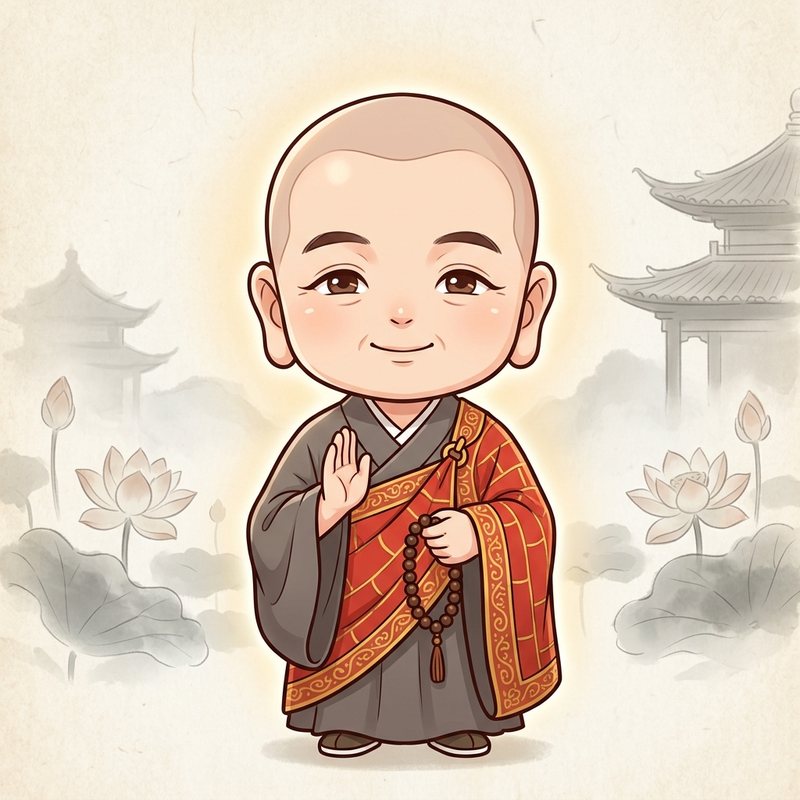
Huineng
Tang Dynasty(638–713)Age 0 · Xinzhou Birthplace“The Sixth Patriarch of Zen Buddhism: who revolutionized Eastern spirituality with 'Bodhi fundamentally has no tree' and taught that enlightenment is already within you.”
The Complete Life Journey & Biography of Huineng (Sixth Patriarch) (慧能)
Chronological travel & exile routes mapped to modern Chinese cities across Tang Dynasty China — featuring bilingual scholar audio, classical poetry recitations, and historical cross-paths.
Nanhai Marketplace Awakening (南海闻经顿悟)
Age 23661 CEModern-day analog: Ancient maritime commercial hub of Lingnan, modern Guangzhou, Guangdong
Delivering firewood in the bustling marketplace, hearing a single line of the Diamond Sutra unleashed a lightning bolt of sudden awakening.
Amid the noise of a Nanhai inn, young Huineng set down his firewood and heard a guest recite the Diamond Sutra. 'One should produce thoughts that abide nowhere'—those eight Chinese characters struck him like a flash of lightning, instantly dissolving all mental boundaries. Without academic theories or years of rituals, he recognized that consciousness is inherently unattached and luminous. Deeply moved, a generous patron provided silver for his mother's livelihood, freeing Huineng to embark on his thousand-mile pilgrimage north.
“One should produce thoughts that abide nowhere.”
应无所住,而生其心。(Yìng wú suǒ zhù, ér shēng qí xīn.)Huangmei East Mountain Enlightenment Verse (黄梅舂米与无树心偈)
Age 24661 CEModern-day analog: Cradle of early Chan monastic community and Fifth Patriarch Hongren's sanctuary, modern Huangmei, Hubei
Pounding rice with a waist-stone for eight months, he stunned the monastic order with 'Fundamentally not a single thing exists' to inherit the Dharma seal.
In the granary of East Mountain Temple, Huineng tied a heavy stone around his waist, pounding rice day and night for eight months. When head monk Shenxiu wrote his cautious verse advocating constant wiping of the mirror, Huineng delivered four lines that shattered all dualities: 'Bodhi fundamentally has no tree; originally not a single thing exists.' Recognized by Hongren, the master struck the pestle three times at dusk. Under cover of midnight, Hongren transmitted Bodhidharma's sacred robe and bowl, crowning the unlettered laborer as the Sixth Patriarch.
“Bodhi fundamentally has no tree, nor is the clear mirror a stand. Originally there is not a single thing; where can dust alight?”
菩提本无树,明镜亦非台。本来无一物,何处惹尘埃!(Pútí běn wú shù, míngjìng yì fēi tái. Běnlái wú yī wù, héchù rě chén'āi!)Dayu Ridge Original Face Dharma (大庾岭度化明上座)
Age 25662 CEModern-day analog: Rugged historic mountain pass connecting Central Plains and Lingnan, modern Dayu, Jiangxi
Pursued by armed seekers of the sacred robe, his question 'What is your original face?' instantly disarmed a fierce warrior into enlightenment.
On the steep crags of Dayu Ridge, hundreds of armed monastics pursued the new patriarch. General-turned-monk Chen Huiming charged to the front. Huineng calmly laid the robe and bowl on a rock; Huiming tried to lift them with all his warrior might, but they were unshakeable. Stepping out unarmed, Huineng asked softly: 'Before thinking of good or evil, right at this moment, what is your original face?' The fierce warrior collapsed to his knees in tears, awakened to the primordial mind.
“Thinking neither of good nor of evil, at this very moment, what is your original face, Venerable Ming?”
不思善,不思恶,正与么时,哪个是明上座本来面目?(Bù sī shàn, bù sī è, zhèng yùmó shí, nǎ ge shì Míng shàngzuò běnlái miànmù?)Sihui Fifteen Years Among Hunters (四会怀集十五年隐遁)
Age 25663 CEModern-day analog: Densely forested subtropical mountain sanctuary, modern Sihui and Huaiji, Zhaoqing, Guangdong
Obeying his master's prophecy, he hid among mountain hunters for fifteen years, eating greens beside meat and quietly safeguarding the Dharma.
In the dense, untamed forests of Sihui and Huaiji, fifteen autumns came and went. The Sixth Patriarch sat on no ornate throne; instead, he wore coarse hemp clothes and lived among rough hunting camps. Guarding their nets, he quietly set trapped animals free; when the hunters boiled meat, he simmered wild greens in the edge of their pots, serenely eating 'only the vegetables beside the meat.' In the dirt and warmth of common human survival, he stripped away all religious pretension, maturing his enlightenment into an unshakable way of being.
“The Buddha-dharma exists in the world; awakening is never apart from everyday worldly life. Seeking Bodhi away from the world is like searching for horns on a rabbit.”
佛法在世间,不离世间觉;离世觅菩提,恰如求兔角。(Fófǎ zài shìjiān, bù lí shìjiān jué; lí shì mì pútí, qià rú qiú tùjiǎo.)Guangzhou Wind and Flag Epiphany (广州法性寺风幡心动出世)
Age 38676 CEModern-day analog: Historic millennium-old Buddhist temple and cradle of Zen public ministry, modern Guangzhou, Guangdong
Hearing two monks debate whether wind or flag moved, he proclaimed 'It is your minds that move,' stepping forth into history.
In the courtyard of Faxing Temple in Guangzhou, temple banners fluttered in the evening breeze as two senior monks argued fiercely over whether wind or cloth was moving. Huineng, still clad in humble lay clothes, spoke six timeless words: 'It is neither wind that moves, nor the flag; it is your minds that move.' The courtyard fell into stunned silence. Abbot Yinzong invited the stranger into his quarters and realized this was the long-hidden Sixth Patriarch. Under the ancient bodhi tree, Yinzong shaved Huineng's head and knelt to receive him as his spiritual master.
“It is neither the wind that moves, nor the flag that moves; it is your minds that move.”
不是风动,不是幡动,仁者心动。(Bù shì fēng dòng, bù shì fān dòng, rénzhě xīn dòng.)Shaozhou Preaching of the Platform Sutra (韶州大梵寺宣说坛经)
Age 39677 CEModern-day analog: Birthplace of the Platform Sutra, the only native Chinese Buddhist text honored as a Sutra, modern Shaoguan, Guangdong
Ascending the high dharma dais at the invitation of Governor Wei Chu, preaching the immortal Platform Sutra before thousands.
In the crowded halls of Dafan Temple in Shaozhou, Governor Wei Chu, scholars, and more than a thousand commoners listened in reverent silence. The thirty-nine-year-old master Huineng ascended the high seat, delivering an electrifying declaration of spiritual freedom: Buddha-nature is already complete within every human heart. Awakening requires neither imperial patronage nor scholastic pedantry, but direct seeing into one's pure mind. Transcribed word for word by disciple Fahai, the Platform Sutra became the only scripture born in China to be honored with the title 'Sutra.'
“The self-nature of Bodhi is inherently pure; simply employ this mind, and one directly attains Buddhahood.”
菩提自性,本来清净,但用此心,直了成佛。(Pútí zìxìng, běnlái qīngjìng, dàn yòng cǐ xīn, zhíliǎo chéng fó.)Caoxi Sanctuary & Imperial Summons Declined (曹溪祖庭与谢绝帝召)
Age 67705 CEModern-day analog: Venerated global patriarchal headquarters of Chan Buddhism, modern Nanhua Temple, Shaoguan, Guangdong
Empress Wu Zetian and Emperor Zhongzong summoned him to the imperial palace, but Huineng serenely declined, remaining at Caoxi.
Among the whispering bamboo groves of Baolin Temple in Caoxi, Master Huineng taught for more than thirty years. Disciples flocked from every corner of China, including masters Nanyue Huairang and Qingyuan Xingsi, whose lineages would birth the five classical houses of Zen. In 705 CE, Empress Wu Zetian sent court envoy Xue Jian bearing an imperial edict inviting the master to Chang'an as national preceptor. Untempted by courtly luxury, the elderly master serenely declined, choosing to stay barefoot among his mountain students. Imperial reverence only elevated Caoxi into the undisputed spiritual capital of Chan.
“If you wish to cultivate practice, you can do so at home; it does not depend on residing in a monastery.”
若欲修行,在家亦得,不由在寺。(Ruò yù xiūxíng, zàijiā yì dé, bù yóu zài sì.)Xinzhou Guo'en Temple Parinirvana & Living Mummy (新州国恩寺圆寂与真身不腐)
Age 75713 CEModern-day analog: Site of Huineng's final parinirvana, modern Guo'en Temple, Xinxing, Guangdong
Returning to his native soil to achieve Parinirvana, leaving an uncorrupted lacquer body that has endured for over 1,300 years.
In the autumn of 713 CE, seventy-six-year-old Master Huineng sat peacefully in the abbot's chamber of Guo'en Temple in his native Xinzhou. Sharing his final verses, he urged his disciples to abandon all fabricated virtue and dualistic striving. At midnight, he smiled gently and said: 'I am departing.' With those words, he entered Parinirvana. Rare fragrance lingered for days. His disciples preserved his seated body with lacquer and gold leaf, returning it to Caoxi. Miraculously untouched by thirteen centuries of humidity, wars, and dynastic collapse, Huineng's living mummy remains seated today at Nanhua Temple, an immortal monument to human spiritual transcendence.
“Tranquil and still, cultivating no contrived virtue; carefree and open, committing no vice. Silent, transcending perception; boundless, the mind clings to nothing.”
兀兀不修善,腾腾不造恶。寂寂断见闻,荡荡心无著。(Wùwù bù xiū shàn, téngténg bù zào è. Jìjì duàn jiànwén, dàngdàng xīn wú zhuó.)
Literati Knowledge Vault · 先贤知识宝库
In-Depth Essays & Philosophical Inquiries on Huineng
Deep dives, myth-busting, and modern psychological lessons from Huineng's life and philosophy.
暂无已发布的深度专栏文章。
Historical Nexus & Intersecting Journeys
与 慧能 (Huineng) 时空交汇、思想交锋或命运相连的华夏先贤网络
Key Historical Inquiries & Context
关于 慧能 (Huineng) 的核心史实考证、公案辨析与中英直答
Who was Huineng (慧能)?
Huineng (638–713 CE) was a legendary Tang Dynasty Buddhist master and the Sixth Patriarch of Chan (Zen) Buddhism, posthumously honored as Master Dajian. Born into crushing poverty in southern Xinzhou and completely illiterate, he supported his widowed mother as a woodcutter before experiencing spontaneous enlightenment upon overhearing the Diamond Sutra in Guangzhou. After pounding rice for eight months at Huangmei, his revolutionary verse 'Bodhi fundamentally has no tree' earned him the patriarchal robe from Fifth Patriarch Hongren. Following fifteen years in hiding among mountain hunters, he emerged at Guangzhou's Faxing Temple with the insight 'It is your minds that move.' Presiding at Caoxi for over thirty years, his spoken teachings were recorded into the Platform Sutra—the sole Chinese Buddhist text honored with the title 'Sutra.' Championing sudden awakening and innate Buddha-nature, he transformed Buddhism into an egalitarian philosophy, venerated as the 'Socratic Patriarch of Zen,' with his miraculously preserved body enduring to this day.
What was Huineng's primary cultural and historical legacy?
Huineng is celebrated across world history as a pioneer of The Socratic Patriarch of Zen, The Apostle of Inherent Enlightenment, The Master of Everyday Transcendence, leaving enduring philosophical insights, literature, and art.
Where does Huineng's historical life journey map lead?
This interactive GIS map retraces 9 chronological stops across Tang Dynasty China, originating from Xinzhou Birthplace and spanning through Xinzhou Guo'en Temple Parinirvana & Living Mummy.