Who Was Shangguan Wan'er? China's Female Prime Minister
From palace slave to imperial chancellor and supreme arbiter of poetry, the brilliant statesman who steered court politics and shaped High Tang literature
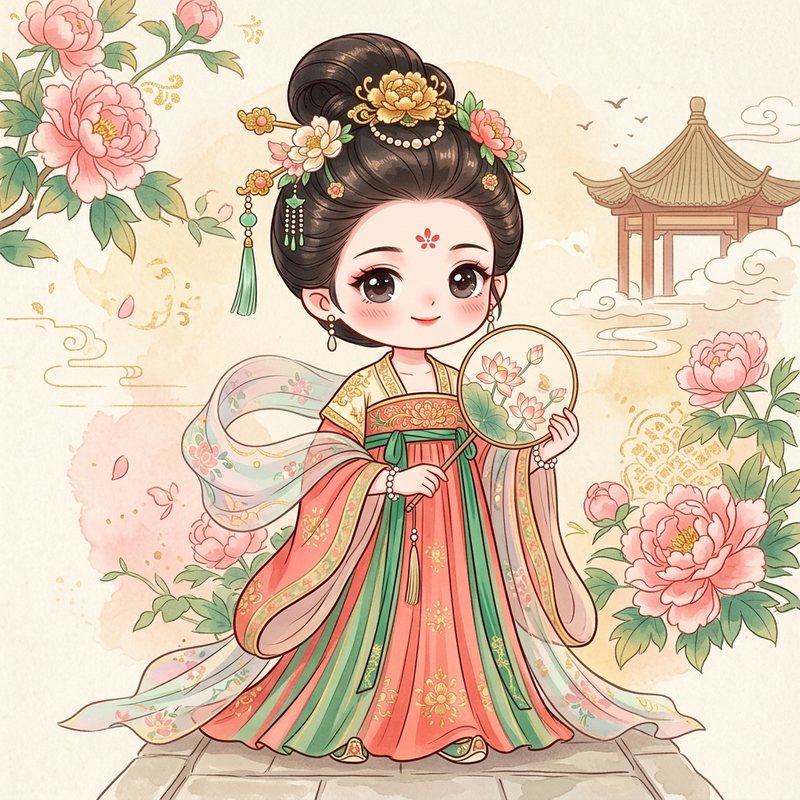
Shangguan Wan'er (上官婉儿 · Shàngguān Wǎn'ér)
世称上官昭容 · 巾帼宰相
From palace slave to imperial chancellor: drafting state decrees and judging imperial poetry with brilliant statesmanship.
从掖庭罪奴到大唐巾帼宰相,草拟天下诏命、彩楼裁决诗文,以绝世文才与政治智慧屹立两朝中枢。
- The Female Prime Minister: Overcame childhood slavery in the palace harem to draft vital state edicts and direct imperial policy as de facto chancellor for over a decade.
- Supreme Arbiter of Tang Poetry: Directed the compilation of the 1,300-volume Sanjiao Zhuying and judged imperial tournaments, establishing the structural standards of High Tang regulated verse.
- Architect of Cultural Meritocracy: Convinced Emperor Zhongzong to expand the imperial academy (Zhaowenguan), opening imperial promotion channels to talented scholars across the empire.
- Immortalized by Archaeological Discovery: The 2013 excavation of her 982-character tomb epitaph in Xianyang revealed her political courage and lifelong devotion to the Tang dynasty.
Phase 1: Tragedy, Enslavement, and Imperial Emancipation (664–677)
Shangguan Wan'er was born in 664 CE into an illustrious official lineage in Shanzhou (modern Sanmenxia, Henan Province). Her grandfather, Shangguan Yi, was a revered prime minister and chancellor under Emperor Gaozong, famous for creating the elegant 'Shangguan Style' (上官体) of court poetry. Yet tragedy struck before Wan'er could walk: Shangguan Yi drafted an imperial decree to depose Empress Wu Zetian, but the plot was leaked. The chancellor and his son, Shangguan Tingzhi, were executed immediately.
麟德元年(664年),上官婉儿出生于陕州官宦名门。其祖父上官仪深得唐高宗器重,位列宰相,开创了流丽典雅的‘上官体’诗风。然而同年冬,上官仪受诏草拟废黜武后诏书事泄,遭灭门之祸,父上官庭芝同被处死。尚在襁褓中的婉儿与母亲郑氏没入宫中掖庭为奴,一夕之间沦入最阴暗的宫廷底层。
Condemned to servitude in the Ye Ting (the palace harem slave quarters) in Chang'an, baby Wan'er was raised under harrowing conditions. Her mother, Lady Zheng, refused to allow despair to extinguish their noble heritage. She secretly educated Wan'er in literature, state history, and calligraphy by lamplight. In 677 CE, hearing rumors of a teenage prodigy among the palace slaves, Empress Wu summoned the fourteen-year-old girl to Daming Palace. Asked to compose an essay on the spot, Wan'er wrote with breathtaking speed and eloquence. Stunned by her genius, the Empress instantly pardoned her slave status and made her an imperial scribe.
在幽暗严苛的长安掖庭中,母亲郑氏以深厚家学悉心抚育,督导年幼的婉儿刻苦修习经史辞赋与书法翰墨。仪凤二年(677年),武则天闻知掖庭有奇才,特于大明宫内殿当面试题命篇。年方十四的婉儿落笔如飞,文辞清赡,立意高华。武后惊叹其才,当即敕免其奴籍,留在御前掌管机要文墨。
叶下洞庭初,思君万里馀。
Yè xià Dòngtíng chū, sī jūn wàn lǐ yú.
As the first autumn leaves flutter across Lake Dongting, my longing for my lord stretches across ten thousand leagues.
Context · From Shangguan Wan'er's lyric gem 'Lament on Colored Stationery' (彩书怨), capturing poignant emotional depth and refined poetic craft.
Phase 2: Chief Scribe of the Divine Capital & The Female Chancellor (684–698)
When Wu Zetian established the Zhou Dynasty and designated Luoyang as the 'Divine Capital' (神都) in 684 CE, Shangguan Wan'er became an indispensable pillar of the imperial court. From atop the monumental Mingtang ceremonial complex, she penned state proclamations, ancestral hymns, and diplomatic correspondence. Her exquisite prose gave moral weight and cultural majesty to Wu Zetian's unprecedented reign as China's sole female emperor.
光宅元年(684年),武则天称制并迁都洛阳,改称神都。上官婉儿随侍身侧,日理万机。凡万象神宫明堂大典、太庙祭祀乐章及朝廷大诏,多由婉儿代笔。她以流丽庄重的文风赋予新政权礼乐威仪,逐渐成为御前不可或缺的中枢智囊。
In 696 CE (the first year of Wansui Tongtian), Empress Wu elevated Wan'er's authority to an extraordinary summit: she was entrusted with reviewing all petitions submitted by the hundred ministries and drafting decisions on imperial policy. Exercising the full administrative purview of a chancellor, Wan'er handled state affairs with lightning efficiency and razor-sharp judgment. Two years later, she led forty eminent scholars in compiling the monumental 1,300-volume encyclopedia *Sanjiao Zhuying* (三教珠英), solidifying her status as the supreme arbiter of imperial culture.
万岁通天元年(696年),武则天正式命上官婉儿总管百司奏章与天下表旨。凡军国要务、官员任免,婉儿皆参预决策,代拟诏批,案无留牍,履行宰相实权,被朝野尊崇为‘巾帼宰相’。圣历初年,她更总揽文苑,率李峤、崔融等名臣编撰一千三百卷《三教珠英》,统合儒释道三家精萃,奠定文坛宗主地位。
密叶因裁吐,新花逐翦舒。
Mì yè yīn cái tǔ, xīn huā zhú jiǎn shū.
Dense foliage sprouts forth from clever shears; fresh blossoms unfurl as the scissors dance.
Context · From Wan'er's acclaimed imperial response on Spring Day, celebrating renewed life and courtly elegance before Empress Wu.
Phase 3: The Tang Restoration & The Arbiter of Poetry (705–709)
Following the Shenlong Coup of 705 CE that forced Empress Wu to abdicate and restored the Tang Dynasty under Emperor Zhongzong, Shangguan Wan'er's unique talent ensured her political survival. Zhongzong elevated her to Consort Zhaorong (昭容, imperial consort of the second rank) and placed all imperial edicts under her sole charge. Recognizing that true dynastic vitality required intellectual renewal, Wan'er urged the emperor to expand the Academy of Scholarly Worthies (Zhaowenguan) and admit commoner scholars based on merit rather than aristocratic pedigree.
神龙元年(705年)神龙政变,唐中宗复位还都长安。中宗素知婉儿治国文才,拜为正二品昭容,仍专掌宫中制诰。婉儿深怀文教远略,力劝中宗大开书馆,增置昭文馆学士,打破士族门第壁垒,广泛招揽四方文人学士,为唐代文风繁荣注入了巨大的时代活力。
Wan'er's cultural influence reached its legendary zenith during the imperial excursions to Kunming Lake and Xinfeng Hot Spring Palace in 709 CE. Seated on a multi-tiered silk pavilion above thousands of onlookers, she personally reviewed and judged poems submitted by the empire's greatest writers. Tossing inferior verses into the wind until sheets of paper fluttered like falling snow, she famously selected Song Zhiwen over Shen Quanqi, decreeing that his triumphant closing lines possessed a higher transcendent spirit. Her aesthetic judgment codified the rigorous tonal rules that defined High Tang poetry.
景龙三年(709年),唐中宗游幸昆明池与新丰温泉宫,文武百官争献应制诗。上官婉儿坐于高耸彩楼之上总评天下诗文,阅卷如飞,落选之作随风抛掷,如漫天飞雪。最终在沈佺期与宋之问两强争锋中,婉儿以宋诗‘果见夕阳收’气度更超凡脱俗定为魁首。这一盛举规范了近体诗格律,确立了‘上官体’承前启后的宗师地位。
遥看电跃龙为马,回瞩霜凌雁作弦。
Yáo kàn diàn yuè lóng wéi mǎ, huí zhǔ shuāng líng yàn zuò xián.
Gazing afar, lightning leaps as dragons turn to steeds; looking back, frost glitters as wild geese form bowstrings across the sky.
Context · From 'Poems Presented on the Imperial Visit to the Xinfeng Hot Spring Palace', demonstrating Wan'er's majestic control over expansive imperial imagery.
Phase 4: The Midnight Coup, Legacy, and Archaeological Vindication (710–712)
In June 710 CE, Emperor Zhongzong died suddenly amid violent court factionalism. Sensing danger, Shangguan Wan'er partnered with Princess Taiping to draft an imperial testament that installed Prince Wen (Li Chongmao) as emperor while appointing Prince Xiang (Li Dan, the future Emperor Ruizong) as co-regent, intentionally curbing Empress Wei's treasonous ambitions. But when Prince Li Longji (the future Emperor Xuanzong) launched a preemptive nocturnal coup, events spiraled out of control.
景龙四年(710年)六月,唐中宗暴崩,朝局危如累卵。上官婉儿与太平公主密商草拟遗诏,立温王重茂为太子,相王李旦辅政,以此牵制韦后夺权。然而临淄王李隆基发动唐隆政变突入内廷。婉儿执烛迎候,出示遗诏草本以明拥戴李唐之心,李隆基为绝后患仍下令将她处决于旗下。
Despite greeting the coup forces holding lanterns and presenting the draft testament proving her loyalty to the imperial house, Wan'er was summarily executed beneath the palace banners. Yet her legacy proved indestructible. In 712 CE, Princess Taiping financed an elaborate funeral on the Hongdu Plateau near Xianyang, commissioning a poignant 982-character epitaph. Even Emperor Xuanzong later repented, ordering Prime Minister Zhang Yue to compile her complete writings into twenty canonical volumes, cementing her everlasting place in China's literary pantheon.
延和元年(712年),太平公主出资五万钱为上官婉儿隆重迁葬于咸阳洪渎原,镌刻982字墓志铭痛悼其卓绝才华。唐玄宗登基后亦深惜其文才,敕令名相张说编纂《唐昭容上官氏文集》二十卷传世。2013年其墓碑破土重光,以确凿金石还原了这位巾帼宰相匡扶社稷的真实面貌。
潇湘水断,宛委山倾。珠沉珀碎,息偃平生。千年万岁,椒花颂声。
Xiāoxiāng shuǐ duàn, Wǎnwěi shān qīng. Zhū chén pò suì, xī yǎn píngshēng. Qiānnián wànsuì, jiāohuā sòngshēng.
The waters of the Xiao and Xiang run dry; Mount Wanwei collapses. The pearl sinks and amber shatters, laying her life to eternal rest. For a thousand years, for ten thousand years, the pepper blossoms will sing her praises.
Context · The final elegiac verse of Shangguan Wan'er's 2013 excavated tomb epitaph, commemorating her peerless brilliance and tragic end.
| Perspective 视角 | Shangguan Wan'er (The Lady Chancellor) | Aspasia of Athens (The Classical Intellectual) |
|---|---|---|
| Core Historical Role | Rose from palace slave to become de facto Prime Minister and chief edict drafter under Empress Wu Zetian and Emperor Zhongzong. | Foreign resident in Classical Athens who became political advisor and partner to Pericles, shaping Golden Age Athenian governance. |
| Literary & Cultural Leadership | Edited the 1,300-volume Sanjiao Zhuying and served as supreme judge of imperial poetry contests, codifying High Tang poetic meter. | Celebrated teacher of rhetoric who engaged Socrates and Athenian philosophers in discourse, shaping the philosophical tradition. |
| Overcoming Patriarchal Bounds | Directly commanded high male scholar-officials in the imperial secretariat and arbitrated state policies behind the imperial throne. | Broke strict Athenian domestic confinement norms to host leading thinkers and politicians in an intellectual salon. |
| Historical & Archaeological Legacy | Her 20-volume collected works and 2013 excavated tomb epitaph demonstrate her decisive role in steering the Tang dynasty. | Remembered through Plato, Plutarch, and classical historians as one of antiquity's most influential female thinkers. |
Trace Shangguan Wan'er's Footsteps on the Interactive Topographic Map
Follow her dramatic life across 8 historical stations—from childhood servitude in Chang'an's Ye Ting and imperial governance in Luoyang to the poetry tournaments of Kunming Lake.
Launch Interactive Journey MapFrequently Asked Questions (FAQ)
Why is Shangguan Wan'er called China's 'Female Prime Minister'?
Although ancient China's civil service system did not officially confer the title of Prime Minister upon women, Shangguan Wan'er performed every primary function of a chancellor. From 696 CE onwards, Empress Wu Zetian entrusted her with reviewing provincial memorials and drafting imperial decisions. She commanded the civil bureaucracy and drafted the emperor's secret decrees.
How did Shangguan Wan'er rise from a palace slave to the imperial court?
Following the execution of her grandfather Shangguan Yi in 664 CE, infant Wan'er was cast into the palace slave quarters. Her mother secretly educated her in classical texts and poetry. At age fourteen, Empress Wu Zetian personally tested her in an oral examination; dazzled by her lightning intellect and elegant prose, the empress immediately emancipated her.
What was Shangguan Wan'er's contribution to Tang Dynasty poetry?
Shangguan Wan'er served as the imperial arbiter of literature under Emperor Zhongzong. She judged the grand poetry tournaments at Kunming Lake, tossing rejected drafts from her pavilion to select the finest verses. Her aesthetic choices elevated thematic vigor and metric harmony, helping transform ornate court verse into the golden age of High Tang poetry.
What did the 2013 excavation of Shangguan Wan'er's tomb reveal?
Excavated near Xianyang Airport in 2013, her tomb contained a 982-character stone epitaph commissioned by Princess Taiping. The text challenged traditional Confucian bias, confirming that Wan'er repeatedly risked her life to oppose imperial overreach and drafted an imperial testament to protect the Tang dynasty before being executed during Li Longji's coup.
Why was Shangguan Wan'er executed in 710 CE?
Following Emperor Zhongzong's sudden death in 710 CE, Prince Li Longji launched a midnight palace coup to eliminate rivals. Although Wan'er met the soldiers holding candles and presented the draft imperial testament proving her loyalty to the Li family, Li Longji executed her to eliminate a formidable political mind capable of dominating court affairs.
Walk with Shangguan Wan'er Across China
随上官婉儿漫步华夏河山 · 亲历命运逆境与精神涅槃