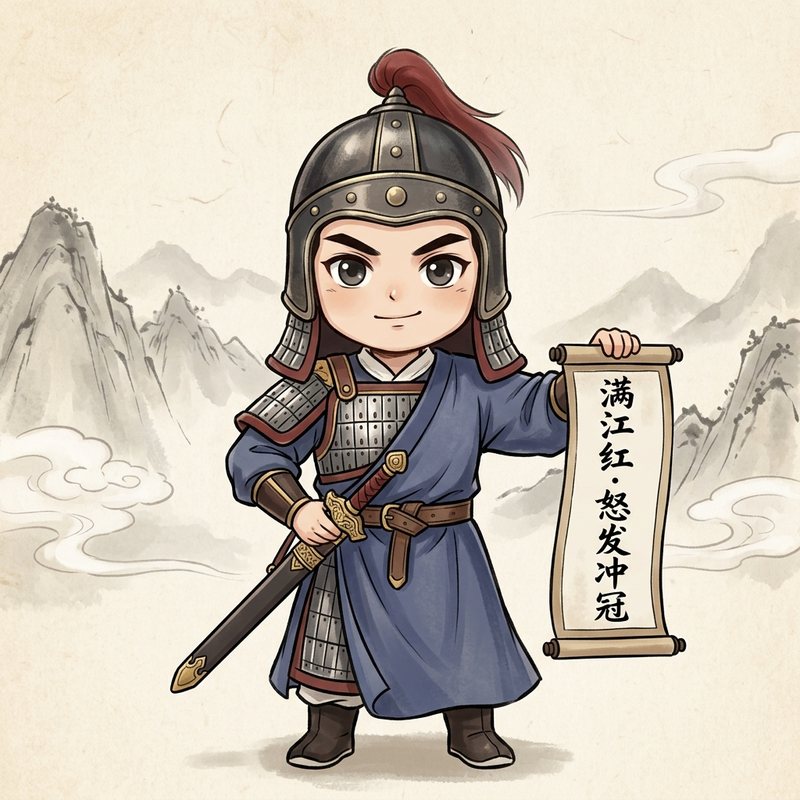
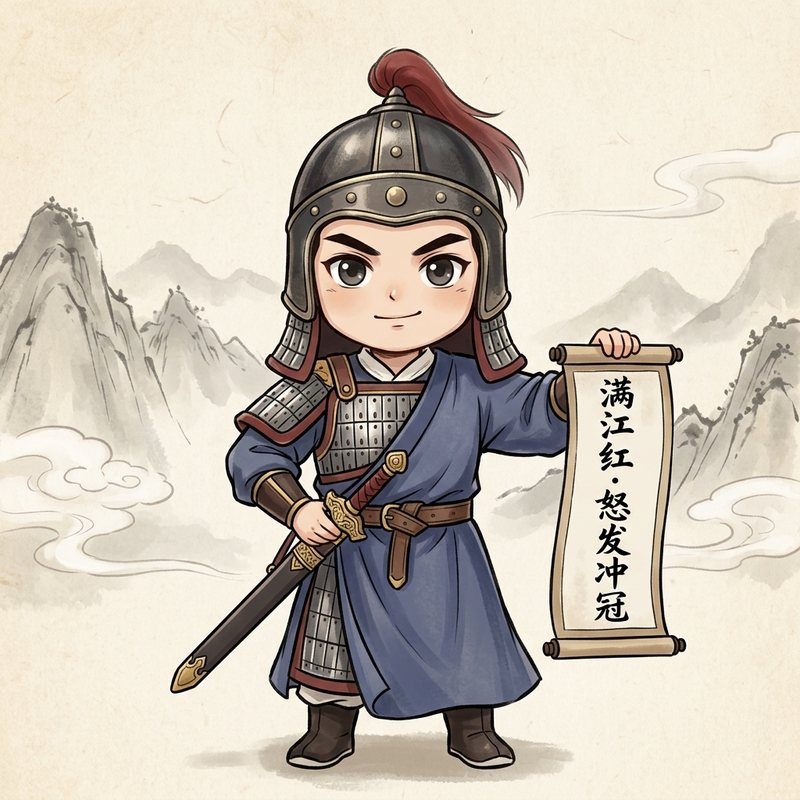
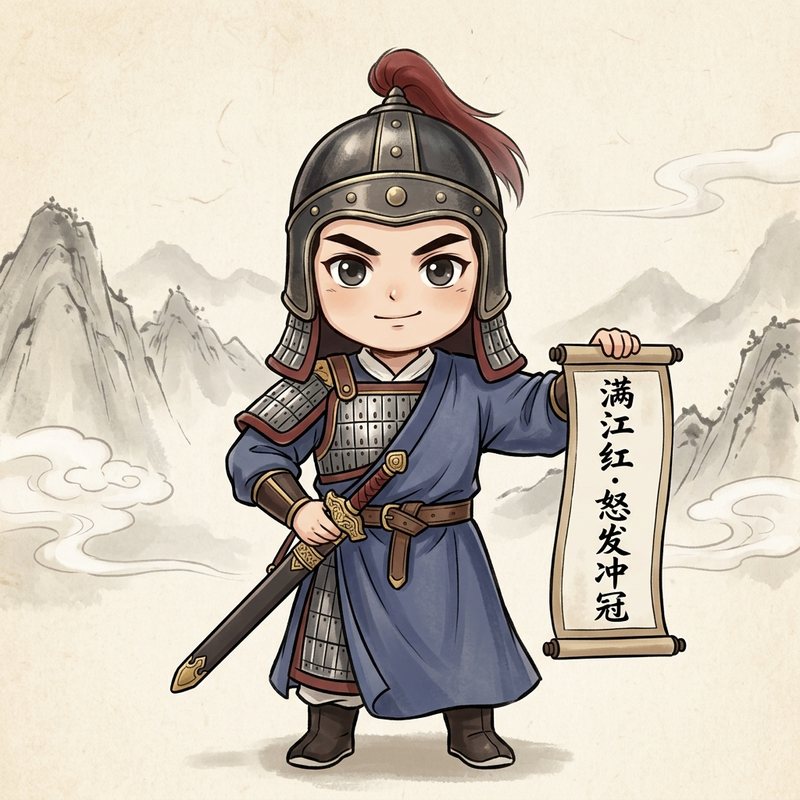
The Warrior Poet & CommanderSouthern Song Dynasty(1140—1207)字幼安 · 号稼轩 · 词中之龙Audio Journey · 7 Stops
A brilliant general trapped in peacetime, turning battlefield fury into immortal verse.
The Warrior Poet· A soldier-poetThe Frustrated Patriot· An unfulfilled patriotThe Dragon of Ci Poetry· A towering lyric master
Unfolding the Historical Landscape…
印
Daily Wisdom & Resilience Oracle
The Resilient Optimist
“竹杖芒鞋轻胜马,谁怕?一蓑烟雨任平生。”
Holding a bamboo cane and wearing straw sandals, I stride faster than a horse. Who is afraid? A straw cloak in the mist and rain — I live my life with equanimity.
💡 In the 3rd year of exile in Huangzhou, caught in a sudden downpour, Su Shi embraced the storm with supreme resilience.
— Su Shi (Dongpo)(The Renaissance Foodie & Optimist)
Historical Footprints & Narration Archive
7 Stations
1
Jinan
1140 CE · Age 1
Modern Jinan, Shandong
Born under foreign occupation, secretly sworn to reconquer his lost homeland.
Riding the howling wind through ten thousand miles of clear sky, looking down upon our glorious mountains and rivers.
Station Narration Script
The waters of Lake Daming could not wash away the fury in young Xin Qiji's eyes. Born under Jin occupation, he grew up watching foreign iron cavalry ride over his ancestors' soil. His grandfather led him up high peaks, weeping as he pointed out the occupied heartland. There was no gentle childhood—only secret training in archery, blades, and military strategy. In 1161, when the Jin emperor marched south, 21-year-old Xin Qiji raised an army of thousands, igniting armed rebellion.
Departure Transition Script
His supreme rebel commander was assassinated by a traitor who defected to the Jin empire. Consumed by icy wrath, 22-year-old Xin Qiji led fifty elite suicide riders into the depths of a 50,000-man enemy army.
2
Jin Military Camp
1162 CE · Age 22
Jurchen Military Outpost
50 suicide riders charging a 50,000-man fortress to kidnap a traitor alive.
In my glorious youth, banners rallied ten thousand warriors; robed in silk brocade, our cavalry charged across the great river.
Station Narration Script
In the slashing rain, muffled hooves thundered in the dark. 22-year-old Xin Qiji and fifty suicide riders plunged like a dagger into the 50,000-man enemy fortress. In the command tent, traitor Zhang Anguo was raising a cup when cold steel met his throat. Amidst deafening chaos and desperate enemy encirclement, Xin Qiji hauled the traitor onto horseback and carved an impossible path of blood out into the night. Crossing the Yangtze, he delivered the traitor to the execution block. The Song court was stunned into silence.
Departure Transition Script
Yet the euphoria was short-lived. To an imperial court addicted to cowardice and appeasement, this untamable northern warrior inspired not gratitude, but deep paranoia and distrust.
3
Lin'an Capital
1165 CE · Age 25
Southern Song Capital (Modern Hangzhou)
Submitting masterclasses in reconquest strategy, only to be laughed off as a madman.
“把吴钩看了,栏杆拍遍,无人会,登临意。”
Bǎ wú gōu kàn le, lán gān pāi biàn, wú rén huì, dēng lín yì.
I gaze upon my curved blade and beat against the railings; yet no one understands the solitary anguish of my climb.
Station Narration Script
The warm breezes of Hangzhou intoxicated tourists and cowards, but froze Xin Qiji's soul. In lonely taverns, he poured his military genius into tactical treatises detailing troop movements, spy networks, and agricultural warfare. His submissions vanished into bureaucratic black holes. The court treated this master general as an inconvenient troublemaker, ordering him to count grain sacks and audit tax records. Climbing riverside towers, he clutched his sword and beat the railings in agonized silence.
Departure Transition Script
Denied imperial armies, he turned to regional governance. Shuffled through the provinces, he waited for his moment. In 1179, arriving as Governor of Hunan, he did something that petrified the capital.
4
Changsha Feihu Army
1180 CE · Age 40
Modern Changsha, Hunan
Building Southern Song's elite strike force from scratch under threat of execution.
“金戈铁马,气吞万里如虎。”
Jīn gē tiě mǎ, qì tūn wàn lǐ rú hǔ.
Spears of gold and armored steeds, devouring ten thousand leagues like a ravenous tiger.
Station Narration Script
The Xiang River churned as battle cries echoed off the banks. At forty, Xin Qiji unleashed his iron will. When the central ministry cut his budget, he raised local funds; when secret edicts ordered him to stop, he defied the throne under pain of death. In just one month, he built fortresses and trained 3,000 elite cavalrymen: the 'Flying Tiger Army'. Disciplined and lethal, they became Southern Song's legendary shield. But his military brilliance terrified the spineless bureaucrats in Lin'an.
Departure Transition Script
Accused by corrupt courtiers of 'spending gold like mud and slaughtering enemies like grass', 42-year-old Xin Qiji was stripped of all military rank. Banished from politics, he was exiled to rural Shangrao.
5
Daihu Hermitage
1181 CE · Age 42
Modern Shangrao, Jiangxi
Drunkenly examining his blade beneath the lamp, dreaming of war horns in exile.
Drunkenly I trim the lamp to inspect my blade; in dreams I wake to horns echoing across sprawling encampments. Feasting our soldiers on roast beef, fifty strings sound border music; an autumn review on the battlefield.
Station Narration Script
The nights at Daihu Lake were deafening in their silence. The great general was forced to roll up his sleeves and plant rice. Yet late at night, fueled by cheap wine, he inevitably drew his rusted broadsword beneath the flickering lamp. 'Drunkenly I inspect my sword; in dreams I wake to war horns!' In his sleep, iron cavalry thundered across the northern snow; waking, there was only the cold drizzle hitting lotus leaves. 'Alas, white hair has grown!' He never wanted to be a poet; a cowardly empire forced a titan to bleed through his brush.
Departure Transition Script
A catastrophic fire destroyed his estate, forcing him to move to Piaoquan. Then, in 1204, the 64-year-old exiled veteran received an astonishing summons from the border front.
6
Zhenjiang Beigu Pavilion
1204 CE · Age 64
Modern Zhenjiang, Jiangsu
Standing atop Mount Beigu asking: 'Is Lian Po too old to fight?'
“廉颇老矣,尚能饭否?”
Lián Pō lǎo yǐ, shàng néng fàn fǒu?
General Lian Po is old now; can he still fight?
Station Narration Script
The Yangtze surged beneath Mount Beigu. 64-year-old Xin Qiji, his beard white as snow, leaned on his walking staff atop Beigu Pavilion. The ambitious prime minister wanted a hasty war for personal glory, but master strategist Xin Qiji knew it was suicide without preparation. Working day and night to forge armor and train scouts, he warned the court against reckless haste. Clutching the stone rail, he penned the crowning glory of Song poetry: 'Across thousands of years, where can we find a hero like Sun Quan?' Ending with the devastating cry: 'Who is left to ask: Is old general Lian Po still able to fight?'
Departure Transition Script
Enraged by his warnings, the prime minister dismissed him once more. In 1206, the hasty invasion was routed with catastrophic casualties. Panicking, the Emperor issued emergency decrees appointing Xin Qiji supreme field director. But fate had run out of time.
7
Piaoquan Hermitage
1207 CE · Age 68
Modern Yanshan, Jiangxi
Screaming 'Kill the enemy!' with his final breath, the dragon of verse passed into legend.
Declare that a true man's heart remains iron until death; watch my hands mend the fracture of the heavens.
Station Narration Script
The autumn wind at Piaoquan brought the Emperor's golden seals, pleading for him to take command of the crumbling army. But bedridden Xin Qiji could no longer even grip a brush. Outside lay a bleeding country shattered by incompetent leaders; beside him lay decades of unfulfilled vows. In late autumn 1207, 68-year-old Xin Qiji suddenly surged upward with superhuman fury. Staring north, he screamed 'Kill the enemy! Kill the enemy!' until his voice shook the roof and his heart gave out. The warrior's iron soul passed into immortality.
Key Historical Inquiries & Context
· 核心史实公案与速览
Xin Qiji was Southern Song's greatest heroic poet and an extraordinary military commander. At twenty-two, he led fifty riders on a daring night raid into a 50,000-strong enemy camp, capturing a traitor alive. Despite presenting brilliant strategic doctrines to reclaim Northern China, he was sidelined and distrusted by appeasement factions for four decades. He poured his unyielding rage and tactical genius into immortal lyrics, etching an eternal heroic tragedy into Chinese history.
Xin Qiji was Southern Song's greatest heroic poet and an extraordinary military commander. At twenty-two, he led fifty riders on a daring night raid into a 50,000-strong enemy camp, capturing a traitor alive. Despite presenting brilliant strategic doctrines to reclaim Northern China, he was sidelined and distrusted by appeasement factions for four decades. He poured his unyielding rage and tactical genius into immortal lyrics, etching an eternal heroic tragedy into Chinese history.
QWhat was Xin Qiji's primary cultural and historical legacy?
Xin Qiji is celebrated across world history as a pioneer of The Warrior Poet, The Frustrated Patriot, The Dragon of Ci Poetry, leaving enduring philosophical insights, literature, and art.
QWhere does Xin Qiji's historical life journey map lead?
This interactive GIS map retraces 7 chronological stops across Southern Song Dynasty China, originating from Jinan and spanning through Piaoquan Hermitage.
The Complete Life Journey & Biography of Xin Qiji (Song Poet) (辛弃疾)
Chronological travel & exile routes mapped to modern Chinese cities across Southern Song Dynasty China — featuring bilingual scholar audio, classical poetry recitations, and historical cross-paths.
Jinan (沦陷济南)
Age 1
Modern-day analog: Modern Jinan, Shandong
Born under foreign occupation, secretly sworn to reconquer his lost homeland.
The waters of Lake Daming could not wash away the fury in young Xin Qiji's eyes. Born under Jin occupation, he grew up watching foreign iron cavalry ride over his ancestors' soil. His grandfather led him up high peaks, weeping as he pointed out the occupied heartland. There was no gentle childhood—only secret training in archery, blades, and military strategy. In 1161, when the Jin emperor marched south, 21-year-old Xin Qiji raised an army of thousands, igniting armed rebellion.
His supreme rebel commander was assassinated by a traitor who defected to the Jin empire. Consumed by icy wrath, 22-year-old Xin Qiji led fifty elite suicide riders into the depths of a 50,000-man enemy army.
“Riding the howling wind through ten thousand miles of clear sky, looking down upon our glorious mountains and rivers.”
50 suicide riders charging a 50,000-man fortress to kidnap a traitor alive.
In the slashing rain, muffled hooves thundered in the dark. 22-year-old Xin Qiji and fifty suicide riders plunged like a dagger into the 50,000-man enemy fortress. In the command tent, traitor Zhang Anguo was raising a cup when cold steel met his throat. Amidst deafening chaos and desperate enemy encirclement, Xin Qiji hauled the traitor onto horseback and carved an impossible path of blood out into the night. Crossing the Yangtze, he delivered the traitor to the execution block. The Song court was stunned into silence.
Yet the euphoria was short-lived. To an imperial court addicted to cowardice and appeasement, this untamable northern warrior inspired not gratitude, but deep paranoia and distrust.
“In my glorious youth, banners rallied ten thousand warriors; robed in silk brocade, our cavalry charged across the great river.”
Modern-day analog: Southern Song Capital (Modern Hangzhou)
Submitting masterclasses in reconquest strategy, only to be laughed off as a madman.
The warm breezes of Hangzhou intoxicated tourists and cowards, but froze Xin Qiji's soul. In lonely taverns, he poured his military genius into tactical treatises detailing troop movements, spy networks, and agricultural warfare. His submissions vanished into bureaucratic black holes. The court treated this master general as an inconvenient troublemaker, ordering him to count grain sacks and audit tax records. Climbing riverside towers, he clutched his sword and beat the railings in agonized silence.
Denied imperial armies, he turned to regional governance. Shuffled through the provinces, he waited for his moment. In 1179, arriving as Governor of Hunan, he did something that petrified the capital.
“I gaze upon my curved blade and beat against the railings; yet no one understands the solitary anguish of my climb.”
把吴钩看了,栏杆拍遍,无人会,登临意。 (Bǎ wú gōu kàn le, lán gān pāi biàn, wú rén huì, dēng lín yì.)
Changsha Feihu Army (潭州飞虎军)
Age 40
Modern-day analog: Modern Changsha, Hunan
Building Southern Song's elite strike force from scratch under threat of execution.
The Xiang River churned as battle cries echoed off the banks. At forty, Xin Qiji unleashed his iron will. When the central ministry cut his budget, he raised local funds; when secret edicts ordered him to stop, he defied the throne under pain of death. In just one month, he built fortresses and trained 3,000 elite cavalrymen: the 'Flying Tiger Army'. Disciplined and lethal, they became Southern Song's legendary shield. But his military brilliance terrified the spineless bureaucrats in Lin'an.
Accused by corrupt courtiers of 'spending gold like mud and slaughtering enemies like grass', 42-year-old Xin Qiji was stripped of all military rank. Banished from politics, he was exiled to rural Shangrao.
“Spears of gold and armored steeds, devouring ten thousand leagues like a ravenous tiger.”
Drunkenly examining his blade beneath the lamp, dreaming of war horns in exile.
The nights at Daihu Lake were deafening in their silence. The great general was forced to roll up his sleeves and plant rice. Yet late at night, fueled by cheap wine, he inevitably drew his rusted broadsword beneath the flickering lamp. 'Drunkenly I inspect my sword; in dreams I wake to war horns!' In his sleep, iron cavalry thundered across the northern snow; waking, there was only the cold drizzle hitting lotus leaves. 'Alas, white hair has grown!' He never wanted to be a poet; a cowardly empire forced a titan to bleed through his brush.
A catastrophic fire destroyed his estate, forcing him to move to Piaoquan. Then, in 1204, the 64-year-old exiled veteran received an astonishing summons from the border front.
“Drunkenly I trim the lamp to inspect my blade; in dreams I wake to horns echoing across sprawling encampments. Feasting our soldiers on roast beef, fifty strings sound border music; an autumn review on the battlefield.”
Standing atop Mount Beigu asking: 'Is Lian Po too old to fight?'
The Yangtze surged beneath Mount Beigu. 64-year-old Xin Qiji, his beard white as snow, leaned on his walking staff atop Beigu Pavilion. The ambitious prime minister wanted a hasty war for personal glory, but master strategist Xin Qiji knew it was suicide without preparation. Working day and night to forge armor and train scouts, he warned the court against reckless haste. Clutching the stone rail, he penned the crowning glory of Song poetry: 'Across thousands of years, where can we find a hero like Sun Quan?' Ending with the devastating cry: 'Who is left to ask: Is old general Lian Po still able to fight?'
Enraged by his warnings, the prime minister dismissed him once more. In 1206, the hasty invasion was routed with catastrophic casualties. Panicking, the Emperor issued emergency decrees appointing Xin Qiji supreme field director. But fate had run out of time.
Screaming 'Kill the enemy!' with his final breath, the dragon of verse passed into legend.
The autumn wind at Piaoquan brought the Emperor's golden seals, pleading for him to take command of the crumbling army. But bedridden Xin Qiji could no longer even grip a brush. Outside lay a bleeding country shattered by incompetent leaders; beside him lay decades of unfulfilled vows. In late autumn 1207, 68-year-old Xin Qiji suddenly surged upward with superhuman fury. Staring north, he screamed 'Kill the enemy! Kill the enemy!' until his voice shook the roof and his heart gave out. The warrior's iron soul passed into immortality.
“Declare that a true man's heart remains iron until death; watch my hands mend the fracture of the heavens.”