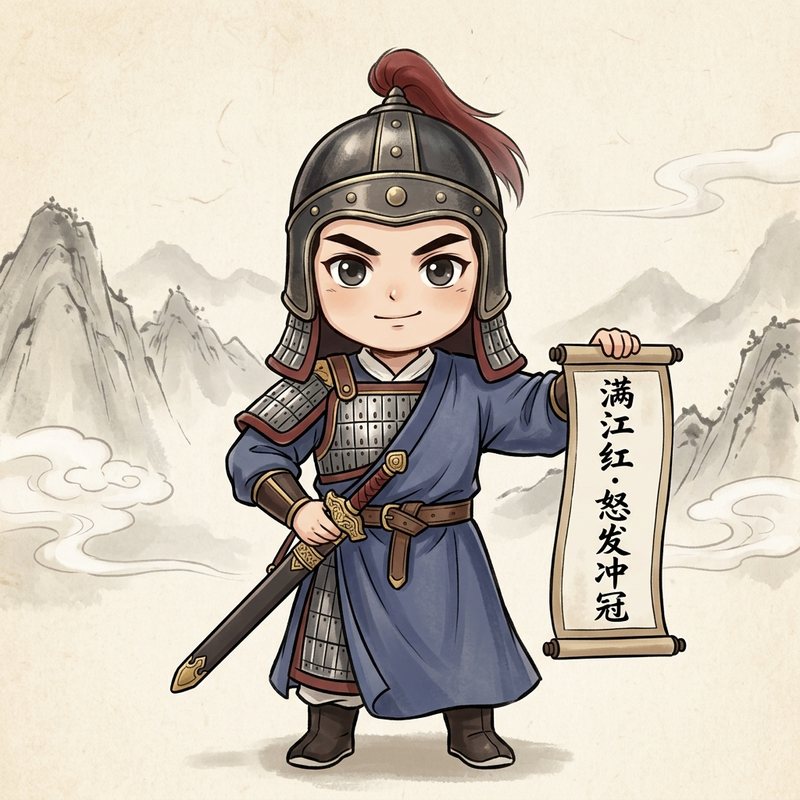
Lu You
Southern Song Dynasty(1125–1210)Age 0 · Riverboat Birth in Huaishang“The supreme patriotic poet of the Southern Song: warrior-poet of the frontier and author of China's immortal patriotic testament.”
The Complete Life Journey & Biography of Lu You (Southern Song Poet) (陆游)
Chronological travel & exile routes mapped to modern Chinese cities across Southern Song Dynasty China — featuring bilingual scholar audio, classical poetry recitations, and historical cross-paths.
Lin'an Imperial Examinations (临安应试)
Age 281153 CEModern-day analog: Modern Hangzhou, Zhejiang
Outperforming the grand chancellor's grandson in the imperial exams, Lu You was stripped of his honors for championing northern reconquest—and walked out with head held high.
In 1153, twenty-nine-year-old Lu You topped the imperial examination in Lin'an, ranking first again the following year. But his policy essays championed armed northern reconquest, placing him ahead of the grand chancellor's favored grandson. Infuriated, Chancellor Qin Hui struck his name from the roster. Rather than grovel, Lu You returned home, uncompromising and proud.
“Listening all night to spring rain in the small upstairs loft; tomorrow morning in deep alleyways someone will sell apricot blossoms.”
小楼一夜听春雨,深巷明朝卖杏花。(Xiǎolóu yīyè tīng chūnyǔ, shēnxiàng míngcháo mài xìnghuā.)Zhenjiang Vice-Prefect (镇江通判)
Age 391164 CEModern-day analog: Modern Zhenjiang, Jiangsu
Appointed vice-prefect at the strategic Yangtze garrison of Zhenjiang, Lu You climbed cliff-top pavilions to stare across the misty river toward the occupied homeland.
Around 1164, Lu You was appointed Vice-Prefect of Zhenjiang, the premier strategic fortress on the Yangtze. Assisting veteran commander Zhang Jun, he drilled maritime defenses. During respites, he climbed Beigu Mountain and ascended Duojing Tower, gazing across the river toward the occupied northern plains and composing grand, mournful lyrics.
“Occupying the supreme strategic landscape south of the Yangtze, ancient Xuzhou stands preeminent. Rolling mountains stretch like a painting, where atop the misty heights looms a soaring tower.”
江左占形胜,最数古徐州。连山如画,佳处缥缈著危楼。(Jiāngzuǒ zhàn xíngshèng, zuì shǔ gǔ Xúzhōu. Liánshān rú huà, jiāchù piāomiǎo zhù wēilóu.)Nanzheng Military Frontier (南郑戎装戍边)
Age 471172 CEModern-day analog: Modern Hanzhong, Shaanxi
Donning iron armor at age 48 on the frontline at Dashan Pass, Lu You scouted frozen ravines, speared a tiger, and drafted battle plans—the warrior-poet dream made real.
In 1172, at age 48, Lu You donned iron armor to serve on the frontline at Nanzheng beside the contested Dashan Pass. Trading his scholar's gowns for iron-scaled armor, he rode through freezing blizzards, scouted forward outposts, speared a tiger on a snowy expedition, and helped draft plans to liberate Chang'an. Though the posting lasted only eight months, it transformed his poetry forever.
“Warships in snowy nights at the Guazhou ferry; iron cavalry in autumn gales at Dashan Pass.”
楼船夜雪瓜洲渡,铁马秋风大散关。(Lóuchuán yèxuě Guāzhōudù, tiěmǎ qiūfēng Dàsànguān.)Chengdu & the Land of Shu (蜀中辗转 · 自号放翁)
Age 481173 CEModern-day analog: Modern Chengdu, Sichuan
After his frontline dreams were abruptly aborted by royal diplomats, Lu You adopted the defiant pen name 'Fangweng' (The Unrestrained Old Man), pouring his unsated warrior fury into verse.
After his frontline dreams were abruptly aborted by royal diplomats, Lu You wandered the cities of Shu, serving as acting prefect of several prefectures and befriending fellow poet Fan Chengda. Though his life was comparatively comfortable, his thwarted ambition rankled. Adopting the pen name 'Fangweng' (The Unrestrained Old Man), he poured his unsated warrior fury into a torrent of majestic yet mournful verse.
“Before national vengeance could be fulfilled, the valiant warrior has grown old; yet deep inside the scabbard, the treasured sword rings fiercely in the night.”
国仇未报壮士老,匣中宝剑夜有声。(Guóchóu wèi bào zhuàngshì lǎo, xiázhōng bǎojiàn yè yǒu shēng.)First Return to Shanyin (罢官初归镜湖)
Age 511176 CEModern-day analog: Modern Shaoxing, Zhejiang
Stripped of office on false charges of intemperance, Lu You returned to his rural home and penned China's most enduring proverb of undefeated optimism.
Stripped of office on false charges of intemperance, Lu You returned to his rural home by Mirror Lake. Facing slander and political persecution, he showed no self-pity, instead embracing the misty scenery with open-minded grace and finding renewed purpose in simple rural life. It was here he penned China's most beloved proverb of hope: 'Where hills bend and streams wind, the pathway seems to end; yet past dark willows and blossoming flowers, another village suddenly appears.'
“Where hills bend and streams wind, the pathway seems to end; yet past dark willows and blossoming flowers, another village suddenly appears.”
山重水复疑无路,柳暗花明又一村。(Shānzhòng shuǐfù yí wú lù, liǔ'àn huāmíng yòu yī cūn.)Fuzhou Granary Relief (抚州开仓赈灾)
Age 541179 CEModern-day analog: Modern Fuzhou, Jiangxi
Confronted by catastrophic famine, Lu You defied court protocol to force open state granaries and rescue starving families—and was impeached for putting lives above red tape.
In 1179, Lu You was appointed Commissioner of the Tea and Salt Monopoly for Jiangxi. The following spring, severe flooding brought catastrophic famine. Setting aside his own career, Lu You opened the state granaries without waiting for imperial approval, ordering all counties to distribute relief and saving countless starving lives. Court censors then impeached him for 'arbitrarily opening granaries,' and he was dismissed once again.
“Having journeyed ten thousand miles to the ends of heaven and earth, I now learn spring plowing alongside my elderly village neighbors.”
行遍天涯千万里,却从邻父学春耕。(Xíngbiàn tiānyá qiānwàn lǐ, què cóng línfù xué chūngēng.)Farming by Mirror Lake (镜湖躬耕田园)
Age 561181 CEModern-day analog: Modern Shaoxing, Zhejiang
Living in near-poverty by Mirror Lake, Lu You worked the mud alongside village farmers, cured their ailments with herbal remedies, and declared no exile could quench his love for his country.
After his second dismissal, Lu You spent five years in rustic retreat at his San Shan cottage beside Mirror Lake. Shedding his official robes for coarse homespun, he worked the fields barefoot alongside village farmers, shared wine with elderly neighbors, and prepared herbal remedies for the sick. Rooted in the joys and sorrows of the common people, his poetry flourished with genuine warmth.
“Though humble in station, I dare never forget my devotion to the nation; true assessment of a man's life must wait until the coffin is sealed.”
位卑未敢忘忧国,事定犹须待阖棺。(Wèi bēi wèi gǎn wàng yōuguó, shì dìng yóuxū dài hégān.)Prefect of Yanzhou (起知严州 · 刊刻剑南)
Age 611186 CEModern-day analog: Modern Jiande, Hangzhou, Zhejiang
Restored to high office at 62 to govern Yanzhou, Lu You proved his administrative brilliance while supervising the first woodblock printing of his massive 'Jiannan Poetry Collection.'
In 1186, sixty-two-year-old Lu You was restored to office as Prefect of Yanzhou. Governing with Confucian benevolence, he reformed administration, reduced corvée and taxes, and encouraged farming, earning the deep affection of the people. In his spare time, he oversaw the first woodblock printing of his 'Jiannan Poetry Collection,' cementing his status as a supreme literary master.
“Was this life destined to be merely that of a wandering poet? Riding a donkey into jagged Jianmen Pass under gentle drizzle.”
此身合是诗人未?细雨骑驴入剑门。(Cǐshēn hé shì shīrén wèi? Xìyǔ qílǘ rù Jiànmén.)Capital Historian & Arsenal Director (掌领军器 · 修撰国史)
Age 631188 CEModern-day analog: Modern Hangzhou, Zhejiang
Summoned to the capital to supervise royal weaponry and chronicle imperial history, Lu You wielded his historian's brush with uncompromising integrity, choosing exile over whitewashing history.
In 1188, Lu You was summoned to the capital as Director of the Imperial Arsenal, overseeing the manufacture of weapons and armor, and soon promoted to Editor of the Veritable Records. He wrote with uncompromising integrity, seeking to preserve authentic history and admonish the court toward national restoration. His outspokenness again drew the enmity of powerful courtiers, and in 1190 he was dismissed on the absurd charge of 'satirizing wind and moon.'
“Examining the past to enlighten the present, leaving authentic history as an eternal mirror for generations to come.”
借古鉴今,以信史垂示后世。(Jiègǔ jiànjīn, yǐ xìnshǐ chuíshì hòushì.)Final Hermitage at Mirror Lake (终老三山 · 冰河入梦)
Age 651190 CEModern-day analog: Modern Shaoxing, Zhejiang
Penniless and bedridden through bitter winter gales, the white-haired poet heard the storms transform into thunderous iron cavalry breaking across frozen northern battlefields.
After his dismissal at 66, Lu You spent his final two decades in austere retirement at his Old Scholar's Studio in Shanyin. Living in Spartan simplicity, he nevertheless wrote ceaselessly, composing thousands of immortal verses. In the autumn of 1192, bedridden as driving rain battered his windows, he dreamed of armored cavalry charging across frozen rivers to liberate the homeland—captured in 'On the Storm of the Fourth Day of the Eleventh Month.'
“Deep in the night I lie listening to the driving wind and rain; iron-armored horses charging across frozen rivers gallop into my dreams.”
夜阑卧听风吹雨,铁马冰河入梦来。(Yèlán wò tīng fēng chuī yǔ, tiěmǎ bīnghé rù mèng lái.)Passing at Home & The Immortal Testament (示儿绝唱 · 千秋诗史)
Age 851210 CEModern-day analog: Modern Shaoxing, Zhejiang
Taking his last breath at 85, Lu You left no will of gold or estates—only four immortal verses commanding his descendants to report the liberation of the north at his ancestral altar.
On January 26, 1210, eighty-five-year-old Lu You lay dying in his modest Shanyin cottage. He left behind no wealth, land, or gold. Grasping a brush for the final time, he wrote his immortal deathbed testament 'To My Son' (示儿), commanding his family that when imperial troops finally march north to pacify the Central Plains, they must never forget to report the victory to his departed spirit at the ancestral shrine. With that transcendent patriotic prayer, he closed his eyes and entered eternity.
“When the imperial banners march north and reclaim the Central Plains, forget not to whisper this to your old father at the family altar.”
王师北定中原日,家祭无忘告乃翁。(Wángshī běi dìng zhōngyuán rì, jiājì wú wàng gào nǎi wēng.)
Literati Knowledge Vault · 先贤知识宝库
In-Depth Essays & Philosophical Inquiries on Lu You
Deep dives, myth-busting, and modern psychological lessons from Lu You's life and philosophy.
暂无已发布的深度专栏文章。
Historical Nexus & Intersecting Journeys
与 陆游 (Lu You) 时空交汇、思想交锋或命运相连的华夏先贤网络
Historical Nexus & Intersecting Journeys
与 陆游 时空交汇、思想交锋或命运相连的华夏先贤网络
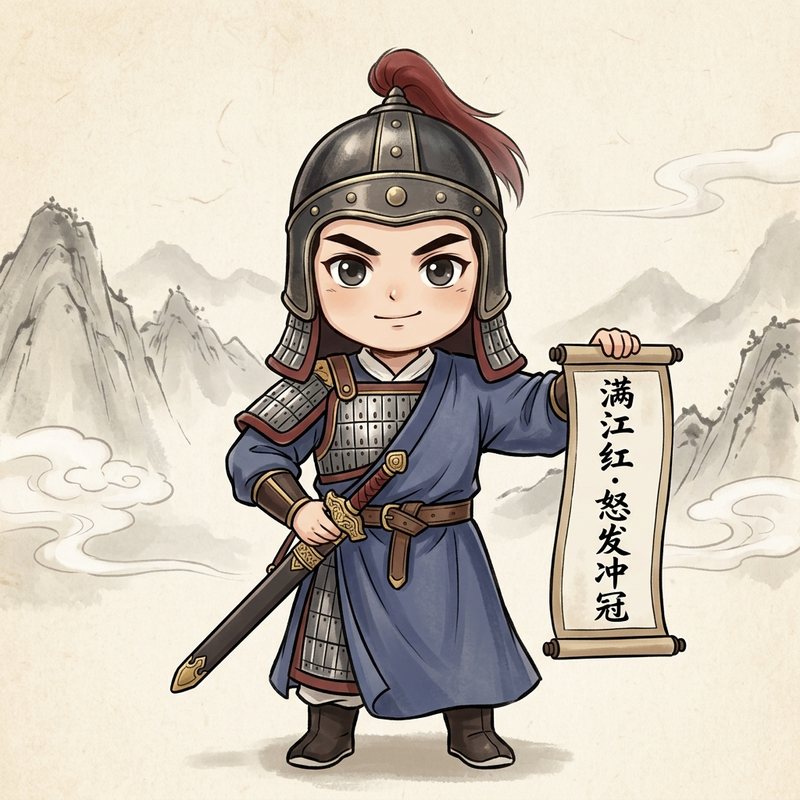
Xin Qiji
辛弃疾
Shared the fiery dream of reclaiming northern China; exchanged deep admiration in their twilight years.
同主北伐恢复,志同道合,辛弃疾病重时陆游作诗相勉,同叹壮志难酬。
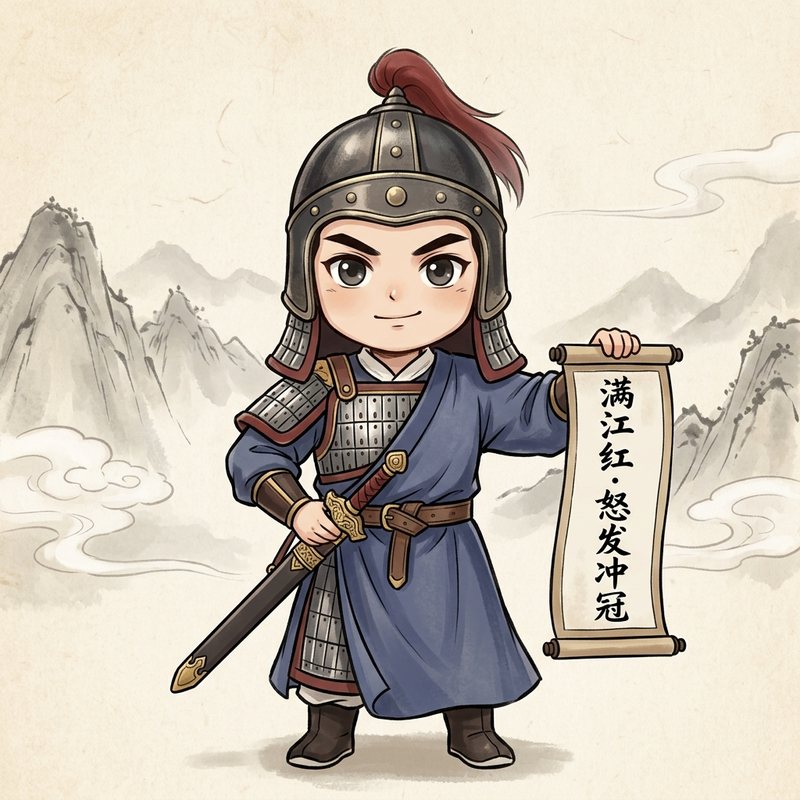
Wen Tianxiang
文天祥
Lu You's deathbed poem became the sacred mantra of resistance for Wen Tianxiang and loyalist martyrs.
陆游'王师北定中原日,家祭无忘告乃翁'成为南宋末年文天祥等志士抗元的精神图腾。
Key Historical Inquiries & Context
关于 陆游 (Lu You) 的核心史实考证、公案辨析与中英直答
Who was Lu You (陆游)?
Lu You (1125–1210), styled Wuguan and known by the art name Fangweng ('The Unrestrained Old Man'), was born in Shanyin, Yuezhou (modern Shaoxing, Zhejiang). One of the 'Four Great Poets of the Southern Song' and the most prolific poet in Chinese history with nearly 10,000 surviving verses, he was born into a scholarly family on the eve of the Jingkang catastrophe and fled south as an infant. Stripped of exam honors by Chancellor Qin Hui for his hawkish anti-Jin views, he later donned iron armor at age 48 to serve on the frontline at Dashan Pass under General Wang Yan. Repeatedly dismissed and impeached by appeasement factions—including for opening state granaries to feed famine victims—he retired to Mirror Lake in Shanyin, writing ceaselessly until his deathbed masterpiece 'To My Son' (示儿). His patriotic ardor, martial heroism, and pastoral realism made him a towering symbol of Chinese resilience.
What was Lu You's primary cultural and historical legacy?
Lu You is celebrated across world history as a pioneer of The Wordsworth & Du Fu of the Song, The Warrior-Poet of Dashan Pass, The Tragic Lover of Shen Garden, leaving enduring philosophical insights, literature, and art.
Where does Lu You's historical life journey map lead?
This interactive GIS map retraces 12 chronological stops across Southern Song Dynasty China, originating from Riverboat Birth in Huaishang and spanning through Passing at Home & The Immortal Testament.