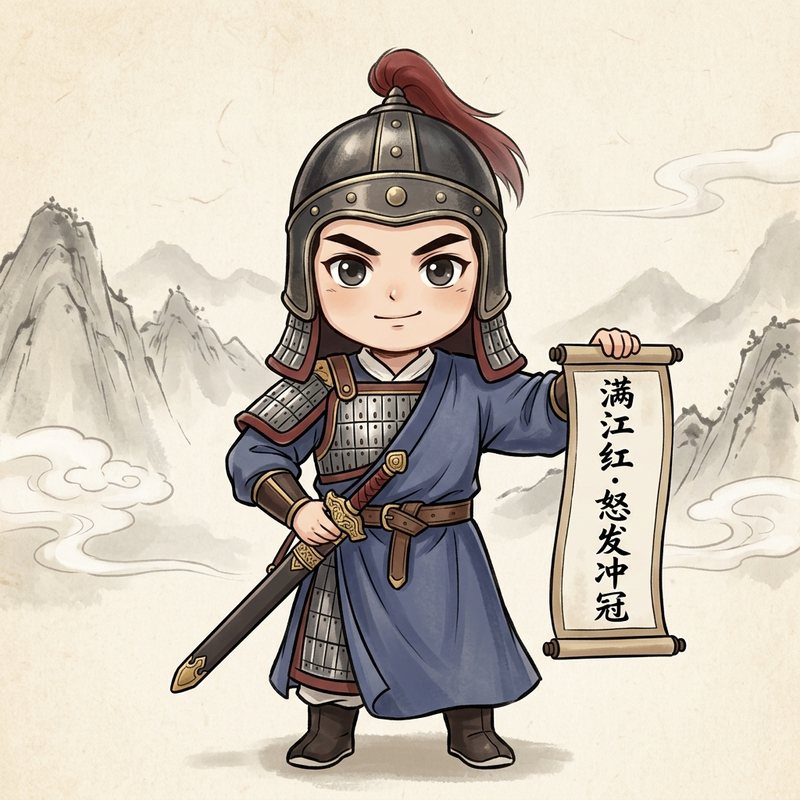
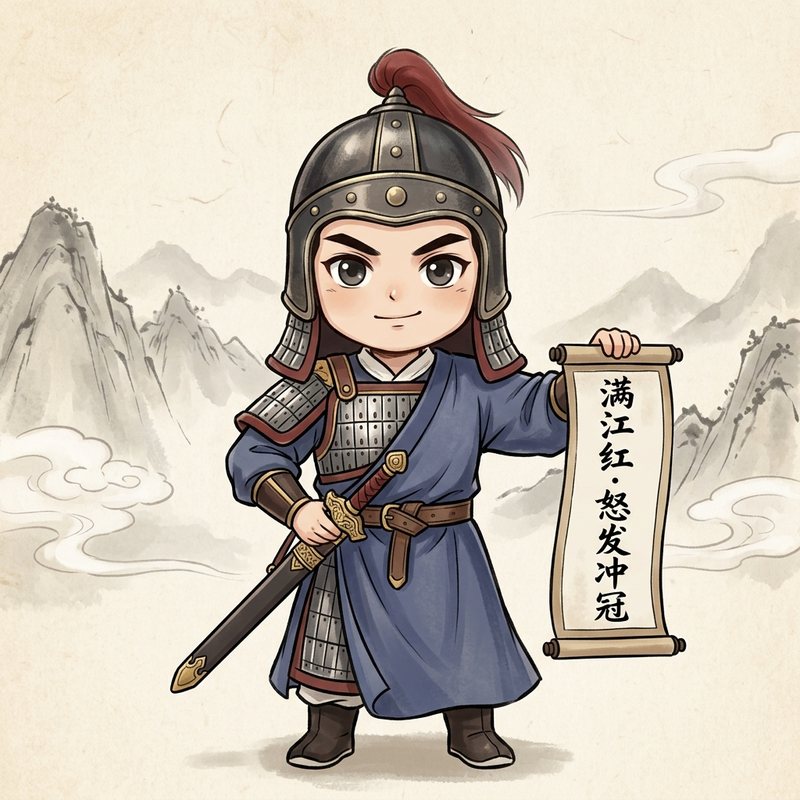
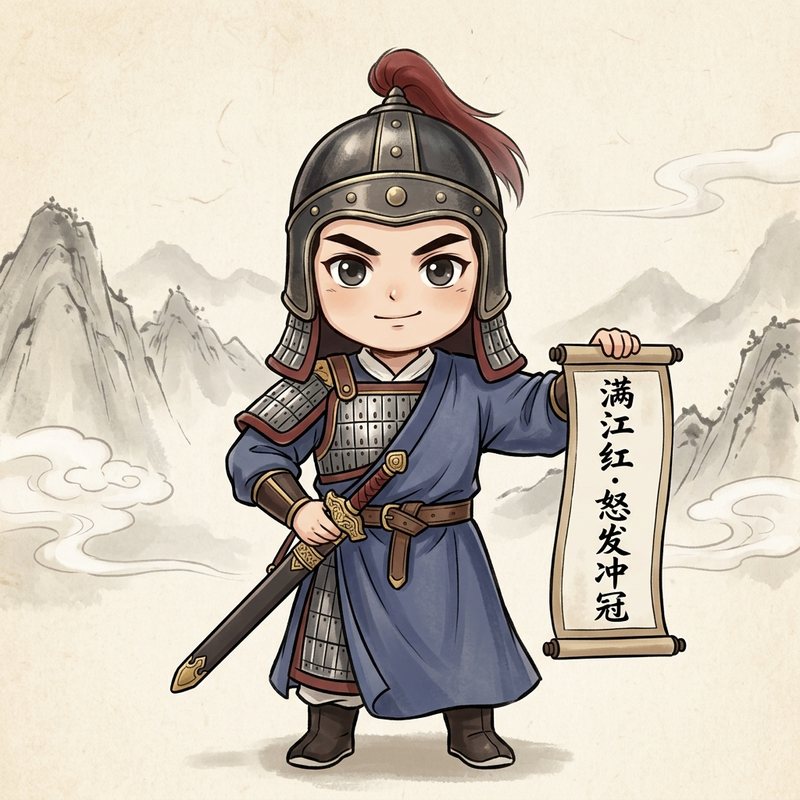
The Patriotic Poet Who Wrote Nearly 10,000 Poems · 1125 – 1210
The supreme patriotic poet of the Southern Song: author of nearly 10,000 verses, warrior-poet of the frontier, and author of China's immortal patriotic testament.
Stops12
Traversed~6,018km
Audio Tour~12min
“孤臣霜发三千丈,每岁烟花一万重。”
A lone minister with frost-white hair three thousand zhang long, facing ten thousand layers of misty spring blossoms year after year.
The Patriotic Poet Who Wrote Nearly 10,000 PoemsSouthern Song Dynasty(1125—1210)字务观 · 号放翁Audio Journey · 12 Stops
The supreme patriotic poet of the Southern Song: warrior-poet of the frontier and author of China's immortal patriotic testament.
The Wordsworth & Du Fu of the Song· William Wordsworth & Du FuThe Warrior-Poet of Dashan Pass· A soldier-poet like Rupert BrookeThe Tragic Lover of Shen Garden· A tragic romance rivaling Abelard & Heloise
Unfolding the Historical Landscape…
印
Daily Wisdom & Resilience Oracle
The Resilient Optimist
“竹杖芒鞋轻胜马,谁怕?一蓑烟雨任平生。”
Holding a bamboo cane and wearing straw sandals, I stride faster than a horse. Who is afraid? A straw cloak in the mist and rain — I live my life with equanimity.
💡 In the 3rd year of exile in Huangzhou, caught in a sudden downpour, Su Shi embraced the storm with supreme resilience.
— Su Shi (Dongpo)(The Renaissance Foodie & Optimist)
Historical Footprints & Narration Archive
12 Stations
1
Riverboat Birth in Huaishang
1125 CE · Age 0
Modern Huai'an, Jiangsu
Born into a patriotic scholar family on the eve of the Jin invasion, the infant Lu You fled south in his mother's arms, drinking in the heartbreak of a fractured empire.
A lone minister with frost-white hair three thousand zhang long, facing ten thousand layers of misty spring blossoms year after year.
Station Narration Script
In 1125, Lu You was born into a patriotic scholar family while his parents traveled by riverboat in Huaishang. The year after his birth, the catastrophic Jingkang Incident erupted as Jin armies sacked the Northern Song capital. Held in his mother's arms aboard a crowded riverboat, the infant Lu You fled south amid war smoke, absorbing the heartbreak of a fractured empire with his earliest memories.
Departure Transition Script
Growing up in Shanyin amidst an extensive family library, Lu You read ravenously and mastered poetry and swordplay, preparing for a life of public service.
2
Lin'an Imperial Examinations
1153 CE · Age 28
Modern Hangzhou, Zhejiang
Outperforming the grand chancellor's grandson in the imperial exams, Lu You was stripped of his honors for championing northern reconquest—and walked out with head held high.
Listening all night to spring rain in the small upstairs loft; tomorrow morning in deep alleyways someone will sell apricot blossoms.
Station Narration Script
In 1153, twenty-nine-year-old Lu You topped the imperial examination in Lin'an, ranking first again the following year. But his policy essays championed armed northern reconquest, placing him ahead of the grand chancellor's favored grandson. Infuriated, Chancellor Qin Hui struck his name from the roster. Rather than grovel, Lu You returned home, uncompromising and proud.
Departure Transition Script
After Qin Hui's death in 1155, Lu You finally entered officialdom, beginning a career marked by both brilliance and repeated persecution.
3
Zhenjiang Vice-Prefect
1164 CE · Age 39
Modern Zhenjiang, Jiangsu
Appointed vice-prefect at the strategic Yangtze garrison of Zhenjiang, Lu You climbed cliff-top pavilions to stare across the misty river toward the occupied homeland.
Occupying the supreme strategic landscape south of the Yangtze, ancient Xuzhou stands preeminent. Rolling mountains stretch like a painting, where atop the misty heights looms a soaring tower.
Station Narration Script
Around 1164, Lu You was appointed Vice-Prefect of Zhenjiang, the premier strategic fortress on the Yangtze. Assisting veteran commander Zhang Jun, he drilled maritime defenses. During respites, he climbed Beigu Mountain and ascended Duojing Tower, gazing across the river toward the occupied northern plains and composing grand, mournful lyrics.
Departure Transition Script
In 1172, Lu You was offered the opportunity of a lifetime: service on the frontline military staff of General Wang Yan at Nanzheng.
4
Nanzheng Military Frontier
1172 CE · Age 47
Modern Hanzhong, Shaanxi
Donning iron armor at age 48 on the frontline at Dashan Pass, Lu You scouted frozen ravines, speared a tiger, and drafted battle plans—the warrior-poet dream made real.
Warships in snowy nights at the Guazhou ferry; iron cavalry in autumn gales at Dashan Pass.
Station Narration Script
In 1172, at age 48, Lu You donned iron armor to serve on the frontline at Nanzheng beside the contested Dashan Pass. Trading his scholar's gowns for iron-scaled armor, he rode through freezing blizzards, scouted forward outposts, speared a tiger on a snowy expedition, and helped draft plans to liberate Chang'an. Though the posting lasted only eight months, it transformed his poetry forever.
Departure Transition Script
When Wang Yan was recalled and the campaign aborted, Lu You was transferred to the tranquil gardens of Chengdu, where he adopted the pen name 'Fangweng.'
5
Chengdu & the Land of Shu
1173 CE · Age 48
Modern Chengdu, Sichuan
After his frontline dreams were abruptly aborted by royal diplomats, Lu You adopted the defiant pen name 'Fangweng' (The Unrestrained Old Man), pouring his unsated warrior fury into verse.
Before national vengeance could be fulfilled, the valiant warrior has grown old; yet deep inside the scabbard, the treasured sword rings fiercely in the night.
Station Narration Script
After his frontline dreams were abruptly aborted by royal diplomats, Lu You wandered the cities of Shu, serving as acting prefect of several prefectures and befriending fellow poet Fan Chengda. Though his life was comparatively comfortable, his thwarted ambition rankled. Adopting the pen name 'Fangweng' (The Unrestrained Old Man), he poured his unsated warrior fury into a torrent of majestic yet mournful verse.
Departure Transition Script
In 1176, pro-appeasement courtiers impeached Lu You for intemperance, and he returned to his hometown of Shanyin.
6
First Return to Shanyin
1176 CE · Age 51
Modern Shaoxing, Zhejiang
Stripped of office on false charges of intemperance, Lu You returned to his rural home and penned China's most enduring proverb of undefeated optimism.
“山重水复疑无路,柳暗花明又一村。”
Shānzhòng shuǐfù yí wú lù, liǔ'àn huāmíng yòu yī cūn.
Where hills bend and streams wind, the pathway seems to end; yet past dark willows and blossoming flowers, another village suddenly appears.
Station Narration Script
Stripped of office on false charges of intemperance, Lu You returned to his rural home by Mirror Lake. Facing slander and political persecution, he showed no self-pity, instead embracing the misty scenery with open-minded grace and finding renewed purpose in simple rural life. It was here he penned China's most beloved proverb of hope: 'Where hills bend and streams wind, the pathway seems to end; yet past dark willows and blossoming flowers, another village suddenly appears.'
Departure Transition Script
In 1179, Lu You was appointed Commissioner of the Tea and Salt Monopoly for Jiangxi, stationed at Fuzhou.
7
Fuzhou Granary Relief
1179 CE · Age 54
Modern Fuzhou, Jiangxi
Confronted by catastrophic famine, Lu You defied court protocol to force open state granaries and rescue starving families—and was impeached for putting lives above red tape.
“行遍天涯千万里,却从邻父学春耕。”
Xíngbiàn tiānyá qiānwàn lǐ, què cóng línfù xué chūngēng.
Having journeyed ten thousand miles to the ends of heaven and earth, I now learn spring plowing alongside my elderly village neighbors.
Station Narration Script
In 1179, Lu You was appointed Commissioner of the Tea and Salt Monopoly for Jiangxi. The following spring, severe flooding brought catastrophic famine. Setting aside his own career, Lu You opened the state granaries without waiting for imperial approval, ordering all counties to distribute relief and saving countless starving lives. Court censors then impeached him for 'arbitrarily opening granaries,' and he was dismissed once again.
Departure Transition Script
Dismissed once more, Lu You returned to his hometown and spent five years farming by Mirror Lake.
8
Farming by Mirror Lake
1181 CE · Age 56
Modern Shaoxing, Zhejiang
Living in near-poverty by Mirror Lake, Lu You worked the mud alongside village farmers, cured their ailments with herbal remedies, and declared no exile could quench his love for his country.
Though humble in station, I dare never forget my devotion to the nation; true assessment of a man's life must wait until the coffin is sealed.
Station Narration Script
After his second dismissal, Lu You spent five years in rustic retreat at his San Shan cottage beside Mirror Lake. Shedding his official robes for coarse homespun, he worked the fields barefoot alongside village farmers, shared wine with elderly neighbors, and prepared herbal remedies for the sick. Rooted in the joys and sorrows of the common people, his poetry flourished with genuine warmth.
Departure Transition Script
In 1186, sixty-two-year-old Lu You was restored to office as Prefect of Yanzhou by Emperor Xiaozong.
9
Prefect of Yanzhou
1186 CE · Age 61
Modern Jiande, Hangzhou, Zhejiang
Restored to high office at 62 to govern Yanzhou, Lu You proved his administrative brilliance while supervising the first woodblock printing of his massive 'Jiannan Poetry Collection.'
“此身合是诗人未?细雨骑驴入剑门。”
Cǐshēn hé shì shīrén wèi? Xìyǔ qílǘ rù Jiànmén.
Was this life destined to be merely that of a wandering poet? Riding a donkey into jagged Jianmen Pass under gentle drizzle.
Station Narration Script
In 1186, sixty-two-year-old Lu You was restored to office as Prefect of Yanzhou. Governing with Confucian benevolence, he reformed administration, reduced corvée and taxes, and encouraged farming, earning the deep affection of the people. In his spare time, he oversaw the first woodblock printing of his 'Jiannan Poetry Collection,' cementing his status as a supreme literary master.
Departure Transition Script
In 1188, Lu You was summoned to the capital to supervise royal weaponry and chronicle imperial history.
10
Capital Historian & Arsenal Director
1188 CE · Age 63
Modern Hangzhou, Zhejiang
Summoned to the capital to supervise royal weaponry and chronicle imperial history, Lu You wielded his historian's brush with uncompromising integrity, choosing exile over whitewashing history.
“借古鉴今,以信史垂示后世。”
Jiègǔ jiànjīn, yǐ xìnshǐ chuíshì hòushì.
Examining the past to enlighten the present, leaving authentic history as an eternal mirror for generations to come.
Station Narration Script
In 1188, Lu You was summoned to the capital as Director of the Imperial Arsenal, overseeing the manufacture of weapons and armor, and soon promoted to Editor of the Veritable Records. He wrote with uncompromising integrity, seeking to preserve authentic history and admonish the court toward national restoration. His outspokenness again drew the enmity of powerful courtiers, and in 1190 he was dismissed on the absurd charge of 'satirizing wind and moon.'
Departure Transition Script
Dismissed at 66, Lu You returned to Shanyin, where he spent his final two decades in austere yet prolific retirement.
11
Final Hermitage at Mirror Lake
1190 CE · Age 65
Modern Shaoxing, Zhejiang
Penniless and bedridden through bitter winter gales, the white-haired poet heard the storms transform into thunderous iron cavalry breaking across frozen northern battlefields.
Deep in the night I lie listening to the driving wind and rain; iron-armored horses charging across frozen rivers gallop into my dreams.
Station Narration Script
After his dismissal at 66, Lu You spent his final two decades in austere retirement at his Old Scholar's Studio in Shanyin. Living in Spartan simplicity, he nevertheless wrote ceaselessly, composing thousands of immortal verses. In the autumn of 1192, bedridden as driving rain battered his windows, he dreamed of armored cavalry charging across frozen rivers to liberate the homeland—captured in 'On the Storm of the Fourth Day of the Eleventh Month.'
Departure Transition Script
On January 26, 1210, eighty-five-year-old Lu You lay dying, and summoned his strength for one final poem.
12
Passing at Home & The Immortal Testament
1210 CE · Age 85
Modern Shaoxing, Zhejiang
Taking his last breath at 85, Lu You left no will of gold or estates—only four immortal verses commanding his descendants to report the liberation of the north at his ancestral altar.
When the imperial banners march north and reclaim the Central Plains, forget not to whisper this to your old father at the family altar.
Station Narration Script
On January 26, 1210, eighty-five-year-old Lu You lay dying in his modest Shanyin cottage. He left behind no wealth, land, or gold. Grasping a brush for the final time, he wrote his immortal deathbed testament 'To My Son' (示儿), commanding his family that when imperial troops finally march north to pacify the Central Plains, they must never forget to report the victory to his departed spirit at the ancestral shrine. With that transcendent patriotic prayer, he closed his eyes and entered eternity.
Departure Transition Script
His nearly 9,300 surviving poems fused the rise and fall of two Song dynasties into an immortal poetic history, inspiring Chinese civilization for over eight centuries.
Key Historical Inquiries & Context
· 核心史实公案与速览
Lu You (1125–1210), styled Wuguan and known by the art name Fangweng ('The Unrestrained Old Man'), was born in Shanyin, Yuezhou (modern Shaoxing, Zhejiang). One of the 'Four Great Poets of the Southern Song' and the most prolific poet in Chinese history with nearly 10,000 surviving verses, he was born into a scholarly family on the eve of the Jingkang catastrophe and fled south as an infant. Stripped of exam honors by Chancellor Qin Hui for his hawkish anti-Jin views, he later donned iron armor at age 48 to serve on the frontline at Dashan Pass under General Wang Yan. Repeatedly dismissed and impeached by appeasement factions—including for opening state granaries to feed famine victims—he retired to Mirror Lake in Shanyin, writing ceaselessly until his deathbed masterpiece 'To My Son' (示儿). His patriotic ardor, martial heroism, and pastoral realism made him a towering symbol of Chinese resilience.
Lu You (1125–1210), styled Wuguan and known by the art name Fangweng ('The Unrestrained Old Man'), was born in Shanyin, Yuezhou (modern Shaoxing, Zhejiang). One of the 'Four Great Poets of the Southern Song' and the most prolific poet in Chinese history with nearly 10,000 surviving verses, he was born into a scholarly family on the eve of the Jingkang catastrophe and fled south as an infant. Stripped of exam honors by Chancellor Qin Hui for his hawkish anti-Jin views, he later donned iron armor at age 48 to serve on the frontline at Dashan Pass under General Wang Yan. Repeatedly dismissed and impeached by appeasement factions—including for opening state granaries to feed famine victims—he retired to Mirror Lake in Shanyin, writing ceaselessly until his deathbed masterpiece 'To My Son' (示儿). His patriotic ardor, martial heroism, and pastoral realism made him a towering symbol of Chinese resilience.
QWhat was Lu You's primary cultural and historical legacy?
Lu You is celebrated across world history as a pioneer of The Wordsworth & Du Fu of the Song, The Warrior-Poet of Dashan Pass, The Tragic Lover of Shen Garden, leaving enduring philosophical insights, literature, and art.
QWhere does Lu You's historical life journey map lead?
This interactive GIS map retraces 12 chronological stops across Southern Song Dynasty China, originating from Riverboat Birth in Huaishang and spanning through Passing at Home & The Immortal Testament.
The Complete Life Journey & Biography of Lu You (Southern Song Poet) (陆游)
Chronological travel & exile routes mapped to modern Chinese cities across Southern Song Dynasty China — featuring bilingual scholar audio, classical poetry recitations, and historical cross-paths.
Riverboat Birth in Huaishang (淮上舟中出生)
Age 0
Modern-day analog: Modern Huai'an, Jiangsu
Born into a patriotic scholar family on the eve of the Jin invasion, the infant Lu You fled south in his mother's arms, drinking in the heartbreak of a fractured empire.
In 1125, Lu You was born into a patriotic scholar family while his parents traveled by riverboat in Huaishang. The year after his birth, the catastrophic Jingkang Incident erupted as Jin armies sacked the Northern Song capital. Held in his mother's arms aboard a crowded riverboat, the infant Lu You fled south amid war smoke, absorbing the heartbreak of a fractured empire with his earliest memories.
Growing up in Shanyin amidst an extensive family library, Lu You read ravenously and mastered poetry and swordplay, preparing for a life of public service.
“A lone minister with frost-white hair three thousand zhang long, facing ten thousand layers of misty spring blossoms year after year.”
Outperforming the grand chancellor's grandson in the imperial exams, Lu You was stripped of his honors for championing northern reconquest—and walked out with head held high.
In 1153, twenty-nine-year-old Lu You topped the imperial examination in Lin'an, ranking first again the following year. But his policy essays championed armed northern reconquest, placing him ahead of the grand chancellor's favored grandson. Infuriated, Chancellor Qin Hui struck his name from the roster. Rather than grovel, Lu You returned home, uncompromising and proud.
After Qin Hui's death in 1155, Lu You finally entered officialdom, beginning a career marked by both brilliance and repeated persecution.
“Listening all night to spring rain in the small upstairs loft; tomorrow morning in deep alleyways someone will sell apricot blossoms.”
Appointed vice-prefect at the strategic Yangtze garrison of Zhenjiang, Lu You climbed cliff-top pavilions to stare across the misty river toward the occupied homeland.
Around 1164, Lu You was appointed Vice-Prefect of Zhenjiang, the premier strategic fortress on the Yangtze. Assisting veteran commander Zhang Jun, he drilled maritime defenses. During respites, he climbed Beigu Mountain and ascended Duojing Tower, gazing across the river toward the occupied northern plains and composing grand, mournful lyrics.
In 1172, Lu You was offered the opportunity of a lifetime: service on the frontline military staff of General Wang Yan at Nanzheng.
“Occupying the supreme strategic landscape south of the Yangtze, ancient Xuzhou stands preeminent. Rolling mountains stretch like a painting, where atop the misty heights looms a soaring tower.”
Donning iron armor at age 48 on the frontline at Dashan Pass, Lu You scouted frozen ravines, speared a tiger, and drafted battle plans—the warrior-poet dream made real.
In 1172, at age 48, Lu You donned iron armor to serve on the frontline at Nanzheng beside the contested Dashan Pass. Trading his scholar's gowns for iron-scaled armor, he rode through freezing blizzards, scouted forward outposts, speared a tiger on a snowy expedition, and helped draft plans to liberate Chang'an. Though the posting lasted only eight months, it transformed his poetry forever.
When Wang Yan was recalled and the campaign aborted, Lu You was transferred to the tranquil gardens of Chengdu, where he adopted the pen name 'Fangweng.'
“Warships in snowy nights at the Guazhou ferry; iron cavalry in autumn gales at Dashan Pass.”
After his frontline dreams were abruptly aborted by royal diplomats, Lu You adopted the defiant pen name 'Fangweng' (The Unrestrained Old Man), pouring his unsated warrior fury into verse.
After his frontline dreams were abruptly aborted by royal diplomats, Lu You wandered the cities of Shu, serving as acting prefect of several prefectures and befriending fellow poet Fan Chengda. Though his life was comparatively comfortable, his thwarted ambition rankled. Adopting the pen name 'Fangweng' (The Unrestrained Old Man), he poured his unsated warrior fury into a torrent of majestic yet mournful verse.
In 1176, pro-appeasement courtiers impeached Lu You for intemperance, and he returned to his hometown of Shanyin.
“Before national vengeance could be fulfilled, the valiant warrior has grown old; yet deep inside the scabbard, the treasured sword rings fiercely in the night.”
Stripped of office on false charges of intemperance, Lu You returned to his rural home and penned China's most enduring proverb of undefeated optimism.
Stripped of office on false charges of intemperance, Lu You returned to his rural home by Mirror Lake. Facing slander and political persecution, he showed no self-pity, instead embracing the misty scenery with open-minded grace and finding renewed purpose in simple rural life. It was here he penned China's most beloved proverb of hope: 'Where hills bend and streams wind, the pathway seems to end; yet past dark willows and blossoming flowers, another village suddenly appears.'
In 1179, Lu You was appointed Commissioner of the Tea and Salt Monopoly for Jiangxi, stationed at Fuzhou.
“Where hills bend and streams wind, the pathway seems to end; yet past dark willows and blossoming flowers, another village suddenly appears.”
Confronted by catastrophic famine, Lu You defied court protocol to force open state granaries and rescue starving families—and was impeached for putting lives above red tape.
In 1179, Lu You was appointed Commissioner of the Tea and Salt Monopoly for Jiangxi. The following spring, severe flooding brought catastrophic famine. Setting aside his own career, Lu You opened the state granaries without waiting for imperial approval, ordering all counties to distribute relief and saving countless starving lives. Court censors then impeached him for 'arbitrarily opening granaries,' and he was dismissed once again.
Dismissed once more, Lu You returned to his hometown and spent five years farming by Mirror Lake.
“Having journeyed ten thousand miles to the ends of heaven and earth, I now learn spring plowing alongside my elderly village neighbors.”
行遍天涯千万里,却从邻父学春耕。 (Xíngbiàn tiānyá qiānwàn lǐ, què cóng línfù xué chūngēng.)
Farming by Mirror Lake (镜湖躬耕田园)
Age 56
Modern-day analog: Modern Shaoxing, Zhejiang
Living in near-poverty by Mirror Lake, Lu You worked the mud alongside village farmers, cured their ailments with herbal remedies, and declared no exile could quench his love for his country.
After his second dismissal, Lu You spent five years in rustic retreat at his San Shan cottage beside Mirror Lake. Shedding his official robes for coarse homespun, he worked the fields barefoot alongside village farmers, shared wine with elderly neighbors, and prepared herbal remedies for the sick. Rooted in the joys and sorrows of the common people, his poetry flourished with genuine warmth.
In 1186, sixty-two-year-old Lu You was restored to office as Prefect of Yanzhou by Emperor Xiaozong.
“Though humble in station, I dare never forget my devotion to the nation; true assessment of a man's life must wait until the coffin is sealed.”
Modern-day analog: Modern Jiande, Hangzhou, Zhejiang
Restored to high office at 62 to govern Yanzhou, Lu You proved his administrative brilliance while supervising the first woodblock printing of his massive 'Jiannan Poetry Collection.'
In 1186, sixty-two-year-old Lu You was restored to office as Prefect of Yanzhou. Governing with Confucian benevolence, he reformed administration, reduced corvée and taxes, and encouraged farming, earning the deep affection of the people. In his spare time, he oversaw the first woodblock printing of his 'Jiannan Poetry Collection,' cementing his status as a supreme literary master.
In 1188, Lu You was summoned to the capital to supervise royal weaponry and chronicle imperial history.
“Was this life destined to be merely that of a wandering poet? Riding a donkey into jagged Jianmen Pass under gentle drizzle.”
Capital Historian & Arsenal Director (掌领军器 · 修撰国史)
Age 63
Modern-day analog: Modern Hangzhou, Zhejiang
Summoned to the capital to supervise royal weaponry and chronicle imperial history, Lu You wielded his historian's brush with uncompromising integrity, choosing exile over whitewashing history.
In 1188, Lu You was summoned to the capital as Director of the Imperial Arsenal, overseeing the manufacture of weapons and armor, and soon promoted to Editor of the Veritable Records. He wrote with uncompromising integrity, seeking to preserve authentic history and admonish the court toward national restoration. His outspokenness again drew the enmity of powerful courtiers, and in 1190 he was dismissed on the absurd charge of 'satirizing wind and moon.'
Dismissed at 66, Lu You returned to Shanyin, where he spent his final two decades in austere yet prolific retirement.
“Examining the past to enlighten the present, leaving authentic history as an eternal mirror for generations to come.”
Penniless and bedridden through bitter winter gales, the white-haired poet heard the storms transform into thunderous iron cavalry breaking across frozen northern battlefields.
After his dismissal at 66, Lu You spent his final two decades in austere retirement at his Old Scholar's Studio in Shanyin. Living in Spartan simplicity, he nevertheless wrote ceaselessly, composing thousands of immortal verses. In the autumn of 1192, bedridden as driving rain battered his windows, he dreamed of armored cavalry charging across frozen rivers to liberate the homeland—captured in 'On the Storm of the Fourth Day of the Eleventh Month.'
On January 26, 1210, eighty-five-year-old Lu You lay dying, and summoned his strength for one final poem.
“Deep in the night I lie listening to the driving wind and rain; iron-armored horses charging across frozen rivers gallop into my dreams.”
Passing at Home & The Immortal Testament (示儿绝唱 · 千秋诗史)
Age 85
Modern-day analog: Modern Shaoxing, Zhejiang
Taking his last breath at 85, Lu You left no will of gold or estates—only four immortal verses commanding his descendants to report the liberation of the north at his ancestral altar.
On January 26, 1210, eighty-five-year-old Lu You lay dying in his modest Shanyin cottage. He left behind no wealth, land, or gold. Grasping a brush for the final time, he wrote his immortal deathbed testament 'To My Son' (示儿), commanding his family that when imperial troops finally march north to pacify the Central Plains, they must never forget to report the victory to his departed spirit at the ancestral shrine. With that transcendent patriotic prayer, he closed his eyes and entered eternity.
His nearly 9,300 surviving poems fused the rise and fall of two Song dynasties into an immortal poetic history, inspiring Chinese civilization for over eight centuries.
“When the imperial banners march north and reclaim the Central Plains, forget not to whisper this to your old father at the family altar.”