Who Was Princess Wencheng? Tang Peace-Weaver of Tibet
Who Was Princess Wencheng? Tang Peace-Weaver of Tibet
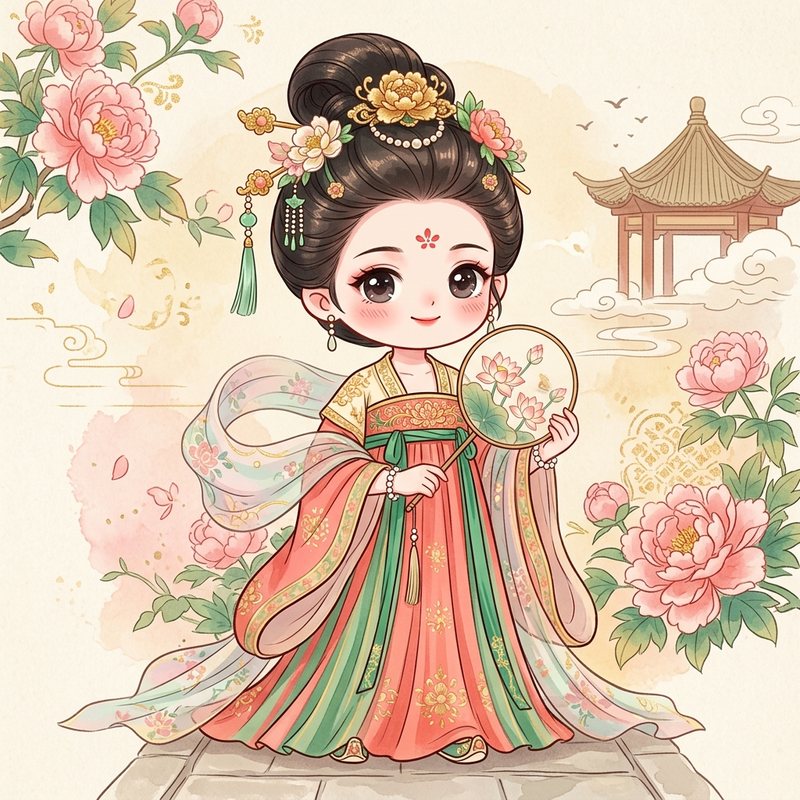
Princess Wencheng (文成公主 · Wénchéng Gōngzhǔ)
吐蕃尊称甲木萨 · 汉妃神女 · 藏传佛教白度母化身
The Royal Peace-Weaver of Tibet: she crossed the snowbound plateau to forge an immortal bridge of peace, introducing agriculture, medicine, and Buddhism across forty devoted years.
唐蕃古道上的和平使者,以坚毅跨越万里风雪,开创汉藏文明交融的金桥;入蕃四十年传授农桑医术、建大昭寺,雪域尊奉为白度母。
- The Royal Peace-Weaver: Wed King Songtsen Gampo in 641 CE to cement Tang-Tibetan peace, ending frontier conflicts and initiating four decades of bilateral cooperation.
- Civilizational Catalyst: Brought a treasure-house dowry of agricultural seeds, medical treatises, weaving looms, astronomy texts, and skilled craftsmen that modernized Tibetan society.
- Sacred Buddhist Patroness: Enshrined the revered Jowo Shakyamuni statue, mapped geomantic sites across Tibet, and inspired the foundation of Lhasa's legendary Jokhang and Ramoche temples.
- Enduring Divine Legacy: Stayed thirty years in Tibet after King Songtsen Gampo's early death, honored by generations of Tibetans as the compassionate White Tara.
Phase 1: Royal Upbringing and the Chang'an Betrothal (623–640)
Princess Wencheng was born around 623 CE into a prestigious branch of the Li imperial clan in Chang'an (modern Xi'an, Shaanxi Province). Reared within the refined atmosphere of the early Tang court, she received an elite education encompassing Confucian classics, poetry, agricultural sciences, traditional medicine, and silk manufacturing.
In 640 CE, the ambitious King Songtsen Gampo of Tibet dispatched his brilliant prime minister, Gar Tongtsen Yulsung (known in Chinese records as Lu Dongzan), to Chang'an with five thousand ounces of gold and dazzling treasures to request an imperial bride. Tang Emperor Taizong, recognizing the strategic wisdom of peace on his western flank, formally bestowed the title of Princess Wencheng upon the young noblewoman.
舅甥和好,社稷如一。
Jiù shēng hé hǎo, shè jì rú yī.
Maternal uncle and royal nephew bound in harmonious fellowship, their sovereign states united as one harmonious commonwealth.
Context · Inscribed on the historic Tang-Tibet Alliance Tablet standing before the Jokhang Temple in Lhasa, celebrating the kinship initiated by Princess Wencheng's royal union.
Phase 2: The Epic Trek Across Mount Chiling and Lake Baihai (641)
In the first month of 641 CE, Prince Li Daozong of Jiangxia was commissioned with imperial tallies to escort Princess Wencheng west. At the desolate pass of Mount Chiling (modern Mount Riyue in Qinghai), the princess stood on the continental divide gazing eastward toward home. Tradition holds that she deliberately shattered the magic Sun-and-Moon mirror given by Emperor Taizong, severing homesickness and committing her soul to the mountain crossing.
Reaching Lake Baihai (modern Lake Kyaring at the source of the Yellow River), King Songtsen Gampo rode thousands of miles with his royal guard to receive his Tang bride. Meeting Prince Li Daozong, the king bowed with the humble etiquette of a devoted son-in-law, marveling openly at the splendor of Tang protocol and courtly attire.
赞普大喜,见道宗,执子婿之礼甚恭。
Zànpǔ dà xǐ, jiàn Dàozōng, zhí zǐxù zhī lǐ shèn gōng.
The Tibetan King was overjoyed; upon meeting Prince Daozong, he observed the humble decorum of a son-in-law with utmost reverence.
Context · From the official Old Book of Tang (旧唐书), documenting the grand 641 CE summit at Lake Baihai that sealed the imperial marriage.
Phase 3: Seeding Civilization in Kham and Lhasa (641–645)
Pausing her grueling journey through the Kham valleys of Yushu, Princess Wencheng spent weeks instructing local villagers in crop cultivation, stone masonry, and timber framing. Her craftsmen carved sacred Buddhist reliefs along the cliffs of Lebagou, founding a sanctuary that would become the beloved Princess Wencheng Temple.
Upon her triumphal arrival in Lhasa, King Songtsen Gampo ordered the construction of a magnificent palace upon Mount Marpori (the foundational fortress of the modern Potala Palace). Wencheng used ancient geomantic principles to survey the Tibetan terrain, identifying the landscape as a supine ogress demoness. To subdue this land, she directed the founding of Ramoche Temple to enshrine the life-sized Jowo Shakyamuni and helped establish the Jokhang Temple.
自从贵主和亲后,一半胡风似汉家。
Zì cóng guì zhǔ hé qīn hòu, yí bàn hú fēng sì hàn jiā.
Ever since the noble imperial princess was wed in diplomatic peace, half of the frontier customs have resembled those of the Han homeland.
Context · Written by Tang Dynasty poet Chen Tao, celebrating how Princess Wencheng's arrival infused Tibetan culture with Tang textiles, literature, and decorum.
Phase 4: Agrarian Innovation at Trandruk and King's Passing (645–650)
In the fertile Yarlung Valley of Shannan, Princess Wencheng resided at Trandruk Temple, where she surveyed and cultivated Tibet's very first measured grain field—the historic Sodang field. She introduced iron plows pulled by double oxen, taught women silk embroidery, and crafted the famed Pearl Thangka depicting Avalokiteshvara.
Tragedy struck in 650 CE when King Songtsen Gampo died unexpectedly after nine years of marriage. Rather than retreating across the mountains to her birthplace in Chang'an, Princess Wencheng made the monumental decision to remain in Tibet. Over the next three decades, she served as a revered elder matriarch, safeguarding political equilibrium and keeping the peace between the Tang Empire and Tibetan ministers.
谁说高原无五谷,公主带来稻麦香。
Shuí shuō gāoyuán wú wǔgǔ, gōngzhǔ dài lái dào mài xiāng.
Who claimed the high plateau could yield no grains? The Princess brought the fragrant harvest of barley, wheat, and rice.
Context · A beloved Tibetan folk song preserved in Shannan celebrating Princess Wencheng's agricultural transformations.
Phase 5: Diplomatic Sanctuary, Deification, and Eternal Legacy (670–680)
During her later years, Lhasa evolved into an essential nexus of Silk Road diplomacy. When famed Tang ambassador Wang Xuance faced betrayal on his expedition to India, Princess Wencheng facilitated crucial military assistance and provisions. She offered sanctuary, food, and maps to Chinese Buddhist monks traversing the Himalayas to reach Nalanda.
In 680 CE, Princess Wencheng passed away peacefully in Lhasa at the age of fifty-seven. The Tibetan court accorded her an unprecedented royal state funeral, and Emperor Gaozong of Tang dispatched special envoys to mourn. Honored as the White Tara, her legacy survives in the verdant 'Tang Willow' she planted outside Jokhang Temple and in the heart of two great peoples.
| Perspective 视角 | Princess Wencheng (The Silk Road Peace-Weaver) | Queen Bertha of Kent (The Anglo-Saxon Peace-Weaver) |
|---|---|---|
| Royal Alliance Mission | Wed King Songtsen Gampo in 641 CE to cement peace between the Tang Empire and Tibetan Kingdom. | Wed King Aethelberht of Kent in 580 CE to connect the pagan Anglo-Saxon kingdom with Christian Frankish Gaul. |
| Cultural & Technological Transfer | Introduced agriculture, silkworm farming, paper milling, calendar systems, and medicine across Tibet. | Re-introduced Roman literacy, architectural building techniques, and Frankish continental legal customs to England. |
| Introduction of Faith & Shrines | Brought the life-sized Jowo Shakyamuni statue to Lhasa and directed the building of the Jokhang and Ramoche temples. | Established St. Martin's Church in Canterbury and facilitated Saint Augustine's Gregorian Mission. |
| Veneration and Sainthood | Venerated across Tibetan Buddhism as the compassionate White Tara (Drolma Karpo) and honored in Tibetan Opera. | Venerated in the Anglican and Roman Catholic Churches as a saint who re-Christianized England. |
Explore Princess Wencheng's Himalayan Expedition on the Map
Follow her actual historical journey across 10 epic stations—from imperial Chang'an and Mount Riyue to the royal wedding at Lake Baihai and her decades in Lhasa.
Launch Interactive Journey MapFrequently Asked Questions (FAQ)
Who was Princess Wencheng in Chinese and Tibetan history?
Princess Wencheng was an imperial noblewoman of the Tang Dynasty who married Tibetan King Songtsen Gampo in 641 CE. Revered as Gyasa in Tibet and later deified as the White Tara, she was instrumental in introducing Chinese agricultural techniques, silk weaving, medicine, paper milling, and Buddhism to Tibet.
What did Princess Wencheng bring with her to Tibet in her dowry?
Her extraordinary dowry included the life-sized Jowo Shakyamuni statue (now housed in Lhasa's Jokhang Temple), hundreds of volumes on agriculture, metallurgy, medicine, and divination, along with grain seeds, silkworm eggs, fine porcelain, and teams of master craftsmen and scholars.
Why did Princess Wencheng shatter the Sun-and-Moon mirror at Mount Riyue?
According to legend, Emperor Taizong gifted Princess Wencheng a magical mirror that allowed her to view Chang'an when she grew homesick. Upon reaching Mount Riyue on the imperial frontier, she realized looking back would weaken her resolve. She shattered the mirror against the rocks, dedicating her life completely to her mission in Tibet.
What role did Princess Wencheng play in building the Jokhang and Ramoche temples?
Applying ancient Chinese geomantic principles, Wencheng diagnosed the Tibetan plateau as a supine demoness whose vital points needed pacification. She selected the dried bed of Lake Wothang for the Jokhang Temple and founded the Ramoche Temple to house the sacred Jowo Shakyamuni statue she brought from Chang'an.
Did Princess Wencheng return to Chang'an after King Songtsen Gampo died?
No, she remained in Tibet for thirty years after King Songtsen Gampo's death in 650 CE. Rather than returning home to comfort, she stayed in Lhasa as a beloved matriarch ('Gyasa'), providing counsel to the Tibetan court and maintaining peaceful relations between the Tang Dynasty and Tibet until her death in 680 CE.