Who Was Confucius? Socrates of Ancient China
Born an impoverished orphan, he became the moral architect of East Asia — teaching that character, not bloodline, defines nobility.
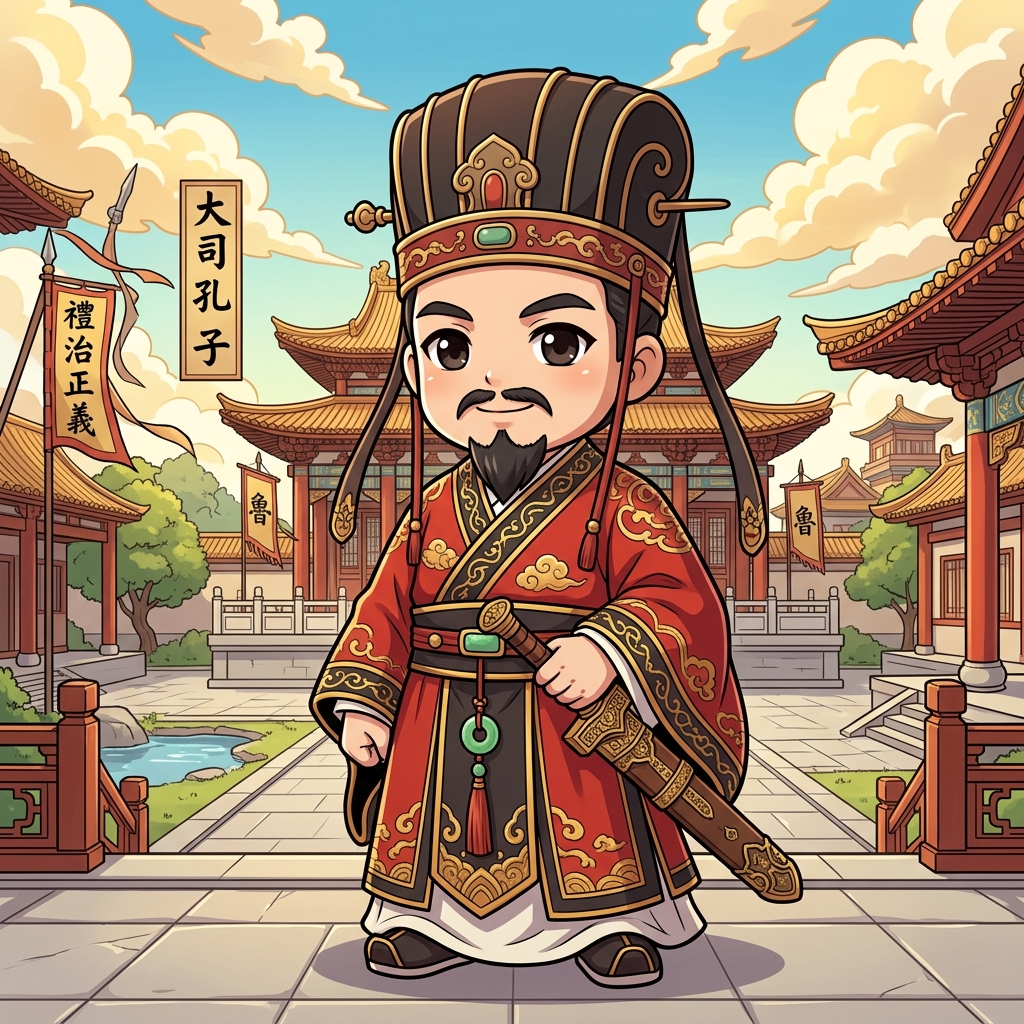
Confucius (Kongzi) (孔子 (孔丘) · Kǒng Zǐ)
字仲尼 · 至圣先师 · 万世师表
The Teacher of Ten Thousand Generations & Architect of Humanistic Ethics
大成至圣先师 · 创立儒家平民私学与仁爱礼乐的万世宗师
- Historical Identity: China's foremost educator and philosopher during the Spring and Autumn Period, venerated as the 'Teacher of Ten Thousand Generations.'
- Democratic Education: Shattered feudal privilege with his universal education motto 'In education, there are no social classes' (有教无类).
- The 14-Year Odyssey: Wandered 14 grueling years through rival states, surviving assassination threats and starvation while serenely playing the zither.
- Enduring Global Impact: Laid the moral and civic foundation for East Asian societies for over 2,500 years, standing alongside Socrates as an Axial Age titan.
From Humble Orphan to Master of the Six Classical Arts
Confucius's father died when he was only three years old, leaving him to be raised by his mother Yan Zhengzai in deep poverty in Qufu. Far from an ivory tower, young Confucius worked menial jobs managing granary accounts and tending livestock. 'I was of humble birth,' he candidly recalled, 'and therefore became skilled in many lowly tasks.'
孔子三岁丧父,随母亲在曲阜阙里清贫度日。他并未生长于显赫书斋,而是做过管理粮仓出纳的‘委吏’与牧养牲畜的‘乘田’。‘吾少也贱,故多能鄙事’,早年的底层劳作磨砺出他扎根大地的实干品格与深切同理心。
吾十有五而志于学,三十而立。
Wú shí yǒu wǔ ér zhì yú xué, sān shí ér lì.
At fifteen I set my heart upon learning; at thirty I took my stand.
Context · From the Analects (论语·为政) — Confucius's reflection on his lifelong commitment to self-cultivation and knowledge.
Standing over six feet tall and gifted with extraordinary physical stamina, Confucius mastered the Six Classical Arts (Rites, Music, Archery, Charioteering, Calligraphy, and Mathematics). At thirty, he founded China's first open private school, insisting that any curious mind could enroll regardless of ancestry.
孔子身高九尺六寸,臂力过人且兼通射御六艺,文武完备。三十岁时,他在阙里杏坛首开私学,弟子三千、贤人七十二,彻底终结了贵族对知识的千年垄断。
The 14-Year Wandering: Testing Moral Conviction Under Siege
After brief governance in Lu where he reformed justice and achieved diplomatic triumphs at Jiagu, Confucius resigned in protest when the duke indulged in hedonistic gifts from rivals. Thus began his epic 14-year journey (497–484 BCE) through Wei, Song, Zheng, and Chen.
在鲁国主政期间,孔子曾使中都路不拾遗,并在夹谷之会以外交折冲收复失地。然而因鲁定公沉溺齐国馈赠的女乐文马,孔子毅然辞官去鲁,开启了长达十四年颠沛流离的周游列国之旅。
The greatest trial occurred between Chen and Cai (489 BCE). Hostile local factions surrounded Confucius and his disciples in a deserted wilderness. Trapped for seven days without grain, many followers fell ill and could not stand. Despair gripped the camp, but Confucius serenely tuned his zither and sang ancient odes.
周游途中最险恶的考验发生于陈蔡之间。陈国与蔡国大夫畏惧孔子入楚,派兵将师徒围困于荒野。绝粮七日,弟子饥病不能起,子路愤怒质问:‘君子亦有穷乎?’孔子泰然抚琴弦歌:‘君子固穷,小人穷斯滥矣。’在生死关头立起了人类崇高的道德丰碑。
岁寒,然后知松柏之后凋也。
Suì hán, ránhòu zhī sōngbǎi zhī hòu diāo yě.
Only when the winter cold comes do we know that the pine and cypress are the last to shed their leaves.
Context · From the Analects (论语·子罕) — A tribute to steadfast resilience and unyielding moral dignity in times of deepest adversity.
| Perspective 视角 | Dimension | Confucius (Ancient China) vs. Socrates (Classical Greece) |
|---|---|---|
| Core Calling | Cultivating moral character (Ren) and social harmony through universal education | Challenging unexamined assumptions and exposing false wisdom through logical inquiry |
| Pedagogical Method | Aphorisms, situational parables, ritual practice, and leading by example (Analects) | Relentless public dialectic, cross-examination, and Socratic irony (Platonic Dialogues) |
| Political Objective | Restoring benevolent governance by training virtuous public leaders (Junzi) | Nurturing self-critical citizens and seeking absolute definitions of justice |
| Ultimate Adversity | 14 years of exile, poverty, and starvation at Chen-Cai met with serene music | Facing public trial, refusing exile, and calmly drinking the hemlock cup |
Trace Confucius's 14-Year Odyssey Across Ancient Warring States
Experience Confucius's authentic 12-station trajectory — from his birthplace at Nishan to the wilderness of Chen-Cai and the sacred Xingtan altar on our interactive 3D map.
Launch Confucius's Odyssey MapFrequently Asked Questions (People Also Ask)
Who was Confucius in simple terms?
Confucius (Kongzi) was an ancient Chinese philosopher, teacher, and statesman of the 6th century BCE whose teachings on empathy (Ren), moral order (Li), and family loyalty shaped East Asian civilization for 2,500 years.
What are the core concepts of Confucianism?
The core pillars include Ren (benevolence or deep human empathy), Li (proper ritual conduct and social norms), Xiao (filial piety), and the cultivation of the Junzi (an exemplary ethical person).
Did Confucius write the Analects himself?
No. Like Socrates and the Gospels, Confucius taught orally. The Analects (Lunyu) were compiled decades after his passing by his devoted students and subsequent generations of disciples.
How did Confucius die and where is he buried?
Confucius died peacefully in 479 BCE at age 72 in Qufu, State of Lu, having spent his final years editing the classical Book of Songs and the Spring and Autumn Annals. His tomb is in the Cemetery of Confucius in Qufu, Shandong.
Walk with Confucius (Kongzi) Across China
随孔子 (孔丘)漫步华夏河山 · 亲历命运逆境与精神涅槃