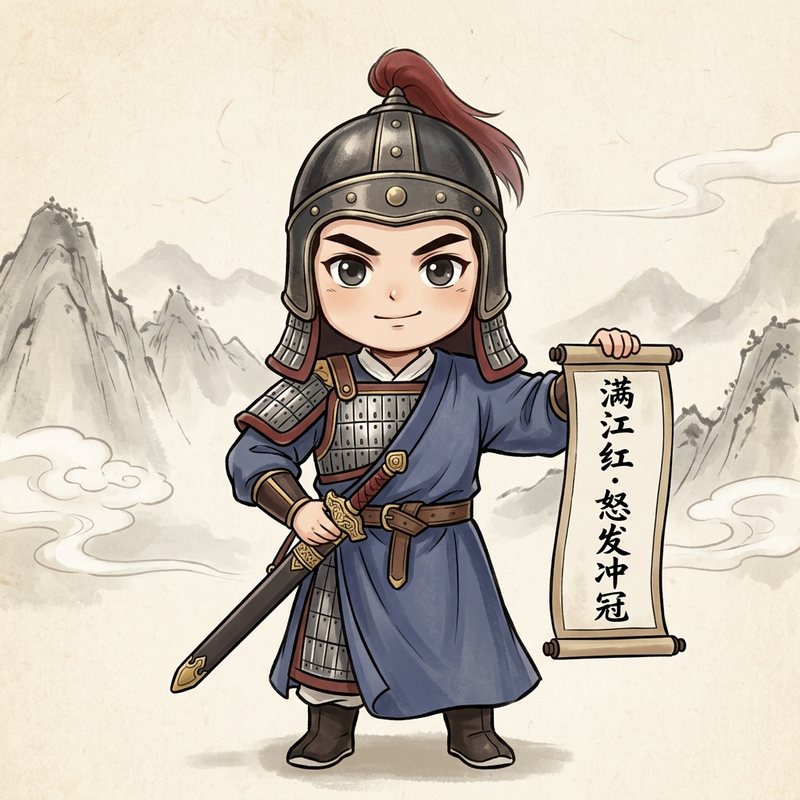
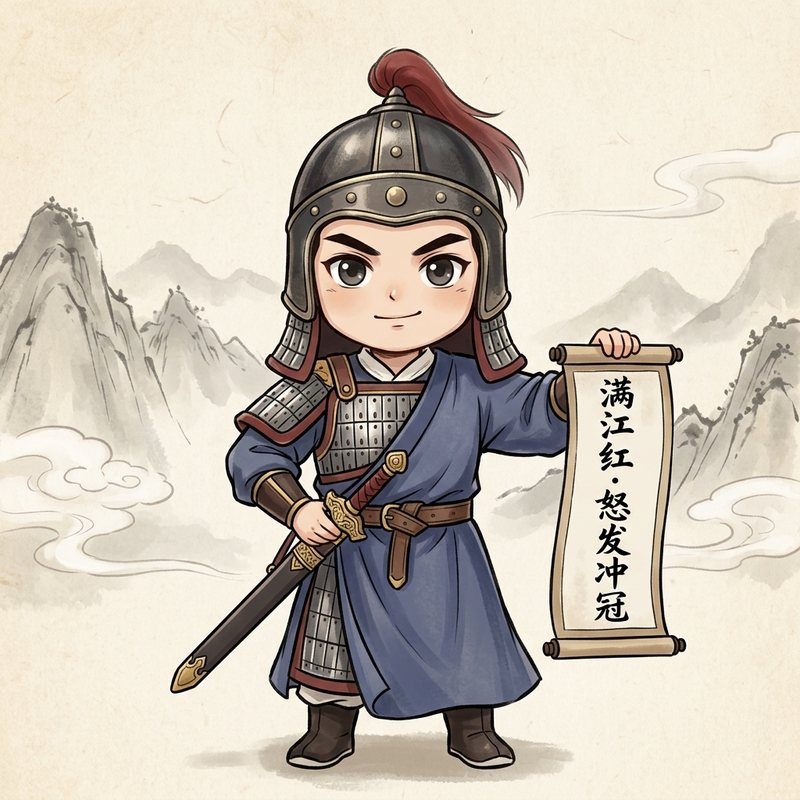
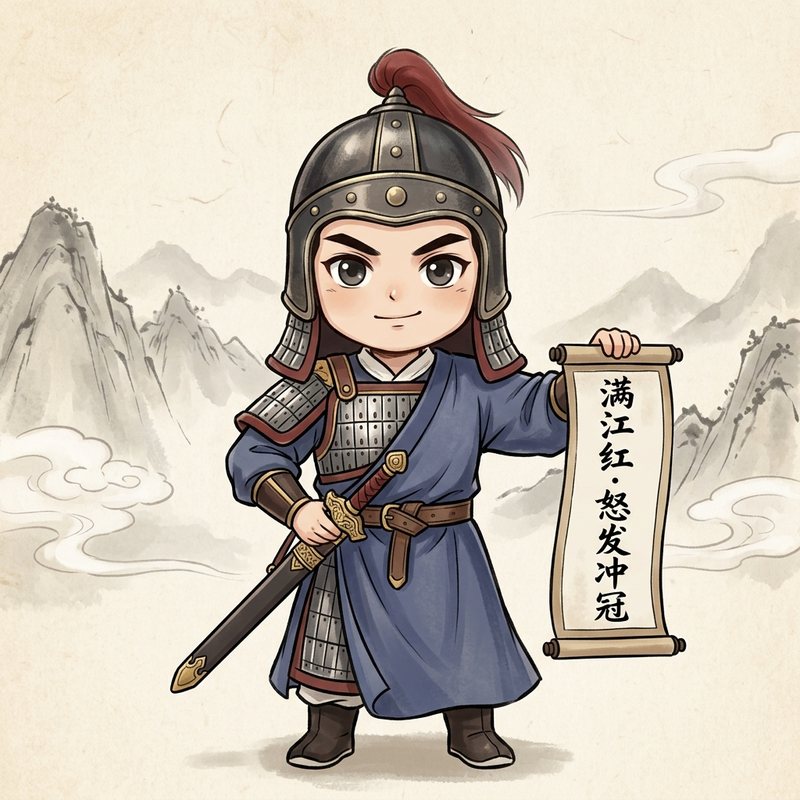
Top imperial scholar, patriotic Prime Minister, and moral martyr of the Southern Song: his 'Song of Righteousness' and 'crimson heart' illuminated Chinese history.
Stops10
Traversed~5,687km
Audio Tour~12min
“没不俎豆其间,非夫也!”
If upon death my spirit is not revered among these ancient patriots, then I have lived as no true man!
The Unbroken Martyr of LingdingyangSong Dynasty(1236—1283)字履善 · 又字宋瑞 · 号文山 · 世称信国公Audio Journey · 10 Stops
Top imperial scholar and patriotic Prime Minister who wrote the immortal 'Song of Righteousness' and preserved national dignity.
The Unbroken Patriot of Lingdingyang· William WallaceThe Stoic Martyr of Moral Conscience· Sir Thomas MoreThe Compass of Southern Loyalty· A steadfast moral beacon
Unfolding the Historical Landscape…
印
Daily Wisdom & Resilience Oracle
The Resilient Optimist
“竹杖芒鞋轻胜马,谁怕?一蓑烟雨任平生。”
Holding a bamboo cane and wearing straw sandals, I stride faster than a horse. Who is afraid? A straw cloak in the mist and rain — I live my life with equanimity.
💡 In the 3rd year of exile in Huangzhou, caught in a sudden downpour, Su Shi embraced the storm with supreme resilience.
— Su Shi (Dongpo)(The Renaissance Foodie & Optimist)
Historical Footprints & Narration Archive
10 Stations
1
Luling, Jizhou
1236 CE · Age 1
Historic cultural cradle along the Gan River, birthplace of Ouyang Xiu and home of Bailuzhou Academy, modern Ji'an, Jiangxi
Standing before portraits of legendary martyrs in his hometown temple, a schoolboy swore he would die worthy of equal honor.
“没不俎豆其间,非夫也!”
Mò bù zǔdòu qí jiān, fēi fū yě!
If upon death my spirit is not revered among these ancient patriots, then I have lived as no true man!
Station Narration Script
In 1236, Wen Tianxiang was born into a distinguished scholar family in Luling, Jiangxi. Brilliant from childhood, he absorbed the wisdom of the Confucian classics under his father's guidance. Gazing at portraits of heroic martyrs in the local academy, he swore to live as a patriot worthy of equal reverence, laying the bedrock of his unbending spirit.
Departure Transition Script
In 1256, twenty-year-old Wen Tianxiang traveled to the capital Lin'an, dazzling the imperial court in the palace examinations.
2
Lin'an Imperial Court
1256 CE · Age 20
Palace examination grounds and scenic imperial capital near West Lake, modern Hangzhou, Zhejiang
At twenty, he penned a ten-thousand-word policy treatise to win first place as Zhuangyuan, then risked execution demanding the death of corrupt eunuchs.
“此天之祥,乃宋之瑞也!”
Cǐ tiān zhī xiáng, nǎi Sòng zhī ruì yě!
This talent is heaven's divine blessing, an auspicious omen sent to preserve the Song!
Station Narration Script
Within the grand halls of Lin'an, twenty-year-old Wen Tianxiang delivered a blistering ten-thousand-word policy treatise, claiming the supreme Zhuangyuan doctoral crown. Emperor Lizong hailed him as the empire's auspicious blessing. Yet when corrupt eunuchs advocated cowardice before invading armies, Wen immediately demanded their execution, preferring resignation over political compromise.
Departure Transition Script
In 1270, Wen governed Ruizhou but was dismissed after refusing to flatter Grand Chancellor Jia Sidao.
3
Ruizhou Prefecture
1270 CE · Age 34
Historic prefecture along the Jin River in north-central Jiangxi, modern Gao'an
When the autocratic Grand Chancellor demanded groveling submission, Wen chose demotion and built a quiet mountain retreat.
“本自山林人,偶尔弄笔砚。”
Běn zì shānlín rén, ǒu'ěr nòng bǐyàn.
I was by nature a quiet hermit of the green mountains, dabbling only by chance in brush and inkstone.
Station Narration Script
In Ruizhou, Wen Tianxiang proved himself an upright and effective administrator, rectifying injustices and protecting the people. Yet when autocratic Chancellor Jia Sidao demanded sycophancy, Wen stood tall and unyielding. Impeached and dismissed, he retreated to Wenshan, styling himself Master Wenshan and quietly cultivating his inner strength.
Departure Transition Script
In 1275, as Mongol armies smashed the Yangtze defense, Wen raised a volunteer army in Ganzhou.
4
Ganzhou Encampment
1275 CE · Age 39
Confluence bastion of the Zhang and Gong rivers below Yugu Terrace, modern Ganzhou, Jiangxi
He sold his entire family estate to arm thirty thousand volunteers, marching into battle when imperial generals were fleeing.
“第以身殉之,庶天下忠臣义士闻风而起!”
Dì yǐ shēn xùn zhī, shù tiānxià zhōngchén yìshì wénfēng ér qǐ!
I offer my own body as a sacrifice, hoping that true patriots across the four seas will awaken and rise to the call!
Station Narration Script
Beneath Yugu Terrace in Ganzhou, Wen Tianxiang wept over the imperial summons for aid. In the hour of national collapse, he emptied his entire personal estate to fund thirty thousand volunteer troops. Well aware of the overwhelming odds, he marched north to Lin'an, offering his mortal life to stir the conscience of an empire.
Departure Transition Script
In January 1276, appointed Right Grand Chancellor, Wen walked into the Mongol camp to negotiate peace.
5
Lin'an & Gaotingshan
1276 CE · Age 40
Gaotingshan battlefield encampment outside the southern capital gates, modern Hangzhou, Zhejiang
Surrounded by drawn blades in the enemy general's tent, the wartime Prime Minister refused to yield an inch of imperial dignity.
A Zhuangyuan Prime Minister of the Song knows only the realm's survival—he knows nothing of personal life or death!
Station Narration Script
In the Mongol encampment at Gaotingshan, surrounded by menacing iron cavalry, other envoys trembled, but newly appointed Prime Minister Wen Tianxiang stood resolute. He castigated the conquerors for breaking treaties and defended the realm's honor without flinching. Awed yet fearful of his spirit, Bayan held him prisoner as the court of Lin'an surrendered.
Departure Transition Script
In February, escorted north under armed guard, Wen escaped during a violent storm at Zhenjiang.
6
Zhenjiang Fortress
1276 CE · Age 40
Ancient strategic bastion on the southern Yangtze bank beneath Beigu Mountain, modern Zhenjiang, Jiangsu
Slipping his guards in a stormy night, he crossed the Yangtze on a tiny skiff, declaring his heart a compass needle pointing south.
My heart is like the needle of a mariner's compass: until it points directly southward, it will never come to rest.
Station Narration Script
On a tempestuous night in Zhenjiang, with river waves crashing against fortress ramparts, Wen Tianxiang slipped away with twelve companions. Evading relentless enemy manhunts across the Yangtze delta, he made his way to open waters. 'My heart is like a mariner's compass needle, never resting until pointing south,' he vowed, turning perilous escape into a triumph of will.
Departure Transition Script
In summer 1276, Wen reached Fuzhou and established military headquarters at Nanjianzhou.
7
Nanjianzhou Headquarters
1276 CE · Age 40
Strategic mountainous confluence of the Min River valley, modern Nanping, Fujian
Deep in the southern mountains, he forged a new liberation army and swept back into Jiangxi, winning back captured cities.
“驱驰万里路,慷慨一身轻。”
Qūchí wànlǐ lù, kāngkǎi yīshēn qīng.
Rushing ten thousand leagues through dust and blood, I carry my mortal body as light as a feather in this noble cause.
Station Narration Script
Amid the misty ranges of Nanjianzhou, Wen Tianxiang set up his military headquarters, rallying thousands of loyal fighters to renew the struggle. Rejecting passive maritime retreat, he spearheaded an offensive back into Jiangxi, liberating cities and proving that moral conviction could breathe new life into a collapsing cause.
Departure Transition Script
In winter 1278, fighting along coastal Guangdong, Wen was surprised and captured at Wupoling.
8
Wupoling Pass
1278 CE · Age 42
Mountain ridge and historical pavilion site in coastal Shanwei, modern Haifeng, Guangdong
Ambushed over a campfire meal in coastal hills, he took poison to deny his captors a prize, surviving only to face a greater trial.
From this day forward I bid farewell to my beloved southland; let my spirit become a cuckoo singing with blood upon its tongue.
Station Narration Script
In the rugged coastal hills of Wupoling, camp cooking fires were shattered by a surprise cavalry charge. Cornered and taking poison in vain, Wen Tianxiang found himself bound in enemy chains. Yet as cold iron pressed against his wrists, his eyes flashed with resolve, stepping forward into the greatest moral trial of his life.
Departure Transition Script
In January 1279, aboard a Mongol warship in Lingdingyang, Wen was ordered to draft a surrender letter.
9
Lingdingyang Estuary
1279 CE · Age 43
Pearl River estuary maritime waters near modern Zhuhai and Macau, site of the Yamen naval finale
Watching his empire drown in the surf of Yamen, he handed his captors not a surrender letter, but the most defiant couplet in history.
All humans throughout history face inescapable mortality; let my loyal crimson heart illuminate the green bamboo annals of history forever.
Station Narration Script
Amid the surging waters of Lingdingyang, surrounded by an overwhelming enemy fleet, chained Wen Tianxiang dipped his brush and composed 'Passing the Lingding Ocean.' 'All humans throughout history face mortality; let my crimson heart illuminate the green bamboo annals forever!' The fourteen characters silenced the conquerors. As the Battle of Yamen sent the dynasty into the sea, Wen's unyielding spirit became the eternal beacon of his culture.
Departure Transition Script
In late 1279, Wen was taken north to Dadu and confined in a subterranean cell for three years.
10
Dadu & Chaishi Execution Ground
1283 CE · Age 47
Bingmasi dungeon cell and historic Chaishi execution site in central Beijing, modern Dongcheng District
In a lightless cell, he wrote the 'Song of Righteousness', spurned Kublai Khan's prime ministership, and calmly faced the axe.
“天地有正气,杂然赋流形。下则为河岳,上则为日星。”
Tiāndì yǒu zhèngqì, zárán fù liúxíng. Xià zé wéi héyuè, shàng zé wéi rìxīng.
In heaven and earth there exists a righteous spirit, taking diverse shapes and infusing all forms: below, it becomes the rivers and sacred mountains; above, the sun and the stars.
Station Narration Script
In the dank subterranean prison of Dadu, Wen Tianxiang endured three years and two months of darkness and pestilence, writing the magnificent 'Song of Righteousness.' When Kublai Khan personally offered him the grand chancellorship, Wen bowed and asked only for death. At the Chaishi execution ground, he turned toward the south, bowed in reverence, and laid his head upon the block. With the words 'From now on, I have no shame' sewn in his belt, he fulfilled the highest ideal of moral righteousness.
Departure Transition Script
The righteous spirit Wen Tianxiang forged with his life shines like eternal mountains and stars across the sky of human history.
Key Historical Inquiries & Context
· 核心史实公案与速览
Wen Tianxiang (1236–1283), styled Songrui and Lüshan, master name Wenshan, was a supreme statesman, military commander, and patriotic poet of the Southern Song Dynasty. Ranking first (Zhuangyuan) in the 1256 imperial examinations, he spent his personal fortune to raise a volunteer army against the Mongol invasion in 1275. Appointed Right Grand Chancellor, he fearlessly confronted the invaders, survived daring escapes, and led guerrilla resistance in southern provinces. Captured at Wupoling in 1278, he refused to surrender aboard warships during the Battle of Yamen, writing 'Passing the Lingding Ocean.' Imprisoned in a subterranean cell in Dadu for over three years, he steadfastly spurned Kublai Khan's personal entreaties to become Prime Minister, writing the immortal 'Song of Righteousness' before facing execution with serene dignity.
Wen Tianxiang (1236–1283), styled Songrui and Lüshan, master name Wenshan, was a supreme statesman, military commander, and patriotic poet of the Southern Song Dynasty. Ranking first (Zhuangyuan) in the 1256 imperial examinations, he spent his personal fortune to raise a volunteer army against the Mongol invasion in 1275. Appointed Right Grand Chancellor, he fearlessly confronted the invaders, survived daring escapes, and led guerrilla resistance in southern provinces. Captured at Wupoling in 1278, he refused to surrender aboard warships during the Battle of Yamen, writing 'Passing the Lingding Ocean.' Imprisoned in a subterranean cell in Dadu for over three years, he steadfastly spurned Kublai Khan's personal entreaties to become Prime Minister, writing the immortal 'Song of Righteousness' before facing execution with serene dignity.
QWhat was Wen Tianxiang's primary cultural and historical legacy?
Wen Tianxiang is celebrated across world history as a pioneer of The Unbroken Patriot of Lingdingyang, The Stoic Martyr of Moral Conscience, The Compass of Southern Loyalty, leaving enduring philosophical insights, literature, and art.
QWhere does Wen Tianxiang's historical life journey map lead?
This interactive GIS map retraces 10 chronological stops across Song Dynasty China, originating from Luling, Jizhou and spanning through Dadu & Chaishi Execution Ground.
The Complete Life Journey & Biography of Wen Tianxiang (Song Patriot) (文天祥)
Chronological travel & exile routes mapped to modern Chinese cities across Song Dynasty China — featuring bilingual scholar audio, classical poetry recitations, and historical cross-paths.
Luling, Jizhou (吉州庐陵)
Age 1
Modern-day analog: Historic cultural cradle along the Gan River, birthplace of Ouyang Xiu and home of Bailuzhou Academy, modern Ji'an, Jiangxi
Standing before portraits of legendary martyrs in his hometown temple, a schoolboy swore he would die worthy of equal honor.
In 1236, Wen Tianxiang was born into a distinguished scholar family in Luling, Jiangxi. Brilliant from childhood, he absorbed the wisdom of the Confucian classics under his father's guidance. Gazing at portraits of heroic martyrs in the local academy, he swore to live as a patriot worthy of equal reverence, laying the bedrock of his unbending spirit.
In 1256, twenty-year-old Wen Tianxiang traveled to the capital Lin'an, dazzling the imperial court in the palace examinations.
“If upon death my spirit is not revered among these ancient patriots, then I have lived as no true man!”
没不俎豆其间,非夫也! (Mò bù zǔdòu qí jiān, fēi fū yě!)
Lin'an Imperial Court (临安及第)
Age 20
Modern-day analog: Palace examination grounds and scenic imperial capital near West Lake, modern Hangzhou, Zhejiang
At twenty, he penned a ten-thousand-word policy treatise to win first place as Zhuangyuan, then risked execution demanding the death of corrupt eunuchs.
Within the grand halls of Lin'an, twenty-year-old Wen Tianxiang delivered a blistering ten-thousand-word policy treatise, claiming the supreme Zhuangyuan doctoral crown. Emperor Lizong hailed him as the empire's auspicious blessing. Yet when corrupt eunuchs advocated cowardice before invading armies, Wen immediately demanded their execution, preferring resignation over political compromise.
In 1270, Wen governed Ruizhou but was dismissed after refusing to flatter Grand Chancellor Jia Sidao.
“This talent is heaven's divine blessing, an auspicious omen sent to preserve the Song!”
Modern-day analog: Historic prefecture along the Jin River in north-central Jiangxi, modern Gao'an
When the autocratic Grand Chancellor demanded groveling submission, Wen chose demotion and built a quiet mountain retreat.
In Ruizhou, Wen Tianxiang proved himself an upright and effective administrator, rectifying injustices and protecting the people. Yet when autocratic Chancellor Jia Sidao demanded sycophancy, Wen stood tall and unyielding. Impeached and dismissed, he retreated to Wenshan, styling himself Master Wenshan and quietly cultivating his inner strength.
In 1275, as Mongol armies smashed the Yangtze defense, Wen raised a volunteer army in Ganzhou.
“I was by nature a quiet hermit of the green mountains, dabbling only by chance in brush and inkstone.”
Modern-day analog: Confluence bastion of the Zhang and Gong rivers below Yugu Terrace, modern Ganzhou, Jiangxi
He sold his entire family estate to arm thirty thousand volunteers, marching into battle when imperial generals were fleeing.
Beneath Yugu Terrace in Ganzhou, Wen Tianxiang wept over the imperial summons for aid. In the hour of national collapse, he emptied his entire personal estate to fund thirty thousand volunteer troops. Well aware of the overwhelming odds, he marched north to Lin'an, offering his mortal life to stir the conscience of an empire.
In January 1276, appointed Right Grand Chancellor, Wen walked into the Mongol camp to negotiate peace.
“I offer my own body as a sacrifice, hoping that true patriots across the four seas will awaken and rise to the call!”
Modern-day analog: Gaotingshan battlefield encampment outside the southern capital gates, modern Hangzhou, Zhejiang
Surrounded by drawn blades in the enemy general's tent, the wartime Prime Minister refused to yield an inch of imperial dignity.
In the Mongol encampment at Gaotingshan, surrounded by menacing iron cavalry, other envoys trembled, but newly appointed Prime Minister Wen Tianxiang stood resolute. He castigated the conquerors for breaking treaties and defended the realm's honor without flinching. Awed yet fearful of his spirit, Bayan held him prisoner as the court of Lin'an surrendered.
In February, escorted north under armed guard, Wen escaped during a violent storm at Zhenjiang.
“A Zhuangyuan Prime Minister of the Song knows only the realm's survival—he knows nothing of personal life or death!”
Modern-day analog: Ancient strategic bastion on the southern Yangtze bank beneath Beigu Mountain, modern Zhenjiang, Jiangsu
Slipping his guards in a stormy night, he crossed the Yangtze on a tiny skiff, declaring his heart a compass needle pointing south.
On a tempestuous night in Zhenjiang, with river waves crashing against fortress ramparts, Wen Tianxiang slipped away with twelve companions. Evading relentless enemy manhunts across the Yangtze delta, he made his way to open waters. 'My heart is like a mariner's compass needle, never resting until pointing south,' he vowed, turning perilous escape into a triumph of will.
In summer 1276, Wen reached Fuzhou and established military headquarters at Nanjianzhou.
“My heart is like the needle of a mariner's compass: until it points directly southward, it will never come to rest.”
Modern-day analog: Strategic mountainous confluence of the Min River valley, modern Nanping, Fujian
Deep in the southern mountains, he forged a new liberation army and swept back into Jiangxi, winning back captured cities.
Amid the misty ranges of Nanjianzhou, Wen Tianxiang set up his military headquarters, rallying thousands of loyal fighters to renew the struggle. Rejecting passive maritime retreat, he spearheaded an offensive back into Jiangxi, liberating cities and proving that moral conviction could breathe new life into a collapsing cause.
In winter 1278, fighting along coastal Guangdong, Wen was surprised and captured at Wupoling.
“Rushing ten thousand leagues through dust and blood, I carry my mortal body as light as a feather in this noble cause.”
Modern-day analog: Mountain ridge and historical pavilion site in coastal Shanwei, modern Haifeng, Guangdong
Ambushed over a campfire meal in coastal hills, he took poison to deny his captors a prize, surviving only to face a greater trial.
In the rugged coastal hills of Wupoling, camp cooking fires were shattered by a surprise cavalry charge. Cornered and taking poison in vain, Wen Tianxiang found himself bound in enemy chains. Yet as cold iron pressed against his wrists, his eyes flashed with resolve, stepping forward into the greatest moral trial of his life.
In January 1279, aboard a Mongol warship in Lingdingyang, Wen was ordered to draft a surrender letter.
“From this day forward I bid farewell to my beloved southland; let my spirit become a cuckoo singing with blood upon its tongue.”
Modern-day analog: Pearl River estuary maritime waters near modern Zhuhai and Macau, site of the Yamen naval finale
Watching his empire drown in the surf of Yamen, he handed his captors not a surrender letter, but the most defiant couplet in history.
Amid the surging waters of Lingdingyang, surrounded by an overwhelming enemy fleet, chained Wen Tianxiang dipped his brush and composed 'Passing the Lingding Ocean.' 'All humans throughout history face mortality; let my crimson heart illuminate the green bamboo annals forever!' The fourteen characters silenced the conquerors. As the Battle of Yamen sent the dynasty into the sea, Wen's unyielding spirit became the eternal beacon of his culture.
In late 1279, Wen was taken north to Dadu and confined in a subterranean cell for three years.
“All humans throughout history face inescapable mortality; let my loyal crimson heart illuminate the green bamboo annals of history forever.”
Modern-day analog: Bingmasi dungeon cell and historic Chaishi execution site in central Beijing, modern Dongcheng District
In a lightless cell, he wrote the 'Song of Righteousness', spurned Kublai Khan's prime ministership, and calmly faced the axe.
In the dank subterranean prison of Dadu, Wen Tianxiang endured three years and two months of darkness and pestilence, writing the magnificent 'Song of Righteousness.' When Kublai Khan personally offered him the grand chancellorship, Wen bowed and asked only for death. At the Chaishi execution ground, he turned toward the south, bowed in reverence, and laid his head upon the block. With the words 'From now on, I have no shame' sewn in his belt, he fulfilled the highest ideal of moral righteousness.
The righteous spirit Wen Tianxiang forged with his life shines like eternal mountains and stars across the sky of human history.
“In heaven and earth there exists a righteous spirit, taking diverse shapes and infusing all forms: below, it becomes the rivers and sacred mountains; above, the sun and the stars.”
天地有正气,杂然赋流形。下则为河岳,上则为日星。 (Tiāndì yǒu zhèngqì, zárán fù liúxíng. Xià zé wéi héyuè, shàng zé wéi rìxīng.)