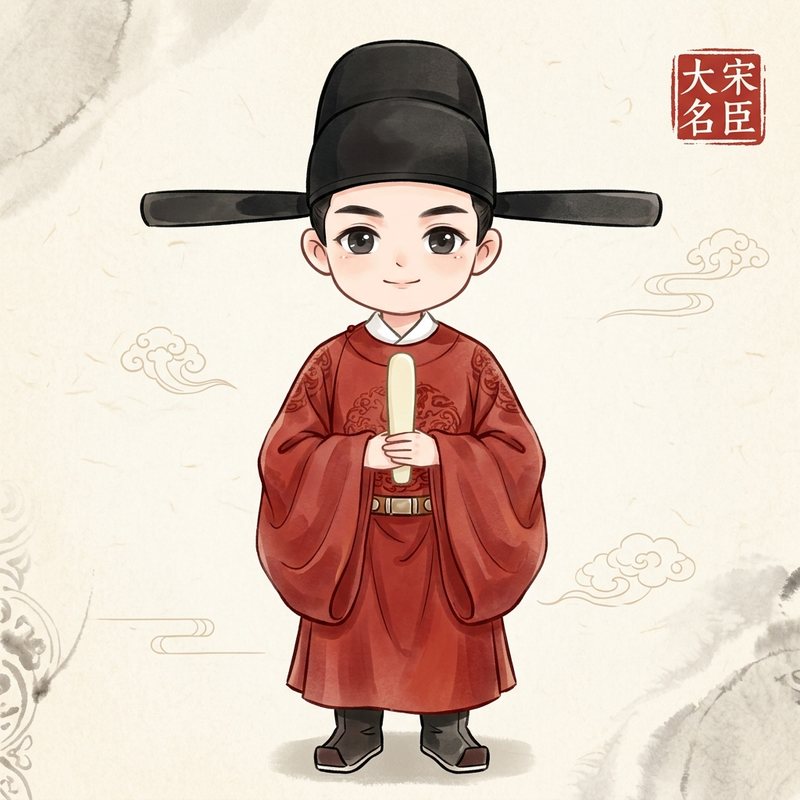
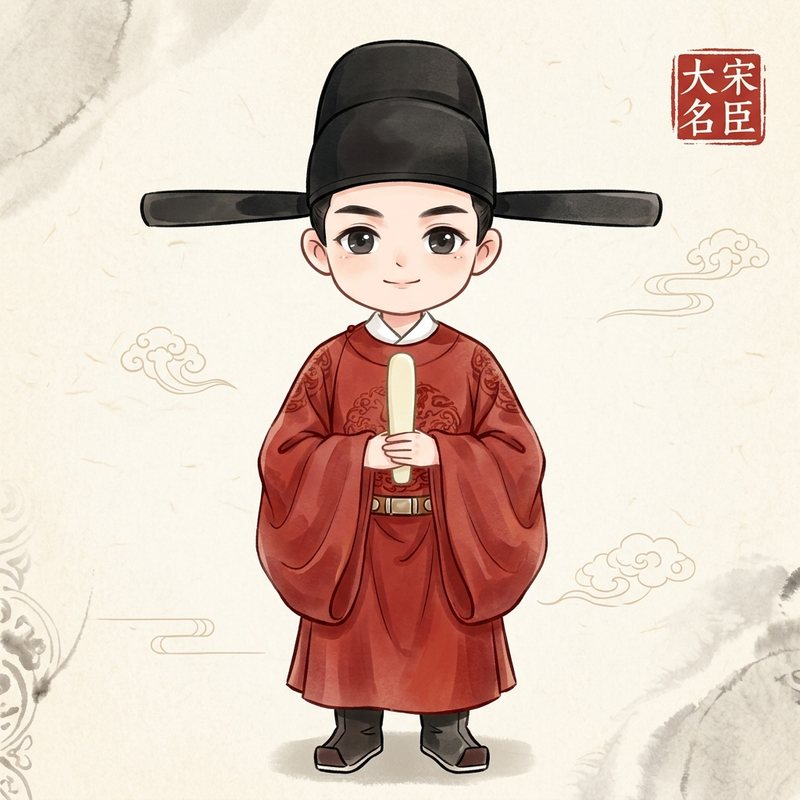
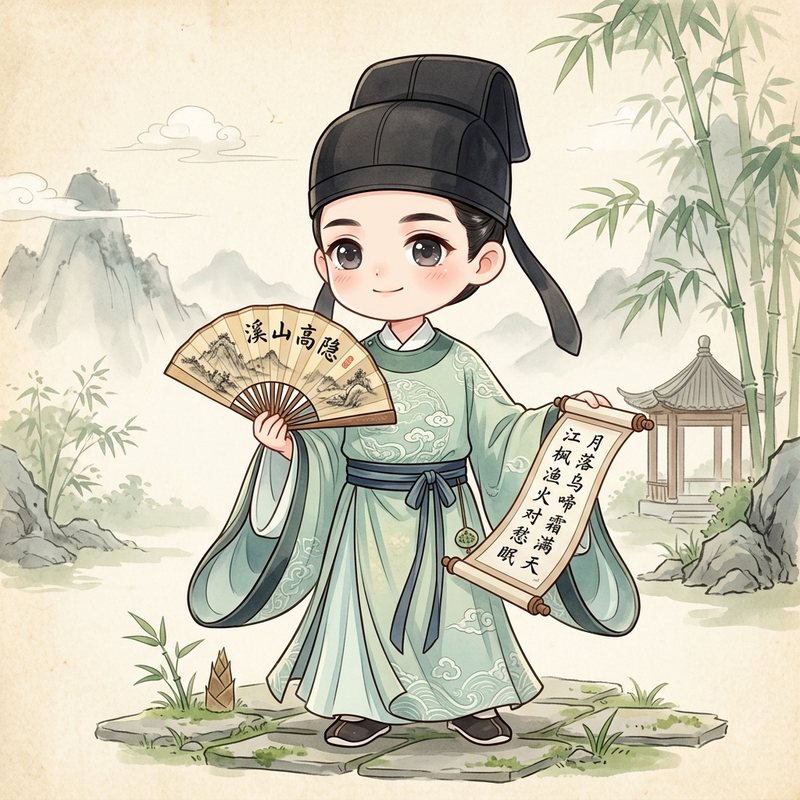
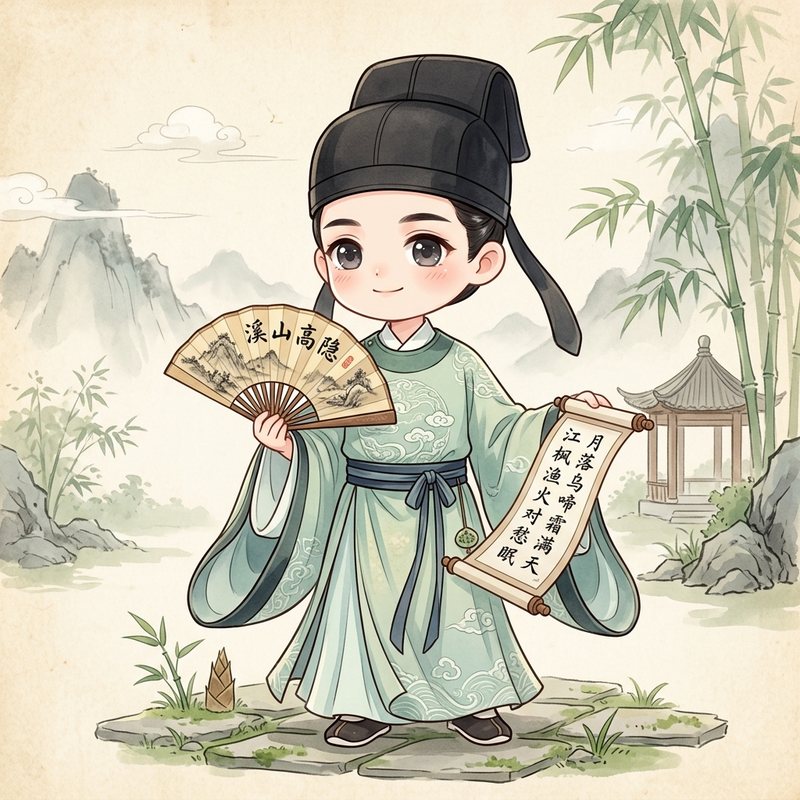
The Uncompromising Reformer & Imperial ChancellorNorthern Song Dynasty(1021—1086)字介甫 · 晚号半山 · 荆国公Audio Journey · 8 Stops
Defying cosmic omens, ancestral laws, and imperial gossip to restructure a dying empire.
The Uncompromising Reformer· A bold economic reformerThe Rationalist Who Defied Heaven· An Enlightenment rationalistThe Stubborn Titan of Letters· A principled literary giant
Unfolding the Historical Landscape…
印
Daily Wisdom & Resilience Oracle
The Resilient Optimist
“竹杖芒鞋轻胜马,谁怕?一蓑烟雨任平生。”
Holding a bamboo cane and wearing straw sandals, I stride faster than a horse. Who is afraid? A straw cloak in the mist and rain — I live my life with equanimity.
💡 In the 3rd year of exile in Huangzhou, caught in a sudden downpour, Su Shi embraced the storm with supreme resilience.
— Su Shi (Dongpo)(The Renaissance Foodie & Optimist)
Historical Footprints & Narration Archive
8 Stations
1
Linchuan
1021 CE · Age 1
Modern Fuzhou, Jiangxi
Born into a rigorous scholarly lineage with an innate ambition to govern.
Since ancient times, leading the people rests on integrity; a single solemn pledge outweighs hundred bars of gold.
Station Narration Script
The mountains of Linchuan did not turn Wang Anshi into a gentle romantic poet. Traveling with his father, he saw firsthand the grinding poverty hidden behind Song prosperity. Reading voraciously through the night, he despised idle scholarly talk, resolving instead to reform the empire through ruthless institutional competence.
Departure Transition Script
Passing the imperial exams at twenty-two, he bypassed lucrative capital positions, demanding instead to be assigned to the rugged eastern county of Yinxian.
2
Yinxian
1047 CE · Age 27
Modern Ningbo, Zhejiang
A 27-year-old magistrate piloting state loans and public works in rural Ningbo.
I fear not that floating clouds will veil my sight, simply because I stand upon the mountain's highest peak.
Station Narration Script
The waters of Dongqian Lake lapped against earthen dams as 27-year-old magistrate Wang Anshi stood knee-deep in mud surveying waterworks. Confronting predatory landlords, he piloted bold state microloans for poor farmers during the lean spring months. Within three years, Yinxian flourished, serving as his testing laboratory for an empire-wide economic revolution.
Departure Transition Script
Repeatedly declining promotions to the decadent capital, Wang Anshi bided his time. Finally in 1058, he dropped a monumental bomb on Emperor Renzong: a ten-thousand-word manifesto demanding structural revolution.
3
Kaifeng
1058 CE · Age 38
Imperial Capital Kaifeng, Henan
A blistering ten-thousand-word manifesto ripping away the illusion of Song prosperity.
Use the collective labor of the world to generate wealth for the world, and allocate that wealth to sustain the public good.
Station Narration Script
While Kaifeng partied through the night, Wang Anshi stared coldly at the empire's hemorrhaging treasury ledgers. He penned a fiery ten-thousand-word exposé, warning that without radical structural surgery, the Song dynasty was doomed. The aging Emperor admired his intellect but backed down before conservative opposition. Wang Anshi withdrew, waiting for an iron-willed monarch who dared to overturn the heavens.
Departure Transition Script
Mourning his mother, he spent five quiet years teaching in Jiangning. Then in 1067, a radical 19-year-old monarch ascended the throne: Emperor Shenzong, who immediately dispatched a secret summons for Wang Anshi.
4
Kaifeng Court
1069 CE · Age 49
Imperial Palace Kaifeng
The lonely titan declaring 'Heaven is not to be feared; ancestors' laws are not eternal.'
Natural portents are not to be feared; ancestral laws need not be obeyed; the criticism of men is not to be heeded.
Station Narration Script
In the imperial palace, the atmosphere turned to ice. Aristocrats and ministers wept, blaming eclipses and droughts on his policies. Confronting ferocious impeachment, 49-year-old Wang Anshi stood tall, uttering a roar that echoed through Chinese history: 'Natural portents are not to be feared! Ancestral laws are not sacred! The criticism of mortals is beneath our concern!' He filled the state coffers, but his uncompromising iron fist severed every friendship he had ever cherished.
Departure Transition Script
In 1074, a devastating drought struck, and enemies presented the Emperor with horrific drawings of starving refugees, blaming his reforms. Shenzong wavered. Wang Anshi was abruptly dismissed, riding south under a clouded moon.
5
Guazhou Ferry
1075 CE · Age 55
Modern Yangzhou, Jiangsu
Standing at the Yangtze crossing, whispering the timeless line of longing and fatigue.
The spring breeze has turned the southern shore green once more; when will the clear moon shine on my journey home?
Station Narration Script
Cold waves churned against the dock at Guazhou Ferry. Wang Anshi, abruptly summoned back to the capital after a single year in exile, stood watching the mist. North lay the bloody political vortex; south lay his beloved tranquil mountains of Jiangnan. Carefully refining his draft, he immortalized the word 'green' into a verb: 'The spring breeze turns the southern bank green once more; when will the bright moon light my journey home?' Beneath the lyricism lay a deeply exhausted soul.
Departure Transition Script
Despite his bone-deep weariness, loyalty forced him back to Kaifeng. Yet this second premiership would bring him not glory, but unbearable personal tragedy.
6
Kaifeng Fall
1076 CE · Age 56
Imperial Capital Kaifeng
The death of his brilliant son and the fracturing of his reform council broke his heart.
My brokenhearted old tears have nowhere to fall; my gaze is severed by endless folds of misty mountains.
Station Narration Script
Returning to Kaifeng, Wang Anshi found betrayal festering within his own faction. Ambitious protégés he had mentored were stabbing him in the back. Then the mortal strike fell: his brilliant son and right-hand man, Wang Pang, died suddenly. White hair mourning black hair. The ugly realities of power and familial agony finally shattered the iron reformer. Conceding that human greed could never be legislated away, he resigned for the last time.
Departure Transition Script
Refusing imperial gifts and bodyguards, Wang Anshi donned a plain coarse robe, mounted an old donkey, and rode quietly out of Kaifeng, bidding farewell to the empire's capital.
7
Banshan Hermitage
1079 CE · Age 59
Purple Mountain, Nanjing
Riding an old donkey through Nanjing, forgiving his fiercest rival Su Shi.
A single phrase with you dissolves in laughter; who would believe that these twin peaks each harbored a giant of their own?
Station Narration Script
The pines of Purple Mountain swept away decades of political grime. In Nanjing, elderly Wang Anshi donated his estate to charity, retaining only a rustic hut named Banshan. Locals grew accustomed to the sight of an eccentric old man riding an old donkey backward down forest trails. When his fierce rival Su Shi faced execution, Wang Anshi sent an urgent plea saving his life. When Su Shi visited in 1084, the two titans drank together under the pines, laughing away half a lifetime of political warfare.
Departure Transition Script
Yet peace was brief. In 1085, Emperor Shenzong died at age 36. Empress Dowager Gao took control, recalling conservative arch-rival Sima Guang to completely dismantle the reforms.
8
Purple Mountain
1086 CE · Age 66
Modern Nanjing, Jiangsu
Lying on his deathbed hearing his life's work undone, finding peace in eternity.
Would that I were a carefree youth of the Five Tombs, born into the golden eras of Zhenguan and Kaiyuan.
Station Narration Script
Autumn leaves fell softly on Purple Mountain. Bedridden with terminal illness, Wang Anshi received devastating news: the conservative government had indiscriminately abolished every reform law he spent his life building. The titan who once stood against the world did not rage; he merely whispered: 'Have they really gone this far?' On May 21, 1086, Wang Anshi closed his eyes forever. His reforms could not save the doomed dynasty, but his immortal defiance remains etched forever into Chinese civilization.
Key Historical Inquiries & Context
· 核心史实公案与速览
Wang Anshi (1021–1086), Wade-Giles Wang An-shih, was the Northern Song Prime Minister who launched the radical Xining Reforms. Defying conservative opposition with his 'Three Defiances', he pioneered state microloans and economic restructuring.
Wang Anshi (1021–1086) was a major Northern Song Prime Minister, economist, and poet who instituted the Xining Reforms to modernize imperial finance and military strength.
QWhat were the Xining Reforms?
A suite of economic and administrative policies including the Green Sprouts Law (government farm microloans), Equal Tax Law, and militia defense systems, aimed at curbing wealthy monopolists.
The Complete Life Journey & Biography of Wang Anshi (Reformer) (王安石)
Chronological travel & exile routes mapped to modern Chinese cities across Northern Song Dynasty China — featuring bilingual scholar audio, classical poetry recitations, and historical cross-paths.
Linchuan (抚州临川)
Age 1
Modern-day analog: Modern Fuzhou, Jiangxi
Born into a rigorous scholarly lineage with an innate ambition to govern.
The mountains of Linchuan did not turn Wang Anshi into a gentle romantic poet. Traveling with his father, he saw firsthand the grinding poverty hidden behind Song prosperity. Reading voraciously through the night, he despised idle scholarly talk, resolving instead to reform the empire through ruthless institutional competence.
Passing the imperial exams at twenty-two, he bypassed lucrative capital positions, demanding instead to be assigned to the rugged eastern county of Yinxian.
“Since ancient times, leading the people rests on integrity; a single solemn pledge outweighs hundred bars of gold.”
A 27-year-old magistrate piloting state loans and public works in rural Ningbo.
The waters of Dongqian Lake lapped against earthen dams as 27-year-old magistrate Wang Anshi stood knee-deep in mud surveying waterworks. Confronting predatory landlords, he piloted bold state microloans for poor farmers during the lean spring months. Within three years, Yinxian flourished, serving as his testing laboratory for an empire-wide economic revolution.
Repeatedly declining promotions to the decadent capital, Wang Anshi bided his time. Finally in 1058, he dropped a monumental bomb on Emperor Renzong: a ten-thousand-word manifesto demanding structural revolution.
“I fear not that floating clouds will veil my sight, simply because I stand upon the mountain's highest peak.”
Modern-day analog: Imperial Capital Kaifeng, Henan
A blistering ten-thousand-word manifesto ripping away the illusion of Song prosperity.
While Kaifeng partied through the night, Wang Anshi stared coldly at the empire's hemorrhaging treasury ledgers. He penned a fiery ten-thousand-word exposé, warning that without radical structural surgery, the Song dynasty was doomed. The aging Emperor admired his intellect but backed down before conservative opposition. Wang Anshi withdrew, waiting for an iron-willed monarch who dared to overturn the heavens.
Mourning his mother, he spent five quiet years teaching in Jiangning. Then in 1067, a radical 19-year-old monarch ascended the throne: Emperor Shenzong, who immediately dispatched a secret summons for Wang Anshi.
“Use the collective labor of the world to generate wealth for the world, and allocate that wealth to sustain the public good.”
The lonely titan declaring 'Heaven is not to be feared; ancestors' laws are not eternal.'
In the imperial palace, the atmosphere turned to ice. Aristocrats and ministers wept, blaming eclipses and droughts on his policies. Confronting ferocious impeachment, 49-year-old Wang Anshi stood tall, uttering a roar that echoed through Chinese history: 'Natural portents are not to be feared! Ancestral laws are not sacred! The criticism of mortals is beneath our concern!' He filled the state coffers, but his uncompromising iron fist severed every friendship he had ever cherished.
In 1074, a devastating drought struck, and enemies presented the Emperor with horrific drawings of starving refugees, blaming his reforms. Shenzong wavered. Wang Anshi was abruptly dismissed, riding south under a clouded moon.
“Natural portents are not to be feared; ancestral laws need not be obeyed; the criticism of men is not to be heeded.”
Standing at the Yangtze crossing, whispering the timeless line of longing and fatigue.
Cold waves churned against the dock at Guazhou Ferry. Wang Anshi, abruptly summoned back to the capital after a single year in exile, stood watching the mist. North lay the bloody political vortex; south lay his beloved tranquil mountains of Jiangnan. Carefully refining his draft, he immortalized the word 'green' into a verb: 'The spring breeze turns the southern bank green once more; when will the bright moon light my journey home?' Beneath the lyricism lay a deeply exhausted soul.
Despite his bone-deep weariness, loyalty forced him back to Kaifeng. Yet this second premiership would bring him not glory, but unbearable personal tragedy.
“The spring breeze has turned the southern shore green once more; when will the clear moon shine on my journey home?”
The death of his brilliant son and the fracturing of his reform council broke his heart.
Returning to Kaifeng, Wang Anshi found betrayal festering within his own faction. Ambitious protégés he had mentored were stabbing him in the back. Then the mortal strike fell: his brilliant son and right-hand man, Wang Pang, died suddenly. White hair mourning black hair. The ugly realities of power and familial agony finally shattered the iron reformer. Conceding that human greed could never be legislated away, he resigned for the last time.
Refusing imperial gifts and bodyguards, Wang Anshi donned a plain coarse robe, mounted an old donkey, and rode quietly out of Kaifeng, bidding farewell to the empire's capital.
“My brokenhearted old tears have nowhere to fall; my gaze is severed by endless folds of misty mountains.”
Riding an old donkey through Nanjing, forgiving his fiercest rival Su Shi.
The pines of Purple Mountain swept away decades of political grime. In Nanjing, elderly Wang Anshi donated his estate to charity, retaining only a rustic hut named Banshan. Locals grew accustomed to the sight of an eccentric old man riding an old donkey backward down forest trails. When his fierce rival Su Shi faced execution, Wang Anshi sent an urgent plea saving his life. When Su Shi visited in 1084, the two titans drank together under the pines, laughing away half a lifetime of political warfare.
Yet peace was brief. In 1085, Emperor Shenzong died at age 36. Empress Dowager Gao took control, recalling conservative arch-rival Sima Guang to completely dismantle the reforms.
“A single phrase with you dissolves in laughter; who would believe that these twin peaks each harbored a giant of their own?”
Lying on his deathbed hearing his life's work undone, finding peace in eternity.
Autumn leaves fell softly on Purple Mountain. Bedridden with terminal illness, Wang Anshi received devastating news: the conservative government had indiscriminately abolished every reform law he spent his life building. The titan who once stood against the world did not rage; he merely whispered: 'Have they really gone this far?' On May 21, 1086, Wang Anshi closed his eyes forever. His reforms could not save the doomed dynasty, but his immortal defiance remains etched forever into Chinese civilization.
“Would that I were a carefree youth of the Five Tombs, born into the golden eras of Zhenguan and Kaiyuan.”