Guo Ziyi: Tang Dynasty General Who Saved an Empire
Supreme Commander of the Tang Armies, conqueror of the An Lushan Rebellion, and the legendary Prince of Fenyang who mastered both battlefield triumph and imperial survival
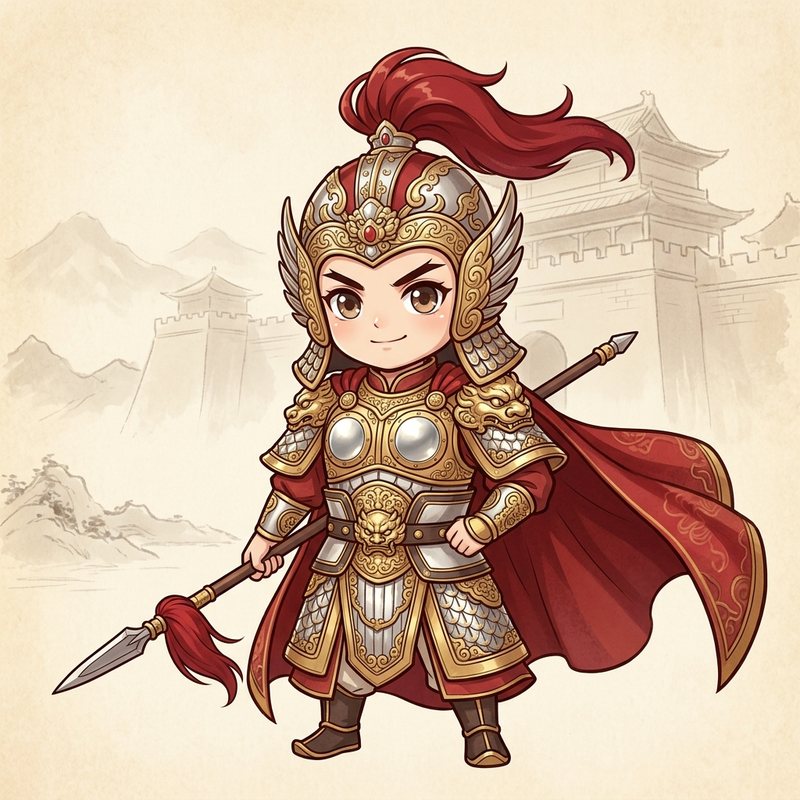
Guo Ziyi (郭子仪 · Guō Zǐyí)
谥忠武 · 世称郭汾阳/汾阳王
The Supreme Commander & Savior of the Tang Dynasty: crushed the An Lushan Rebellion, recaptured the dual capitals, and mastered both battlefield triumph and imperial survival.
大唐中兴第一名将,平定安史之乱元勋、汾阳郡王;以单骑免胄、功成身退名垂青史,被尊为福禄寿三星中的'禄星'。
- Savior of the Tang Dynasty: Crushed the devastating An Lushan Rebellion (755–763 CE) and recaptured the imperial dual capitals of Chang'an and Luoyang.
- The Legend of the Unarmed Rider: Single-handedly averted a massive multi-tribal invasion at Binzhou in 765 CE by riding into the hostile Uyghur camp without armor or weapons.
- Master of Imperial Survival: Served four successive Tang emperors, rising to Prince of Fenyang without triggering lethal monarchical jealousy ('功盖天下而主不疑').
- God of Fortune and Longevity: Blessed with eight sons and seven daughters-in-law in high office, he was revered in East Asian folklore as the 'Lu Star' (God of Prosperity).
Phase 1: Martial Prodigy & Decades of Frontier Vigilance (697–755)
Guo Ziyi was born in 697 CE into an illustrious official clan in Zheng County of Huazhou (modern Huazhou District, Weinan, Shaanxi Province) during the reign of Empress Wu Zetian. His father, Guo Jingzhi, served as governor across five strategic prefectures. Standing an extraordinary seven feet and two inches tall, young Guo possessed magnificent physical strength coupled with a calm, temperate demeanor. He immersed himself in ancient military treatises and horsemanship, preparing for imperial service with patient discipline.
武周万岁通天二年(697年),郭子仪出生于华州郑县(今陕西省渭南市华州区)的官宦世家。其父郭敬之历任吉州、寿州等五州刺史。郭子仪自幼身长七尺二寸、容貌伟秀,兼具绝伦膂力与温裕深沉的儒将品格。少年时期精修骑射与兵家韬略,早早立下了安邦定国的崇高抱负。
Guo entered state service by passing the prestigious imperial martial examinations (Wuju) with highest distinction, earning appointment as Chief of Staff in the Left Imperial Guard. Throughout the golden Kaiyuan and Tianbao eras under Emperor Xuanzong, Guo served in grueling border commands across the northwestern marches, including Shanxi and the Western Regions (Anxi). By 754 CE, he was appointed Governor of Jiuyuan and Deputy Military Commissioner of the Shuofang garrison, standing as a tranquil fortress of military readiness along the northern frontier.
郭子仪赴长安参加武举策试,以出类拔萃的成绩斩获高等(武举高第),补授左卫长史,步入大唐军界。在开元、天宝盛世的数十年间,他长期驻守单于、安西及河套塞北要隘,历经严酷的边防磨砺。天宝十三载(754年),他晋升九原太守、朔方节度右兵马使,成为大唐西北长城。
身长七尺二寸,容貌伟秀,质性温裕。
Shēn cháng qī chǐ èr cùn, róngmào wěixiù, zhìxìng wēnyù.
Standing over seven feet and two inches tall with a magnificent presence, his demeanor was gentle, magnanimous, and dignified.
Context · From the New Book of Tang (新唐书), describing young Guo Ziyi's rare combination of towering physical stature and tranquil moral restraint.
Phase 2: The Fall of the Capitals & The Rally at Lingwu (755–756)
In the eleventh lunar month of 755 CE, general An Lushan ignited his cataclysmic rebellion in the northeast, driving over one hundred thousand battle-hardened cavalry toward the imperial heartland. By summer 756 CE, the strategic Tongguan Pass fell, the jewel capital of Chang'an was plundered, and the aging Emperor Xuanzong fled toward the rugged mountains of Sichuan. The three-century-old Tang Dynasty appeared to have reached its terminal collapse.
天宝十四载(755年)冬,身兼三镇节度使的安禄山在范阳起兵反唐,十余万铁骑席卷中原。次年六月潼关失守,大唐帝都长安陷落,唐玄宗仓皇西幸入蜀,拥有百余年盛世荣光的大唐帝国骤然坠入山河破碎的无底深渊。
Following the historic mutiny at Mawei Courier Station, Crown Prince Li Heng split from the imperial entourage and hastened north to Lingwu (modern Lingwu, Ningxia) to assume the throne as Emperor Suzong. With fewer than two thousand disorganized troops at hand, the new emperor was besieged by despair. At this critical juncture, Guo Ziyi marched fifty thousand elite Shuofang cavalry across the sands to answer the royal call. Suzong wept openly upon seeing Guo's disciplined banners, proclaiming: 'The rebirth of our dynasty is entirely the fruit of your loyalty!' Guo was instantly appointed Grand Chancellor and Supreme Commander of the imperial armies.
马嵬驿兵变后,太子李亨毅然北上灵武(今宁夏灵武西南)即位为唐肃宗。面对兵微将寡、江山动摇的绝境,朔方节度使郭子仪以天下社稷为念,率朔方精锐大军五万余人星夜驰抵灵武勤王。肃宗遥见旌旗蔽日,握住郭子仪的手涕泣赞叹:‘国家再造,卿之功也!’当即拜为宰相与平叛统帅。
国家再造,卿之功也!
Guójiā zàizào, qīng zhī gōng yě!
The rebirth of our imperial dynasty is entirely the fruit of your loyal devotion!
Context · Spoken through tears by Emperor Suzong at Lingwu upon receiving Guo Ziyi's relief army, marking the turning point of the Tang Dynasty's survival.
Phase 3: The Hebei Breakthrough & Liberating the Dual Capitals (756–762)
Wasting no time, Guo Ziyi led the imperial armies eastward through the rugged Jingxing Pass into the Hebei plain, joining forces with another legendary general, Li Guangbi (remembered in history as 'Guo and Li'). Facing the formidable rebel warlord Shi Siming, Guo laid a tactical ambush at the Battle of Jiashan (in modern Dingzhou, Hebei). He feigned retreat to lure out the overconfident rebel cavalry before unleashing his flanks, slaying over forty thousand enemy soldiers. The victory severed An Lushan's supply line to his northern base in Beijing, prompting seventeen commanderies to declare for the Tang.
受命拜相后,郭子仪挥师东出井陉关,与名将李光弼(世称‘郭李’)合兵进击河北。在定州嘉山,郭子仪布下正奇之阵,示弱诱敌,大破史思明叛军精锐,斩首四万级、降服数千人。嘉山大捷一举斩断了叛军在洛阳与幽州大本营之间的交通咽喉,十七郡重归大唐。
In the autumn of 757 CE, Guo Ziyi directed the decisive imperial counter-offensive alongside imperial prince Li Chu and allied Uyghur cavalry. At the apocalyptic Battle of Xiangjisi outside Chang'an, sixty thousand rebel soldiers fell before Guo's iron infantry lines, reclaiming the western capital. Sweeping east without pause, Guo routed rebel forces at Xindian in Shanzhou, liberating the eastern capital of Luoyang. By 762 CE, Guo coordinated the final destruction of the rebel remnants, bringing the eight-year nightmare of the An Lushan Rebellion to an end.
至德二年(757年)秋,郭子仪辅佐广平王李俶,统帅大军与回纥借兵发起反攻。在长安城外爆发惨烈空前的香积寺决战,郭子仪斩敌六万、克复长安!随后乘胜东出陕州新店大捷,彻底光复东都洛阳。至762年宝应年间,郭子仪再度坐镇陕州平定叛军残部,彻底终结了八年安史浩劫。
再造王室,勋高一代。
Zài zào wángshì, xūn gāo yīdài.
He rebuilt the imperial house, his merit towering above a generation.
Context · From the official appraisal in the Old Book of Tang, commending Guo Ziyi's historic role in reclaiming both capitals and crushing rebel momentum.
Phase 4: River Defense at Puzhou & The Miracle of the Unarmed Rider (762–774)
Supreme battlefield success in imperial China often brought fatal political peril. Following setbacks caused by eunuch supervisory interference at the Siege of Yecheng, court eunuch Yu Chao'en falsely blamed Guo Ziyi. Demonstrating supreme self-restraint, Guo surrendered his military commission and returned to Chang'an without a single protest. Recognizing his irreplaceable stature, the throne soon reinstated him as Military Commissioner of Hedong, garrisoned at Puzhou (modern Yongji, Shanxi). From Puzhou, Guo anchored the defense of the Yellow River, soothing unruly troops with magnanimity and patience.
功高震主历来是历代权臣的生死难关。邺城之败因宦官鱼朝恩监军弄权所致,鱼朝恩反诬郭子仪。面对削夺兵权,郭子仪顾全大局坦然交出兵符回京,毫无愤怨之色。朝廷深知非郭公无法镇抚河东,旋即起复其为河东节度使进驻蒲州。郭子仪在黄河东岸修筑坚垒,以宽仁安定军心,屹立如山。
In 765 CE, a sudden existential threat struck: renegade general Pugu Huai'en allied with a joint force of one hundred thousand Tibetan and Uyghur nomadic horsemen, pushing deep into the Guanzhong plain to besiege Binzhou (modern Binzhou, Shaanxi). When Pugu died suddenly, the nomad leaders were misled by traitors into believing Guo Ziyi was dead. In one of the most astonishing moments in world military history, the nearly seventy-year-old Guo rode out completely unarmed and unarmored, taking off his iron helmet before the Uyghur lines. Recognizing their revered old ally, the nomadic chieftains wept, discarded their scimitars, and made an instant oath of peace—joining the Tang army to crush the invading Tibetans without firing an arrow.
永泰元年(765年),吐蕃与回纥十万联军深犯关中直逼邠州。叛将曾欺骗联军称郭子仪已死。年近七旬的郭子仪作出了震撼千古的决断:不穿甲胄、不佩刀剑,单骑直奔回纥大营!老令公阵前摘下铁胄,回纥酋长认出救星相顾骇然,纷纷滚鞍下马罗拜。郭子仪晓以大义,回纥深感前盟反戈合击吐蕃,创造了‘单骑免胄退雄师’的不朽传奇。
免胄见其大酋,握手言欢,誓好如初。
Miǎn zhòu jiàn qí dà qiú, wò shǒu yán huān, shì hǎo rú chū.
Removing his helmet to meet the enemy chieftain, he clasped hands in friendship and renewed their former alliance.
Context · From the Old Book of Tang, chronicling Guo Ziyi's legendary unarmed diplomacy at Binzhou, which dissolved an allied nomadic invasion without shedding blood.
Phase 5: The Grand Patriarch, Radical Transparency & Immortality as the Lu Star (774–781)
In his final decade, Guo Ziyi was ennobled as Prince of Fenyang and hailed by Emperor Daizong as 'Imperial Father' (Shangfu). Aware that immense prestige invited monarchical paranoia, Guo pioneered a masterclass in survival through radical transparency. He ordered the front gates of his mansion in Chang'an's Qinren Ward to remain permanently open. Commoners, traveling merchants, and soldiers freely walked through the courtyards, observing his family's everyday meals and domestic routines. This total absence of secrecy permanently disarmed the suspicious court.
晚年郭子仪荣封汾阳郡王,唐代宗尊称其为‘尚父’。面对位极人臣的险境,郭子仪开创了‘大巧若拙、极端透明’的处世哲学。他下令将长安亲仁坊王府的大门常年敞开,任由市井百姓与杂役军士自由出入观瞻,毫无戒备防范。这种坦荡无私的胸襟,彻底打消了历代帝王骨子里的猜忌。
This domestic tranquility was immortalized in the beloved folk drama 'Drunken Striking of the Golden Bough' (打金枝). When Guo's sixth son, Guo Nuan, quarreled drunkenly with his royal wife, Princess Shengping, boasting about his father's supreme power, Guo Ziyi immediately bound his son and dragged him before the throne to request severe punishment. Emperor Daizong smiled warmly, delivering a celebrated imperial adage: 'A man who is not partly deaf and blind is unfit to be head of a great household.' The crisis was turned into a charming domestic reconciliation.
这份超凡智慧在传统名剧《打金枝》中展现得淋漓尽致。其子郭暧酒醉与升平公主口角,失言‘吾父薄天子不为’,郭子仪闻讯大惊,绑子入宫请罪。代宗大度开解:‘不痴不聋,不做家翁。儿女闺阁私语,何足介怀!’君臣相谐化为千古美谈。
Guo Ziyi passed away peacefully at age eighty-five in the summer of 781 CE. Emperor Dezong canceled court audiences for five days in deep grief, granting him the posthumous title 'Zhongwu' (Loyal and Martial). Survived by eight sons and seven sons-in-law who all held ministerial ranks, his birthday celebrations saw ministers' ivory office tablets literally covering an entire couch ('Crib Filled with Hu Tablets' / 满床笏). Across East Asian folklore, Guo was deified as the 'Lu Star' (禄星) among the Three Auspicious Immortals, revered as the ultimate historical model of battlefield glory, familial bliss, and enduring good fortune.
建中二年(781年),八十五岁的郭子仪在长安安详寿终正寝。唐德宗震悼废朝五日,追赠太师,赐谥‘忠武’。其八子七婿皆登朝廷朱紫显宦,祝寿朝笏堆满床榻(‘满床笏’)。在民间信仰中,郭子仪被尊奉为‘福禄寿三星’中的‘禄星’化身,名列《无双谱》,成为千古中国功德圆满的名将第一人。
功盖天下而主不疑,位极人臣而众不疾,穷奢极欲而人不非之。
Gōng gài tiānxià ér zhǔ bù yí, wèi jí rénchén ér zhòng bù jí, qióng shē jí yù ér rén bù fēi zhī.
His achievements overshadowed the empire yet the ruler never suspected him; he rose to the highest rank yet none envied him; he lived in extravagance yet no one condemned him.
Context · The crowning appraisal in the New Book of Tang, marking Guo Ziyi as Chinese history's rarest archetype: the supreme general who achieved absolute glory and died in absolute peace.
| Perspective 视角 | Guo Ziyi (Savior of the Tang Dynasty) | Scipio Africanus (Savior of the Roman Republic) |
|---|---|---|
| Crisis of the State | Responded to the catastrophic An Lushan Rebellion when dual capitals fell and imperial collapse seemed imminent. | Responded to the Second Punic War after the slaughter at Cannae when Hannibal brought Rome to the brink of extinction. |
| Decisive Battlefield Triumph | Masterminded the Battle of Jiashan and the recapture of Chang'an and Luoyang, systematically breaking rebel power. | Masterminded the Battle of Zama (202 BCE), outmaneuvering Hannibal's war elephants and crushing Carthage. |
| Moral and Unarmed Courage | Rode unarmed without armor into the hostile Uyghur camp at Binzhou to dissolve a 100,000-strong barbarian invasion peacefully. | Showed legendary clemency after taking New Carthage, returning hostages safely and winning over local Iberian chieftains. |
| Political Survival & End of Life | Practiced complete household transparency, survived four emperors without suspicion, and died peacefully at 85 surrounded by family. | Faced relentless political persecution by Cato and senatorial rivals, dying in bitter self-imposed exile at Liternum. |
Trace Guo Ziyi's Campaigns on the Interactive Topographic Map
Follow his eighty-five-year journey across 8 epic stations—from his martial exams in Chang'an and the desert rally at Lingwu to his unarmed heroics at Binzhou and peaceful passing in the capital.
Launch Interactive Journey MapFrequently Asked Questions (FAQ)
Who was Guo Ziyi in Tang Dynasty history?
Guo Ziyi (697–781 CE) was the supreme military commander and Grand Chancellor of the Tang Dynasty. Renowned as the general who saved the empire from total destruction during the devastating An Lushan Rebellion, he recaptured both imperial capitals, defended the frontiers for decades, and lived to age eighty-five in peace.
How did Guo Ziyi defeat the An Lushan Rebellion?
When the Tang capitals fell in 756 CE, Guo Ziyi rallied fifty thousand elite frontier troops at Lingwu to support the new Emperor Suzong. Teaming with general Li Guangbi, Guo severed rebel supply lines at Jiashan, crushed rebel armies at Xiangjisi, and liberated both Chang'an and Luoyang in 757 CE.
What was Guo Ziyi's legendary 'Single Rider Without Armor' (单骑免胄) standoff?
In 765 CE at Binzhou, facing an allied invasion of 100,000 Tibetan and Uyghur troops, Guo Ziyi rode completely unarmed into the Uyghur camp. Recognizing the legendary general, the chieftains dropped their weapons in reverence. Guo reaffirmed their old friendship, persuading them to switch sides and defeat the Tibetans peacefully.
Why was Guo Ziyi never purged by paranoid Tang emperors?
Guo Ziyi practiced radical openness and filial humility. He kept his Chang'an palace gates wide open for ordinary citizens to enter, removing any suspicion of treason. Whenever emperors demoted him due to court slander, he yielded power immediately without complaint, earning the unconditional trust of four successive monarchs.
What is the famous Chinese story 'Drunken Striking of the Golden Bough' (打金枝)?
In this famous episode, Guo Ziyi's son Guo Nuan had a drunken argument with his wife, Princess Shengping, boasting about his father's supreme power. Guo Ziyi immediately arrested his son to face imperial justice. Emperor Daizong wisely pardoned the prince, famously remarking that heads of households must pretend to be deaf and blind.
Why is Guo Ziyi worshipped as the 'Lu Star' (God of Prosperity) in Chinese folklore?
Guo Ziyi achieved the rare trifecta of absolute battlefield glory, boundless wealth, and peaceful longevity. With eight sons and seven sons-in-law holding prominent court offices, his household was blessed with extraordinary fortune ('满床笏'). Later generations revered him as the living embodiment of the Lu Star, the patron deity of career success and prosperity.
Walk with Guo Ziyi Across China
随郭子仪漫步华夏河山 · 亲历命运逆境与精神涅槃