Who Was Fan Zhongyan? The Moral Compass of the Northern Song
Author of 'First to worry about the world's sorrows', the scholar-general who led the Qingli Reforms, built Fan's Seawall, and defined the moral spine of Chinese statecraft
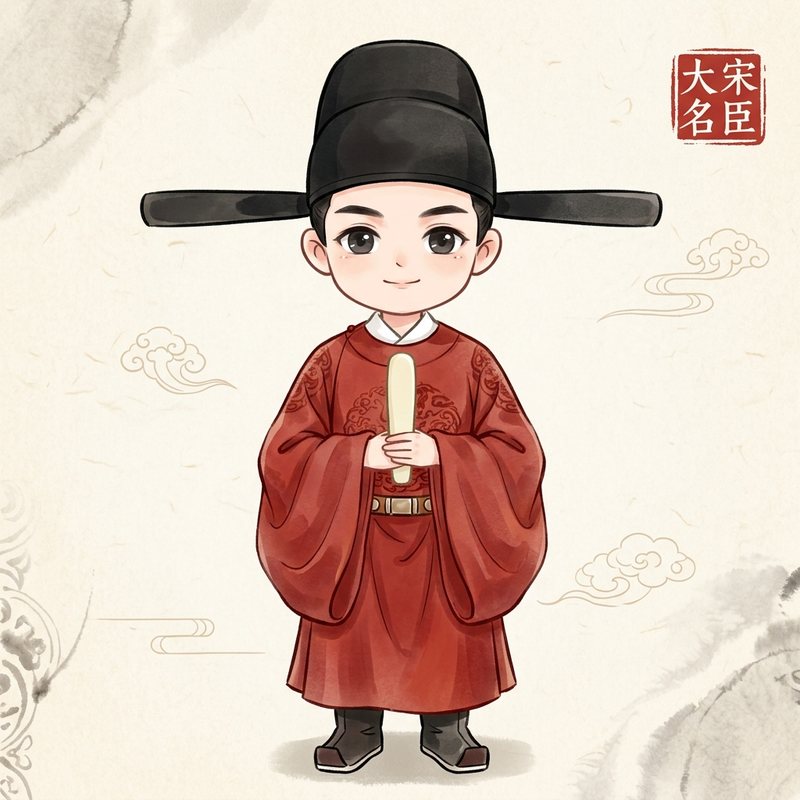
Fan Zhongyan (范仲淹 · Fàn Zhòngyān)
字希文 · 谥号文正
The Moral Compass of the Empire: 'First to worry about the world's sorrows, last to rejoice in its joys'—the supreme scholar-general of Chinese history.
先天下之忧而忧,后天下之乐而乐;出将入相、断齑画粥,华夏千年士大夫第一典范。
- The Moral Compass of the Empire: Author of 'Be the first to worry about the world's sorrows, and the last to rejoice in the world's joys', the foundational ethical creed that made him the supreme exemplar of the Chinese scholar-official.
- The Self-Made Scholar: Rising from orphaned poverty, he studied five straight years without removing his clothes, living on frozen porridge and pickled greens—a rags-to-riches story of relentless discipline.
- The Unbending Dissenter: Three times impeached and exiled for exposing corruption, his prestige only grew with each banishment, as scholars cheered that each exile was 'more glorious' than the last.
- The Scholar-General: Commanding the frontier against Western Xia invaders, he built fortress chains so formidable that enemies feared him as carrying 'tens of thousands of armored troops in his chest'.
- The Reformer & Civic Genius: He led the Qingli Reforms and later fought famine in Hangzhou with proto-Keynesian stimulus—releasing capital, staging dragon boat races, and hiring tens of thousands of refugees.
Phase 1: The Frozen Gruel & The Self-Made Scholar (1011–1015)
Fan Zhongyan was born in 989 CE, but his path to greatness began in tragedy. After his father died, his mother remarried into the Zhu family, and the young boy grew up unaware of his true lineage. When he discovered he was a foster son, he made a radical decision: he left home penniless and enrolled at Yingtian Academy in Shangqiu (modern Henan). There he studied with monastic asceticism—freezing in winter, splashing icy water on his face to stay awake, and living on a single bowl of rice porridge that he let freeze solid, cut into four blocks, and ate two pieces a day with chopped pickled greens. This is the legendary 'duan ji hua zhou' (dividing the frozen gruel, chopping the pickles). For five years he never removed his robes to sleep. In 1015, he passed the imperial exam at the very top, reclaimed his father's surname, and stepped onto the stage of history.
范仲淹生于989年,他的成才之路始于一场身世悲剧。父亲早逝后,母亲改嫁朱氏,少年范仲淹在不知情中长大。当得知自己是寄养之子后,他做出了一个决绝的选择:毅然辞家,身无分文地进入商丘应天府书院苦读。冬日寒甚,他以冷水沃面提神;食不果腹,每夜煮一碗稠粥,凝结后划为四块,早晚各食两块,就着几根咸菜——这就是名震青史的『断齑画粥』。五年间他未曾解衣入眠。1015年,他一举进士及第,迎回母亲改复范姓,正式登上历史舞台。
断齑画粥,昼夜不息。
Duàn jī huà zhōu, zhòu yè bù xī.
Dividing the frozen gruel, chopping the pickles; laboring day and night without pause.
Context · The iconic idiom describing Fan Zhongyan's legendary academic discipline at Yingtian Academy, the foundation of his self-made rise.
Phase 2: Fan's Seawall & The Civic Engineer (1021–1025)
Fan Zhongyan's first great act of public service came not in the capital but on the storm-battered coast of Taizhou (modern Jiangsu). Managing the salt warehouses there, he watched ocean storm surges ruin salt works and drown farmers. Refusing to look away, he petitioned the throne to build a massive sea defense. When the court tasked him with construction, he led tens of thousands of laborers into freezing tides, plunging into the roaring surf himself to haul boulders when killer storm surges wiped out the early foundations. Completed after years of blood and sweat, the continuous seawall stretched hundreds of miles, shielding the coast for a millennium. Generations renamed it 'Fan's Seawall' (范公堤), a living monument to his conviction that true statesmanship means serving the people where they suffer.
范仲淹的第一件大功,不在朝堂,而在东海狂涛肆虐的泰州。监西溪盐税期间,他目睹海潮频发冲垮盐场、咸潮吞没良田,毅然上书力主修筑捍海大堤。朝廷任其为兴化令主持施工,他带领数万劳工顶风涉水筑堤。当怒涛几度冲毁地基、群情汹汹之际,范仲淹第一个跳入冰冷的浊浪中打桩填石,以肉躯抗争海啸。历时数载,数百里长堤终成,挡住了万顷凶涛,活人无数。百姓泪洒长堤,将这道生命防线永远命名为『范公堤』。
春水涵冰清,秋风引波绿。
Chūn shuǐ hán bīng qīng, qiū fēng yǐn bō lǜ.
Spring waters harbor crystal clarity; autumn breezes guide waves of jade green.
Context · Celebrating the peaceful transformation of coastal lands behind Fan's Seawall, the dike that still bears his name.
Phase 3: The Unbending Dissenter & Three Exiles (1033–1036)
His engineering triumph launched Fan Zhongyan into the imperial capital of Kaifeng. But the court was a den of factional intrigue, and Fan Zhongyan refused to bend. As a remonstrance official, he feared neither Empress nor Emperor, speaking truth without hesitation. His boldest act came when he presented the 'Chart of Hundred Officials' (Baiguan Tu), exposing the Prime Minister Lv Yijian's brazen nepotism and corruption before the entire court. The Emperor was enraged, and Fan was banished—not once, but three times. Yet each exile only magnified his moral prestige. Scholars lined the city gates with wine, declaring: 'Your first exile was glorious, your second was more glorious, and this third is the most magnificent of all!' Through exile, he forged the moral spine of Chinese intellectuals.
治水大功让范仲淹名震天下,奉调入京任秘阁校理。然而朝堂是权力的大染缸,范仲淹宁折不弯。任右司谏期间,他直谏仁宗与刘太后,诤言无所顾忌。最惊心动魄的一击,是他呈上亲手绘制的《百官图》,在满朝文武面前将宰相吕夷简任人唯亲、专权弄私的丑态撕得粉碎。皇帝震怒,一道道贬书将他赶出开封,一贬再贬三贬。然而他每被贬一次,天下人心就向他凝聚一分!士大夫们在城门为他痛饮饯行,赞叹道:『先生一贬极光彩,再贬愈光彩,三贬尤光彩!』他用一身铮铮傲骨,定义了大宋读书人的精神海拔。
宁鸣而死,不默而生。
Nìng míng ér sǐ, bù mò ér shēng.
Better to cry out and die than to remain silent and live.
Context · From 'Spirit of the Cicada' (Ling Que Fu), Fan Zhongyan's immortal pledge of intellectual defiance in the face of power.
Phase 4: The Scholar-General of the Frontier (1040–1043)
In 1038, Western Xia hordes invaded, annihilating Song frontier forces. Facing national catastrophe, the panicked court recalled the 'hard-boned' Fan Zhongyan and dispatched him to the northwest frontlines. Commanding the frontier at Yan'an, the pure scholar transformed into a brilliant general. Rejecting reckless charges, he established deep fortress chains, cultivated abandoned soils, reorganized broken legions into disciplined strike corps, and won over local Qiang tribes. Savage Western Xia cavalry crashed repeatedly against his stone defenses. In despair, enemy commanders warned each other: 'Do not attack Yan'an; Little Old Fan carries tens of thousands of armored soldiers in his chest.' Beneath the smoke of the setting sun, the sleepless general penned 'Pride of Fishermen' (Yu Jia Ao), the pioneer of heroic frontier poetry in Chinese literature.
1038年,西夏李元昊称帝立国,大举入寇,边军连战皆溃。危难之际,朝廷急调硬骨头范仲淹奔赴西北前线。在延州,这位纯正的文官化身一代名将。他不崇尚盲目决战,而是深沟高垒、筑堡屯田、步步为营,将各自为战的散兵编为精锐部阵,并团结羌族部落。凶悍的西夏铁骑几度进犯,皆撞碎在他筑起的铁壁铜墙面前。敌军互告相戒:『莫打延州,小范老子胸中自有数万甲兵!』长烟落日下,将军夜不能寐,写下《渔家傲·秋思》,开创了华夏词史上豪迈写实的边塞词风。
塞下秋来风景异,衡阳雁去无留意。四面边声连角起,千嶂里,长烟落日孤城闭。
Sài xià qiū lái fēng jǐng yì, Héng yáng yàn qù wú liú yì. Sì miàn biān shēng lián jiǎo qǐ, qiān zhàng lǐ, cháng yān luò rì gū chéng bì.
Autumn paints the frontier with a strange, bleak hue; the geese head south without lingering. From all sides border horns rise in unison; amidst a thousand peaks, lone fortress gates close against the setting sun.
Context · From 'Yu Jia Ao' (Pride of Fishermen), the pioneer of heroic, realistic frontier poetry, written at the Yan'an front.
Phase 5: The Memorial to Yueyang Tower & The Eternal Creed (1046)
With the frontier pacified, Emperor Renzong recalled Fan Zhongyan in 1043 and appointed him Vice Chancellor to lead the Qingli Reforms—the most famous political reform of the Northern Song. But when conservative aristocrats sabotaged the reforms, Fan gracefully stepped down and was assigned to Dengzhou. There he founded Huazhou Academy and taught with gentle dedication. In the autumn of 1046, his exiled friend Teng Zijing sent him a painting of Lake Dongting, requesting a commemorative text for the rebuilt Yueyang Tower. Having never set foot on the tower, Fan Zhongyan wrote 'Memorial to Yueyang Tower' (Yueyang Lou Ji) from pure imagination—and in doing so, crafted the eternal compass of Chinese public service: 'Be the first to worry about the world's sorrows, and the last to rejoice in the world's joys.'
西北边患既平,1043年仁宗召范仲淹还京,拜为参知政事(副宰相),庆历新政——北宋最著名的政治改革——正式拉开序幕。然而新政触动贵族官僚集团利益,遭疯狂反扑。范仲淹自请罢相,出知邓州,创办花洲书院,春风化雨。1046年秋,好友滕子京寄来一幅《洞庭秋晚图》,请他为重修岳阳楼作记。范仲淹一生从未登临岳阳楼,仅凭一幅画卷,写下了千古不朽名篇《岳阳楼记》:『先天下之忧而忧,后天下之乐而乐。』那一刻,文章已成圣贤,浩然正气照彻万古!
先天下之忧而忧,后天下之乐而乐。
Xiān tiān xià zhī yōu ér yōu, hòu tiān xià zhī lè ér lè.
Be the first to worry about the world's sorrows, and the last to rejoice in the world's joys.
Context · From 'Memorial to Yueyang Tower' (岳阳楼记), the foundational ethical creed of Chinese scholars and the moral compass of the empire.
Phase 6: The Keynesian Governor of Hangzhou (1050–1051)
In 1050, a horrific famine scorched the Jiangnan region. Conventional magistrates would have opened emergency porridge lines and capped prices. The 61-year-old Fan Zhongyan did the exact opposite. He allowed grain prices to rise, enticing merchants from across China to rush ships to Hangzhou—crashing the price naturally. He then staged massive dragon boat races on West Lake and commissioned grand temple repairs, stimulating wealthy spending to hire tens of thousands of starving refugees daily. Outraged censors accused him of frivolous luxury, but Fan smiled: he was practicing proto-Keynesian stimulus nine centuries before Keynes. Neighboring provinces were filled with corpses, yet Hangzhou survived without losing a single soul. It remains a legendary triumph of economic genius in the history of famine relief.
1050年,江南大荒,赤地千里。换作寻常官员,早已开仓施粥、强压米价。六十一岁的范仲淹却反其道而行之。他不仅不抑粮价,反而鼓励富户大兴土木,并在西湖大张旗鼓举办龙舟竞渡,以狂欢拉动富人消费,大搞以工代赈,每天让数万流民有工可做、有钱果腹。监察官员弹劾他奢靡荒淫,他却淡然一笑——这是比凯恩斯早九个世纪的刺激经济救荒术。邻近诸州饿殍遍野,唯独杭州安堵如常,『公私并利,民不流徙』,成为世界救荒史上的经典案例。
发有余之财,以惠贫者,贸易、饮食、工技、医药之人,皆得以发其志。
Fā yǒu yú zhī cái, yǐ huì pín zhě, mào yì, yǐn shí, gōng jì, yī yào zhī rén, jiē dé yǐ fā qí zhì.
Release surplus capital to nourish the poor, so that merchants, cooks, laborers, and physicians can all sustain their livelihoods.
Context · Fan Zhongyan's revolutionary economic insight on leveraging consumption and public works to relieve recession and famine.
Phase 7: The Complete Man & The Final Rest (1052)
Hangzhou was saved, but the old warrior was burning out. In 1052, transferred to Yingzhou, Fan Zhongyan embarked on his final journey along the dusty post roads. On May 20, 1052, he died of illness in Xuzhou, aged 64. Despite decades as a top prime minister and commander, examiners found his pockets empty—not even enough coin for a casket. Every copper of his salary had gone into the 'Fan Charitable Clan Trust' (范氏义庄) to feed and educate impoverished families. When news of his death spread, Qiang tribal chieftains in the northwest wept aloud, and thousands across Jiangnan wore mourning white. Emperor Renzong inscribed his tombstone 'Honoring the Worthy' and awarded him the supreme posthumous title Wenzheng (Civil and Upright). He was the complete man—whose life defined the highest moral ideal of Chinese civilization.
杭州大安,而这位操劳了一生的老者却已油尽灯枯。1052年,范仲淹带病调任颍州,在赴任的颠簸驿道上走到了生命的尽头。5月20日,六十四岁的他在徐州病逝。官居一品、名动天下的副宰相,清点遗物时囊中竟无余钱安葬——他毕生的俸禄,全部捐建了庇佑宗族贫寒的『范氏义庄』。死讯传出,西北羌族酋长率众痛哭如丧考妣,江南数千百姓自发披麻戴孝。宋仁宗亲题『褒贤之碑』,赐谥号『文正』——文人至高谥号。什么是千古完人?他用一生的『先忧后乐』,给出了华夏文明最崇高的回答!
不以物喜,不以己悲。
Bù yǐ wù xǐ, bù yǐ jǐ bēi.
Neither elated by worldly fortune, nor despondent over personal plight.
Context · The spiritual core of Fan Zhongyan's transcendent psychological resilience, from 'Memorial to Yueyang Tower'.
| Perspective 视角 | Fan Zhongyan (The Moral Compass of the Empire) | Marcus Aurelius (The Philosopher-Emperor) |
|---|---|---|
| Core Life Mission | Served as the supreme scholar-official of the Northern Song, defining Chinese statecraft through 'Be the first to worry about the world's sorrows, and the last to rejoice in the world's joys'. | Served as Roman Emperor while writing Stoic meditations on duty, virtue, and the transience of power, embodying the philosopher-king ideal. |
| The Self-Made Ascent | Rose from orphaned poverty through five years of frozen-gruel study, passing the imperial exam at the top to enter government service. | Born into the imperial family and groomed for rule, yet cultivated rigorous self-discipline and philosophical detachment from privilege. |
| Scholar & Warrior | Commanded the frontier against Western Xia invaders, building fortress chains so feared that enemies called him 'Little Old Fan with ten thousand troops in his chest'. | Led Roman legions in the Marcomannic Wars on the Danube frontier while composing Stoic philosophy in his tent at night. |
| Response to Adversity | Three times exiled for fearless dissent, yet each banishment only magnified his moral prestige; he turned setbacks into public works and eternal essays. | Endured plague, betrayal, and endless frontier war, responding with Stoic equanimity and unwavering devotion to duty. |
| Enduring Legacy | The supreme exemplar of the Chinese scholar-official; his 'First to worry' creed remains the most memorized ethical statement in Chinese education. | The archetypal philosopher-king; his 'Meditations' remains a cornerstone of Western Stoic philosophy and leadership literature. |
Trace Fan Zhongyan's Footsteps on the Interactive Topographic Map
Follow his actual historical trail across 7 imperial stations—from the frozen-gruel study of Shangqiu and Fan's Seawall in Taizhou to court defiance in Kaifeng, the frontier at Yan'an, and the eternal creed of the Memorial to Yueyang Tower in Dengzhou.
Launch Interactive Journey MapFrequently Asked Questions (FAQ)
Who was Fan Zhongyan and why is he so important?
Fan Zhongyan (989–1052) was the supreme scholar-official of the Northern Song Dynasty—a statesman, general, reformer, and philosopher. He is best known for authoring the immortal line 'Be the first to worry about the world's sorrows, and the last to rejoice in the world's joys' in his 'Memorial to Yueyang Tower'. Rising from orphaned poverty through five years of frozen-gruel study, he built Fan's Seawall, commanded the frontier against Western Xia, led the Qingli Reforms, and fought famine in Hangzhou with proto-Keynesian economics. He is regarded as the definitive moral exemplar of the Chinese scholar-official tradition.
What does 'Xian Tian Xia Zhi You Er You' (先天下之忧而忧) mean?
'Xian tian xia zhi you er you, hou tian xia zhi le er le' translates as 'Be the first to worry about the world's sorrows, and the last to rejoice in the world's joys.' It is the most famous line from Fan Zhongyan's 'Memorial to Yueyang Tower' (1046), written while he was exiled in Dengzhou. The creed expresses the ideal of the scholar-official: to place the welfare of the people and the state above one's own comfort. It became the foundational ethical compass of Chinese public service and remains the most memorized moral statement in Chinese education.
Did Fan Zhongyan really write the Memorial to Yueyang Tower without visiting it?
Yes. In 1046, while serving as governor of Dengzhou, Fan Zhongyan received a painting of Lake Dongting from his exiled friend Teng Zijing, who had rebuilt Yueyang Tower and requested a commemorative text. Fan Zhongyan had never actually set foot on Yueyang Tower—he wrote the famous 'Memorial to Yueyang Tower' entirely from imagination, based on the painting and his own deep concern for the empire. This makes the essay's moral power all the more remarkable: its famous creed of 'worrying before the world, rejoicing after the world' came not from a tower's view, but from a lifetime of moral conviction.
What were the Qingli Reforms?
The Qingli Reforms were the most famous political reform program of the Northern Song Dynasty, launched in 1043 when Emperor Renzong appointed Fan Zhongyan as Vice Chancellor (Canshi Zhengshi). The reforms aimed to clean up officialdom by promoting talent on merit, reducing corruption, and improving governance. However, they threatened the entrenched aristocratic and bureaucratic interests, who launched a fierce counterattack. The reforms ultimately failed, and Fan Zhongyan was forced to step down and was assigned to Dengzhou. Though short-lived, the Qingli Reforms set an enduring precedent for reform in Chinese political history.
How did Fan Zhongyan fight the famine in Hangzhou?
When a catastrophic famine struck Hangzhou in 1050, Fan Zhongyan rejected conventional price caps and porridge lines. Instead, he allowed grain prices to rise, which enticed merchants from across China to rush grain shipments to Hangzhou, crashing the price naturally. He then staged lavish dragon boat races on West Lake and commissioned grand public works, stimulating wealthy spending and hiring tens of thousands of starving refugees daily through work-relief programs. Censors accused him of frivolous luxury, but his approach—a form of Keynesian stimulus nine centuries before Keynes—kept Hangzhou thriving while neighboring provinces were devastated. It remains a legendary case study in economic statecraft.
Why is Fan Zhongyan called 'Wenzheng' and the 'Complete Man'?
After Fan Zhongyan died penniless on the road in 1052, Emperor Renzong awarded him the posthumous title 'Wenzheng' (Civil and Upright)—the highest honor a Chinese scholar could receive. Despite decades as a top prime minister and commander, he died with no money for a coffin, having donated his entire salary to the 'Fan Charitable Clan Trust' (范氏义庄) to feed and educate impoverished families. When his death was announced, Qiang tribal chieftains in the northwest wept, and thousands across Jiangnan wore mourning white. He is called the 'Complete Man' because he mastered both the sword and the pen, the court and the frontier, and lived his own creed of 'worrying before the world, rejoicing after the world' to the very end.
Walk with Fan Zhongyan Across China
随范仲淹漫步华夏河山 · 亲历命运逆境与精神涅槃