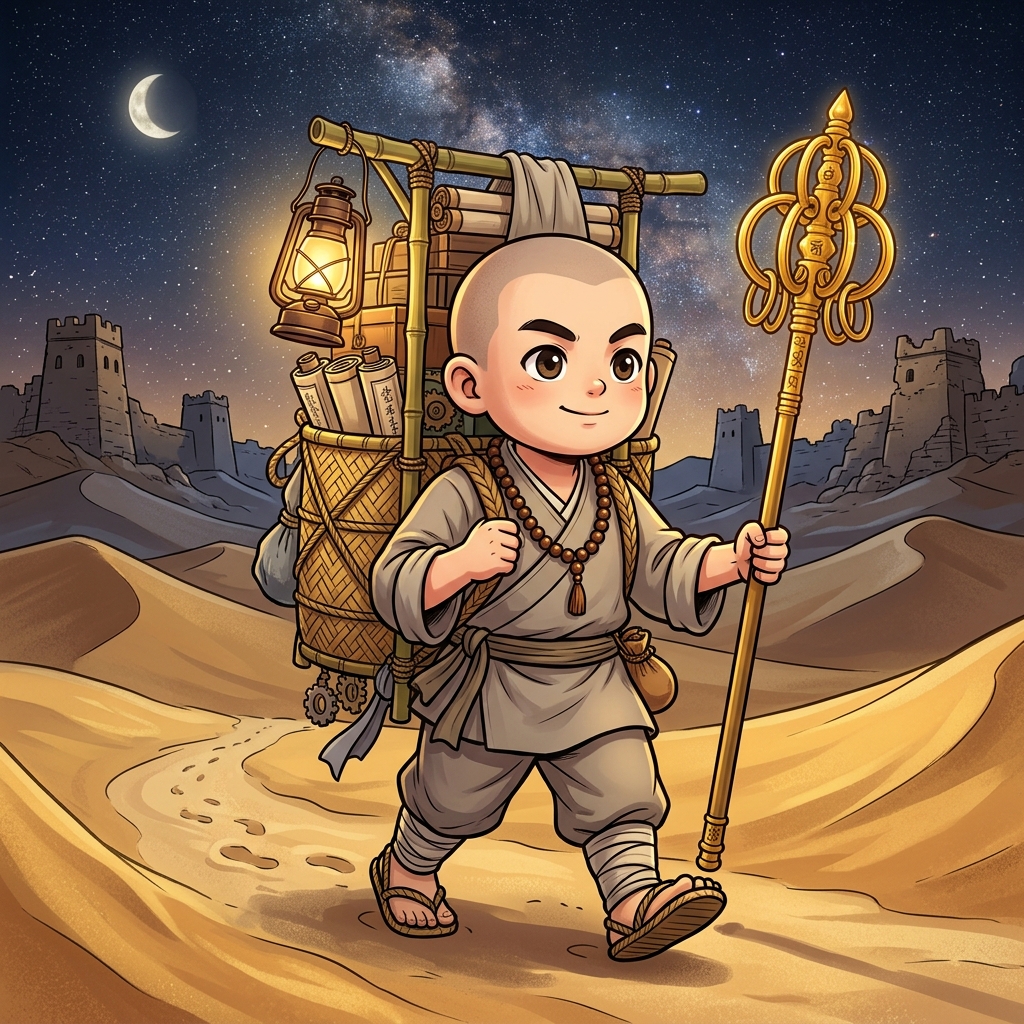
Xuanzang
Tang Dynasty (602-664)Age 20 · Luoyang (Ordination & Mastery), Henan“Walked 50,000 miles alone through deserts and blizzards to bring enlightenment back to China.”
The Complete Life Journey & Biography of Xuanzang (Tripitaka) (玄奘)
Chronological travel & exile routes mapped to modern Chinese cities across Tang Dynasty (602-664) China — featuring bilingual scholar audio, classical poetry recitations, and historical cross-paths.
Chang'an (The Solemn Vow to the West), Shaanxi (陕西西安 (大唐都城长安 · 发愿西行))
Age 25627 CEModern-day analog: Grand Tang Buddhist center where Xuanzang vowed to travel west for original scriptures, Xi'an
Defying the Emperor's Travel Ban for the Sake of Truth
At Chang'an's Zhuangyan Temple, Xuanzang took his solemn vow before the altar. Alone and defying imperial edict, he embarked upon a perilous 10,000-mile journey across deserts and icy mountains.
“I vow to dedicate this mortal body to the Great Dharma, swearing to venture west to seek the original scriptures.”
愿以此身,殉于大法;誓往西方,求取真经。(Yuàn yǐ cǐ shēn, xùn yú dàfǎ; shì wǎng xīfāng, qiúqǔ zhēnjīng.)Moheyanqi Desert (Sea of Death), Hexi (甘肃敦煌/瓜州 (莫贺延碛沙漠 · 八百里死海))
Age 25627 CEModern-day analog: Treacherous Gobi desert where Xuanzang nearly perished of thirst, Gansu/Xinjiang
'I Would Rather Die Moving One Step West, Than Live by Returning East!'
In the desert, Xuanzang accidentally dropped his water flask, going four days and five nights without a single drop of water. Collapsing in hallucinations, he recited the Heart Sutra until his horse smelled water, miraculously surviving.
“I would rather die taking one more step west, than live in regret by returning one step east!”
宁可就西而死,岂能东归而生!(Nìngkě jiù xī ér sǐ, qǐnéng dōng guī ér shēng!)Gaochang Kingdom (Turpan Oasis), Xinjiang (新疆吐鲁番 (高昌古国 · 国王结拜兄弟))
Age 26628 CEModern-day analog: Silk Road kingdom whose king became Xuanzang's sworn brother, Turpan, Xinjiang
The King Held Him Hostage Out of Love: A Royal Blood Brotherhood
Supplied with royal gold, silk, and 24 travel letters to Central Asian kings, Xuanzang set forth along the Tian Shan mountain range, carrying the goodwill of the Oasis Kingdoms into Central Asia.
“Xuanzang ventures west for the Dharma, ready to sacrifice his life; if you must retain my body here, you shall keep only my bones!”
玄奘西行求法,愿以身殉道;若留身于此,请留余骸!(Xuánzàng xīxíng qiúfǎ, yuàn yǐ shēn xùndào; ruò liú shēn yúcǐ, qǐng liú yú hái!)Suyab & Samarkand, Central Asia (Silk Road Heart) (中亚碎叶城与撒马尔罕 (欧亚大陆心脏 · 会见突厥可汗))
Age 27628 CEModern-day analog: Ancient Western Turkic khaganate hub along Lake Issyk-Kul, Kyrgyzstan
Audience with the Great Khan of the Western Turkic Empire
At Suyab, the Western Turkic Khagan was captivated by Xuanzang's eloquence, providing cavalry escorts to guide him through the Iron Gates toward the colossal Giant Buddhas of Bamiyan in Afghanistan.
“Ice and snow mingle in raging tempests; glaciers never melt amidst howling blizzards and hurtling hailstones.”
冰雪相杂,风气暴烈;积雪不化,飞雹狂飙。(Bīngxuě xiāngzá, fēngqì bàoliè; jīxuě bù huà, fēibáo kuángbiāo.)Bamiyan & Gandhara (Giant Buddhas), Afghanistan (阿富汗巴米扬与犍陀罗 (千年巨佛与希腊化佛教艺术))
Age 28630 CEModern-day analog: Fabled Bamiyan Valley and Gandharan Buddhist artistic crossroads, Afghanistan
Gazing at the Colossal Golden Bamiyan Buddhas
Before the Bamiyan cliffside grottos, Xuanzang documented the world's largest standing Buddha statues in gleaming gold, preserving eyewitness records for world cultural heritage.
“To the northeast of the royal city on a mountain cliff stands a stone Buddha statue, 150 feet high, dazzling with bright gold and adorned with radiant jewels.”
王城东北山阿有石佛立像,高百四五十尺,金色晃曜,宝饰焕烂。(Wángchéng dōngběi shān'ē yǒu shífó lìxiàng, gāo bǎi sìwǔshí chǐ, jīnsè huàngyào, bǎoshì huànlàn.)Nalanda University (Zenith of Ancient Wisdom), India (印度那烂陀大学 (全印学术之巅 · 拜戒贤法师))
Age 33631 CEModern-day analog: Ancient Buddhist mega-monastery & university in Bihar, India
Entering the Harvard of Ancient Asia: The Supreme Scholar of Nalanda
At Nalanda, Xuanzang studied for about eight years under Chancellor Silabhadra. Mastering Sanskrit and epistemology, he was selected as one of the ten Chief Lecturers of the university.
“All phenomena arise from interrelated causes; of these causes, the Buddha has taught the true nature and their cessation.”
诸法因缘生,我说是因缘;因缘尽故灭,我作如是说。(Zhūfǎ yīnyuán shēng, wǒ shuō shì yīnyuán; yīnyuán jìn gù miè, wǒ zuò rúshì shuō.)In-Depth Inquiries at this Stop:Kanyakubja Grand Assembly (King Harsha), India (印度曲女城 (戒日王无遮辩经大会 · 名震五印))
Age 40642 CEModern-day analog: Imperial assembly hosted by King Harsha where Xuanzang defended Mahayana, India
The Grand Debate of 18 Days: Crowned Supreme Philosopher of India
At Kanyakubja, eighteen monarchs and thousands of philosophers assembled. Xuanzang's mastery earned him the revered titles of 'Deva of the Great Vehicle' across all of India.
“If anyone can find a single flaw in my thesis and refute it, I shall offer my head in forfeit!”
若有一字无理能折难者,请斩首以谢!(Ruò yǒu yī zì wúlǐ néng zhénàn zhě, qǐng zhǎnshǒu yǐ xiè!)Pamir Plateau & Khotan (Trekking Home with 657 Sutras) (新疆和田与帕米尔高原 (携657部梵经翻越葱岭东归))
Age 42643 CEModern-day analog: Historic Silk Road jade kingdom where Xuanzang crossed the Pamir Mountains, Xinjiang
Crossing the Roof of the World with 657 Sacred Sanskrit Manuscripts
On the return, an elephant carrying scriptures drowned while fording a river and some manuscripts were lost. Xuanzang had copies remade at Khotan and other oases, then crossed the Pamirs to bring the bulk of the canon safely home.
“Tens of thousands of miles crossed in peril and storm, fortunately safe and sound; now bearing the sacred Dharma treasures, I behold the majesty of Great Tang once more!”
经途数万,涉险涉难,幸得全济;今携法宝,重睹大唐天颜!(Jīngtú shùwàn, shèxiǎn shènàn, xìngdé quánjì; jīnxxié fǎbǎo, chóngdǔ Dà Táng tiānyán!)Chang'an (Giant Wild Goose Pagoda Translation Bureau) (陕西西安 (大慈恩寺大雁塔 · 二十年国家译场))
Age 43645 CEModern-day analog: Great Wild Goose Pagoda built by Xuanzang to translate sacred scriptures, Xi'an
19 Years of Translation: Building the Giant Wild Goose Pagoda
Xuanzang led the state translation bureau at Da Ci'en Temple, declining high office and dictating the 'Great Tang Records on the Western Regions'. He petitioned for a pagoda to house the Sanskrit manuscripts; the Big Wild Goose Pagoda, built under Crown Prince (later Emperor Gaozong) Li Zhi, became that repository. Over nineteen years he translated 1,335 fascicles.
“Form is not different from emptiness; emptiness is not different from form. Form is itself emptiness; emptiness is itself form.”
色不异空,空不异色;色即是空,空即是色。(Sè bù yì kōng, kōng bù yì sè; sè jí shì kōng, kōng jí shì sè.)Yuhua Palace, Shaanxi (Final Chapter & Maha Prajna) (陕西铜川 (玉华寺 · 译毕大般若经与圆寂))
Age 62664 CEModern-day analog: Imperial mountain retreat where Xuanzang translated the Great Prajnaparamita, Shaanxi
'My Work is Finished': A Giant of World Civilization Enters Nirvana
In 664, Xuanzang passed away peacefully at age 62. Emperor Gaozong wept: 'I have lost my greatest national treasure.' Over a million mourners gathered at Bailuyuan to bid farewell to this monumental pioneer of global civilization.
“Xuanzang's task with this sacred scripture is fully finished; when my life expires, I shall depart in peace. Measuring my remaining strength, I shall translate no more.”
玄奘此经业务毕矣,命尽当谢。自量气力,不复更经。(Xuánzàng cǐ jīng yèwù bì yǐ, mìng jìn dāng xiè. Zì liàng qìlì, bù fù gèng jīng.)
Literati Knowledge Vault · 先贤知识宝库
In-Depth Essays & Philosophical Inquiries on Xuanzang
Deep dives, myth-busting, and modern psychological lessons from Xuanzang's life and philosophy.
Historical Nexus & Intersecting Journeys
与 玄奘 (Xuanzang) 时空交汇、思想交锋或命运相连的华夏先贤网络
Historical Nexus & Intersecting Journeys
与 玄奘 时空交汇、思想交锋或命运相连的华夏先贤网络
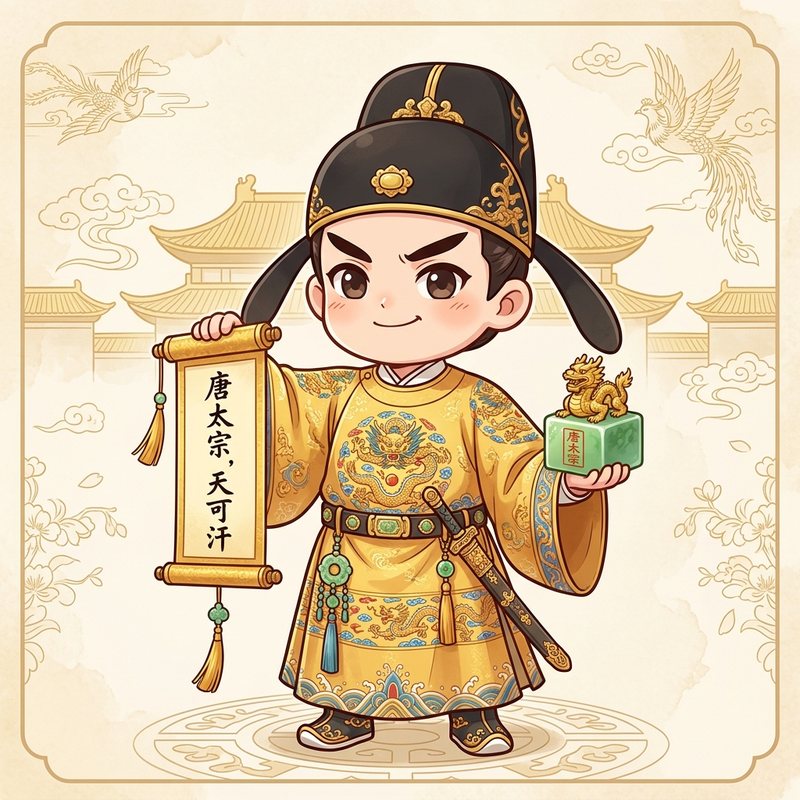
Li Shimin (Emperor Taizong)
李世民
Welcomed by Emperor Taizong after his 17-year epic journey; the throne funded the historic translation of Indian sutras.
孤征西域十七载载誉归来,唐太宗于洛阳召见并御制《大唐三藏圣教序》,国家财力支持译经。
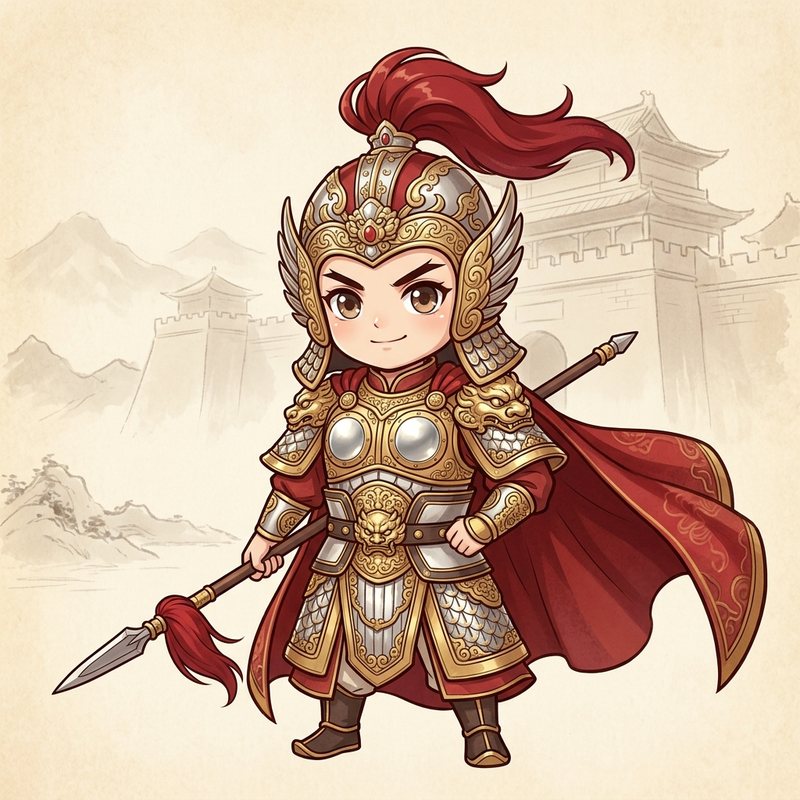
Wang Xuance
王玄策
His 'Great Tang Records on the Western Regions' served as the definitive guide for Wang Xuance's Indian embassies.
其所著《大唐西域记》为王玄策使团提供了详尽准确的地理政治向导,互为大唐西域双璧。
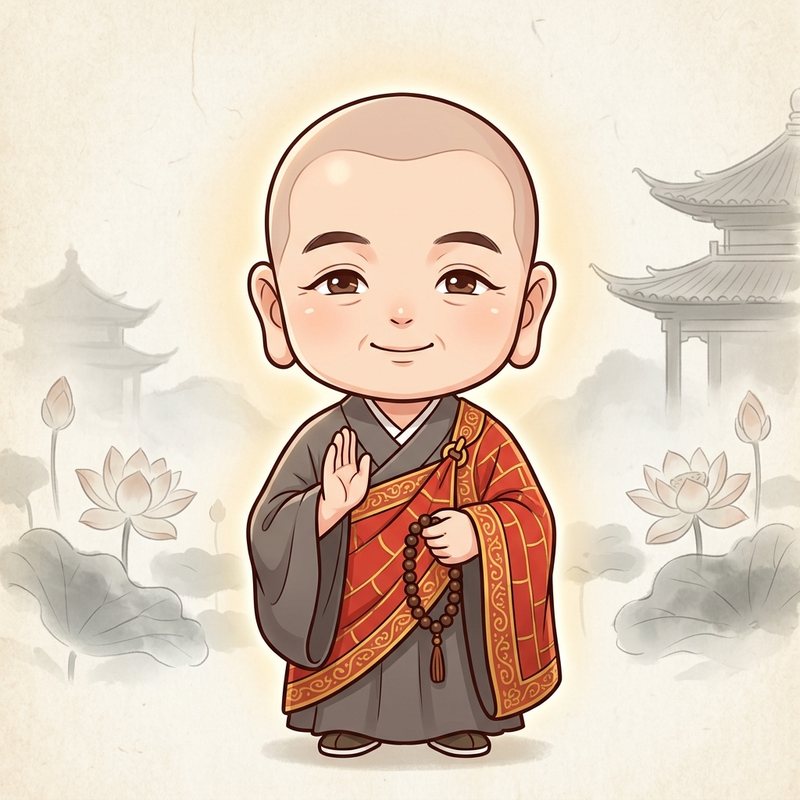
Jianzhen
鉴真
Xuanzang journeyed west overland, Jianzhen journeyed east overseas; together completed Tang Buddhism's global arc.
玄奘陆路西行求法取经,鉴真海路东渡传律弘法,共同筑就华夏佛教文明世界性传播双向丰碑。
Key Historical Inquiries & Context
关于 玄奘 (Xuanzang) 的核心史实考证、公案辨析与中英直答
Where is Xuanzang's travel route on a map?
This page traces the historical stations from Chang'an across the Gobi and Central Asia to Nalanda and back. It is not the novel itinerary.
Did Xuanzang travel with the Monkey King?
No. Journey to the West is 16th-century fiction. The historical Xuanzang traveled with caravans and disciples, not Sun Wukong.