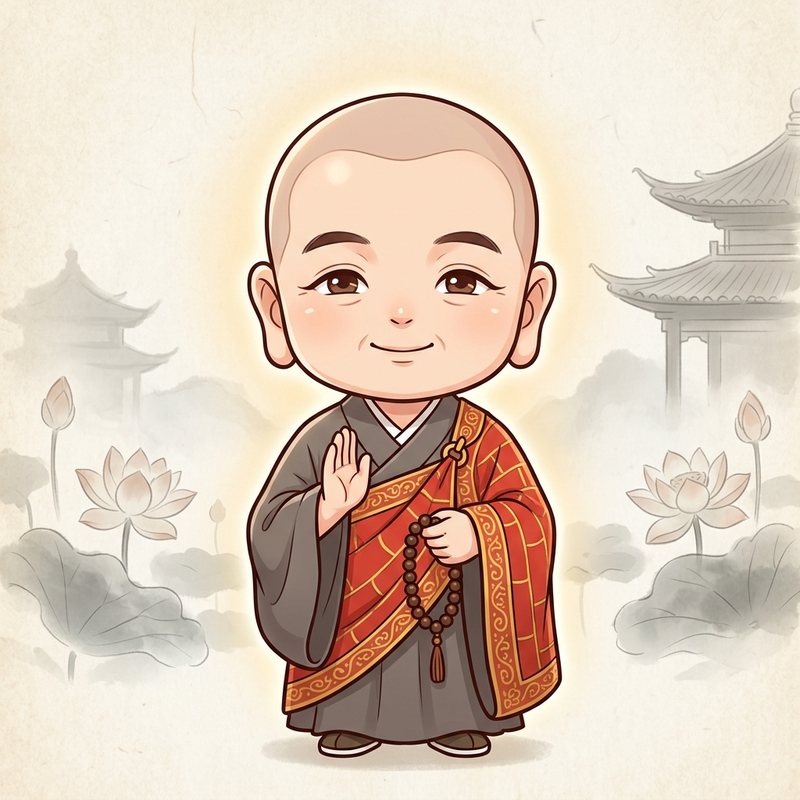
The Blind Master & Cultural Ambassador: crossed the sea six times to bring Buddhism to Japan, founding Japanese Risshū and spreading Tang medicine and architecture.
Stops10
Traversed~6,473km
Audio Tour~12min
“俗姓淳于,扬州江阳人也。”
Born into the Chunyu clan, he was a native of Jiangyang in Yangzhou.
The Blind Master Who Crossed the SeaTang Dynasty(688—763)俗姓淳于 · 日称唐大和上/过海大师Audio Journey · 10 Stops
The Blind Master who crossed the sea six times to bring Buddhism to Japan.
The Unbreakable Pilgrim· St. Patrick, apostle of IrelandThe Cultural Ambassador· A civilizational bridge between two landsThe Blind Healer· A healer who overcomes disability through other senses
Unfolding the Historical Landscape…
印
Daily Wisdom & Resilience Oracle
The Resilient Optimist
“竹杖芒鞋轻胜马,谁怕?一蓑烟雨任平生。”
Holding a bamboo cane and wearing straw sandals, I stride faster than a horse. Who is afraid? A straw cloak in the mist and rain — I live my life with equanimity.
💡 In the 3rd year of exile in Huangzhou, caught in a sudden downpour, Su Shi embraced the storm with supreme resilience.
— Su Shi (Dongpo)(The Renaissance Foodie & Optimist)
Historical Footprints & Narration Archive
10 Stations
1
Yangzhou
688 CE · Age 0
Prosperous canal metropolis, modern Yangzhou, Jiangsu
Born into the Chunyu clan in Yangzhou, steeped in Buddhist compassion from childhood.
“俗姓淳于,扬州江阳人也。”
Súxìng Chúnyú, Yángzhōu Jiāngyáng rén yě.
Born into the Chunyu clan, he was a native of Jiangyang in Yangzhou.
Station Narration Script
Born in 688 into the Chunyu clan in Yangzhou, Jianzhen grew up in a bustling maritime and canal metropolis. His devout father steeped him in Buddhist teachings; from youth he was bright and compassionate, resolving to aid all living beings.
Departure Transition Script
Around 701, at age fourteen, Jianzhen visited Dayun Monastery with his father and resolved to renounce the world.
2
Dayun Monastery, Yangzhou
701 CE · Age 13
Modern Yangzhou, Jiangsu
At fourteen, entered monastic life at Dayun Monastery under Chan Master Zhiman.
Beholding the majestic solemnity of the Buddha's statues, supreme joy arose in his heart, whereupon he entered monastic life under Chan Master Zhiman.
Station Narration Script
Around 701, fourteen-year-old Jianzhen visited Dayun Monastery with his father. Struck by the solemnity of the Buddha statues, he begged to enter monastic life. His father consented, and Jianzhen was ordained as a novice under Chan Master Zhiman. He studied diligently day and night, showing remarkable discipline and devotion.
Departure Transition Script
Around 705, Jianzhen left Yangzhou to study in the imperial capitals of Luoyang and Chang'an.
3
Chang'an
708 CE · Age 20
Imperial capital of Tang, modern Xi'an, Shaanxi
Studied in the twin capitals, received full ordination, mastered the Nanshan Vinaya and medicine.
“究南山之奥旨,兼百家之长技。”
Jiù Nánshān zhī àozhǐ, jiān bǎijiā zhī chángjì.
Mastering the profound essence of the Nanshan Vinaya, while integrating practical expertise across medicine, architecture, and the arts.
Station Narration Script
Before the Giant Wild Goose Pagoda of Chang'an, the young Jianzhen studied with monks from China and abroad. Around 705 he traveled to the twin capitals; in 708, at twenty-one, he received full ordination at Shiji Monastery. Under masters of the Nanshan Vinaya, he mastered the precepts while also studying medicine, architecture, sculpture, and calligraphy, becoming a renowned scholar-monk of the Tang.
Departure Transition Script
Around 713, Jianzhen returned to Yangzhou and became abbot of Daming Monastery.
4
Daming Monastery, Yangzhou
726 CE · Age 38
Modern Yangzhou, Jiangsu
As abbot of Daming Monastery, ordained thousands and founded a charitable clinic, becoming the region's moral beacon.
“江淮之间,独步无双;悲田广济,德润万姓。”
Jiānghuái zhī jiān, dúbù wúshuāng; bēitián guǎngjì, dé rùn wànxìng.
Unrivaled across the Yangtze-Huai riverlands; expanding the Beitian charitable clinics to shelter and heal countless destitute souls.
Station Narration Script
In the lecture hall of Daming Monastery, the middle-aged Jianzhen taught the precepts from a high seat. Around 713 he returned to Yangzhou as abbot, lecturing on the Nanshan Vinaya over forty times and ordaining over forty thousand disciples. He also founded the Beitian charitable clinic, gathering herbs and healing the sick, becoming the region's revered moral beacon.
Departure Transition Script
In 742, the Japanese monks Yōei and Fushō arrived at Daming Monastery, pleading with Jianzhen to bring the precepts to Japan.
5
Yangzhou
742 CE · Age 54
Modern Yangzhou, Jiangsu
Vowed to cross the sea for the Dharma, 'why begrudge our mortal bodies,' first voyage thwarted.
This is for the sacred Dharma—why begrudge our mortal bodies! If none among you will go, I shall go alone!
Station Narration Script
At Daming Monastery in Yangzhou, Jianzhen held the robe embroidered with 'Though mountains and rivers divide our lands, we share the same wind and moon.' In 742, the Japanese monks Yōei and Fushō, sent by Emperor Shōmu, pleaded with him to bring the precepts to Japan. Facing the deadly sea, his disciples fell silent in fear. Jianzhen declared without hesitation, 'This is for the sacred Dharma—why begrudge our mortal bodies! If none of you will go, I shall go alone!' He vowed to cross.
Departure Transition Script
In 743, Jianzhen purchased a vessel and set sail, beginning the arduous saga of six crossings.
6
Mingzhou & Zhoushan
743 CE · Age 55
Modern Ningbo & Zhoushan, Zhejiang
Second and third crossings failed: shipwrecked by storms, then blocked by officials.
“狂风冲浪,落潮触礁;舟破水入,困守荒崖而志不衰。”
Kuángfēng chōng làng, luòcháo chùjiāo; zhōu pò shuǐ rù, kùnshǒu huāngyá ér zhì bù shuāi.
Fierce gales whipped violent swells and ebbing tides smashed the hull against rocky shoals; though the vessel splintered and cold seas poured in, marooned on desolate crags their resolve never withered.
Station Narration Script
On the storm-lashed rocks of Zhoushan, the shattered vessel tilted amid the waves while Jianzhen sat calmly in meditation. In 743 he set sail, but storms destroyed the ship; on a second attempt the vessel struck reefs, and the party was marooned before rescue. He moved to Mingzhou to prepare a third crossing, but disciples, fearing for his life, secretly asked officials to stop him.
Departure Transition Script
In 748, Jianzhen set sail from Yangzhou with thirty-five disciples on his fourth crossing.
7
Zhenzhou, Duanzhou & Shaozhou
748 CE · Age 60
Hainan Island & Guangdong, southern China
Fourth crossing blown to Hainan by typhoon; lost Yōei to illness and his own eyesight.
For the sake of the Dharma he forgot his mortal frame, shrinking from no peril; though both eyes turned blind, the lamp of his inner spirit burned forever bright.
Station Narration Script
On the banks of Duanzhou, the blind Jianzhen stood serene, touching a stone tablet in memory of his companion Yōei. In 748 he set sail with thirty-five disciples; a monstrous typhoon drove them to Hainan. He built temples and spread medicine there. On the return, Yōei died at Duanzhou, and illness cost Jianzhen his eyesight. Yet out of perpetual darkness, his vow burned ever brighter.
Departure Transition Script
In 753, the Japanese envoy secretly invited the blind, sixty-six-year-old Jianzhen to sail east—and he agreed.
8
Satsuma, Kyushu
753 CE · Age 65
Modern Kagoshima, Kyushu, Japan
Sixth crossing succeeded—after eleven years, five failures, and blindness, finally reached Japan.
Having endured thousands of perils, they finally reached the shore; ten thousand leagues of stormy dark seas transformed into an open path of light.
Station Narration Script
On the sunlit shores of Kyushu, the blind Jianzhen stepped onto Japanese soil, supported by his disciples Fushō and Situo. In 753, the Japanese envoy secretly invited him to sail east. The sixty-six-year-old blind monk agreed, boarding with twenty-four disciples and a cargo of scriptures and medicines. After a perilous voyage, on December 20, 753, he landed at Satsuma. After eleven years, five failures, and blindness, the unbreakable monk had finally crossed the sea.
Departure Transition Script
In 754, Jianzhen arrived at the Japanese capital of Heijō-kyō (Nara), welcomed by the entire court.
9
Heijō-kyō (Nara)
754 CE · Age 66
Modern Nara, Japan
Built the ordination platform at Tōdai-ji, ordained the emperor, founded Japanese Risshū Buddhism.
Erecting the supreme ordination altar at Tōdai-ji, transmitting the Dharma to the Land of the Rising Sun; smelling herbs to heal chronic afflictions, revered as the Great Bonze by the imperial court.
Station Narration Script
Before the Great Buddha Hall of Tōdai-ji, the blind Jianzhen sat upon the white ordination platform. In 754 he arrived at the Japanese capital of Nara, welcomed by the Retired Emperor Shōmu, Empress Kōmyō, and Empress Kōken, who honored him as the 'Great Bonze of Tang.' He built Japan's first formal ordination platform at Tōdai-ji, ordaining the emperor and over four hundred monks, founding Japanese Risshū Buddhism. Though blind, he identified herbs by smell and touch, honored as the father of Kampo medicine.
Departure Transition Script
In 759, the court granted Jianzhen the former residence of Emperor Junnin, where he built Tōshōdai-ji.
10
Tōshōdai-ji, Nara
759 CE · Age 71
Modern Nara, Japan
Founded Tōshōdai-ji, spread Tang architecture and medicine, passed away in peace, his statue enduring.
Had I not reached the shores of Japan, my primal vow would have remained unfulfilled; now that I have arrived, what regret could I possibly harbor!
Station Narration Script
Before the Golden Hall of Tōshōdai-ji, the blind, elderly Jianzhen sat in meditative peace, wearing the deep red robe of Tang. In 759, the court granted him the former residence of Emperor Junnin, where he built Tōshōdai-ji with Tang craftsmen, introducing Tang timber architecture, dry-lacquer sculpture, and calligraphy to Japan, and establishing a herb garden and Vinaya academy. In 763, Jianzhen passed away in peace, aged seventy-six. His disciple Renji created the immortal dry-lacquer statue of Jianzhen, a national treasure that endures today.
Departure Transition Script
Through six crossings and a lifetime of unbreakable resolve, Jianzhen carried Tang Buddhism, medicine, and architecture to Japan—an eternal cultural bond across the sea.
Key Historical Inquiries & Context
· 核心史实公案与速览
Jianzhen (688-763), born into the Chunyu clan in Yangzhou, was a Tang Dynasty monk and the founder of Japanese Risshū Buddhism, honored as the 'Great Bonze of Tang.' He entered monastic life at fourteen, studied in the twin capitals, and mastered the Nanshan Vinaya, medicine, and architecture. In 742, answering the plea of Japanese monks, he vowed to cross the sea. Over eleven years he attempted six crossings, failed five times, and went blind, finally reaching Japan in 753. He built the ordination platform at Tōdai-ji, founded Japanese Risshū, and established Tōshōdai-ji, carrying Tang Buddhism, medicine, and architecture to Japan. He died at Tōshōdai-ji in 763.
Jianzhen (688-763), born into the Chunyu clan in Yangzhou, was a Tang Dynasty monk and the founder of Japanese Risshū Buddhism, honored as the 'Great Bonze of Tang.' He entered monastic life at fourteen, studied in the twin capitals, and mastered the Nanshan Vinaya, medicine, and architecture. In 742, answering the plea of Japanese monks, he vowed to cross the sea. Over eleven years he attempted six crossings, failed five times, and went blind, finally reaching Japan in 753. He built the ordination platform at Tōdai-ji, founded Japanese Risshū, and established Tōshōdai-ji, carrying Tang Buddhism, medicine, and architecture to Japan. He died at Tōshōdai-ji in 763.
QWhat was Jianzhen's primary cultural and historical legacy?
Jianzhen is celebrated across world history as a pioneer of The Unbreakable Pilgrim, The Cultural Ambassador, The Blind Healer, leaving enduring philosophical insights, literature, and art.
QWhere does Jianzhen's historical life journey map lead?
This interactive GIS map retraces 10 chronological stops across Tang Dynasty China, originating from Yangzhou and spanning through Tōshōdai-ji, Nara.
The Complete Life Journey & Biography of Jianzhen (Ganjin) (鉴真)
Chronological travel & exile routes mapped to modern Chinese cities across Tang Dynasty China — featuring bilingual scholar audio, classical poetry recitations, and historical cross-paths.
Yangzhou (扬州)
Age 0
Modern-day analog: Prosperous canal metropolis, modern Yangzhou, Jiangsu
Born into the Chunyu clan in Yangzhou, steeped in Buddhist compassion from childhood.
Born in 688 into the Chunyu clan in Yangzhou, Jianzhen grew up in a bustling maritime and canal metropolis. His devout father steeped him in Buddhist teachings; from youth he was bright and compassionate, resolving to aid all living beings.
Around 701, at age fourteen, Jianzhen visited Dayun Monastery with his father and resolved to renounce the world.
“Born into the Chunyu clan, he was a native of Jiangyang in Yangzhou.”
At fourteen, entered monastic life at Dayun Monastery under Chan Master Zhiman.
Around 701, fourteen-year-old Jianzhen visited Dayun Monastery with his father. Struck by the solemnity of the Buddha statues, he begged to enter monastic life. His father consented, and Jianzhen was ordained as a novice under Chan Master Zhiman. He studied diligently day and night, showing remarkable discipline and devotion.
Around 705, Jianzhen left Yangzhou to study in the imperial capitals of Luoyang and Chang'an.
“Beholding the majestic solemnity of the Buddha's statues, supreme joy arose in his heart, whereupon he entered monastic life under Chan Master Zhiman.”
Modern-day analog: Imperial capital of Tang, modern Xi'an, Shaanxi
Studied in the twin capitals, received full ordination, mastered the Nanshan Vinaya and medicine.
Before the Giant Wild Goose Pagoda of Chang'an, the young Jianzhen studied with monks from China and abroad. Around 705 he traveled to the twin capitals; in 708, at twenty-one, he received full ordination at Shiji Monastery. Under masters of the Nanshan Vinaya, he mastered the precepts while also studying medicine, architecture, sculpture, and calligraphy, becoming a renowned scholar-monk of the Tang.
Around 713, Jianzhen returned to Yangzhou and became abbot of Daming Monastery.
“Mastering the profound essence of the Nanshan Vinaya, while integrating practical expertise across medicine, architecture, and the arts.”
As abbot of Daming Monastery, ordained thousands and founded a charitable clinic, becoming the region's moral beacon.
In the lecture hall of Daming Monastery, the middle-aged Jianzhen taught the precepts from a high seat. Around 713 he returned to Yangzhou as abbot, lecturing on the Nanshan Vinaya over forty times and ordaining over forty thousand disciples. He also founded the Beitian charitable clinic, gathering herbs and healing the sick, becoming the region's revered moral beacon.
In 742, the Japanese monks Yōei and Fushō arrived at Daming Monastery, pleading with Jianzhen to bring the precepts to Japan.
“Unrivaled across the Yangtze-Huai riverlands; expanding the Beitian charitable clinics to shelter and heal countless destitute souls.”
Vowed to cross the sea for the Dharma, 'why begrudge our mortal bodies,' first voyage thwarted.
At Daming Monastery in Yangzhou, Jianzhen held the robe embroidered with 'Though mountains and rivers divide our lands, we share the same wind and moon.' In 742, the Japanese monks Yōei and Fushō, sent by Emperor Shōmu, pleaded with him to bring the precepts to Japan. Facing the deadly sea, his disciples fell silent in fear. Jianzhen declared without hesitation, 'This is for the sacred Dharma—why begrudge our mortal bodies! If none of you will go, I shall go alone!' He vowed to cross.
In 743, Jianzhen purchased a vessel and set sail, beginning the arduous saga of six crossings.
“This is for the sacred Dharma—why begrudge our mortal bodies! If none among you will go, I shall go alone!”
Modern-day analog: Modern Ningbo & Zhoushan, Zhejiang
Second and third crossings failed: shipwrecked by storms, then blocked by officials.
On the storm-lashed rocks of Zhoushan, the shattered vessel tilted amid the waves while Jianzhen sat calmly in meditation. In 743 he set sail, but storms destroyed the ship; on a second attempt the vessel struck reefs, and the party was marooned before rescue. He moved to Mingzhou to prepare a third crossing, but disciples, fearing for his life, secretly asked officials to stop him.
In 748, Jianzhen set sail from Yangzhou with thirty-five disciples on his fourth crossing.
“Fierce gales whipped violent swells and ebbing tides smashed the hull against rocky shoals; though the vessel splintered and cold seas poured in, marooned on desolate crags their resolve never withered.”
狂风冲浪,落潮触礁;舟破水入,困守荒崖而志不衰。 (Kuángfēng chōng làng, luòcháo chùjiāo; zhōu pò shuǐ rù, kùnshǒu huāngyá ér zhì bù shuāi.)
Zhenzhou, Duanzhou & Shaozhou (振州、端州、韶州)
Age 60
Modern-day analog: Hainan Island & Guangdong, southern China
Fourth crossing blown to Hainan by typhoon; lost Yōei to illness and his own eyesight.
On the banks of Duanzhou, the blind Jianzhen stood serene, touching a stone tablet in memory of his companion Yōei. In 748 he set sail with thirty-five disciples; a monstrous typhoon drove them to Hainan. He built temples and spread medicine there. On the return, Yōei died at Duanzhou, and illness cost Jianzhen his eyesight. Yet out of perpetual darkness, his vow burned ever brighter.
In 753, the Japanese envoy secretly invited the blind, sixty-six-year-old Jianzhen to sail east—and he agreed.
“For the sake of the Dharma he forgot his mortal frame, shrinking from no peril; though both eyes turned blind, the lamp of his inner spirit burned forever bright.”
Modern-day analog: Modern Kagoshima, Kyushu, Japan
Sixth crossing succeeded—after eleven years, five failures, and blindness, finally reached Japan.
On the sunlit shores of Kyushu, the blind Jianzhen stepped onto Japanese soil, supported by his disciples Fushō and Situo. In 753, the Japanese envoy secretly invited him to sail east. The sixty-six-year-old blind monk agreed, boarding with twenty-four disciples and a cargo of scriptures and medicines. After a perilous voyage, on December 20, 753, he landed at Satsuma. After eleven years, five failures, and blindness, the unbreakable monk had finally crossed the sea.
In 754, Jianzhen arrived at the Japanese capital of Heijō-kyō (Nara), welcomed by the entire court.
“Having endured thousands of perils, they finally reached the shore; ten thousand leagues of stormy dark seas transformed into an open path of light.”
Built the ordination platform at Tōdai-ji, ordained the emperor, founded Japanese Risshū Buddhism.
Before the Great Buddha Hall of Tōdai-ji, the blind Jianzhen sat upon the white ordination platform. In 754 he arrived at the Japanese capital of Nara, welcomed by the Retired Emperor Shōmu, Empress Kōmyō, and Empress Kōken, who honored him as the 'Great Bonze of Tang.' He built Japan's first formal ordination platform at Tōdai-ji, ordaining the emperor and over four hundred monks, founding Japanese Risshū Buddhism. Though blind, he identified herbs by smell and touch, honored as the father of Kampo medicine.
In 759, the court granted Jianzhen the former residence of Emperor Junnin, where he built Tōshōdai-ji.
“Erecting the supreme ordination altar at Tōdai-ji, transmitting the Dharma to the Land of the Rising Sun; smelling herbs to heal chronic afflictions, revered as the Great Bonze by the imperial court.”
Founded Tōshōdai-ji, spread Tang architecture and medicine, passed away in peace, his statue enduring.
Before the Golden Hall of Tōshōdai-ji, the blind, elderly Jianzhen sat in meditative peace, wearing the deep red robe of Tang. In 759, the court granted him the former residence of Emperor Junnin, where he built Tōshōdai-ji with Tang craftsmen, introducing Tang timber architecture, dry-lacquer sculpture, and calligraphy to Japan, and establishing a herb garden and Vinaya academy. In 763, Jianzhen passed away in peace, aged seventy-six. His disciple Renji created the immortal dry-lacquer statue of Jianzhen, a national treasure that endures today.
Through six crossings and a lifetime of unbreakable resolve, Jianzhen carried Tang Buddhism, medicine, and architecture to Japan—an eternal cultural bond across the sea.
“Had I not reached the shores of Japan, my primal vow would have remained unfulfilled; now that I have arrived, what regret could I possibly harbor!”