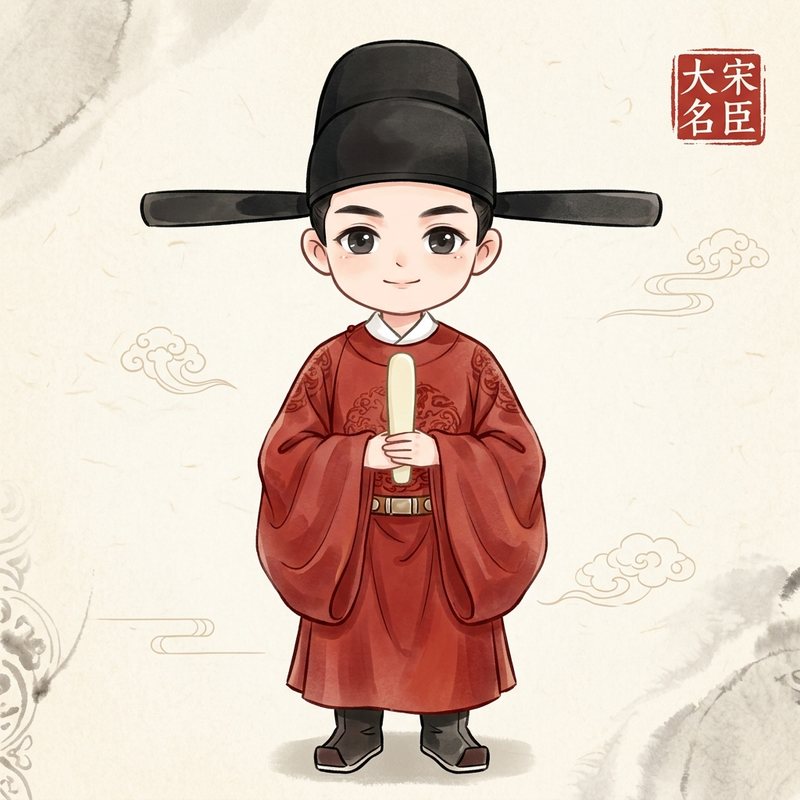
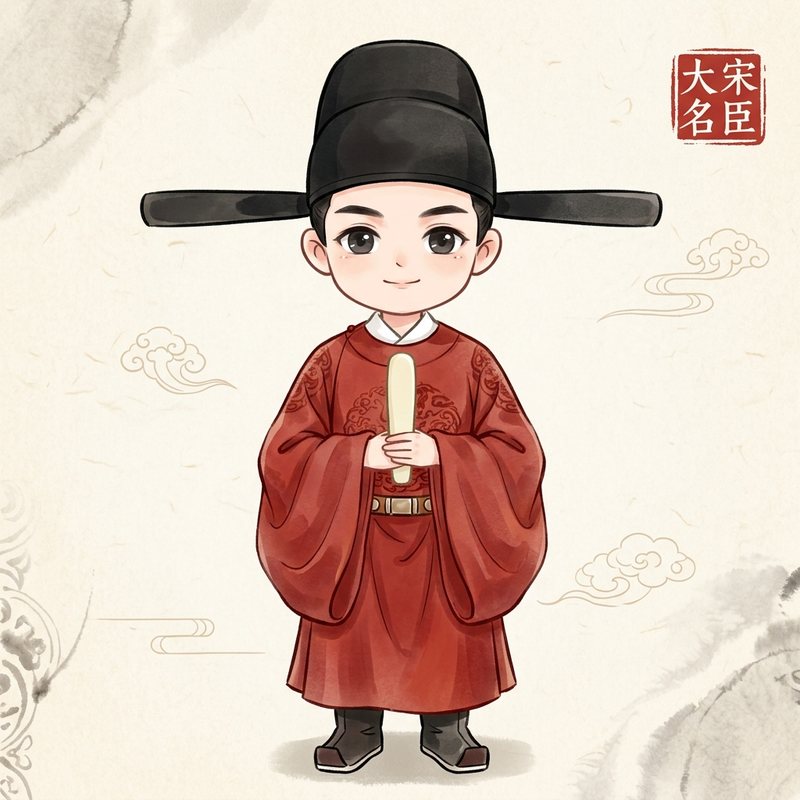
The Iron-Faced Judge & Symbol of Justice · 999 – 1062
The incorruptible magistrate of Kaifeng and eternal symbol of Chinese justice who defied princes, broke corrupt rings, and never took a single inkstone.
Stops10
Traversed~4,611km
Audio Tour~12min
“耕读传家,端肃立身。”
Pass down the virtues of labor and scholarship through generations; establish oneself with solemn rectitude.
The Iron-Faced Judge & Symbol of JusticeNorthern Song Dynasty(999—1062)字希仁 · 谥号孝肃Audio Journey · 10 Stops
The incorruptible magistrate of Kaifeng and eternal symbol of Chinese justice who defied princes, broke corrupt rings, and never took a single inkstone.
The Sherlock Holmes of Ancient China· Sherlock HolmesThe Solomon of Eastern Justice· King SolomonAristides the Just of the Song Dynasty· Aristides the Just
Unfolding the Historical Landscape…
印
Daily Wisdom & Resilience Oracle
The Resilient Optimist
“竹杖芒鞋轻胜马,谁怕?一蓑烟雨任平生。”
Holding a bamboo cane and wearing straw sandals, I stride faster than a horse. Who is afraid? A straw cloak in the mist and rain — I live my life with equanimity.
💡 In the 3rd year of exile in Huangzhou, caught in a sudden downpour, Su Shi embraced the storm with supreme resilience.
— Su Shi (Dongpo)(The Renaissance Foodie & Optimist)
Historical Footprints & Narration Archive
10 Stations
1
Luzhou Ancestral Home
999 CE · Age 0
Ancestral Hometown, modern Hefei, Anhui Province
Born into a scholar-official household in central China, naturally solemn and studious.
“耕读传家,端肃立身。”
Gēng dú chuán jiā, duān sù lì shēn.
Pass down the virtues of labor and scholarship through generations; establish oneself with solemn rectitude.
Station Narration Script
In 999 CE, amid the tranquil farmlands of central China, young Bao Zheng grew up in the rural hamlet of Baocun near Luzhou. Unlike other boys, he was quiet, serious, and perpetually buried in the Confucian classics. His father, a retired judicial official, taught him that righteousness and filial devotion were the supreme treasures of life. In this serene agrarian crucible, the moral foundation of China's future champion of justice was laid.
Departure Transition Script
After years of rigorous classical schooling, young Bao Zheng journeyed to the imperial capital in 1027 and passed the imperial examinations with top honors.
2
Luzhou Thatched Hermitage
1027 CE · Age 28
Rural Hermitage near Ancestral Tombs, modern Hefei, Anhui
Surrendering imperial glory to nurse his aging parents for a decade in a thatch hut.
Filial devotion is the very root of human virtue; without devotion to one's parents, how can one be truly faithful to the realm?
Station Narration Script
While ambitious young graduates galloped toward lucrative administrative careers, 28-year-old Bao Zheng turned back toward his humble village. For ten quiet years he cooked meals and brewed medicine for his aging parents, choosing filial duty over imperial prestige. When they passed, he built a simple thatch shelter beside their graves, enduring wind and frost in deep mourning. This decade of ascetic devotion forged the unshakable moral anchor of his soul.
Departure Transition Script
In 1037, his mourning completed, 38-year-old Bao Zheng accepted his first administrative posting as magistrate of Tianchang County.
3
Tianchang County Yamen
1037 CE · Age 38
Ancient County Seat, modern Tianchang, Chuzhou, Anhui
Solving the baffling severed ox tongue mystery with brilliant reverse psychological traps.
“第归,杀而鬻之。”
Dì guī, shā ér yù zhī.
Just return home, slaughter the ox, and sell its meat.
Station Narration Script
Inside the modest yamen of Tianchang County, Bao Zheng applied razor-sharp intellect to rural disputes. The severed ox tongue case was a masterclass in behavioral deduction: without resorting to coercion, Bao predicted human spite with mathematical precision. When the smug culprit arrived to file his false report, Bao's thunderous interrogation cracked the case instantly. The legend of Bao the master detective had begun.
Departure Transition Script
Earning exemplary performance ratings, Bao Zheng was promoted in 1040 to govern the prized southern prefecture of Duanzhou.
4
Duanzhou Prefectural Office
1040 CE · Age 41
The Imperial Inkstone Capital, modern Zhaoqing, Guangdong
Banning corrupt tribute quotas and sailing home without keeping a single precious inkstone.
A pure heart is the foundation of governance; the straight path is the strategy for oneself. A magnificent trunk will eventually become a pillar of state; refined steel is never bent into a crooked hook.
Station Narration Script
Along the West River, the mountains of Duanzhou yielded China's finest inkstones—prized by emperors and hoarded by corrupt bureaucrats. Bao Zheng looked past the luxury stones to see the exhausted quarrymen. He broke the entrenched tribute cartels overnight, dug municipal freshwater wells, and cleansed the administration. When his term concluded, he boarded his return ship with empty trunks. His refusal to take even a single stone became an eternal proverb of incorruptibility.
Departure Transition Script
In 1044, Bao Zheng was recalled to the capital and appointed Investigating Censor, stepping onto the imperial political stage.
5
Imperial Censorate & Northern Frontier
1045 CE · Age 46
Imperial Censorate Headquarters, modern Kaifeng, Henan
Confronting Khitan interrogators as imperial envoy and reforming northern frontier defenses.
The root of order or turmoil lies in the rule of law; the peace of the realm depends on forethought and vigilance.
Station Narration Script
Holding the imperial credentials as envoy, 46-year-old Bao Zheng rode north across frozen steppes. Standing inside the Khitan court tents, he parried hostile territorial provocations with razor-sharp diplomatic logic, safeguarding imperial sovereignty. Back in Kaifeng's Censorate, he focused on systemic vulnerabilities, targeting military bloat and fiscal waste. His memorials rattled entrenched generals, demanding a battle-ready frontier.
Departure Transition Script
In 1050, Bao was appointed Chief Remonstrator (Zhi Jian Yuan), initiating the most dramatic remonstrance campaigns of the Northern Song.
6
The Remonstrance Bureau
1050 CE · Age 51
Imperial Hall of Remonstrance, modern Kaifeng, Henan
Spitting in passion before Emperor Renzong to block royal nepotism and impeaching tyrants seven times.
The sacred duty of remonstrance is that above, one does not fail the Son of Heaven; and below, one does not fail the common people.
Station Narration Script
Inside Kaifeng's imperial court, 51-year-old Bao Zheng stood alone against aristocratic nepotism. Arguing against unearned favors granted to the emperor's in-law, his impassioned debate brought spittle directly onto the sovereign's robes. Emperor Renzong wiped his face in exasperation but was forced to surrender to the truth. Against the extortionist Wang Kui, Bao fired seven successive impeachment memorials. Across China, corrupt officials trembled at the word 'Bao-Tan' (Bao's Impeachments).
Departure Transition Script
In 1053, having agitated high courtiers through unyielding dissent, Bao Zheng was posted away as governor of his native Luzhou.
7
Luzhou Municipal Courthouse
1053 CE · Age 54
Prefectural Seat of Luzhou, modern Hefei, Anhui
Governing his native prefecture and cane-beating his own law-breaking uncle in open court.
The law does not flatter the noble; the carpenter's plumb-line does not bend for curves. Upholding righteousness over family ties leaves no room for private favoritism.
Station Narration Script
Outside Luzhou's courthouse, crowds gathered to watch the magistrate judge his own blood relative. The arrogant uncle smirked, expecting quiet leniency. But behind the bench, 54-year-old Bao Zheng wore a face of chiseled stone. Down came his gavel, and down came the bailiffs' heavy wooden staves. In that single act, centuries of clan privilege were shattered. By refusing to shield his own family, Bao demonstrated that statutory justice recognized no favorites.
Departure Transition Script
In late 1056, Bao was summoned back to the capital for the legendary zenith of his career: Prefect of Kaifeng.
8
Kaifeng Prefectural Yamen
1057 CE · Age 58
Municipal Yamen of Northern Song Capital, modern Kaifeng, Henan
Opening courthouse gates directly to commoners, razing illegal royal villas, and creating the legend of Bao Qingtian.
“关节不到,有阎罗包老。”
Guān jié bù dào, yǒu Yán Luó Bāo lǎo.
Bribery cannot pass through the gate; for there sits Old Bao, the Living King of the Underworld!
Station Narration Script
Kaifeng's massive yamen gates swung wide, welcoming thousands of impoverished citizens into the great hall. Beneath the plaque of pure clarity, 58-year-old Bao Zheng listened to the voiceless. Imperial princes and corrupt grandees who once sneered at the law trembled before his gavel. When the Huimin River threatened catastrophic floods, Bao bulldozed aristocratic riverside villas into rubble without hesitation, letting the waters drain. In fifteen months as mayor, he carved his name into the immortal soul of Chinese civilization.
Departure Transition Script
In 1059, Bao was elevated to Minister of State Finance (Sansi Shi), taking charge of the empire's treasury and economic administration.
9
State Finance Commission
1059 CE · Age 60
State Finance Commission Headquarters, modern Kaifeng, Henan
Overhauling imperial state finance, abolishing coercive purchase quotas, and forgiving crushing debt.
The incorruptible official is the role model for the people; the corrupt official is the thief of the people.
Station Narration Script
Inside the State Finance Agency, 60-year-old Bao Zheng audited towering stacks of ledgers. Understanding that national stability rested on peasant livelihoods, he refused to balance imperial books by grinding down the vulnerable. He struck down coercive state monopolies, eradicated forced requisitions, and forgave generational tax debts with a stroke of his vermilion brush. Grain flowed freely, merchants traded safely, and ordinary folk found relief under his economic stewardship.
Departure Transition Script
In 1061, Bao was promoted to Privy Councillor (Shumi Fushi), entering the supreme imperial military council.
10
Privy Council & Final Rest
1062 CE · Age 63
Privy Council Office and Ancestral Shrine, modern Kaifeng, Henan
Carving his iron anti-corruption family precept into stone and passing away in highest military office.
If any descendant who serves in official office commits corruption, they shall not be permitted to return to the family home; upon their death, they shall not be buried in our ancestral tomb. Those who do not follow my will are no descendants of mine.
Station Narration Script
In the summer of 1062, gentle rain bathed Kaifeng as 63-year-old Bao Zheng passed away. When clerks examined his quarters, they found only worn robes and bookshelves—not enough spare coin to pay for a standard casket. Grief swept the imperial capital: markets shuttered and citizens wept openly in alleys. Emperor Renzong conferred the posthumous title Xiaosu ('Filial and Stern'). The stone stele carved on his ancestral wall remained an eternal beacon of incorruptibility.
Departure Transition Script
Though the physical magistrate passed, the legend of Judge Bao became an eternal constellation of justice in Chinese civilization, shining undimmed across the centuries.
Key Historical Inquiries & Context
· 核心史实公案与速览
Bao Zheng (999–1062), styled Xiren, was Northern Song China's definitive statesman, reformer, and immortal judicial titan, revered as 'Judge Bao' or 'Bao Qingtian' (Clear-Sky Bao). Passing the imperial examinations in 1027, he set aside worldly ambition to care for his elderly parents for a full decade. Entering office at thirty-eight, he served as magistrate of Tianchang, governor of Duanzhou, imperial censor, chief remonstrator, prefect of Kaifeng, finance commissioner, and privy councillor. Famous for solving the severed ox tongue case through deduction, leaving Duanzhou without keeping a single prized inkstone, and fearlessly confronting Emperor Renzong over nepotism, he reached his legendary apex in Kaifeng by opening courthouse doors directly to common citizens. In his final years, he reformed imperial finance to ease peasant burdens and carved a terrifying family precept disowning any corrupt descendant. His name remains the eternal symbol of justice in Chinese civilization.
Bao Zheng (999–1062), styled Xiren, was Northern Song China's definitive statesman, reformer, and immortal judicial titan, revered as 'Judge Bao' or 'Bao Qingtian' (Clear-Sky Bao). Passing the imperial examinations in 1027, he set aside worldly ambition to care for his elderly parents for a full decade. Entering office at thirty-eight, he served as magistrate of Tianchang, governor of Duanzhou, imperial censor, chief remonstrator, prefect of Kaifeng, finance commissioner, and privy councillor. Famous for solving the severed ox tongue case through deduction, leaving Duanzhou without keeping a single prized inkstone, and fearlessly confronting Emperor Renzong over nepotism, he reached his legendary apex in Kaifeng by opening courthouse doors directly to common citizens. In his final years, he reformed imperial finance to ease peasant burdens and carved a terrifying family precept disowning any corrupt descendant. His name remains the eternal symbol of justice in Chinese civilization.
QWhat was Bao Zheng's primary cultural and historical legacy?
Bao Zheng is celebrated across world history as a pioneer of The Sherlock Holmes of Ancient China, The Solomon of Eastern Justice, Aristides the Just of the Song Dynasty, leaving enduring philosophical insights, literature, and art.
QWhere does Bao Zheng's historical life journey map lead?
This interactive GIS map retraces 10 chronological stops across Northern Song Dynasty China, originating from Luzhou Ancestral Home and spanning through Privy Council & Final Rest.
The Complete Life Journey & Biography of Bao Zheng (Judge Bao) (包拯)
Chronological travel & exile routes mapped to modern Chinese cities across Northern Song Dynasty China — featuring bilingual scholar audio, classical poetry recitations, and historical cross-paths.
Luzhou Ancestral Home (庐州故里)
Age 0
Modern-day analog: Ancestral Hometown, modern Hefei, Anhui Province
Born into a scholar-official household in central China, naturally solemn and studious.
In 999 CE, amid the tranquil farmlands of central China, young Bao Zheng grew up in the rural hamlet of Baocun near Luzhou. Unlike other boys, he was quiet, serious, and perpetually buried in the Confucian classics. His father, a retired judicial official, taught him that righteousness and filial devotion were the supreme treasures of life. In this serene agrarian crucible, the moral foundation of China's future champion of justice was laid.
After years of rigorous classical schooling, young Bao Zheng journeyed to the imperial capital in 1027 and passed the imperial examinations with top honors.
“Pass down the virtues of labor and scholarship through generations; establish oneself with solemn rectitude.”
耕读传家,端肃立身。 (Gēng dú chuán jiā, duān sù lì shēn.)
Luzhou Thatched Hermitage (合肥纯孝)
Age 28
Modern-day analog: Rural Hermitage near Ancestral Tombs, modern Hefei, Anhui
Surrendering imperial glory to nurse his aging parents for a decade in a thatch hut.
While ambitious young graduates galloped toward lucrative administrative careers, 28-year-old Bao Zheng turned back toward his humble village. For ten quiet years he cooked meals and brewed medicine for his aging parents, choosing filial duty over imperial prestige. When they passed, he built a simple thatch shelter beside their graves, enduring wind and frost in deep mourning. This decade of ascetic devotion forged the unshakable moral anchor of his soul.
In 1037, his mourning completed, 38-year-old Bao Zheng accepted his first administrative posting as magistrate of Tianchang County.
“Filial devotion is the very root of human virtue; without devotion to one's parents, how can one be truly faithful to the realm?”
Modern-day analog: Ancient County Seat, modern Tianchang, Chuzhou, Anhui
Solving the baffling severed ox tongue mystery with brilliant reverse psychological traps.
Inside the modest yamen of Tianchang County, Bao Zheng applied razor-sharp intellect to rural disputes. The severed ox tongue case was a masterclass in behavioral deduction: without resorting to coercion, Bao predicted human spite with mathematical precision. When the smug culprit arrived to file his false report, Bao's thunderous interrogation cracked the case instantly. The legend of Bao the master detective had begun.
Earning exemplary performance ratings, Bao Zheng was promoted in 1040 to govern the prized southern prefecture of Duanzhou.
“Just return home, slaughter the ox, and sell its meat.”
第归,杀而鬻之。 (Dì guī, shā ér yù zhī.)
Duanzhou Prefectural Office (端州掷砚)
Age 41
Modern-day analog: The Imperial Inkstone Capital, modern Zhaoqing, Guangdong
Banning corrupt tribute quotas and sailing home without keeping a single precious inkstone.
Along the West River, the mountains of Duanzhou yielded China's finest inkstones—prized by emperors and hoarded by corrupt bureaucrats. Bao Zheng looked past the luxury stones to see the exhausted quarrymen. He broke the entrenched tribute cartels overnight, dug municipal freshwater wells, and cleansed the administration. When his term concluded, he boarded his return ship with empty trunks. His refusal to take even a single stone became an eternal proverb of incorruptibility.
In 1044, Bao Zheng was recalled to the capital and appointed Investigating Censor, stepping onto the imperial political stage.
“A pure heart is the foundation of governance; the straight path is the strategy for oneself. A magnificent trunk will eventually become a pillar of state; refined steel is never bent into a crooked hook.”
Modern-day analog: Imperial Censorate Headquarters, modern Kaifeng, Henan
Confronting Khitan interrogators as imperial envoy and reforming northern frontier defenses.
Holding the imperial credentials as envoy, 46-year-old Bao Zheng rode north across frozen steppes. Standing inside the Khitan court tents, he parried hostile territorial provocations with razor-sharp diplomatic logic, safeguarding imperial sovereignty. Back in Kaifeng's Censorate, he focused on systemic vulnerabilities, targeting military bloat and fiscal waste. His memorials rattled entrenched generals, demanding a battle-ready frontier.
In 1050, Bao was appointed Chief Remonstrator (Zhi Jian Yuan), initiating the most dramatic remonstrance campaigns of the Northern Song.
“The root of order or turmoil lies in the rule of law; the peace of the realm depends on forethought and vigilance.”
Modern-day analog: Imperial Hall of Remonstrance, modern Kaifeng, Henan
Spitting in passion before Emperor Renzong to block royal nepotism and impeaching tyrants seven times.
Inside Kaifeng's imperial court, 51-year-old Bao Zheng stood alone against aristocratic nepotism. Arguing against unearned favors granted to the emperor's in-law, his impassioned debate brought spittle directly onto the sovereign's robes. Emperor Renzong wiped his face in exasperation but was forced to surrender to the truth. Against the extortionist Wang Kui, Bao fired seven successive impeachment memorials. Across China, corrupt officials trembled at the word 'Bao-Tan' (Bao's Impeachments).
In 1053, having agitated high courtiers through unyielding dissent, Bao Zheng was posted away as governor of his native Luzhou.
“The sacred duty of remonstrance is that above, one does not fail the Son of Heaven; and below, one does not fail the common people.”
Modern-day analog: Prefectural Seat of Luzhou, modern Hefei, Anhui
Governing his native prefecture and cane-beating his own law-breaking uncle in open court.
Outside Luzhou's courthouse, crowds gathered to watch the magistrate judge his own blood relative. The arrogant uncle smirked, expecting quiet leniency. But behind the bench, 54-year-old Bao Zheng wore a face of chiseled stone. Down came his gavel, and down came the bailiffs' heavy wooden staves. In that single act, centuries of clan privilege were shattered. By refusing to shield his own family, Bao demonstrated that statutory justice recognized no favorites.
In late 1056, Bao was summoned back to the capital for the legendary zenith of his career: Prefect of Kaifeng.
“The law does not flatter the noble; the carpenter's plumb-line does not bend for curves. Upholding righteousness over family ties leaves no room for private favoritism.”
Modern-day analog: Municipal Yamen of Northern Song Capital, modern Kaifeng, Henan
Opening courthouse gates directly to commoners, razing illegal royal villas, and creating the legend of Bao Qingtian.
Kaifeng's massive yamen gates swung wide, welcoming thousands of impoverished citizens into the great hall. Beneath the plaque of pure clarity, 58-year-old Bao Zheng listened to the voiceless. Imperial princes and corrupt grandees who once sneered at the law trembled before his gavel. When the Huimin River threatened catastrophic floods, Bao bulldozed aristocratic riverside villas into rubble without hesitation, letting the waters drain. In fifteen months as mayor, he carved his name into the immortal soul of Chinese civilization.
In 1059, Bao was elevated to Minister of State Finance (Sansi Shi), taking charge of the empire's treasury and economic administration.
“Bribery cannot pass through the gate; for there sits Old Bao, the Living King of the Underworld!”
Modern-day analog: State Finance Commission Headquarters, modern Kaifeng, Henan
Overhauling imperial state finance, abolishing coercive purchase quotas, and forgiving crushing debt.
Inside the State Finance Agency, 60-year-old Bao Zheng audited towering stacks of ledgers. Understanding that national stability rested on peasant livelihoods, he refused to balance imperial books by grinding down the vulnerable. He struck down coercive state monopolies, eradicated forced requisitions, and forgave generational tax debts with a stroke of his vermilion brush. Grain flowed freely, merchants traded safely, and ordinary folk found relief under his economic stewardship.
In 1061, Bao was promoted to Privy Councillor (Shumi Fushi), entering the supreme imperial military council.
“The incorruptible official is the role model for the people; the corrupt official is the thief of the people.”
Modern-day analog: Privy Council Office and Ancestral Shrine, modern Kaifeng, Henan
Carving his iron anti-corruption family precept into stone and passing away in highest military office.
In the summer of 1062, gentle rain bathed Kaifeng as 63-year-old Bao Zheng passed away. When clerks examined his quarters, they found only worn robes and bookshelves—not enough spare coin to pay for a standard casket. Grief swept the imperial capital: markets shuttered and citizens wept openly in alleys. Emperor Renzong conferred the posthumous title Xiaosu ('Filial and Stern'). The stone stele carved on his ancestral wall remained an eternal beacon of incorruptibility.
Though the physical magistrate passed, the legend of Judge Bao became an eternal constellation of justice in Chinese civilization, shining undimmed across the centuries.
“If any descendant who serves in official office commits corruption, they shall not be permitted to return to the family home; upon their death, they shall not be buried in our ancestral tomb. Those who do not follow my will are no descendants of mine.”