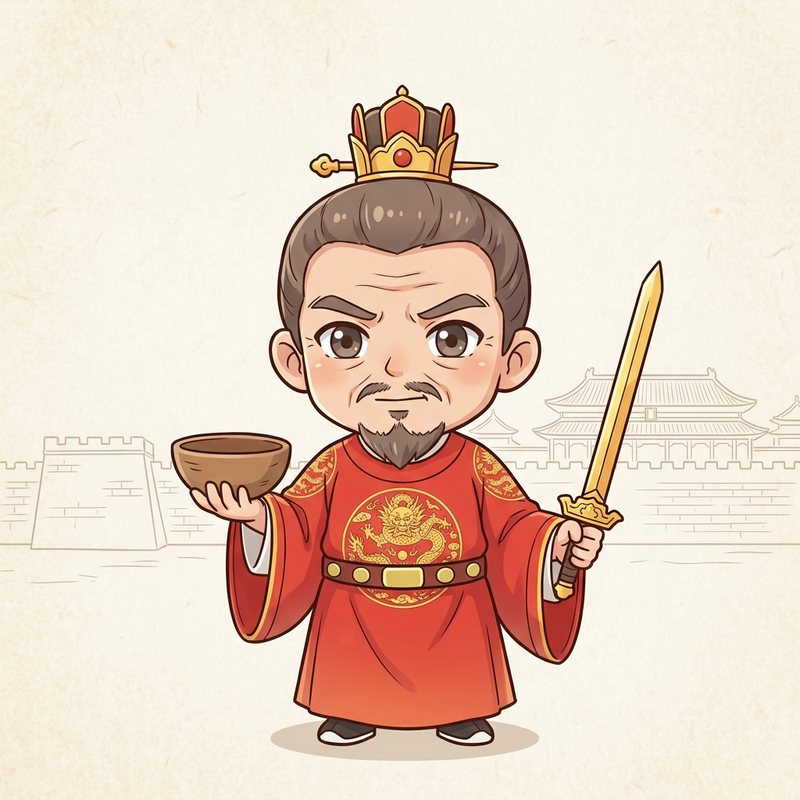
Zhu Yuanzhang
Ming Dynasty(1328–1398)Age 1 · Haozhou (Zhongli, Birthplace)“From a destitute monk and beggar to the supreme founding emperor of China.”
The Complete Life Journey & Biography of Zhu Yuanzhang (Hongwu) (朱元璋)
Chronological travel & exile routes mapped to modern Chinese cities across Ming Dynasty China — featuring bilingual scholar audio, classical poetry recitations, and historical cross-paths.
Huangjue Monastery (Alms Trail) (皇觉寺(出家托钵,浪迹淮西))
Age 161344 CEModern-day analog: Fengyang, Anhui to Central China plains
Ordained as a novice monk, starvation soon forced him into a three-year wandering pilgrimage begging for alms across the Huai River basin.
The monastery bell could not ring hope into the boy's heart. Within fifty days the temple ran out of grain, and seventeen-year-old Zhu was sent onto the roads with only an alms bowl. For three years he wandered westward to Hefei and north to Yingzhou, sleeping in ruined shrines and enduring hunger. He saw every shade of human coldness and warmth, and etched the geography of the Huai region into his memory. In these humblest years he met righteous men who defied Mongol rule, forging his will and spirit anew. He began with a beggar's bowl—and he carried it for three years.
“He began with nothing but a beggar's bowl, and ended by delivering all under Heaven from chaos.”
开局一个碗,扫平天下乱。(Kāi jú yī gè wǎn, sǎo píng tiān xià luàn.)Haozhou Garrison (The Righteous Army) (濠州城(投奔红巾,崭露头角))
Age 241352 CEModern-day analog: Linhuai Town, Fengyang, Anhui
Responding to a secret summons, he enlisted in Guo Zixing's Red Turban uprising, earning renown for tactical brilliance and marrying the future Empress Ma.
Upon Haozhou's walls, Red Turban banners snapped in the wind. At first suspected as a spy, Zhu was recognized by Commander Guo Zixing for his commanding presence and kept as a personal guard. He fought at the front in every battle, sharing all plunder with his comrades. Impressed by his virtue, Guo gave him his foster daughter, Lady Ma, in marriage. Zhu then recruited Xu Da, Chang Yuchun, and twenty-two other loyal warriors, forging the core that would one day conquer the realm. That day he swore: the reunification of all under Heaven begins today.
“The reunification of all under Heaven begins today.”
天下一统,当在今日。(Tiān xià yī tǒng, dāng zài jīn rì.)Yingtianfu (Nanjing, Foundation of Ming) (应天府(高筑墙,广积粮,缓称王))
Age 281356 CEModern-day analog: Modern Nanjing, Jiangsu Province
Capturing Nanjing, he embraced scholar Zhu Sheng's nine-word strategy: 'Build high walls, store abundant grain, and delay claiming kingship'.
Yingtianfu—the fabled capital of six dynasties. After capturing it, Zhu did not rush to claim kingship. Instead he embraced scholar Zhu Sheng's nine-word strategy: build high walls, store abundant grain, delay claiming kingship. He opened examinations, recruited the finest scholars of Jiangnan, and promoted self-sufficient farming. Liu Bowen, Song Lian, and other luminaries flocked to his side to craft institutions and strategy. While rivals scrambled for empty titles, he quietly built walls and stockpiled grain. This patience and foresight were the mark of a true sovereign—not grasping at fleeting glory, but building for a thousand years.
“Build high walls, store abundant grain, and delay claiming kingship.”
高筑墙,广积粮,缓称王。(Gāo zhù qiáng, guǎng jī liáng, huǎn chēng wáng.)Lake Poyang (Naval Battle of Destiny) (鄱阳湖(火攻巨舰,水战克敌))
Age 351363 CEModern-day analog: Northern Jiangxi, near modern Jiujiang / Poyang
Locked in a thirty-six-day titanic naval clash against Chen Youliang's colossal fleet, Zhu deployed fire-ships to annihilate his supreme rival.
Over Lake Poyang, war clouds gathered. Chen Youliang's towering war fortresses, chained together, formed a fleet of six hundred thousand. Zhu's small ships darted among them, barely holding on. At the critical moment, Liu Bowen read the shifting wind. Zhu personally led a suicide squad, driving seven blazing fire-ships downwind into the enemy's heart. Fire licked the sky as hundreds of giant vessels burned to ash, and Chen Youliang fell to a stray arrow. After thirty-six days, the southern half of China was his. A single battle had settled the sovereign destiny of the realm.
“The regal aura of Jinling rises sublime; a single battle settles the sovereign destiny of China.”
金陵王气正巍巍,一箭射落江山定。(Jīn líng wáng qì zhèng wēi wēi, yī jiàn shè luò jiāng shān dìng.)Nanjing Imperial Palace (The Hongwu Era) (南京皇宫(称帝改元,驱逐胡虏))
Age 401368 CEModern-day analog: Nanjing Imperial Palace ruins, Jiangsu Province
Ascending the dragon throne in Nanjing to proclaim the Great Ming, he dispatched General Xu Da northward to retake Beijing and restore Chinese sovereignty.
On the fourth day of the first month of 1368, dragon banners darkened the sky before Nanjing's Fengtian Hall. From a cowherd in Fengyang and a beggar-monk of Huangjue Temple to the founding emperor upon the dragon throne, Zhu Yuanzhang had finally reached this day. He issued the northern manifesto drafted by Song Lian: drive out the foreign oppressors, restore China, establish legal order, and deliver the people from suffering. General Xu Da retook Dadu without bloodshed as the Yuan emperor fled into the desert. Nearly a thousand years of division and foreign rule since the Jin dynasty ended in that moment. China was reunited.
“Drive out the foreign oppressors, restore China, establish legal order, and deliver the people from suffering.”
驱逐胡虏,恢复中华,立纲陈纪,救济斯民。(Qū zhú hú lǔ, huī fù zhōng huá, lì gāng chén jì, jiù jì sī mín.)Ming Xiaoling Mausoleum (Zijin Mountain) (明孝陵(钟山之巅,布衣天子长眠))
Age 701398 CEModern-day analog: Mount Zijin, Nanjing, Jiangsu Province
Passing away in the imperial palace, he was laid to rest beside beloved Empress Ma at Ming Xiaoling, commanding that grief not disrupt commoners' lives.
In May 1398, the commoner-emperor who had labored all his life passed away in the imperial palace of Nanjing. For thirty-one years, conscious of perils day and night, he had worked tirelessly. He punished corrupt officials, surveyed land and population, compiled the Yellow Registers and Fish-Scale Registers, and eased taxes to revive agriculture, ushering in the Hongwu governance. His final testament was gentle toward the people: mourn for three days, then set aside grief and let weddings and farming continue. From an orphan buried in straw to a sovereign resting atop Purple Mountain, he never forgot he came from the common people—and to them he returned at last. Ming Xiaoling is the eternal home of this commoner-emperor.
“For thirty-one years, conscious of perils day and night, I labored tirelessly for the empire. Now, obeying Heaven's mandate, I return peacefully to nature.”
三十一年,忧危积心,日勤不怠。今兹眷命,归于自然。(Sān shí yī nián, yōu wēi jī xīn, rì qín bù dài.)
Literati Knowledge Vault · 先贤知识宝库
In-Depth Essays & Philosophical Inquiries on Zhu Yuanzhang
Deep dives, myth-busting, and modern psychological lessons from Zhu Yuanzhang's life and philosophy.
Historical Nexus & Intersecting Journeys
与 朱元璋 (Zhu Yuanzhang) 时空交汇、思想交锋或命运相连的华夏先贤网络
Historical Nexus & Intersecting Journeys
与 朱元璋 时空交汇、思想交锋或命运相连的华夏先贤网络
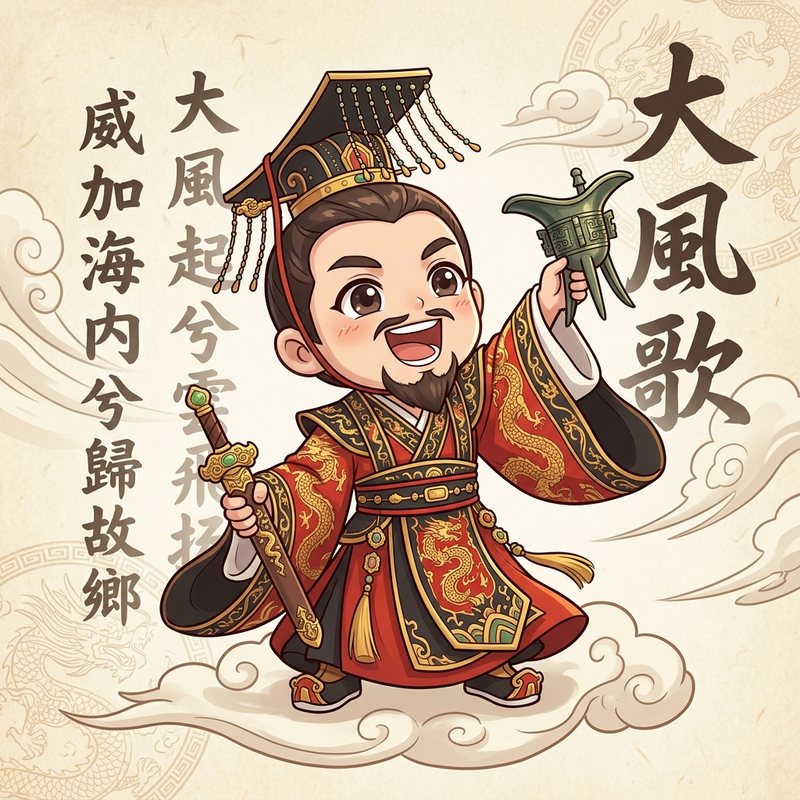
Key Historical Inquiries & Context
关于 朱元璋 (Zhu Yuanzhang) 的核心史实考证、公案辨析与中英直答
Who founded the Ming dynasty?
Zhu Yuanzhang, the Hongwu Emperor, in 1368. Later Ming voyages under Zheng He rest on this founding.
How do you spell Zhu Yuanzhang?
Pinyin: Zhū Yuánzhāng. Wade-Giles: Chu Yuan-chang. Search typos such as zhu yanzhang still mean this Ming founder.