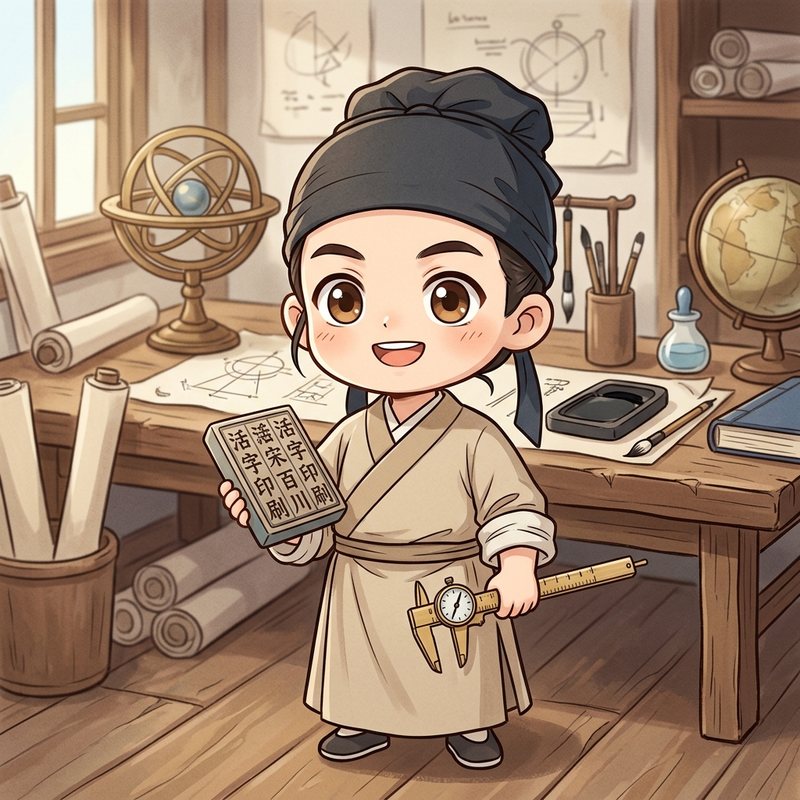
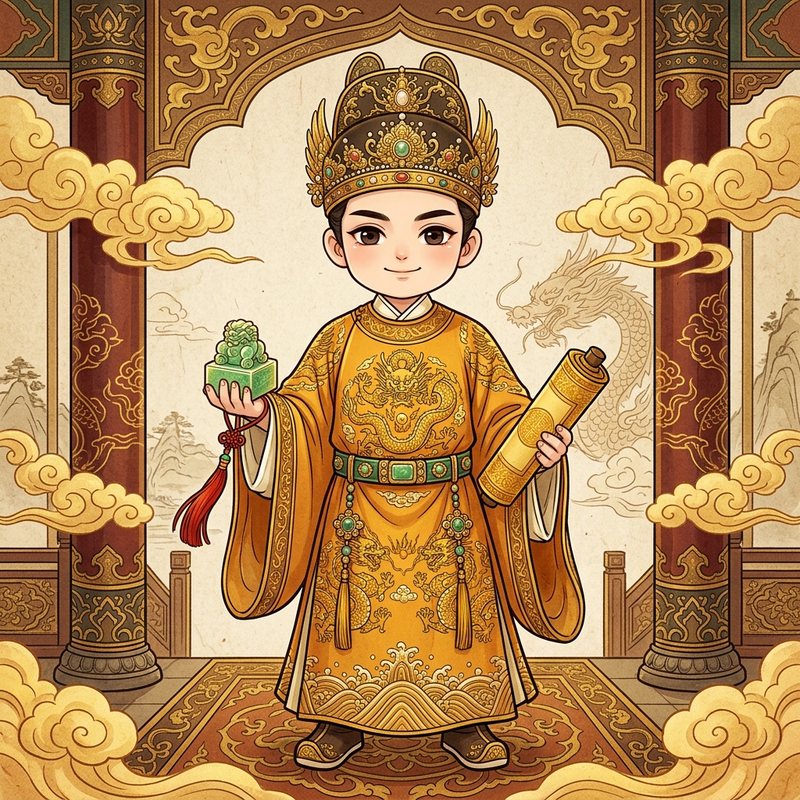
The Bruegel of Imperial ChinaSong Dynasty(1085—1145)字正道 · 琅琊东武人Audio Journey · 9 Stops
The Bruegel of Imperial China: master of architectural realism whose five-meter scroll captured the living heartbeat of Song Dynasty Kaifeng.
The Bruegel of Imperial China· Pieter Bruegel the ElderThe Master of Ruled-Line Precision· CanalettoThe Chronicler of the Golden Metropolis Before the Deluge· A profound civilizational chronicler
Unfolding the Historical Landscape…
印
Daily Wisdom & Resilience Oracle
The Resilient Optimist
“竹杖芒鞋轻胜马,谁怕?一蓑烟雨任平生。”
Holding a bamboo cane and wearing straw sandals, I stride faster than a horse. Who is afraid? A straw cloak in the mist and rain — I live my life with equanimity.
💡 In the 3rd year of exile in Huangzhou, caught in a sudden downpour, Su Shi embraced the storm with supreme resilience.
— Su Shi (Dongpo)(The Renaissance Foodie & Optimist)
Historical Footprints & Narration Archive
9 Stations
1
Dongwu Homeland
1085 CE · Age 1
Ancient cultural hub of eastern Shandong, modern Zhucheng, Weifang
Born into a scholar family in coastal Dongwu, devoting his youth to classical studies with dreams of imperial service.
Zhang Zeduan, styled Zhengdao, was a native of Dongwu. In youth he read classics and traveled to the imperial capital for studies.
Station Narration Script
Around 1085 CE, Zhang Zeduan was born in Dongwu of Langya. Steeped in the scholarly traditions of coastal Shandong, the young boy studied Confucian classics, dreaming of imperial service. Yet destiny was preparing a vastly different canvas for his genius.
Departure Transition Script
At twenty, young Zhang Zeduan departed his homeland, traveling west to seek his fortune in the imperial capital Bianjing.
2
Imperial Capital Bianjing
1104 CE · Age 20
The bustling imperial metropolis of the Northern Song Dynasty along the Bian River, modern Kaifeng, Henan
Arriving in imperial Bianjing, dazzled by the world's most populous commercial capital and its endless canal traffic.
Green trees along the nine great avenues hold the hues of spring; crimson pavilions across ten thousand households glow in the evening twilight.
Station Narration Script
In 1104 CE, Bianjing was the premier metropolis on Earth. Walking through the imperial avenues outside Xuande Gate, young Zhang Zeduan was spellbound. Hundreds of canal freighters bustled along the Bian River, wine taverns gleamed, and night markets hummed until dawn. The raw pulse of common life began replacing rigid examination textbooks in his heart.
Departure Transition Script
Moved by the living spectacle of commoners, Zhang laid aside the civil examination brush and embraced architectural painting.
3
Bian River Waterfront
1108 CE · Age 24
The vibrant riverfront markets and freight docks along the Bian River, modern Kaifeng, Henan
Abandoning standard civil exams to master ruled-line painting, sketching canal boats and bridges day after day.
He was fundamentally skilled in ruled-line boundary painting, with an extraordinary fondness for boats, carts, market bridges, and streets, forming his own distinct school.
Station Narration Script
Amid the roaring bustle of the Bian River docks, twenty-four-year-old Zhang Zeduan made a life-defining choice. Packing away examination primers, he took up the ruler and fine brush. Day after day on the canal embankments, he sketched mortise joints on cargo barges and the sweat on dockworkers' brows, steering traditional ruled-line painting from cold palaces into the warm heart of human commerce.
Departure Transition Script
With draftsmanship of unmatched precision, Zhang Zeduan soon opened the doors of the empire's supreme art academy.
4
Hanlin Painting Academy
1113 CE · Age 29
The prestigious imperial academy of painting under Song Huizong, modern Kaifeng, Henan
Appointed painter-in-attendance at the Xuanhe Academy, synthesizing imperial aesthetics with vibrant street realism.
On that day the Hanlin master presented his painting, capturing the winds and customs of peace worthy of eternal transmission.
Station Narration Script
Within the vermilion corridors of the Hanlin Painting Academy, twenty-nine-year-old Zhang Zeduan donned the green robes of court service. Emperor Huizong demanded exacting realism and spiritual resonance. Here Zhang immersed himself in masterworks of past dynasties, marrying refined court elegance with the gritty vitality of the streets. He became the academy's singular prodigy and the golden era's truest visual historian.
Departure Transition Script
Commissioned by the court, Zhang turned to capturing the imperial water pageants at Jinming Lake.
5
Jinming Lake Imperial Garden
1118 CE · Age 34
The imperial aquatic pleasure park west of Bianjing, modern Kaifeng, Henan
Painting the dragon boat regatta on Jinming Lake, capturing water palaces and racing ships to divine acclaim.
“《西湖争标图》《清明上河图》选入神品,藏者宜宝之。”
Xī hú zhēng biāo tú, Qīng míng shàng hé tú xuǎn rù shén pǐn, cáng zhě yí bǎo zhī.
The 'West Lake Regatta' and 'Along the River During the Qingming Festival' were selected into the divine grade; collectors should cherish them as precious treasures.
Station Narration Script
Spring sunlight glistened over Jinming Lake as thirty-four-year-old Zhang Zeduan reached his first creative peak. Before the imperial Baojin Pavilion, vivid dragon boats surged forward; on both shores, tens of thousands of cheering citizens roared with joy. With pinpoint draftsmanship, Zhang captured the entire imperial regatta on silk. Upon completion, contemporary critics instantly crowned it an immortal 'Divine-Grade' work.
Departure Transition Script
Having conquered the imperial pleasure gardens, Zhang began conceptualizing a monumental scroll capturing the entire Song civilization.
6
Imperial Xuanhe Treasury
1124 CE · Age 40
The inner imperial court and imperial treasury of Xuanhe palace, modern Kaifeng, Henan
Presenting the 5.28-meter Qingming scroll to Emperor Huizong, who sealed it with his Slender Gold calligraphy.
The water gate connects eastward to the Grand Canal; houses line like fish scales. The sage Laozi warned against fullness—thus we know how today all became mounds.
Station Narration Script
In the imperial palace in 1124 CE, forty-year-old Zhang Zeduan slowly unrolled his five-meter handscroll. In that sublime moment, the living soul of Northern Song awoke: the heart-stopping drama of lowering masts beneath the Rainbow Bridge, camel caravans passing through gates, and tavern patrons clinking cups. Over 800 living souls breathed on silk. Emperor Huizong gazed in awe, writing the title in his Slender Gold hand and affixing the imperial double-dragon seal.
Departure Transition Script
Yet the splendor preserved on silk could not avert the catastrophic storm gathering on the northern frontier.
7
Besieged Capital Bianjing
1127 CE · Age 43
The besieged imperial capital during the catastrophic Jingkang Incident of 1127, modern Kaifeng, Henan
Jurchen invaders sack Kaifeng in the Jingkang Incident; the golden city collapses into ruins and smoke.
Singing taverns blossomed like fireworks for a million households. Who let this paradise decay into wild grass? Treacherous ministers dominating court power.
Station Narration Script
In the spring of 1127, Jurchen cavalry shattered Bianjing's imperial gates. Forty-three-year-old Zhang Zeduan stood under a sky filled with smoke, watching the Rainbow Bridge splintered into debris, tavern banners swallowed by fire, and a million citizens weeping in the snow. The vibrant world on his scroll had vanished into a living nightmare. With the academy dissolved, the artist fled into the winter wilderness clutching only brushes and scrap paper.
Departure Transition Script
Surviving the chaotic tides of war, the battle-worn artist drifted through the Central Plains back to his native Shandong.
8
Rural Dongwu Homeland
1135 CE · Age 51
The rural homeland of Dongwu where the aging master lived in reclusion after the fall of the capital, modern Zhucheng, Shandong
Living in quiet reclusion in rural Shandong, selling sketches to survive while preserving the memories of Song.
Rudders from Chu and masts from Wu on ships of ten thousand leagues; awakening from a fleeting dream of splendor, where have the flutes and pleasure towers gone?
Station Narration Script
In a thatched cottage in his native Shandong, fifty-one-year-old Zhang Zeduan's hair had turned silvery white. Declining invitations from foreign authorities, he returned to the life of a simple commoner. The gold-leaf imperial silks of the Xuanhe court were gone, replaced by coarse tea and worn brushes. Looking out at farmers returning with hoes as cowbells tinkled, his brushwork gained profound warmth. Dynasties could fall, but the indomitable life of common humanity would never be extinguished.
Departure Transition Script
A decade later, the master painter peacefully brought his legendary artistic odyssey to a serene close.
9
Yanshan Historical Resonance
1145 CE · Age 61
Ancient Yanshan where Jin dynasty scholars recorded Zhang Zeduan's colophons, modern Beijing
Passing peacefully into history as later colophons enshrined his scroll as China's immortal cultural Mona Lisa.
The golden dream shattered, both ends of the bridge now vacant; only the sorrowful waters of the Bian River flow endlessly eastward.
Station Narration Script
Around 1145 CE, genre master Zhang Zeduan closed his eyes in peaceful serenity. He departed without regret, having safely delivered the finest soul of the Song Dynasty into the arms of eternity. Four decades later, scholar Zhang Zhu recorded his name in Yanshan; eight centuries later, millions still queue at the Palace Museum to marvel at his vision. Dynasties may crumble into dust, but the 814 souls along the Rainbow Bridge live on—forever smiling, forever immortal.
Departure Transition Script
With a singular brush of ruled-line genius, Zhang Zeduan erected an eternal visual monument for human civilization.
Key Historical Inquiries & Context
· 核心史实公案与速览
Zhang Zeduan (1085–1145 CE), Wade-Giles Chang Tse-tuan, was the Northern Song court master painter who created Along the River During the Qingming Festival, the most famous panoramic handscroll in Chinese art history.
Zhang Zeduan was a master court artist of the Northern Song Dynasty's Hanlin Academy, famous worldwide for painting the panoramic masterpiece Along the River During the Qingming Festival.
QWhat is Zhang Zeduan's most famous painting?
Along the River During the Qingming Festival (清明上河图), a 5.28-meter handscroll capturing over 800 people, ships, and buildings in the bustling Song capital of Bianjing (modern Kaifeng).
The Complete Life Journey & Biography of Zhang Zeduan (Song Painter) (张择端)
Chronological travel & exile routes mapped to modern Chinese cities across Song Dynasty China — featuring bilingual scholar audio, classical poetry recitations, and historical cross-paths.
Dongwu Homeland (琅琊东武)
Age 1
Modern-day analog: Ancient cultural hub of eastern Shandong, modern Zhucheng, Weifang
Born into a scholar family in coastal Dongwu, devoting his youth to classical studies with dreams of imperial service.
Around 1085 CE, Zhang Zeduan was born in Dongwu of Langya. Steeped in the scholarly traditions of coastal Shandong, the young boy studied Confucian classics, dreaming of imperial service. Yet destiny was preparing a vastly different canvas for his genius.
At twenty, young Zhang Zeduan departed his homeland, traveling west to seek his fortune in the imperial capital Bianjing.
“Zhang Zeduan, styled Zhengdao, was a native of Dongwu. In youth he read classics and traveled to the imperial capital for studies.”
Modern-day analog: The bustling imperial metropolis of the Northern Song Dynasty along the Bian River, modern Kaifeng, Henan
Arriving in imperial Bianjing, dazzled by the world's most populous commercial capital and its endless canal traffic.
In 1104 CE, Bianjing was the premier metropolis on Earth. Walking through the imperial avenues outside Xuande Gate, young Zhang Zeduan was spellbound. Hundreds of canal freighters bustled along the Bian River, wine taverns gleamed, and night markets hummed until dawn. The raw pulse of common life began replacing rigid examination textbooks in his heart.
Moved by the living spectacle of commoners, Zhang laid aside the civil examination brush and embraced architectural painting.
“Green trees along the nine great avenues hold the hues of spring; crimson pavilions across ten thousand households glow in the evening twilight.”
Modern-day analog: The vibrant riverfront markets and freight docks along the Bian River, modern Kaifeng, Henan
Abandoning standard civil exams to master ruled-line painting, sketching canal boats and bridges day after day.
Amid the roaring bustle of the Bian River docks, twenty-four-year-old Zhang Zeduan made a life-defining choice. Packing away examination primers, he took up the ruler and fine brush. Day after day on the canal embankments, he sketched mortise joints on cargo barges and the sweat on dockworkers' brows, steering traditional ruled-line painting from cold palaces into the warm heart of human commerce.
With draftsmanship of unmatched precision, Zhang Zeduan soon opened the doors of the empire's supreme art academy.
“He was fundamentally skilled in ruled-line boundary painting, with an extraordinary fondness for boats, carts, market bridges, and streets, forming his own distinct school.”
Modern-day analog: The prestigious imperial academy of painting under Song Huizong, modern Kaifeng, Henan
Appointed painter-in-attendance at the Xuanhe Academy, synthesizing imperial aesthetics with vibrant street realism.
Within the vermilion corridors of the Hanlin Painting Academy, twenty-nine-year-old Zhang Zeduan donned the green robes of court service. Emperor Huizong demanded exacting realism and spiritual resonance. Here Zhang immersed himself in masterworks of past dynasties, marrying refined court elegance with the gritty vitality of the streets. He became the academy's singular prodigy and the golden era's truest visual historian.
Commissioned by the court, Zhang turned to capturing the imperial water pageants at Jinming Lake.
“On that day the Hanlin master presented his painting, capturing the winds and customs of peace worthy of eternal transmission.”
Modern-day analog: The imperial aquatic pleasure park west of Bianjing, modern Kaifeng, Henan
Painting the dragon boat regatta on Jinming Lake, capturing water palaces and racing ships to divine acclaim.
Spring sunlight glistened over Jinming Lake as thirty-four-year-old Zhang Zeduan reached his first creative peak. Before the imperial Baojin Pavilion, vivid dragon boats surged forward; on both shores, tens of thousands of cheering citizens roared with joy. With pinpoint draftsmanship, Zhang captured the entire imperial regatta on silk. Upon completion, contemporary critics instantly crowned it an immortal 'Divine-Grade' work.
Having conquered the imperial pleasure gardens, Zhang began conceptualizing a monumental scroll capturing the entire Song civilization.
“The 'West Lake Regatta' and 'Along the River During the Qingming Festival' were selected into the divine grade; collectors should cherish them as precious treasures.”
《西湖争标图》《清明上河图》选入神品,藏者宜宝之。 (Xī hú zhēng biāo tú, Qīng míng shàng hé tú xuǎn rù shén pǐn, cáng zhě yí bǎo zhī.)
Imperial Xuanhe Treasury (宣和内府呈卷)
Age 40
Modern-day analog: The inner imperial court and imperial treasury of Xuanhe palace, modern Kaifeng, Henan
Presenting the 5.28-meter Qingming scroll to Emperor Huizong, who sealed it with his Slender Gold calligraphy.
In the imperial palace in 1124 CE, forty-year-old Zhang Zeduan slowly unrolled his five-meter handscroll. In that sublime moment, the living soul of Northern Song awoke: the heart-stopping drama of lowering masts beneath the Rainbow Bridge, camel caravans passing through gates, and tavern patrons clinking cups. Over 800 living souls breathed on silk. Emperor Huizong gazed in awe, writing the title in his Slender Gold hand and affixing the imperial double-dragon seal.
Yet the splendor preserved on silk could not avert the catastrophic storm gathering on the northern frontier.
“The water gate connects eastward to the Grand Canal; houses line like fish scales. The sage Laozi warned against fullness—thus we know how today all became mounds.”
Modern-day analog: The besieged imperial capital during the catastrophic Jingkang Incident of 1127, modern Kaifeng, Henan
Jurchen invaders sack Kaifeng in the Jingkang Incident; the golden city collapses into ruins and smoke.
In the spring of 1127, Jurchen cavalry shattered Bianjing's imperial gates. Forty-three-year-old Zhang Zeduan stood under a sky filled with smoke, watching the Rainbow Bridge splintered into debris, tavern banners swallowed by fire, and a million citizens weeping in the snow. The vibrant world on his scroll had vanished into a living nightmare. With the academy dissolved, the artist fled into the winter wilderness clutching only brushes and scrap paper.
Surviving the chaotic tides of war, the battle-worn artist drifted through the Central Plains back to his native Shandong.
“Singing taverns blossomed like fireworks for a million households. Who let this paradise decay into wild grass? Treacherous ministers dominating court power.”
Modern-day analog: The rural homeland of Dongwu where the aging master lived in reclusion after the fall of the capital, modern Zhucheng, Shandong
Living in quiet reclusion in rural Shandong, selling sketches to survive while preserving the memories of Song.
In a thatched cottage in his native Shandong, fifty-one-year-old Zhang Zeduan's hair had turned silvery white. Declining invitations from foreign authorities, he returned to the life of a simple commoner. The gold-leaf imperial silks of the Xuanhe court were gone, replaced by coarse tea and worn brushes. Looking out at farmers returning with hoes as cowbells tinkled, his brushwork gained profound warmth. Dynasties could fall, but the indomitable life of common humanity would never be extinguished.
A decade later, the master painter peacefully brought his legendary artistic odyssey to a serene close.
“Rudders from Chu and masts from Wu on ships of ten thousand leagues; awakening from a fleeting dream of splendor, where have the flutes and pleasure towers gone?”
Modern-day analog: Ancient Yanshan where Jin dynasty scholars recorded Zhang Zeduan's colophons, modern Beijing
Passing peacefully into history as later colophons enshrined his scroll as China's immortal cultural Mona Lisa.
Around 1145 CE, genre master Zhang Zeduan closed his eyes in peaceful serenity. He departed without regret, having safely delivered the finest soul of the Song Dynasty into the arms of eternity. Four decades later, scholar Zhang Zhu recorded his name in Yanshan; eight centuries later, millions still queue at the Palace Museum to marvel at his vision. Dynasties may crumble into dust, but the 814 souls along the Rainbow Bridge live on—forever smiling, forever immortal.
With a singular brush of ruled-line genius, Zhang Zeduan erected an eternal visual monument for human civilization.
“The golden dream shattered, both ends of the bridge now vacant; only the sorrowful waters of the Bian River flow endlessly eastward.”