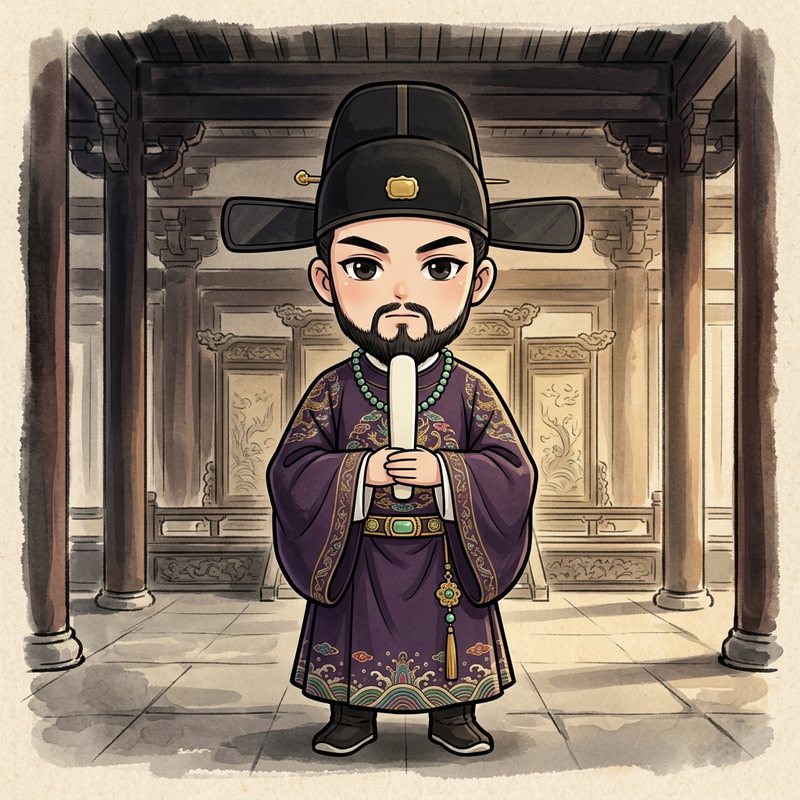
Wei Zheng
Tang Dynasty(580–643)Age 0 · Xiaquyang, Julu“The Fearless Chancellor & 'Human Mirror' of Tang who helped forge the golden Zhenguan era.”
The Complete Life Journey & Biography of Wei Zheng (Tang Chancellor) (魏征)
Chronological travel & exile routes mapped to modern Chinese cities across Tang Dynasty China — featuring bilingual scholar audio, classical poetry recitations, and historical cross-paths.
Wuyang Commandery (武阳郡)
Age 31611 CEModern-day analog: Modern Daming County, Hebei
Took refuge as a Daoist hermit, then managed secretarial affairs for Vice-Governor Yuan Baozang, first gaining fame.
Amid the Sui collapse, Wei Zheng became a Daoist hermit, studying statecraft and the art of governance. When Vice-Governor Yuan Baozang revolted, he recruited Wei to manage secretarial affairs; Wei's elegant, incisive documents brought him early fame across the north.
“Dwelling in quiet seclusion to cultivate the Dao, while treasuring within his heart grand statecraft to rescue civilization.”
潜居修道,胸藏救世经纶。(Qiánjū xiūdào, xiōng cáng jiùshì jīnglún.)Luokou Granary (洛口仓)
Age 37617 CEModern-day analog: Modern Gongyi, Henan
Joined the Wagang Army as literary advisor, presenting ten grand strategies to Li Mi.
Beneath the great granaries of Luokou, Wei Zheng joined the Wagang Army and was appointed literary advisor by Li Mi. He presented ten visionary strategies to seize Guanzhong and pacify the realm. Though Li Mi failed to adopt them, Wei's strategic genius impressed the entire army.
“Discerning the grand tides of the empire, presenting ten master strategies to forge enduring peace.”
识天下大势,献十策以图安定。(Shí tiānxià dàshì, xiàn shí cè yǐ tú āndìng.)Chang'an (长安)
Age 38618 CEModern-day analog: Imperial capital of Tang, modern Xi'an, Shaanxi
Surrendered to Tang in Chang'an, then volunteered to ride alone to pacify the eastern plains.
After Li Mi's surrender, Wei Zheng entered Chang'an. Overlooked at first, he boldly volunteered to ride alone east to pacify the Shandong region, composing the stirring poem 'Expressing My Feelings' on the journey: 'In this fleeting life, a noble soul is moved only by true honor; who would haggle over worldly glory?'
“In this fleeting mortal life, a noble soul is moved only by true honor and conviction; who would stoop to haggle over worldly glory?”
人生感意气,功名谁复论。(Rénshēng gǎn yìqì, gōngmíng shuí fù lùn.)Liyang & Mingzhou (黎阳、洺州)
Age 39619 CEModern-day analog: Modern Xun County, Henan
Captured by Dou Jiande, faced peril with calm dignity, appointed imperial diarist.
When Liyang fell, Wei Zheng was captured by the warlord Dou Jiande, who admired his integrity and appointed him imperial diarist. Facing danger with calm dignity, Wei recorded events with strict truthfulness, preserving his Confucian integrity amid the chaos.
“Caught in perilous captivity yet unswerving in moral purpose; wielding the historian's brush with uncompromising righteousness.”
身陷危局而志不移,秉笔秉正而守天理。(Shēn xiàn wēijú ér zhì bù yí, bǐngbǐ bǐngzhèng ér shǒu tiānlǐ.)Chang'an (长安)
Age 41621 CEModern-day analog: Imperial capital of Tang, modern Xi'an, Shaanxi
Served as senior advisor to Crown Prince Li Jiancheng, offering loyal counsel to secure his position.
Back in Chang'an, Wei Zheng served Crown Prince Li Jiancheng as senior advisor in the East Palace. He offered loyal counsel to secure the prince's position, serving with absolute integrity amid the intensifying rivalry that would culminate in the Xuanwu Gate Incident.
“Serving one's lord with unflinching loyalty; dedicating every ounce of wisdom and moral integrity to righteous counsel.”
事君以忠,竭智尽节。(Shì jūn yǐ zhōng, jié zhì jìn jié.)Chang'an (长安)
Age 46626 CEModern-day analog: Imperial capital of Tang, modern Xi'an, Shaanxi
After the Xuanwu Gate Incident, answered Taizong with fearless candor)Skip, was promoted and admonished the emperor over 200 times.
After the Xuanwu Gate Incident, Li Shimin summoned Wei Zheng and demanded, 'Why did you alienate us brothers?' Wei replied with calm defiance, 'Had the late prince followed my counsel, he would never have suffered today's catastrophe!' Stunned by his integrity, Taizong promoted him to Imperial Remonstrator, inaugurating the golden age of 'wise ruler, upright minister.' Wei admonished the emperor over 200 times, championing 'heed all sides' and 'water carries the boat.'
“Heed all sides and you shall be enlightened; listen only to one side and you shall remain trapped in darkness.”
兼听则明,偏信则暗。(Jiān tīng zé míng, piān xìn zé àn.)Luoyang (洛阳)
Age 52632 CEModern-day analog: Eastern capital of the Tang Empire, modern Luoyang, Henan
As Grand Chancellor, submitted the 'Petition on Ten Failings' to check Emperor Taizong's growing complacency.
Beneath the palaces of Luoyang, Wei Zheng rose to Grand Chancellor and Duke of Zheng, directing the compilation of the Book of Sui and Qunshu Zhiyao. In 637, as Taizong grew complacent and contemplated lavish sacrifices, Wei submitted his blistering 'Petition on Ten Failings,' enumerating ten ways the emperor was abandoning his early virtue. Deeply shaken, Taizong transcribed the petition onto his bedchamber screens and abandoned the plan.
“Those who make a virtuous beginning are indeed many, but those who can see it through to a glorious finish are truly few.”
善始者实繁,克终者盖寡。(Shàn shǐ zhě shí fán, kè zhōng zhě gài guǎ.)Chang'an (长安)
Age 57637 CEModern-day analog: Imperial capital of Tang, modern Xi'an, Shaanxi
Though at the pinnacle of power, lived austerely; Taizong halted palace construction to build him a hall.
In his humble dwelling in Chang'an, the aging Wei Zheng lived in austerity despite his supreme rank. His house lacked even a reception hall, so Emperor Taizong halted palace construction to build him one. Even on his sickbed, Wei continued to remonstrate; whenever major decisions arose, Taizong sought his bedside counsel—a model of the loyal minister.
“To make a tree grow tall, one must secure its roots; to make a river flow far, one must dredge its source; to ensure a nation's peace, one must amass virtue and moral justice.”
求木之长者,必固其根本;欲流之远者,必浚其泉源;思国之安者,必积其德义。(Qiú mù zhī cháng zhě, bì gù qí gēnběn; yù liú zhī yuǎn zhě, bì jùn qí quányuán; sī guó zhī ān zhě, bì jī qí déyì.)Chang'an (长安)
Age 63643 CEModern-day analog: Imperial capital of Tang, modern Xi'an, Shaanxi
Passed away in Chang'an; Taizong mourned five days, uttering the immortal 'Three Mirrors' eulogy, buried at Zhaoling.
In the first month of 643, Wei Zheng passed away in Chang'an at sixty-three. Grief-stricken, Taizong canceled court for five days, granted posthumous honors, and buried him at Zhaoling. Ascending the court balcony, the emperor delivered his immortal eulogy: 'Using copper as a mirror, one straightens one's clothes; using history, one understands the rise and fall of dynasties; using a person, one discerns right from wrong. In Wei Zheng's death, I have lost my mirror!' Wei was enshrined in the Lingyan Pavilion, fourth among the twenty-four meritorious officials—the eternal 'Human Mirror' of Chinese governance.
“Using copper as a mirror, one can straighten one's clothes; using history as a mirror, one can understand the rise and fall of dynasties; using a person as a mirror, one can discern right from wrong.”
以铜为镜,可以正衣冠;以古为镜,可以知兴替;以人为镜,可以明得失。(Yǐ tóng wéi jìng, kě yǐ zhèng yī guān; yǐ gǔ wéi jìng, kě yǐ zhī xīng tì; yǐ rén wéi jìng, kě yǐ míng dé shī.)
Literati Knowledge Vault · 先贤知识宝库
In-Depth Essays & Philosophical Inquiries on Wei Zheng
Deep dives, myth-busting, and modern psychological lessons from Wei Zheng's life and philosophy.
暂无已发布的深度专栏文章。
Historical Nexus & Intersecting Journeys
与 魏征 (Wei Zheng) 时空交汇、思想交锋或命运相连的华夏先贤网络
Historical Nexus & Intersecting Journeys
与 魏征 时空交汇、思想交锋或命运相连的华夏先贤网络
Key Historical Inquiries & Context
关于 魏征 (Wei Zheng) 的核心史实考证、公案辨析与中英直答
Who was Wei Zheng (魏征)?
Wei Zheng (580-643), styled Xuancheng, was a Tang Dynasty chancellor, historian, and the fourth of the twenty-four meritorious officials of the Lingyan Pavilion, celebrated as the 'Human Mirror' of governance. After a poor, learned youth and turbulent days among the Sui-era rebels, he won Emperor Taizong's trust through fearless candor after the Xuanwu Gate Incident. As Imperial Remonstrator and Grand Chancellor, he admonished the emperor over 200 times, championing 'heed all sides' and 'water carries the boat,' and helped forge the golden Zhenguan era. He directed the Book of Sui and edited Qunshu Zhiyao. His death in 643 moved Taizong to lament the loss of his 'mirror.'
What was Wei Zheng's primary cultural and historical legacy?
Wei Zheng is celebrated across world history as a pioneer of The Emperor's Human Mirror, The Wise Ruler & Upright Minister, The Historian of Dynastic Cycles, leaving enduring philosophical insights, literature, and art.
Where does Wei Zheng's historical life journey map lead?
This interactive GIS map retraces 10 chronological stops across Tang Dynasty China, originating from Xiaquyang, Julu and spanning through Chang'an.